 Bellingham Roofing
 What Birch Bay's Shoreline Climate Demands From Siding
Birch Bay sits directly on the water in northern Whatcom County, and that setting puts more stress on a home's siding than most other parts of the county see. The exterior wall is the first line of defense against salt-laden marine air, wind-driven rain that comes in sideways instead of straight down, and a moss and mildew season that can stretch across most of the year on shaded walls. For siding specifically, that means the material and the installation both have to hold up to a heavier, more sustained moisture load than a home a few miles inland deals with.
Salt Air Goes After Fasteners and Finishes First
Homes set back from the water in Whatcom County still get plenty of rain, but they don't take on the steady dose of salt that a shoreline property in Birch Bay does. Salt accelerates corrosion in exposed fasteners and trim flashing, and it can dull or break down a lower-quality finish faster than a drier, more inland location would. Any siding system on a Birch Bay home needs a finish and hardware package built for that exposure, not one that was only tested against a milder climate.
Wind-Driven Rain Finds the Seams
Waterfront exposure also means more sustained wind, and wind-driven rain doesn't behave like an ordinary shower — it gets pushed into laps, joints, and trim intersections that would stay dry in a calmer setting. That's a heavier moisture load on the siding's seams and fastener penetrations than an annual rainfall number suggests, and it's where most siding failures actually start.
A Long Moss and Mildew Season
Mild temperatures, shade, and near-constant moisture add up to a moss and mildew season that runs long on this stretch of the Whatcom County coastline. Siding that's even slightly porous, or that holds moisture against the substrate at the bottom edge of each course, becomes a growth surface over time — usually on the north side of the home or anywhere shaded by trees or a neighboring structure.
Why James Hardie Fiber Cement Is What We Install Here
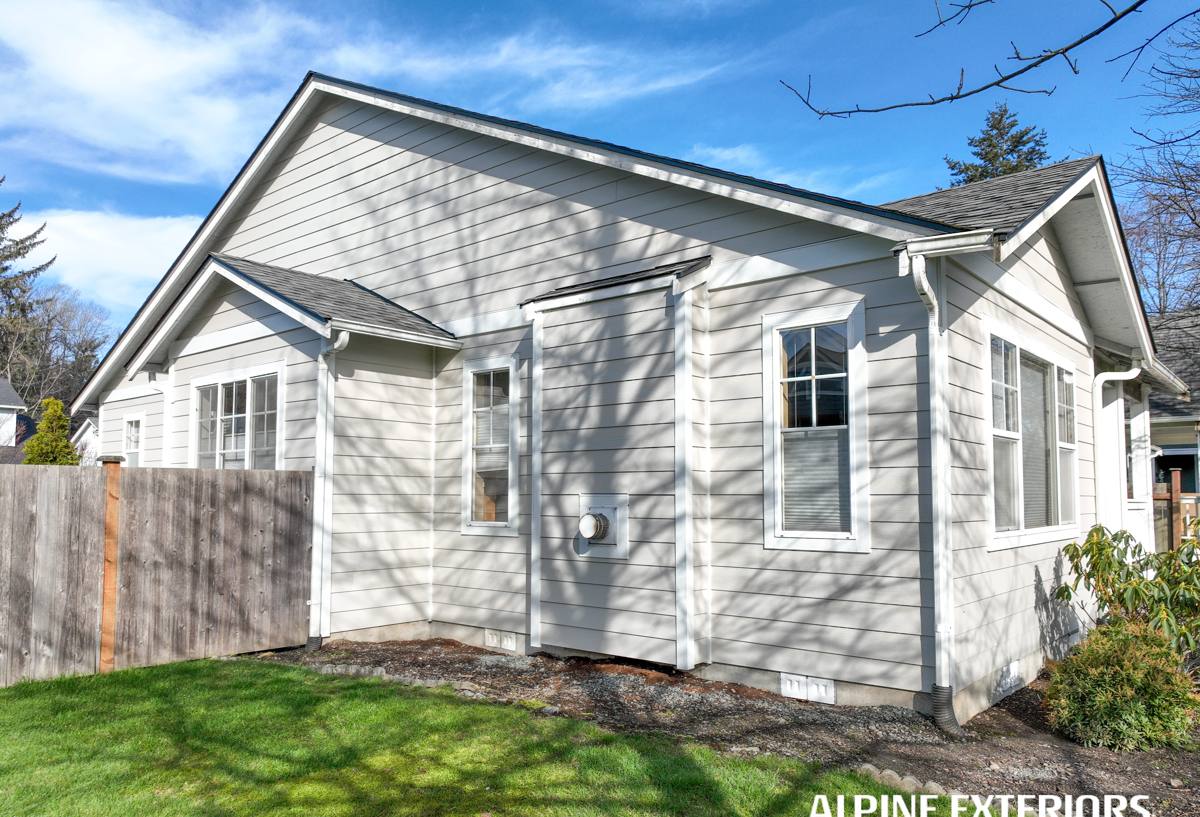
We install James Hardie fiber cement siding exclusively, and on a shoreline exposure like Birch Bay that standard matters more than it does almost anywhere else we work. Fiber cement doesn't swell, cup, or warp the way wood-based siding can when it takes on repeated moisture, and it holds its shape and finish through the kind of wet-dry cycling that a bay-front lot sees far more of than an inland property.
HZ5 Engineering for This Specific Climate
Hardie manufactures its siding in different formulations for different climate zones, and the HZ5 line is engineered for regions with heavy moisture exposure and freeze-thaw cycling — a fit for waterfront Whatcom County. That's not a label on the box; it changes how the product is formulated to resist the swelling and moisture-related damage that a wetter, saltier climate causes over time.
A Factory Finish That Doesn't Depend on a Dry Weather Window
Hardie's ColorPlus finish is baked onto the board under controlled factory conditions rather than brushed or sprayed on after installation. That matters specifically in Birch Bay, because field-applied paint needs a real dry stretch to cure properly, and this part of the coast doesn't always offer one on a contractor's schedule. A finish that's already fully cured before it reaches the site holds its color and resists chalking far longer in salt air and steady moisture than paint applied on-site ever will.
A Warranty Built Around Correct Installation
Hardie backs its siding with one of the stronger warranty structures in the industry — long-term coverage on the material itself, separate coverage on the ColorPlus finish, and terms that transfer to a new owner if the home is sold. That coverage assumes the product was installed to Hardie's published specifications, which is exactly why the installation details below matter as much as the product choice itself.
What a Correct Hardie Installation Actually Involves
A Hardie board installed loosely, or with the wrong fasteners, or without proper drainage detailing behind it, will still develop moisture problems in a climate like this one. The material is only as good as the installation behind it, and on a waterfront lot the margin for error is smaller than it would be a few miles inland.
Fastening and Clearance
Hardie specifies fastener type, spacing, and embedment depth for a reason — the wrong nail or an over-driven fastener creates a point where water can work its way into the board over time. Proper clearance from grade, roof lines, decks, and walkways also matters more here, since standing water and splash-back near the siding's bottom edge are more common on a low-lying, waterfront property.
Rain-Screen and Drainage Detailing
A drainage plane or rain-screen gap behind the siding gives any moisture that gets past the surface a way to drain and dry out instead of sitting against the wall assembly. On a home taking on the kind of sustained wind-driven rain Birch Bay sees, that drainage detail is often the difference between water that dries out harmlessly and water that sits long enough to cause rot in the sheathing underneath.
Joints, Corners, and Trim
Butt joints, corners, and trim intersections are where siding installations most often fail, because they're where water pressure from wind-driven rain concentrates. Factory-mitered corners, correctly flashed joints, and the right sealant used in the right places all matter more on an exposed shoreline lot than they would on a sheltered, tree-lined one.
Choosing the Right Hardie Profile for a Birch Bay Home
James Hardie's siding system includes several profiles, and the right one depends on the home's style and how exposed the walls are to wind and rain — not just personal preference.
- HardiePlank lap siding — the most common profile, with a traditional horizontal look. Its overlapping courses shed water well when installed with correct exposure and fastening, making it a solid default choice for most Birch Bay homes.
- HardiePanel vertical siding — often used for a modern look or board-and-batten style. It has more vertical seams than lap siding, so those seams need careful flashing and batten detailing to perform on a wind-exposed wall.
- HardieShingle siding — a staggered or straight-edge shingle profile for a cottage look. It has more individual pieces and joints than lap siding, which makes correct installation and detailing especially important on this coastline.
- HardieTrim boards — used around windows, doors, and corners. Trim takes direct water exposure at every penetration point, so it needs the same attention to flashing and sealant as the field siding itself.
What We Won't Install on a Birch Bay Home, and Why
We used to install a wider range of siding products. We don't anymore, and that change came from what we kept seeing on service calls and tear-offs in this specific kind of climate — salt air, sustained moisture, and heavy moss exposure — not from a supplier relationship or a sales pitch.
We won't install LP SmartSide, vinyl siding, Cemplank, Allura, primed spruce, or cedar. Each has a legitimate place in the market and homeowners who are satisfied with them in other settings. But engineered wood products are moisture-sensitive at cut edges and joints, vinyl can distort with heat and its seams are ongoing exposure points, and cedar and primed wood need consistent refinishing to hold up in wet, salty air. On a shoreline exposure like Birch Bay, we've made a professional call that we'd rather install one system we fully stand behind than offer a cheaper option that shifts more long-term maintenance risk onto the homeowner.
Cost Factors for a Birch Bay Hardie Siding Project
Every siding project prices out differently, but the factors below are the ones that move the number most on a Birch Bay home specifically.
| Factor | Why It Affects Cost Here |
|---|---|
| Tear-off vs. new construction | Removing old siding on a waterfront home often reveals moisture or rot damage from years of salt and wind exposure, which adds repair scope before new siding goes on |
| Siding profile chosen | Panel and shingle profiles have more seams and trim detail than standard lap siding, which adds labor time for correct flashing and fastening |
| Trim and corner complexity | Homes with more windows, dormers, and architectural detail have more penetration points that each need proper flashing on a wind-driven-rain exposure |
| Drainage plane upgrades | Adding or upgrading a rain-screen drainage gap behind the siding is worth the added cost on a directly exposed lot, less critical on a sheltered inland one |
| Site access | Waterfront lots with limited staging space or steep grade can add time for material handling and scaffolding |
A Practical Checklist Before Hiring for Hardie Siding in Birch Bay
- Ask specifically about their fastener spacing, clearance from grade, and whether they install a drainage plane behind the siding
- Confirm they're a certified or experienced Hardie installer, not a crew that occasionally installs it alongside several other brands
- Ask how they detail flashing at windows, doors, and roof-to-wall transitions for wind-driven rain specifically
- Confirm current Washington contractor licensing and active liability insurance
- Get a written scope of work, including which Hardie profile and HZ line will be used, before signing anything
Why a Crew That Already Works This Stretch of Coastline Matters
A contractor who installs siding on this part of the Whatcom County coastline regularly already knows how salt air, wind exposure, and prolonged moisture behave differently here than they do even a few miles inland. That familiarity shows up in the details — how tightly joints get sealed, which fastener grade gets used, where an extra drainage detail gets added without being asked. Those are exactly the details that determine whether a siding job lasts one wet season or several decades on a waterfront lot.
Our Process for a Birch Bay Siding Project
We start with an on-site assessment of the existing siding and the wall assembly behind it, looking specifically for how the current system has handled moisture and salt exposure over time. From there we put together a clear, written scope covering the Hardie profile, color, and installation details before any work begins. Tear-off happens carefully, since it's often the point where hidden moisture damage from years of exposure first becomes visible, and any repair needed to the sheathing or framing gets addressed before new siding goes up. Fastening, drainage detailing, and trim work follow Hardie's specifications as standard practice on every job, not as an upgrade.
If you're weighing siding options for a home in Birch Bay, we're happy to walk the exterior with you and give an honest read on what it needs. Reach out below for a free, no-pressure estimate.