 Bellingham Roofing
 Building a Deck That Actually Holds Up in Edgemoor
Edgemoor is one of the more distinctive pockets of Bellingham to build a deck in. Between the mature tree canopy, the bluff-top exposure to Bellingham Bay, and lots that stay shaded and damp for long stretches of the year, a deck here has to deal with conditions that a deck in a sunnier, more open part of Whatcom County simply doesn't face. We've worked on enough decks in this neighborhood to know that the standard build isn't always the right build. This page walks through what actually matters when a deck is going in on an Edgemoor property, and why the details most people never think about are usually the ones that determine whether a deck lasts fifteen years or thirty.
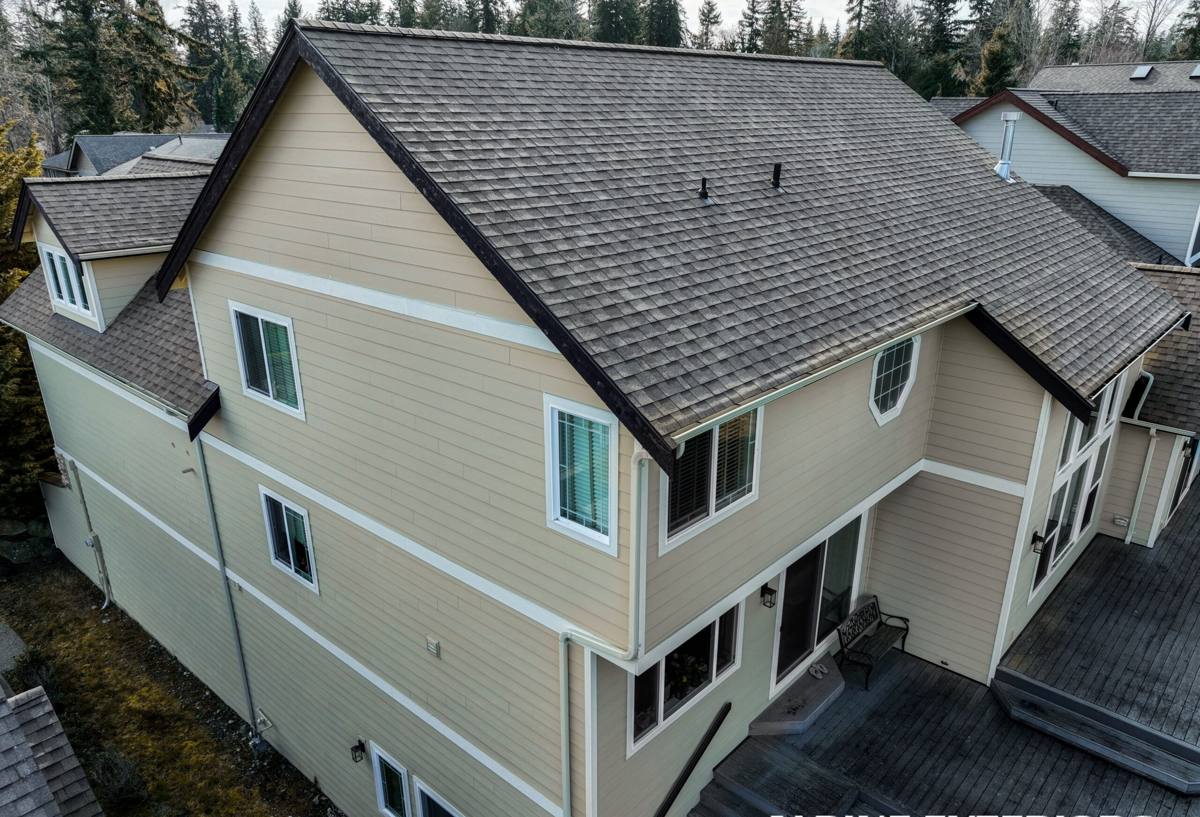
What Edgemoor's Microclimate Does to a Deck
Bellingham's climate is wet for most of the year, but Edgemoor adds a few local wrinkles on top of that. Homes closer to the water pick up salt-laden air off Bellingham Bay, while the neighborhood's big evergreens and mature deciduous trees keep large sections of many yards in shade almost year-round. That combination shows up in the condition of decks we've inspected here far more often than in other parts of town.
Salt Air and Metal Fasteners
Airborne salt accelerates corrosion on any exposed metal — nails, screws, joist hangers, post bases. On a bluff-exposed lot, standard galvanized hardware can start showing rust streaks and pitting years before it would inland. Once fasteners corrode, they lose holding strength long before the wood around them shows any obvious damage, which is part of why deck failures near the water are often more about the hardware than the lumber.
Shade, Moss, and Constant Dampness
Tree cover is a mixed blessing. It's part of what makes Edgemoor lots feel private and established, but it also means decking boards, especially on the north or east side of a house, can stay damp for days after a storm passes. That moisture is exactly what moss, algae, and mildew need to take hold. Once moss establishes itself on a deck surface, it holds even more moisture against the wood, and the cycle accelerates.
Driving Rain and Ledger Board Vulnerability
Whatcom County's wind-driven rain events push water sideways into places it wouldn't normally reach, and the ledger board — where the deck attaches to the house — is the single most common point of hidden rot on any deck in this region. If the flashing detail at that connection isn't done correctly, water gets behind the ledger and into the house framing, often for years before anyone notices.
Choosing the Right Decking Material for This Neighborhood
There's no universally "best" decking material — there's the material that's right for a given lot, budget, and exposure. On Edgemoor's shaded, salt-exposed properties, we weigh moisture behavior and moss resistance more heavily than we might on a sunny, open lot elsewhere in Bellingham.
| Material | Moss/Moisture Behavior | Maintenance | Typical Lifespan | Relative Cost |
|---|---|---|---|---|
| Pressure-treated lumber | Absorbs moisture readily; needs sealing to resist moss in shade | Annual cleaning, periodic staining/sealing | 15-25 years with upkeep | Lowest |
| Cedar | Naturally moisture- and insect-resistant, but surface still hosts moss if shaded and untreated | Regular cleaning, periodic oil or stain | 20-25 years with upkeep | Mid |
| Composite decking | Doesn't rot, but surface texture can still collect moss/algae in deep shade | Periodic washing; no staining or sealing | 25-30+ years (manufacturer warranty dependent) | Mid-High |
| PVC/capped decking | Fully moisture-sealed surface, most moss-resistant option | Occasional washing | 25-30+ years (manufacturer warranty dependent) | Highest |
On heavily shaded Edgemoor lots, we lean toward composite or capped decking more often than we would elsewhere, simply because homeowners with less direct sun get less natural drying time between rain events. That said, plenty of Edgemoor decks in cedar or pressure-treated wood are performing fine — the difference usually comes down to whether the substructure was built correctly and whether the owner keeps up with basic cleaning, not the decking material alone.
What a Correctly Built Deck Actually Involves
The decking boards are the part everyone sees, but they're the smallest factor in whether a deck lasts. Most of the failures we get called out to inspect trace back to a handful of details that are invisible once the deck is finished.
Ledger Attachment and Flashing
The ledger board needs proper structural fasteners into the house framing (not just lag screws into siding) and a correctly layered flashing system — metal or high-quality membrane flashing that directs water away from the house rather than behind the ledger. This single detail is where we see the most costly hidden damage on older decks in this area.
Footings Sized for the Actual Soil
Whatcom County's soil varies a lot from lot to lot, and Edgemoor's mix of bluff-adjacent and heavily wooded properties means footing depth and bearing needs to be sized to what's actually underneath, not a generic assumption. Footings poured too shallow or undersized for the soil conditions are a common source of deck movement over time.
Hardware Grade Matched to Exposure
Given the salt air exposure common in this neighborhood, we default to stainless steel or heavy hot-dip galvanized fasteners and connectors rather than standard-grade hardware, particularly on any deck within view of the bay or exposed to prevailing wind off the water.
Airflow Underneath the Deck
A deck built low to the ground or over damp, shaded soil needs deliberate ventilation gaps and grading so air can move underneath. Without that airflow, the underside of the joists stays wet far longer after every rain, which is exactly the environment moss, mildew, and rot organisms need.
Our Process for an Edgemoor Deck Project
- Site visit and design. We look at sun exposure, tree cover, soil, drainage patterns, and how the deck will actually be used before recommending a layout or material.
- Material and structural plan. Based on that site visit, we recommend decking, hardware grade, and footing approach suited to the specific lot — not a one-size-fits-all spec.
- Permitting. We handle the permit application and inspection scheduling required for the project, coordinating with the City of Bellingham or Whatcom County as applicable.
- Framing and waterproofing. Ledger flashing, footings, and framing go in first, with every connection point built to the exposure the deck will actually see.
- Decking and finish work. Boards, railing, and any stairs or fascia are installed once the structure underneath is confirmed solid.
- Final walkthrough. We go over the finished deck with the homeowner, including what maintenance it will actually need given its sun and shade exposure.
Maintenance Realities: Keeping Moss and Mildew Off Your New Deck
Even the best-built deck in a shaded Edgemoor yard will need some regular attention — the climate here doesn't allow for a "build it and forget it" deck. The goal is to keep organic growth from ever getting a foothold rather than scrubbing it off after it's established.
- Sweep off fir needles, leaves, and other organic debris regularly, especially in fall — trapped debris holds moisture against the boards.
- Rinse the deck surface periodically during the wet season to prevent early moss growth, particularly in shaded corners.
- Keep gutters and downspouts near the deck clear so runoff isn't dumping extra water onto or under the structure.
- Trim back overhanging branches where reasonable to let more light and air reach the deck surface.
- Check the ledger flashing and any visible fasteners once a year for early rust staining or gaps.
- Re-seal wood decking on the manufacturer's or installer's recommended schedule — don't wait until it's visibly gray or absorbing water.
Permits and Site Considerations for Wooded and Bluff-Area Lots
Deck projects in Bellingham typically require a building permit, and lots in and around Edgemoor sometimes carry additional considerations depending on proximity to the bluff, slope, or critical areas as defined by the city or county. We don't guess on this — where a lot's specific setback, slope, or geotechnical requirements aren't clear-cut, we coordinate with the local permitting office (and a geotechnical professional, if the site calls for it) before finalizing a design, rather than building first and hoping it passes inspection.
Why Hire a Crew That Already Works in Edgemoor
A deck built to a generic spec sheet can look identical to a deck built for this specific neighborhood's conditions — right up until the first few wet seasons pass. A crew that already works in Edgemoor knows which lots need extra ventilation under the frame, which ones need upgraded hardware because of bay exposure, and which yards will need a maintenance conversation up front because of heavy tree cover. That local pattern recognition is the difference between a deck that needs a repair call in year four and one that doesn't.
Signs Your Existing Deck May Need Attention
| What You Notice | What It Often Means |
|---|---|
| Green or black film on boards, especially in shaded corners | Moss/algae growth — early stage, usually addressable with cleaning and better airflow |
| Soft or spongy spots underfoot | Possible rot in the decking or joists beneath — worth an inspection before it spreads |
| Rust streaks around screws or brackets | Hardware corrosion, common on salt-exposed lots — can weaken connections over time |
| Gap or staining where the deck meets the house | Possible ledger flashing failure — one of the more serious issues to catch early |
| Visible sagging or bounce in the deck surface | Possible footing or framing issue — should be evaluated before continued use |
If any of these sound familiar, it's worth having a crew take a look before the next wet season rather than after.
If you're planning a new deck or trying to figure out what's going on with an existing one on your Edgemoor property, we're happy to take a look and put together a straightforward, no-pressure estimate — just fill out the form below to get started.