 Bellingham Roofing
 Why Birch Bay Roofs Take a Different Kind of Beating
Birch Bay sits right on the water, and that changes what "storm damage" means for a roof here compared to a home a few miles inland in Bellingham. Wind off the Strait of Georgia doesn't just gust — it drives rain sideways, works up under shingle tabs, and pushes moisture into seams that would stay dry on a more sheltered lot. Add in salt-laden air that slowly breaks down fasteners, flashing, and sealants, and you've got a roof that ages faster than the manufacturer's warranty assumes it will.
Then there's moss. Whatcom County's damp, mild winters give moss a long growing season, and a roof that's already stressed from wind and salt exposure gives moss an easier foothold — especially in shaded valleys, north-facing slopes, and anywhere debris collects after a storm. None of this means Birch Bay roofs are doomed to constant repair. It means storm damage repair here has to account for conditions that a generic inland job doesn't.
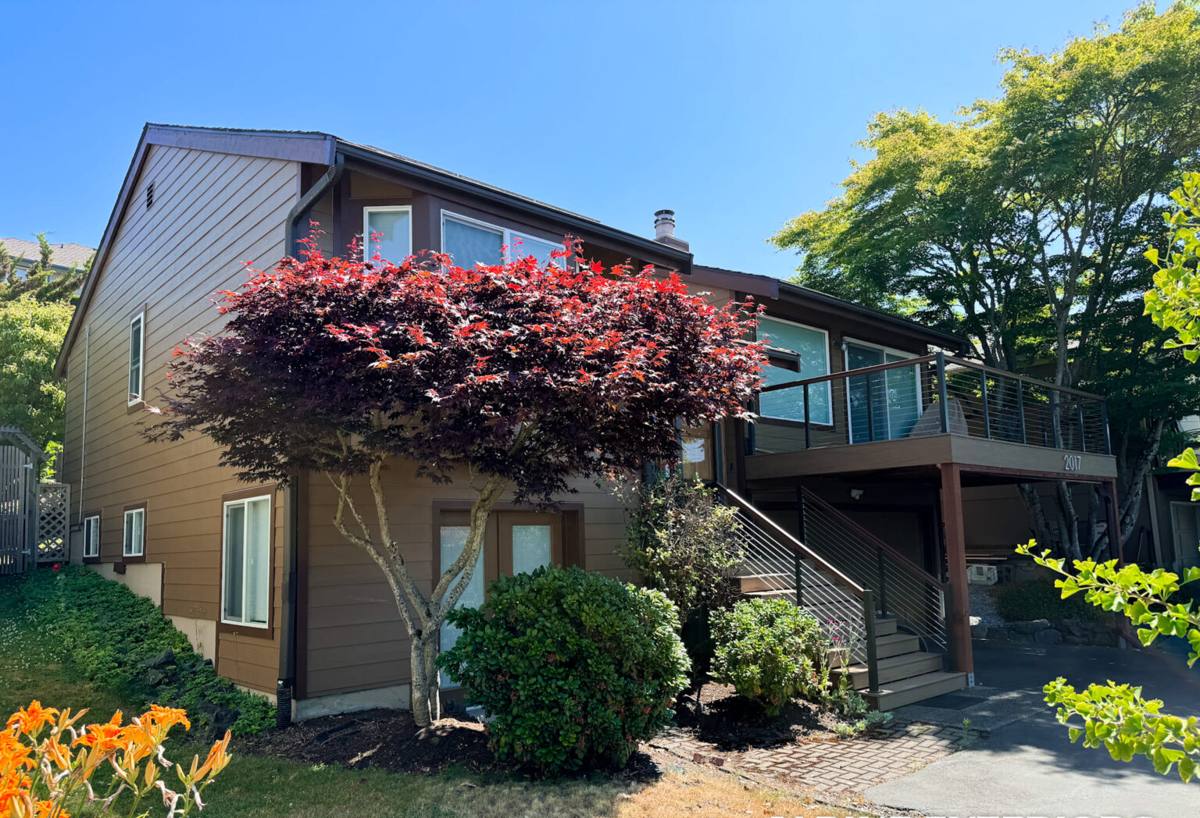
What Actually Counts as Storm Damage
Storm damage isn't always a dramatic hole in the roof. On coastal homes it's often quieter and easier to miss:
- Shingles lifted, cracked, or torn loose at the tabs from sustained wind, even if they're still technically "in place"
- Granule loss on asphalt shingles from wind-driven rain and debris, which shortens the shingle's remaining life even without visible holes
- Flashing pulled away or bent at chimneys, vent pipes, and roof-to-wall transitions — a common entry point for wind-driven rain
- Water intrusion at valleys and eaves where wind can push rain uphill against the natural flow of the roof
- Debris impact from branches or wind-carried material, which can bruise or puncture shingles without an obvious hole
- Accelerated moss and algae growth in areas where a storm knocked debris into valleys or gutters and it wasn't cleared
The tricky part is that most of this is only visible from the roof itself, not from the ground. A homeowner can do a reasonable walk-around after a storm, but a full assessment really does require someone up there looking at seams, flashing, and fastener lines directly.
Signs Birch Bay Homeowners Should Check For After a Storm
You don't need to get on a ladder yourself, but knowing what to look for from the ground and inside the house helps you decide how urgently to call someone.
- Shingle pieces or granules collecting in gutters, downspouts, or on the ground around the foundation
- Water stains or new discoloration on interior ceilings, especially near chimneys, skylights, or where two roof planes meet
- Daylight visible through the attic roof deck, or damp insulation in the attic
- Gutters pulling away from the fascia or sagging, which points to water backing up rather than draining
- Visible gaps, curling, or lifted edges on shingles when viewed with binoculars from the ground
- Moss or dark streaking that's spread noticeably since the last time you looked, particularly after a wet, windy stretch
- Any tarp, patch, or repair from a previous storm that looks like it's shifted or failed
If you see any of these, it's worth having it looked at even if there's no active leak yet. Small entry points get worse with every following storm, and Birch Bay doesn't go long between them.
What a Correct Storm Damage Repair Actually Involves
Start With the Deck, Not Just the Shingles
A repair that only replaces surface shingles without checking the roof deck underneath is treating the symptom, not the cause. Wind-driven rain that's been getting past damaged shingles for even a short time can soften the plywood or OSB decking below. If that decking isn't checked and, where needed, replaced, new shingles laid over a compromised deck won't hold or seal properly — and the leak comes back.
Match the Underlayment to the Exposure
On a coastal, wind-exposed roof, the underlayment beneath the shingles matters as much as the shingles themselves. A synthetic or self-adhering underlayment at vulnerable areas — eaves, valleys, and around penetrations — gives a second line of defense when wind pushes rain in a direction the shingles alone weren't designed to shed.
Rebuild Flashing Properly, Not Just Reseal It
Caulk over old, bent flashing is a short-term patch, not a repair. Flashing that's been compromised in a storm should be reformed or replaced so it sheds water the way it was designed to, particularly at chimneys, skylights, and wall intersections where wind-driven rain concentrates.
Match Materials Honestly
When only part of a roof slope is damaged, we'll match shingle style and, where possible, color as closely as the current product line allows. Shingle lines get discontinued and dye lots shift over time, so on some roofs a perfect blend isn't realistic — we'll tell you plainly if that's the case rather than pretend otherwise, and talk through whether a full slope or full roof replacement makes more sense visually and financially.
How Our Storm Damage Repair Process Works
1. Inspection and Documentation
We walk the roof, photograph the damage, and check the attic where accessible. This gives you a clear record of what the storm actually did, which matters whether you're deciding on repair scope or working with an insurance adjuster.
2. Temporary Protection If Needed
If there's active water intrusion, protecting the interior comes first — tarping or temporary sealing to stop further damage while the full repair is scheduled and any materials are sourced.
3. A Written Scope and Estimate
You get a clear explanation of what's damaged, what needs to be repaired versus what can be left alone, and a written estimate before any repair work starts. No surprise scope creep once we're up there.
4. The Repair Itself
Deck repair or replacement where needed, correct underlayment at vulnerable areas, rebuilt flashing, and matched shingle work — done in that order, not skipped to save a step.
5. Cleanup and Final Check
Debris and old materials are cleared from the property and gutters, and we do a final check of the repaired area and surrounding roof for anything else the storm may have loosened.
Repair or Replace? What Actually Drives That Decision
Not every storm-damaged roof needs full replacement, and not every roof is worth another round of patching. The honest answer depends on a few factors working together, not any single one.
| Factor | Leans Toward Repair | Leans Toward Replacement |
|---|---|---|
| Roof age | Well within its expected service life | Already near or past typical lifespan for the material |
| Extent of damage | Isolated to one area or slope | Spread across multiple slopes or recurring in the same spots |
| Deck condition | Solid, dry decking under the damaged area | Soft, delaminated, or repeatedly wet decking |
| Shingle condition elsewhere | Rest of the roof is holding up well | Granule loss and brittleness showing roof-wide |
| Storm frequency exposure | Sheltered or moderately exposed lot | Direct wind exposure off the water, repeat damage history |
For a lot of Birch Bay homes, especially those closer to the shoreline with direct wind exposure, we'll flag when repeated storm repairs are starting to cost more over a few years than a planned replacement would — but that's your call to make with real numbers in front of you, not a sales pitch.
Storm Damage and Insurance: What We Can and Can't Do
We're not insurance adjusters, and we won't tell you a claim will be approved — that's between you and your insurer. What we can do is document the damage clearly with photos and a written scope so you have accurate information to bring to your adjuster, and complete repairs to the standard we'd stand behind regardless of how a claim resolves. If your policy requires specific documentation or an adjuster visit before repairs begin, let us know up front so we can time the work around that.
Why It Matters That We Already Work in Birch Bay
A crew that's worked coastal Whatcom County roofs knows what to check first on a wind-exposed home versus a sheltered one, and isn't guessing at how salt air affects fastener corrosion or how long moss takes to re-establish after a storm knocks debris into a valley. That familiarity shows up in small decisions — where to reinforce flashing, which underlayment makes sense at an exposed eave, how urgently a given type of damage needs a tarp versus a scheduled repair.
It also means a faster response when it counts. After a significant wind event, response time on temporary protection can be the difference between a contained repair and a much larger interior damage claim. Working Bellingham and the surrounding Whatcom County coastline, including Birch Bay, regularly means we're not learning the area's weather patterns from scratch on your roof.
After the Repair: Reducing the Next Storm's Impact
A good repair holds up better if a few basic habits go with it:
- Keep gutters and valleys clear of debris, especially heading into fall and winter storm season
- Have moss treated before it spreads rather than after it's established across a slope
- After any significant wind event, do a ground-level visual check even if nothing seems obviously wrong
- Address small leaks or lifted shingles promptly — they rarely stay small on a wind-exposed roof
- Keep nearby trees trimmed back from the roofline to reduce debris impact in future storms
None of this replaces a proper inspection after a real storm, but it reduces how much damage the next one can do.
If a recent storm has left you with lifted shingles, a slow leak, or just some uncertainty about how your roof held up, we're happy to take a look. Reach out for a free, no-pressure estimate using the form below.