 Bellingham Roofing
 Blaine's Marine Climate Puts Real Stress on Exterior Siding
Blaine sits at the northwest corner of Whatcom County, right where Puget Sound weather meets open water and the Canadian border. That location gives homes here a specific set of exterior problems that inland Whatcom County houses don't deal with in the same way. Salt-laden air moves off the water and settles on siding, trim, and fasteners. Wind carries rain sideways into wall assemblies that were only designed to shed water falling straight down. And because the marine layer keeps humidity high for long stretches of the year, moss and algae get a much longer growing season on north-facing and shaded walls than they would in a drier climate.
Salt Air and Wind-Driven Rain
Salt air is corrosive to bare metal, and it's abrasive to any siding finish that isn't built to hold up under repeated wet-dry cycling. Wind-driven rain is a separate problem: it doesn't just wet the face of the siding, it pushes moisture into seams, laps, and butt joints that a calmer climate would never test. Siding that looks fine from the street can still be failing behind the surface if the water management underneath it wasn't detailed correctly.
Moss Season Runs Long Here
In a lot of the country, moss and algae growth is a late-fall-to-spring problem. In Blaine's marine climate, shaded and north-facing walls can stay damp enough to support moss growth for most of the year. That constant moisture load matters more for some siding materials than others — it's one of the main reasons wood-based products need more upkeep here than they would somewhere drier.
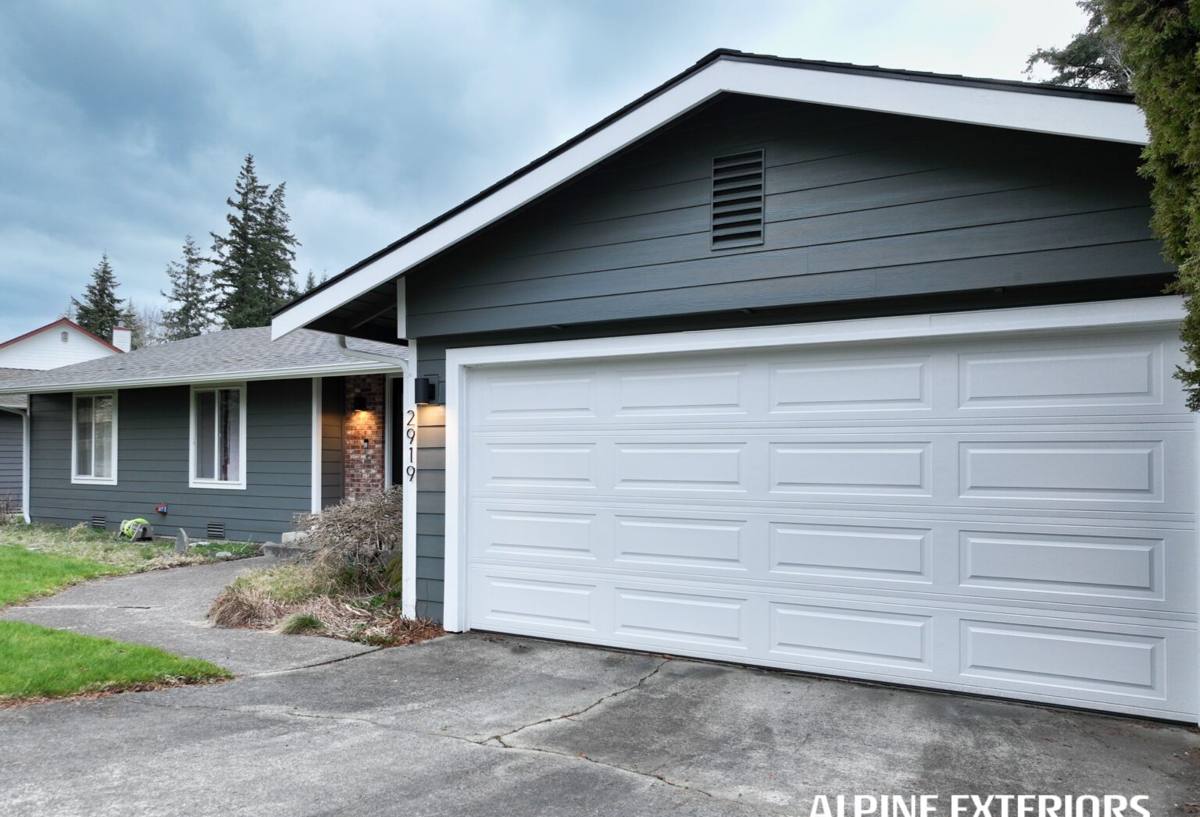
What Board & Batten Siding Is, and Why It Suits This Area
Board and batten is a vertical siding pattern: wide boards or panels installed with narrow strips (battens) covering the seams between them. It's a look with deep roots in Pacific Northwest farmhouse and craftsman architecture, and it's also a natural fit for the more modern coastal and cottage-style homes you'll find around Blaine. The vertical lines read as clean and understated, and the pattern pairs well with the region's mix of traditional and updated exterior styles.
Beyond looks, the vertical orientation has a practical advantage in a wet climate: water runs down the face of the boards rather than pooling along horizontal laps the way it can with lap siding. That doesn't eliminate the need for correct water management behind the siding, but it's one reason board and batten has stayed popular in wetter parts of the country for generations.
Why We Install James Hardie Board & Batten — Not Vinyl or Wood
We get asked fairly often why we don't offer cedar or vinyl board and batten, since both are common in the Pacific Northwest. Here's the honest breakdown of why we standardized on James Hardie fiber cement instead.
Cedar Board & Batten
Cedar looks good, and a lot of homeowners love the natural material. The trade-off in a climate like Blaine's is upkeep: cedar needs to be re-stained or re-painted on a recurring schedule, it's a food source for the moss and algae that thrive in this climate, and any gap in the finish lets moisture into the wood, which can lead to rot and cupping over time. That's a real, ongoing cost of ownership — not a knock on cedar as a material, just a maintenance burden we don't think is worth it when a lower-maintenance option performs as well or better.
Vinyl Board & Batten
Vinyl is inexpensive and low-maintenance in the sense that it doesn't need painting, but it's a thin plastic product that can warp or distort in temperature swings and become brittle with age. In a coastal, wind-exposed area, vinyl's lighter panels and mechanical fastening system are more prone to rattling, lifting, or cracking at fastener points than a heavier, more rigid material. It also doesn't hold up structurally in a wildfire or ember exposure the way a non-combustible product does — a growing consideration for insurance and resale in this region.
Why We Standardized on James Hardie
James Hardie fiber cement is dense, dimensionally stable, and non-combustible. It doesn't feed moss the way wood does, it holds a factory-applied ColorPlus finish that's engineered to resist fading and doesn't need field painting for years, and it's manufactured in regional formulations (the HZ5 product line) specifically for the wetter Pacific Northwest climate. It costs more upfront than vinyl and is priced closer to or above quality cedar, but the combination of low maintenance, real moisture resistance, and a strong transferable warranty is why it's the only board and batten system we put on homes.
Comparing Board & Batten Materials for a Blaine Home
| Factor | James Hardie Fiber Cement | Cedar | Vinyl |
|---|---|---|---|
| Moisture / moss resistance | High — non-organic, engineered HZ5 formulation | Low to moderate — organic material, feeds moss/algae | Moderate — won't rot but traps moisture behind panels if installed poorly |
| Finish maintenance | Factory ColorPlus finish, no field painting needed for years | Needs re-staining or repainting on a recurring cycle | No painting, but color fades and can't be refinished |
| Wind / impact durability | Rigid, heavy, holds up well to wind-driven debris | Durable but prone to splitting and cupping over time | Can crack, warp, or rattle loose in high wind exposure |
| Fire resistance | Non-combustible | Combustible | Combustible, can melt/deform under heat exposure |
| Typical upfront cost | Moderate to higher | Moderate to higher | Lower |
| Warranty | Strong transferable manufacturer warranty | Varies, largely dependent on finish maintained by owner | Manufacturer warranty, often prorated |
What a Correct Board & Batten Installation Requires
Board and batten siding is simple in appearance but unforgiving of shortcuts, especially in a wet, wind-exposed climate. The visible boards and battens are the last part of the assembly — what's underneath them determines whether the siding actually performs for the next few decades.
Drainage Plane and Rainscreen Gap
A weather-resistive barrier goes against the sheathing first, with all seams and penetrations properly lapped and sealed. Behind the siding itself, a rainscreen gap (typically furring strips) lets any moisture that gets past the outer layer drain and dry out instead of sitting against the wall assembly — a detail that matters more here than in a drier climate because Blaine's wind-driven rain will find any gap in the drainage plane.
Fastening and Batten Spacing
Fasteners need to be corrosion-resistant and driven to manufacturer spec — over-driven or under-driven fasteners are one of the most common causes of early siding failure. Batten spacing and layout should be planned before the first board goes up, not adjusted on the fly, so the reveal is even and every seam is actually covered and protected.
Flashing and Penetrations
Windows, doors, hose bibs, vents, and any other wall penetration need site-specific flashing detail, not a bead of caulk as the primary defense. Caulk is a backup, not a water management system — a distinction that matters in any coastal climate where wind pushes rain into places gravity alone wouldn't take it.
How Our Process Works
- Free on-site evaluation of your existing siding, water damage risk areas, and the wall assembly underneath.
- A written estimate that spells out the Hardie products, batten layout, and any trim or flashing work involved — no vague allowances.
- Removal of old siding and inspection of the sheathing for rot or damage before anything new goes up.
- Installation of the weather-resistive barrier, rainscreen gap, and flashing details at every penetration.
- Installation of HardiePanel vertical siding with HardieTrim battens set to the agreed layout and fastened to manufacturer spec.
- Final walkthrough so you can see the completed work and ask questions before we consider the job done.
Living With Board & Batten Siding in a Marine Climate
Even a low-maintenance material benefits from some basic upkeep in a climate like Blaine's. None of this is heavy work, but skipping it lets moss and salt residue build up over time.
- Rinse siding with a garden hose once or twice a year to clear salt residue and airborne debris, especially on walls facing the water.
- Keep an eye on shaded, north-facing sections where moss is most likely to establish — a soft wash removes it before it spreads.
- Trim back vegetation and maintain a gap between plantings and the siding so walls can dry out between rain events.
- Check caulking at trim edges and penetrations periodically — caulk is a maintenance item even on a low-maintenance siding system.
- Have gutters and downspouts checked seasonally, since overflow onto siding is one of the most common causes of localized staining and moisture damage.
Why a Crew That Already Works in Blaine Matters
Whatcom County's coastal edge doesn't behave exactly like inland Bellingham or the drier parts of the county, and it doesn't behave like other coastal towns further south, either. Wind exposure, salt content in the air, and how long a wall stays wet after a storm all vary block by block depending on orientation and how close a home sits to open water. A crew that installs siding across Whatcom County regularly builds a working sense of which walls need extra attention to flashing and drainage detail and which fastener and layout choices actually hold up here over time — not just what a manufacturer's install guide says in general terms. That local track record is also what makes a warranty mean something: a crew that's still working in the area next year, and the year after, is a crew that's accountable for what it installed.
If you're weighing board and batten siding for a home in Blaine, we're happy to take a look and walk you through what we'd recommend for your specific walls and exposure. The estimate is free, there's no pressure to sign anything on the spot, and you'll get a straight answer about what your home actually needs.