 Bellingham Roofing
 Board & Batten in South Hill: A Style That Has to Earn Its Keep
Board and batten has become one of the most requested looks in South Hill — the vertical lines read as clean and modern on newer builds, and they pair well with the mix of craftsman and mid-century homes scattered through the neighborhood. It's a strong choice for accent walls, gable ends, dormers, and full-elevation replacements alike. But in Whatcom County, board and batten is not just a design decision. The seams, reveals, and vertical joints in this profile create more opportunities for water to find its way behind the cladding than a standard lap siding job does — which means the material and the installer matter more here than almost anywhere else in the region.
We install board and batten in James Hardie fiber cement exclusively. That's not a marketing line — it's a standard we hold because we've seen what Bellingham's weather does to vertical siding that wasn't built or installed for it.
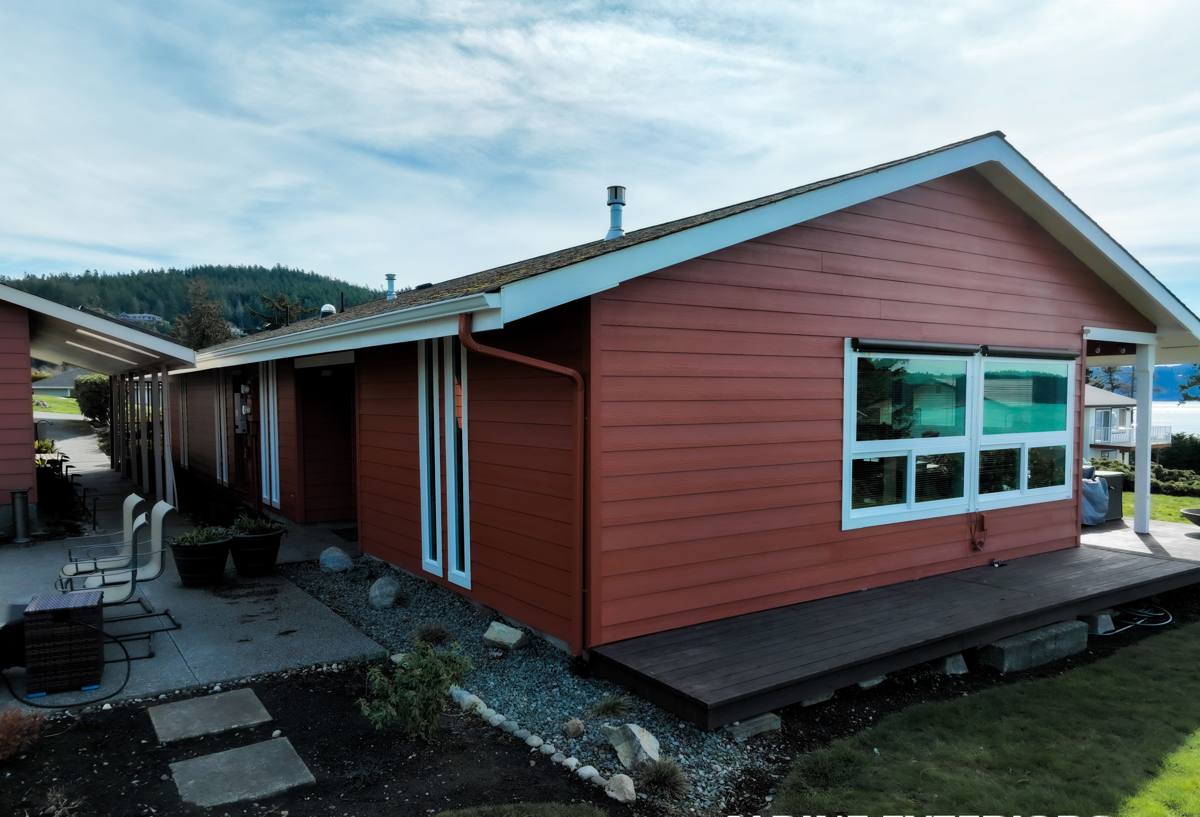
What Bellingham's Climate Actually Does to Vertical Siding
South Hill sits close enough to the water and open enough to weather that homes here take a real beating over the course of a year, even if no single storm feels dramatic. Three factors matter most for board and batten specifically:
Salt Air and Coastal Moisture
Bellingham's proximity to the bay means airborne salt and moisture settle on exterior surfaces year-round. Salt-laden air accelerates corrosion on exposed metal fasteners and trim, and it degrades cheap coatings faster than inland climates would. Vertical siding profiles expose more edge and joint surface to this than flat lap siding does, so the fastening and finish quality on a board and batten job has less margin for error.
Driving Rain
Whatcom County doesn't just get rain — it gets wind-driven rain that hits siding at an angle instead of running straight down it. On lap siding, gravity and overlap do most of the work keeping water out. On board and batten, the vertical battens create long, straight joints that wind-driven rain can push water into if the gap, flashing, and water-resistive barrier underneath aren't detailed correctly. This is the single biggest reason board and batten fails prematurely when it's installed as a purely cosmetic upgrade rather than a full assembly.
A Long Moss Season
Damp, shaded, and mild — Bellingham's climate is close to ideal for moss and algae growth for much of the year. Vertical battens create narrow ledges and shadow lines where organic growth gets a foothold, especially on north-facing walls and under eaves with less sun exposure. Left unaddressed, moss holds moisture against the siding surface far longer than it would otherwise sit there, which shortens the life of any coating or finish underneath it.
Why We Only Install Board & Batten in James Hardie Fiber Cement
Board and batten is available in several materials — vinyl, engineered wood, primed wood, and fiber cement among them. We don't install vinyl or engineered wood board and batten, and here's the honest reasoning, not a sales pitch:
- Vinyl board and batten expands and contracts significantly with temperature swings, and those long vertical panels can bow, warp, or pull away from fastening points over time — problems that show up faster on tall, exposed elevations.
- Engineered wood and primed wood battens are dimensionally stable when new, but they're wood-based products that rely entirely on the paint or coating film to keep moisture out. In a climate with this much sustained dampness and moss pressure, any coating failure at a cut edge or fastener hole becomes an entry point for rot.
- James Hardie fiber cement is non-combustible, dimensionally stable across our temperature range, and doesn't rely on an intact paint film alone to resist moisture the way wood-based products do. It's engineered specifically for climates like ours.
For board and batten work, we typically build the look using HardiePanel vertical siding as the field panel with HardieTrim boards as the battens, all finished in a factory-applied ColorPlus coating. That combination gives the crisp architectural lines board and batten is chosen for, backed by a material system designed to handle driving rain and prolonged dampness rather than just tolerate it.
What a Correct Board & Batten Installation Actually Involves
The visual result of a good board and batten job and a bad one can look identical on install day. The difference shows up two, five, and ten years later, and it comes down to what's happening behind the battens, not what's visible on the surface.
The Rainscreen Gap
Correct installation uses a drainage gap — typically created with vertical furring strips — behind the panel and battens. This gap lets any moisture that does get past the outer surface drain and dry out instead of sitting trapped against the sheathing. Skipping this step is the single most common shortcut we see on board and batten jobs that fail early, and it's invisible once the siding is up.
Fastening and Batten Layout
Battens need to land over solid backing with fastener spacing that matches the manufacturer's engineering, not just "close enough." Fasteners that are overdriven, underdriven, or placed too close to a panel edge create weak points that show up as cracking or movement well before the siding's expected service life is up.
Flashing at Every Transition
Windows, doors, roof lines, and horizontal trim boards all need proper flashing integration with the water-resistive barrier before the first panel goes up. On a vertical profile, a flashing mistake at a single transition can channel water down behind an entire run of battens instead of shedding it at that one spot.
Joint and Seam Sealing
Panel seams and butt joints need to be sealed or flashed per the manufacturer's published details — not just caulked over as a finishing step. Caulk is a maintenance item, not a waterproofing system, and treating it as the latter is how vertical siding jobs develop hidden moisture problems.
- Drainage gap installed behind the entire assembly, not just at high-risk spots
- Furring and fasteners sized and spaced to manufacturer specification
- Water-resistive barrier lapped correctly before any panel installation begins
- Flashing integrated at every window, door, and horizontal trim intersection
- Panel and batten joints sealed or flashed per the manufacturer's installation instructions
- Factory ColorPlus finish inspected for touch-up needs at every field cut
Comparing Board & Batten Materials for a South Hill Home
| Material | Behavior in Driving Rain | Moss & Moisture Resistance | Long-Term Maintenance |
|---|---|---|---|
| Vinyl board & batten | Can flex, bow, or gap at fastening points over time | Doesn't rot, but traps moisture behind panels if installed tight | Low upfront, but limited repair options once damaged |
| Engineered/primed wood battens | Adequate if coating stays fully intact | Vulnerable at any coating break, cut edge, or fastener hole | Regular repainting and edge sealing required |
| James Hardie fiber cement (HardiePanel + HardieTrim) | Engineered for wind-driven rain when installed with a rainscreen assembly | Non-combustible, dimensionally stable, resists moisture-driven damage | Occasional cleaning; factory finish reduces repainting cycles |
Our Process for South Hill Board & Batten Projects
Every board and batten quote starts with an on-site look at the specific walls involved — sun exposure, existing moss or moisture staining, and what's currently behind the cladding matter for how we plan the job. From there:
- Assessment: we check the sheathing and water-resistive barrier condition before quoting, since board and batten replacement is a good opportunity to fix hidden moisture issues while the wall is open.
- Prep and barrier work: any compromised sheathing or barrier gets addressed before furring goes up — installing new siding over an existing problem just hides it again.
- Rainscreen and panel installation: furring, panels, and battens go up per Hardie's published fastening and spacing specs, with flashing detailed at every transition as we go.
- Finish and walkthrough: we inspect every cut edge and field touch-up before calling the job done, and walk the finished elevations with you so you know what you're looking at.
Maintenance and What to Expect Long-Term
James Hardie board and batten is low-maintenance, not no-maintenance. In South Hill's conditions, plan on an occasional rinse-down to keep moss and algae from establishing on shaded or north-facing walls, and a visual check after major windstorms for any loose trim or caulking that needs attention. Because the ColorPlus finish is baked on at the factory rather than field-applied, you're not looking at a repainting cycle the way you would with primed wood battens — that's one of the practical reasons this system holds up better here than the alternatives.
Why It Matters That We Already Work South Hill
Board and batten installation quality is hard for a homeowner to judge by looking at it — the parts that determine whether it lasts are covered up by the time the job is finished. A crew that already works South Hill regularly has a feel for how the neighborhood's sun exposure, moisture patterns, and wind direction affect a given wall before the first panel goes up, and that shows up in fewer surprises during the job and fewer callbacks after it. It also means someone local is easy to reach if a question comes up two years down the road, not a crew that was passing through Whatcom County for one job.
If you're weighing board and batten for a South Hill home, we're happy to walk your property, look at what's there now, and give you a straight answer on what a correct installation would involve — no pressure, no inflated scope. Use the form below to request a free estimate.