 Bellingham Roofing
 Window Replacement Built for Columbia's Climate
Columbia sits close to Bellingham Bay and Whatcom Creek, which means homes here deal with a specific combination of conditions: salt-laden air coming off the water, wind-driven rain that doesn't just fall straight down, and a long stretch of the year where shade and moisture never really let up. Windows take the brunt of all three. Frames corrode faster near salt air, driving rain finds its way past weak seals and flashing, and moss and algae creep into anything that stays damp too long. A window replacement in this neighborhood isn't just a cosmetic upgrade — it's a chance to fix a weak point in the house before it causes real damage.
We work on homes throughout Columbia regularly, and the patterns repeat: aging wood sashes that have swollen and stuck, aluminum frames pitted from years of salt exposure, and sills that stay wet long after a storm has passed. A correct replacement addresses the window itself and the opening around it, because in this climate, the installation detail matters as much as the window brand.
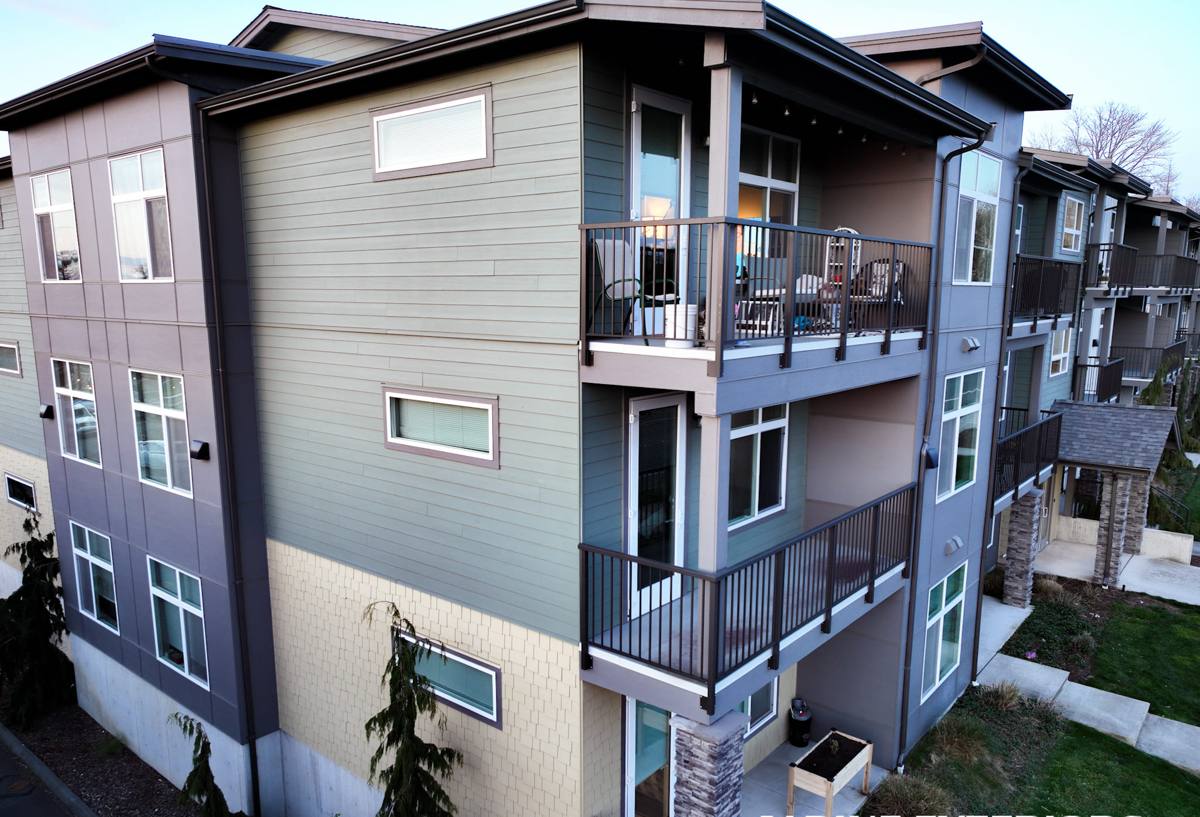
What Bellingham's Climate Does to Windows Over Time
Salt Air and Corrosion
Proximity to Bellingham Bay means airborne salt settles on exterior surfaces, including window hardware, metal flashing, and aluminum frame components. Over years, this accelerates corrosion on hinges, locks, and cranks, and can pit or discolor untreated metal. It's a slow process, but it's constant — and it's one reason we pay close attention to hardware material and finish when we spec a replacement window for this area.
Driving Rain and Wind-Loaded Water
Rain in Whatcom County doesn't always fall straight down. Storms off the Sound push rain sideways into west- and southwest-facing walls, which means water gets forced against and around window openings with real pressure behind it. A window that would perform fine in a calmer climate can leak here if the flashing, sealant, and drainage plane aren't installed correctly. This is the single most common cause of hidden water damage we find behind older windows in this neighborhood.
Moss, Algae, and Prolonged Moisture
Between the tree cover common in older Bellingham neighborhoods and the sheer number of overcast, damp days each year, moss and algae get a long runway to establish themselves on sills, trim, and anywhere water sits instead of draining. Beyond the appearance issue, sustained moisture against wood trim or sills is what eventually leads to rot — which is often discovered only once a window is pulled for replacement.
Signs Your Columbia Home Needs New Windows
- Visible gaps, cracked glazing putty, or daylight around the sash when the window is closed
- Windows that are difficult to open, close, or lock — often from swelling, warping, or corroded hardware
- Soft, discolored, or spongy trim and sills, especially on walls that face prevailing storms
- Persistent moss or algae staining that returns quickly after cleaning
- Condensation forming between panes (a sign the seal on an insulated glass unit has failed)
- Noticeable drafts or a cold spot near the window even when it's fully closed
- Rising heating bills without another clear explanation
- Fogging, rattling, or visible daylight around the frame during wind-driven storms
Any one of these on its own might just need a repair. Several of them together, especially on a home with original or older windows, usually means replacement is the more cost-effective path.
What a Correct Window Replacement Actually Involves
Swapping in a new window is the visible part of the job, but it's not the part that determines whether the window performs well in this climate for the next 20-plus years. The details around the opening matter just as much:
- Removing the old unit carefully to expose the rough opening and check the condition of the framing, sill, and sheathing underneath
- Repairing any rot or water damage found during removal before anything new goes in — installing a new window over a compromised opening just hides the problem
- Flashing the opening properly, with attention to how water is directed away from the sill and down the exterior wall rather than into it
- Sealing and insulating the gap between the window frame and the rough opening, so there's no bypass for air or moisture
- Setting the window level, plumb, and square so it operates smoothly and seals evenly for years, not just on install day
- Finishing the exterior trim and sealant in a way that sheds wind-driven rain rather than trapping it against the frame
Skipping any of these steps is how a brand-new window ends up leaking or drafting within a few years. The window product matters, but installation quality is what actually determines performance in a climate like ours.
Choosing the Right Window for This Climate
There's no single "best" window material — the right choice depends on the home, the budget, and how much maintenance you want to take on. Here's how the common options stack up for a Columbia home specifically:
| Material | Salt Air / Corrosion Resistance | Maintenance | Notes for This Area |
|---|---|---|---|
| Vinyl | Good — won't corrode or rot | Low | Solid value option; check frame reinforcement on larger openings |
| Fiberglass | Very good — stable and corrosion-resistant | Low | Handles temperature swings and moisture well; higher upfront cost |
| Aluminum | Fair — prone to pitting near salt air over time | Moderate | Thermally weaker unless thermally broken; not our first recommendation this close to the bay |
| Wood | Poor if unprotected — needs consistent upkeep | High | Best suited to homes prioritizing original character, paired with disciplined maintenance |
| Wood-Clad (wood interior, clad exterior) | Good on the exterior-facing clad surface | Low-moderate | Popular middle ground for older-character homes wanting less upkeep |
We also pay attention to hardware finish and glass package. In a salt-air environment, hardware with a corrosion-resistant finish holds up noticeably better than standard finishes over time. On the glass side, a quality low-E, argon-filled insulated unit does more for comfort and condensation control here than it would in a drier climate, simply because our humidity and temperature swings are more persistent.
How Our Process Works
- On-site assessment. We look at each window's condition, the surrounding trim and sill, and any signs of past water intrusion — not just the glass and frame.
- Straightforward recommendations. We'll tell you which windows genuinely need replacement, which can be repaired, and why — no upselling a full-house replacement when it isn't warranted.
- Product selection. We walk through material, glass package, and hardware options suited to your home's exposure, whether that's a wall that catches the brunt of storms or a more sheltered side of the house.
- Removal and inspection. Old windows come out carefully so we can check the framing underneath before anything new goes in.
- Correct installation. Flashing, sealing, and finishing done to shed water and block air infiltration, not just to look finished from the curb.
- Cleanup and walkthrough. We clean up the work area and walk you through how each window operates and how to maintain it.
We keep the process direct because most homeowners just want to know what's actually wrong, what it'll take to fix it, and what it's going to cost — not a sales pitch.
What Affects the Cost of Window Replacement
Every home and every window is a little different, so exact pricing depends on your specific project. In general, these are the factors that move the number up or down:
| Factor | How It Affects Cost |
|---|---|
| Number of windows | Per-window pricing typically drops somewhat as the total count on a single job increases |
| Window material | Vinyl is usually the most budget-friendly; fiberglass and wood-clad cost more upfront |
| Size and configuration | Large picture windows, bays, or custom shapes cost more than standard single or double-hung sizes |
| Condition of the opening | Rot repair or reframing found during removal adds labor beyond a straightforward swap |
| Access and height | Second-story or hard-to-reach windows can add labor time |
| Glass package | Upgraded low-E coatings or triple-pane glass add cost but improve comfort and efficiency |
We'd rather give you a real, itemized number after seeing the windows in person than a broad estimate that doesn't hold up once the job starts. That's what the free estimate is for.
Why Hire a Crew That Already Works in Columbia
Window replacement isn't a one-size-fits-all job, and a crew that already spends time working in Columbia and the surrounding Bellingham neighborhoods brings something a general contractor from farther away doesn't: familiarity with how homes here actually age. That includes knowing which exposures tend to take the worst of the driving rain, recognizing early moss and moisture patterns before they become structural problems, and understanding that a home's older character is sometimes worth preserving rather than replacing wholesale.
It also matters when it comes to timing and coordination. Local crews know the realistic weather windows for exterior work in Whatcom County, which affects scheduling around sealants and finish work that need dry conditions to cure properly. And if a question comes up about permitting or code requirements on a specific project, a contractor who works in the City of Bellingham regularly already knows the process rather than learning it for the first time on your house.
Keeping New Windows Performing Long-Term
A quality install goes a long way, but a little seasonal attention keeps windows performing the way they should for the long run:
- Rinse sills and tracks periodically to keep salt residue and organic buildup from accumulating
- Check exterior caulking and sealant once a year, especially after a rough winter, and touch up anything that's cracked or pulled away
- Keep gutters and downspouts clear so water isn't sheeting down over window heads during storms
- Trim back vegetation that keeps a window shaded and damp longer than the rest of the house
- Operate hardware a few times a season if a window isn't used often, so mechanisms don't seize up
- Address any new condensation between panes early — it's a sign a seal has failed, not something that resolves on its own
If you're noticing drafts, sticking sashes, moisture damage, or windows that just aren't keeping up with Bellingham's weather anymore, we're happy to take a look and give you a straight answer about what your home actually needs. Reach out for a free, no-pressure estimate using the form below.