 Bellingham Roofing
 Decking in Edgemoor Faces a Different Set of Problems
Edgemoor sits close to Bellingham Bay, and that proximity shapes everything about how an outdoor deck ages here. Salt-laden air drifts in off the water and settles into fastener heads, railing hardware, and any exposed metal connectors. Add the region's driving rain, which doesn't just fall straight down but gets pushed sideways into railings, stair stringers, and ledger boards, and you have a climate that's genuinely harder on decking than most inland parts of Whatcom County.
Many Edgemoor lots are also well treed, which is part of what makes the neighborhood attractive, but it comes with a tradeoff: shaded decks dry out slower after a storm. That extended dampness is exactly what moss, algae, and mildew need to take hold, and once moss gets established on a deck surface it holds moisture against the boards even longer. It's a cycle, and it's the main reason we get calls from Edgemoor homeowners about decks that are barely a few years old but already look tired.
Salt Air and Metal Hardware
Standard zinc-coated screws and brackets corrode faster this close to the bay. Corroding fasteners don't just look bad through the deck boards, they weaken over time, which is a structural issue, not a cosmetic one.
Shade, Moss, and Slow-Drying Surfaces
A deck that gets a few hours of direct sun each day sheds moisture and moss pressure naturally. A deck tucked under mature trees, common on many Edgemoor properties, needs to be built and maintained with that shade in mind from day one, not treated the same as a wide-open, south-facing deck across town.
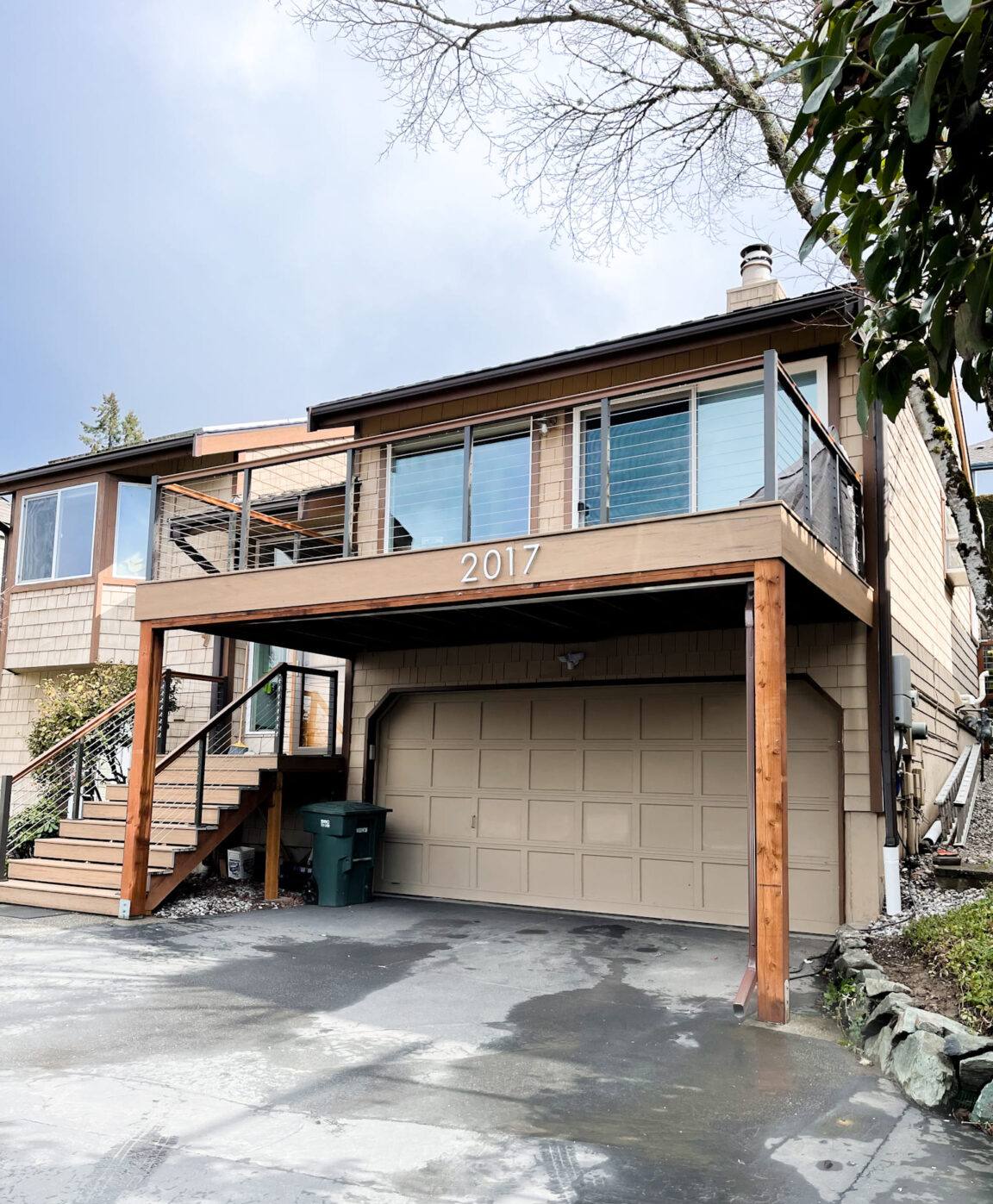
Why Composite Makes Sense for This Climate
Wood decking isn't a bad product, but it asks a lot of the homeowner: annual sealing or staining, sanding down splinters, and constant vigilance against rot in a climate that stays damp for much of the year. Skip a year of maintenance on a wood deck near the bay and you'll see it in the wood's condition.
Composite decking, especially capped composite, handles Bellingham's rain-and-shade cycle better because it doesn't absorb water the way wood does, and it doesn't need staining or sealing to keep its surface intact. That's a real advantage for a neighborhood where decks spend a lot of time wet.
What Composite Won't Fix on Its Own
Composite boards are only as good as what's underneath them. A poorly flashed ledger board, undersized joists, or a substructure with no drainage path will cause problems no matter what decking material sits on top. We've seen composite decks fail prematurely not because the boards were bad, but because the framing and moisture management underneath were an afterthought. That's the part of the job that actually determines how long a deck lasts here.
Comparing Decking Materials for Edgemoor Conditions
There's no single right answer for every project, but here's how the common options stack up against the specific conditions Edgemoor decks deal with:
| Material | Moisture Behavior | Maintenance | Best Fit For |
|---|---|---|---|
| Pressure-treated wood | Absorbs water, prone to cupping and splitting if not resealed regularly | Annual cleaning, sealing or staining | Budget-first projects, owners who don't mind upkeep |
| Uncapped composite | Better than wood, but surface can still absorb moisture and stain or mold over time | Periodic cleaning, more prone to mildew in shade | Sunnier lots away from heavy shade |
| Capped composite | Moisture-resistant outer shell resists staining, mildew, and moss adhesion | Occasional washing, no sealing or staining | Shaded, damp, or salt-exposed sites like most of Edgemoor |
| PVC decking | Fully moisture-resistant, doesn't absorb water at all | Lowest maintenance, occasional washing | Waterfront-adjacent or very shaded properties, higher budget |
For most Edgemoor properties we work on, capped composite is the practical middle ground: strong moisture resistance without the added cost of full PVC systems, and none of the annual upkeep that pressure-treated wood demands.
What a Correctly Built Composite Deck Looks Like Here
Framing and Moisture Management
Before any composite board goes down, the framing needs to be right for this climate: proper joist spacing for the board span, a ledger board that's flashed to shed water away from the house rather than trap it against the rim joist, and enough gap between boards and the substructure for airflow underneath. On shaded lots especially, that airflow is what keeps the underside of the deck from staying damp long after a storm has passed.
Fasteners and Hardware
Given the salt air off the bay, we don't cut corners on hardware. Stainless steel or coated, corrosion-rated fasteners and structural connectors cost more up front than standard zinc hardware, but they're the difference between hardware that's still solid in ten years and hardware that's rusting and staining the decking by year three.
Board Gapping and Drainage
Composite boards expand and contract with temperature and moisture more than most homeowners expect. Proper gapping isn't just for looks, it lets water drain through instead of pooling on the surface, which matters a great deal during the long stretches of steady Pacific Northwest rain.
Our Process for Edgemoor Composite Decking Projects
Every deck project starts with an honest look at what's actually there, not just a quote based on square footage.
- On-site evaluation of the existing deck or build area, including drainage, shade exposure, and proximity to the house's water management (gutters, downspouts, grading)
- Structural check of existing footings, posts, and ledger connection if we're rebuilding on an existing footprint
- Permit coordination where required, decks attached to the home or built above a certain height typically need sign-off from the City of Bellingham
- Framing and moisture management built for the site's specific sun and shade conditions
- Composite decking installation with corrosion-rated fasteners and proper board spacing
- Railing and stair installation to code, sized to the actual deck height and layout
- Final walkthrough covering how to care for the specific decking product installed
We don't treat every Edgemoor deck the same. A deck on an open, sunnier lot doesn't need the same ventilation and moss-prevention attention as one tucked under a tree canopy a few blocks away, and our process adjusts to that.
Maintaining a Composite Deck in a Salt Air, Moss-Prone Environment
Composite decking cuts maintenance significantly compared to wood, but "low maintenance" doesn't mean "no maintenance," especially this close to the bay.
- Rinse or sweep debris and organic buildup off the surface regularly, especially in fall when leaves and needles collect and trap moisture
- Clean visible moss or algae promptly with a soft brush and a cleaner made for composite decking, avoid high-pressure washing that can damage the cap surface
- Keep gutters and downspouts clear so runoff from the roof isn't sheeting directly onto the deck surface
- Check railing hardware and fasteners periodically for early signs of corrosion, especially on decks facing open water exposure
What Drives Cost on an Edgemoor Composite Deck
We don't publish flat pricing because every deck project is genuinely different, but these are the factors that move the number up or down:
| Factor | Effect on Project |
|---|---|
| Deck size and shape | Larger and more complex layouts (angles, multiple levels) increase material and labor |
| Height off grade | Taller decks need more substantial framing, railing, and often stairs, plus permitting |
| Site access | Tree cover, slope, or tight side-yard access common on wooded Edgemoor lots can slow equipment and material staging |
| Substructure condition | Rebuilding failed footings or a rotted ledger connection on an existing deck adds cost beyond the surface decking |
| Board tier and railing choice | Composite lines and railing materials (aluminum, cable, composite) vary in price |
The most reliable way to get an accurate number is a site visit. Square footage alone doesn't tell us enough about a shaded, sloped, or tree-lined lot to give an honest estimate.
Why a Crew That Already Works in Edgemoor Matters
A contractor who's worked decks throughout Edgemoor already knows which lots need extra drainage planning, which streets sit close enough to the water to warrant upgraded hardware, and how the City of Bellingham's permitting process applies to typical deck heights and attachments in the neighborhood. That familiarity shows up in fewer surprises mid-project and a deck that's actually built for the conditions it will sit in for the next fifteen-plus years, not a generic build dropped into a coastal, tree-shaded lot.
It also matters when something needs adjusting after the fact. A crew that knows the area and stands behind its work locally is easier to reach and more accountable than one that treated the job as a one-off.
Get a Straight Answer for Your Edgemoor Property
If you're weighing a new composite deck or replacing one that hasn't held up to Bellingham's rain and salt air, we're glad to take a look and give you an honest read on what your property needs. Use the form below to request a free, no-pressure estimate.