 Bellingham Roofing
 Decks in Cordata Take a Different Kind of Beating
Cordata sits in north Bellingham, close enough to the water and the marine weather pattern that rolls off Bellingham Bay to feel it year-round. That means decks here deal with a specific combination of stresses: salt-tinged air that accelerates corrosion on fasteners and hardware, long stretches of driving rain that finds every gap in a ledger board or a rail joint, and a moss season that can run from October well into April. None of that is unique to one street or subdivision — it's a Whatcom County reality — but it adds up differently on a deck than it does on a roof or siding, because a deck takes on water from above, below, and the sides all at once.
A deck built or repaired without that in mind tends to fail in predictable spots: where the deck meets the house, where posts meet footings, and anywhere water can sit instead of shed. We've built our repair process around those failure points specifically, because patching the boards people can see while ignoring the framing underneath just buys a year or two before the same problem reopens.
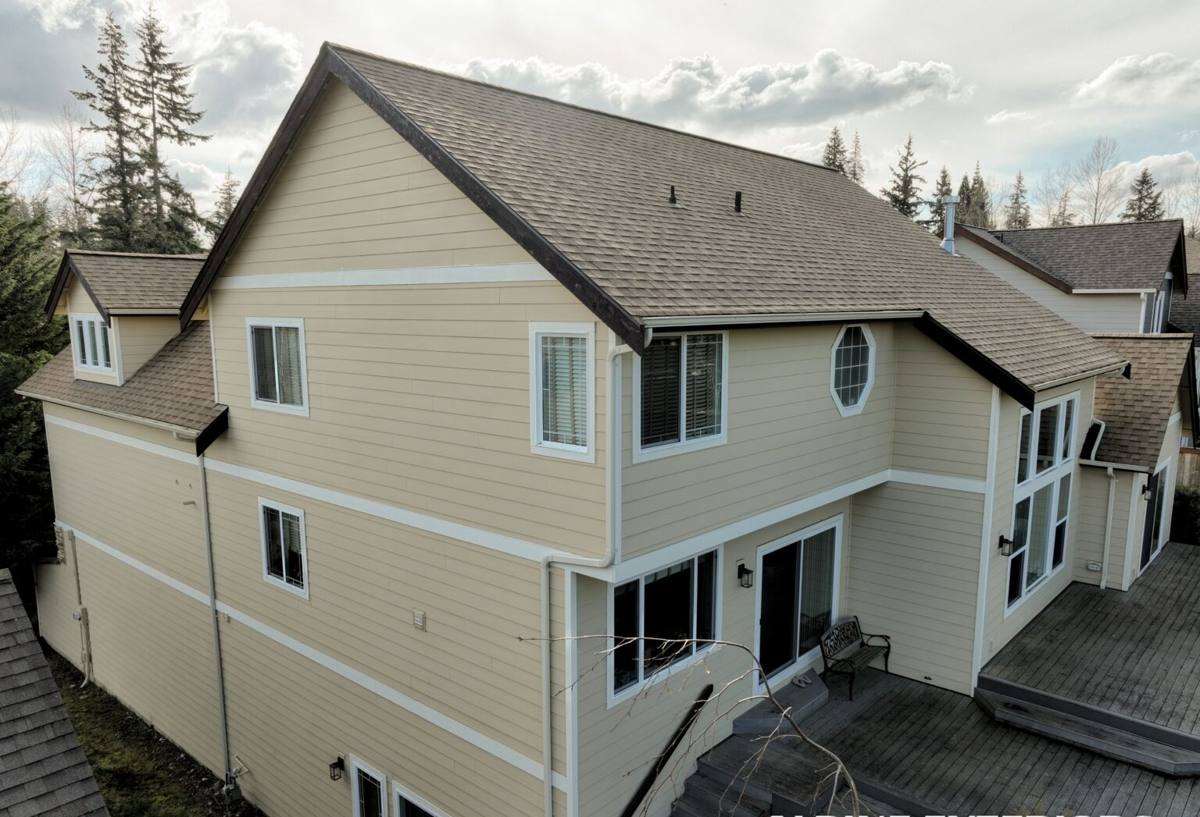
How to Tell If You Need Repair, Not Just Cleaning
Every deck in this climate gets dirty and green — that's normal and mostly cosmetic. The harder question is whether the structure underneath is still sound. Some signs point clearly to repair work rather than a wash and reseal:
- Boards that feel spongy or flex noticeably when you walk across them
- Railings or posts that wiggle or feel loose when pushed
- Dark staining or soft wood where the deck attaches to the house (the ledger board)
- Gaps that have opened up between deck boards and framing, or fasteners backing out
- Visible mold, black streaking, or persistent moss in the same spots every year, even after cleaning
- Stairs that feel uneven, bouncy, or have a stringer that's visibly cracked or split
Any one of these on its own might be minor. Several together, or anything involving the ledger board or the posts and footings, means it's worth having someone look at the structure, not just the surface.
Surface Damage vs. Structural Damage
Surface damage — graying wood, worn finish, minor splintering — is mostly a maintenance issue. Structural damage involves the framing members that actually hold the deck up: joists, beams, posts, footings, and the ledger connection to the house. The distinction matters because surface repair is straightforward and affordable, while structural repair is what protects people from an actual collapse or fall. We check both on every visit, because surface problems are often the visible symptom of a structural one happening underneath.
What a Correct Deck Repair Actually Involves
A repair that holds up through another Whatcom County winter has to address water management, not just replace what's broken. That means:
- Ledger board and flashing: The connection where the deck meets the house is the single most common source of hidden rot. Proper flashing directs water away from this joint instead of letting it wick into the house framing.
- Joist and beam condition: We check for soft spots, delamination, and rot at joist ends and beam connections, since these carry the actual load of the deck.
- Fastener and hardware condition: Salt-air exposure corrodes standard fasteners faster than people expect. Corroded joist hangers, bolts, and screws get replaced with hardware rated for exterior and coastal-adjacent use.
- Post and footing stability: Posts that have shifted, rotted at the base, or lost contact with a solid footing need to be reset or replaced — this isn't a cosmetic fix.
- Drainage and grading beneath the deck: Water pooling under a low deck accelerates rot from below, which is often the hardest damage to spot from above.
Skipping any of these to save time on a repair just relocates the problem a season or two down the road.
Deck Materials We See Around Cordata, and How Repair Differs by Type
Not every deck repair is the same job. The material your deck is built from changes what fails first, how it's repaired, and what to expect going forward.
| Material | Common Failure Point | Repair Approach |
|---|---|---|
| Pressure-treated lumber | Rot at ledger, joist ends, and fastener points; surface checking | Sister or replace affected framing; re-flash connections; refasten with corrosion-rated hardware |
| Cedar or other untreated wood | Graying, splitting, and softening from prolonged moisture exposure | Replace deteriorated boards; refinish exposed wood; improve drainage to reduce standing moisture |
| Composite decking | Board-end swelling, fastener pull-through, and surface delamination near board joints | Replace failed boards or sections; correct fastening pattern; address moisture trapped beneath the boards |
| Older or original-construction decks | Undersized or corroded original hardware; footings that have shifted over time | Full framing inspection; upgrade hardware to current standards; reset or repour footings as needed |
Our standard is to match the repair to what the material and the framing actually need — not to default to whatever's fastest. On some decks that means replacing a full section; on others it's targeted repair of the framing with the existing decking boards left in place.
Moss, Algae, and the Long Wet Stretch
Whatcom County's wet season isn't a short shoulder period — it's a long stretch of low sun angle, minimal drying time between rain events, and shade from surrounding trees that keeps moisture sitting on horizontal surfaces far longer than it would elsewhere. On a deck, that shows up as moss and algae growth on the boards themselves, but the more important effect is what's happening underneath: prolonged dampness at board joints and framing connections is what actually causes rot, not the moss itself.
Moss and algae are usually a visibility problem more than a structural one — but they're also a warning sign. A deck that stays damp long enough to grow moss every year is a deck that's staying damp long enough to rot, just on a slower timeline. Repair work should include improving airflow and shedding water faster, not just cleaning off the growth and leaving the same conditions in place.
Our Repair Process
- On-site inspection: We walk the full deck, check the ledger connection, get underneath where access allows, and test posts, railings, and framing by hand.
- Written scope and estimate: You get a clear breakdown of what needs repair, what's optional, and why — no vague line items.
- Repair work: Framing and structural fixes happen first, then decking, railing, and finish work.
- Hardware and fastener upgrade: Any corroded or undersized hardware gets replaced with material suited to this climate.
- Final check and cleanup: We walk the deck with you before we consider the job done, and the site is cleaned up when we leave.
What Repairs Typically Cost, and What Changes the Price
Every deck is different, so exact pricing depends on what we find once we're actually on it — but the factors that move the number are consistent:
| Factor | Why It Matters |
|---|---|
| Extent of framing damage | Surface board replacement is far less involved than repairing rotted joists, beams, or the ledger connection |
| Deck material | Composite and certain specialty boards can cost more to source and match than standard lumber |
| Access and height | Elevated decks or decks with limited underneath access take more labor to inspect and repair safely |
| Railing and code compliance | Railings that don't meet current height or spacing standards may need more than a spot repair |
| Footing and post condition | Resetting or repouring footings adds time and cost but is not optional if posts have shifted |
We'd rather give you an honest range after seeing the deck than a number over the phone that doesn't hold up once we start pulling boards. Broad repairs on an otherwise sound deck tend to run in the lower range; anything involving structural framing or footings runs higher.
After the Repair: Keeping It That Way
A repaired deck still needs some seasonal attention in this climate. A short list that actually makes a difference:
- Sweep leaves and debris off the deck surface before fall rains settle in — trapped debris holds moisture against the boards
- Rinse or gently clean moss and algae buildup before it has a chance to sit through the wet season
- Check railings and stair connections for looseness once a year
- Keep gutters and downspouts near the deck clear so runoff isn't draining directly onto or under it
- Reseal or refinish wood decking on the schedule appropriate to the product — untreated wood needs it more often than composite
- Watch the ledger board area for staining or softness, since it's the first place hidden problems tend to show
Why a Crew That Already Works Cordata Matters
Deck repair done right depends on understanding how a specific climate treats specific materials over time — and that's knowledge you build by working on decks in this area repeatedly, not by reading a general checklist. A crew that already works in and around Cordata and greater Bellingham knows what a deck built to handle a drier climate looks like after a few Whatcom County winters, and where to check first. That local familiarity shows up in faster, more accurate inspections and repairs that account for what actually happens here — not generic assumptions imported from a different region's weather.
If your deck is showing any of the signs above, or you just want an honest read on its condition before it becomes a bigger problem, we're glad to take a look. Reach out for a free, no-pressure estimate using the form below.