 Bellingham Roofing
 Why Cordata Roofs Take a Different Kind of Beating
Cordata sits in north Bellingham, close enough to Bellingham Bay and the Strait of Georgia that the same weather system can hit it three different ways in a single storm: salt-laden wind off the water, hours of driving rain, and — once the wind dies down — a slow soak that seeps into anything the wind already loosened. Whatcom County doesn't usually get the kind of catastrophic wind events that make national news, but it gets something arguably harder on roofs: long stretches of wet, mild weather punctuated by sharp windstorms, several times a year, every year. That combination is what actually wears a roof down.
Add in Cordata's mix of mature trees and residential lots with real tree cover, and you get a longer moss season than most of the country ever deals with. Moss doesn't blow a roof off in one night, but it holds moisture against shingles for months at a time, and it's often what turns a minor storm hit into a real leak. When we get called out for storm damage in this neighborhood, moss and trapped moisture are almost always part of the story, not just the wind.
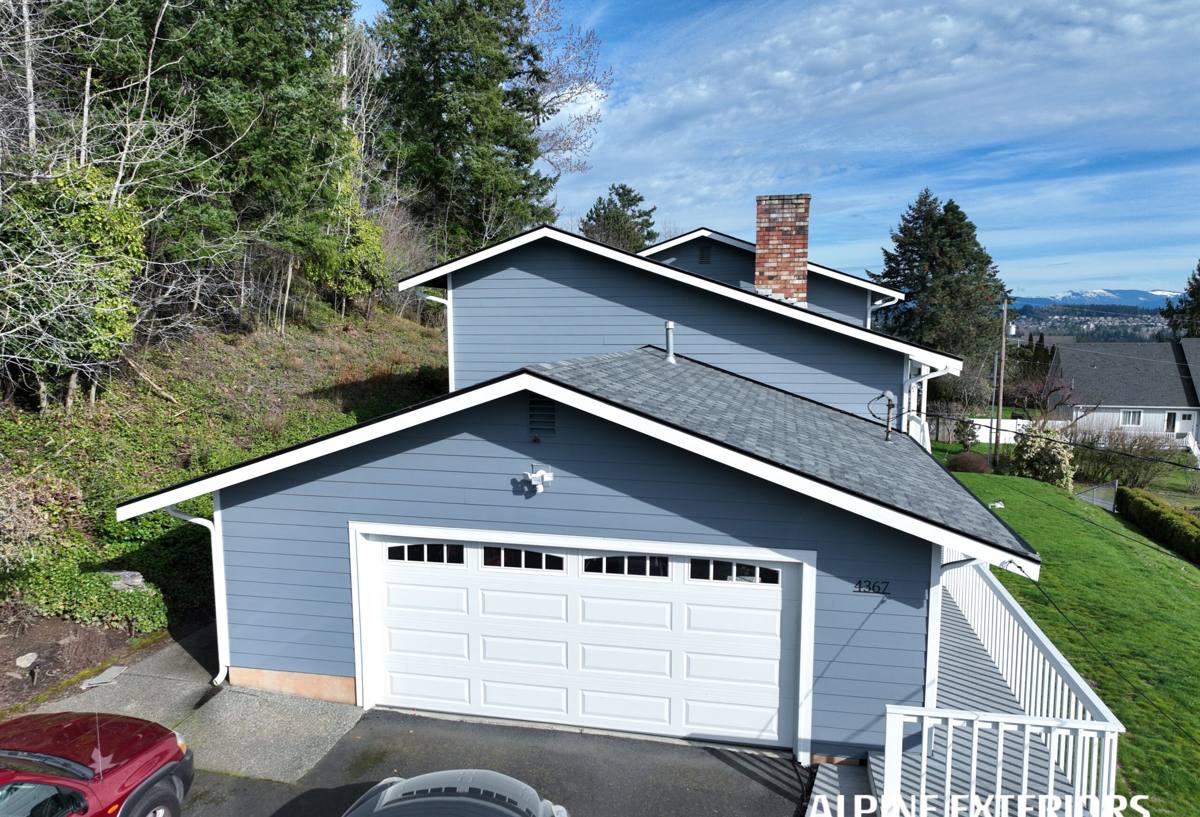
What Counts as Storm Damage (and What Doesn't)
Homeowners often assume storm damage means missing shingles scattered across the yard. Sometimes it's that obvious. More often it's subtle — and the subtle damage is what causes the most expensive problems down the line if it's not caught.
Wind Damage
Wind rarely rips a whole roof apart around here. What it does is lift the edge of a shingle just enough to break the seal, crease a shingle without tearing it off, or work a fastener loose. The shingle looks fine from the ground. The seal underneath is not fine, and every rain after that pushes a little more water underneath it.
Wind-Driven Rain and Water Intrusion
Bellingham storms are rarely just rain — they're rain pushed sideways. That matters because it forces water into places a straight-down rain never reaches: under flashing edges, up under ridge caps, into gaps around vent boots and chimneys. A roof that's handled years of ordinary rain fine can still leak the first time it takes wind-driven rain from an unusual direction.
Moss, Debris, and Limb Impact
Falling limbs and wind-blown debris can crack or puncture shingles outright. But the more common Whatcom County pattern is moss and needle buildup that dams water during a storm, forcing it sideways and under the shingle edge instead of down and off the roof the way it's designed to.
What a Correct Storm Damage Repair Actually Involves
Inspection First, Repair Second
A storm repair done right starts with a full roof inspection, not just a patch over the spot the homeowner noticed from inside. Wind and water damage is rarely limited to one visible location — we check every slope, all flashing points, valleys, vents, and the attic or roof deck from the inside where we can access it, because that's often where a leak actually shows itself first.
Matching Materials and Techniques
Repairs need to match the existing roof's material, exposure, and fastening pattern — not just get something waterproof over the hole. A patch that doesn't match the surrounding shingle course, or that's face-nailed instead of properly integrated with the flashing and underlayment, tends to fail again in the next storm, sometimes worse than the original damage. We repair storm damage the same way we'd want it done on our own house: matched materials, correct fastening, and flashing detail that actually sheds water instead of just covering the gap.
Insurance Claims and Storm Repair — What Homeowners Should Know
Many storm repairs in this area are covered, at least in part, by homeowners insurance — but coverage depends on the policy, the cause of damage, and how promptly it's documented. A few things make the process smoother regardless of who your carrier is:
- Photograph visible damage from the ground as soon as it's safe to do so, before any cleanup
- Get a written inspection report that separates storm-caused damage from pre-existing wear
- Avoid full replacement of undamaged sections just because an adjuster suggests it's easier — repair what's actually damaged
- Keep any tarping or emergency mitigation documented and dated, since insurers often require proof that further damage was prevented
We're not an insurance company and we don't promise claim outcomes. What we can do is give you an honest, itemized inspection report you can hand to your adjuster, and repair exactly what the storm damaged — no more, no less.
Our Process for Storm Repairs in Cordata
- Inspection. We walk the roof (or use a lift/camera where pitch or access makes that unsafe) and document every point of damage with notes and photos.
- Written scope and estimate. You get a clear breakdown of what's damaged, what needs repair versus what's simply worn, and a real cost range — not a vague verbal number.
- Temporary protection if needed. If there's active leaking, we tarp or seal vulnerable areas the same visit so the damage doesn't spread while repairs are scheduled.
- Repair. Matched materials, proper flashing and underlayment work, and cleanup of debris, old fasteners, and displaced material.
- Final check. We confirm the repair holds under close inspection before we call the job done — not after the next storm tells us.
Repair vs. Replacement — What Actually Drives the Decision
Not every storm-damaged roof needs full replacement, and not every roof that looks rough after a storm is actually a repair candidate. The honest answer depends on a few factors:
| Factor | Favors Repair | Favors Replacement |
|---|---|---|
| Extent of damage | Isolated to one slope or a handful of shingles | Spread across multiple slopes or ridge lines |
| Roof age | Under 12-15 years, materials still sound | Nearing or past expected material lifespan |
| Underlying deck condition | Deck is solid, dry, no rot | Soft spots, rot, or long-term moisture damage found |
| Moss and organic buildup | Light, surface-level, treatable | Heavy, longstanding, has already lifted shingle edges broadly |
| Matching materials | Shingle line still available or close match exists | Discontinued product, visible patchwork unavoidable |
We'll tell you straight which category your roof falls into. A roof that only needs repair doesn't need to be sold as a replacement, and we'd rather earn a smaller job done right than push a bigger one that isn't necessary.
Why Hiring a Crew That Already Works Cordata Matters
Roofing in Cordata isn't the same job as roofing in a drier, more open part of the state. A crew that mostly works inland or in low-moisture climates doesn't have the same instinct for where wind-driven rain from the water tends to find its way in, or how aggressively moss needs to be managed on shaded, tree-covered lots. Local experience shows up in small decisions — how tight the flashing gets sealed at a valley, whether ridge caps get extra attention against the prevailing wind direction, how a roof is treated to slow moss regrowth instead of just scraping it off once. Those decisions are the difference between a repair that holds for years and one that reopens with the next storm season.
A Quick Storm Damage Checklist for Cordata Homeowners
- Check gutters and downspouts for granules, moss clumps, or shingle fragments after a storm
- Look for creased, lifted, or missing shingles from the ground with binoculars — don't climb up yourself
- Watch ceilings and attic spaces for new water stains in the days following a storm, not just immediately after
- Note any new sagging, especially near valleys or where two roof planes meet
- Get damage documented and inspected before the next storm compounds it — Whatcom County's wet season doesn't leave much of a gap between events
Slowing Down the Next Storm's Damage
Storm damage repair fixes what already happened. Reducing how much the next storm can do usually comes down to the basics: keeping moss under control so it can't dam water at the edges, keeping gutters and valleys clear so wind-driven rain has somewhere to go, and catching lifted or loose shingles during routine maintenance instead of after a leak shows up inside the house. None of that is glamorous work, but in a climate like ours, it's what actually keeps a roof performing over the long haul.
If your Cordata home has taken storm damage, or you just want a straight answer on what a recent windstorm did to your roof, we're happy to take a look. The estimate is free, there's no pressure to book anything on the spot, and you'll get a clear, written picture of what's actually going on up there — just fill out the form below.