 Bellingham Roofing
 Decks in Birchwood Have to Work Harder Than Decks Inland
Birchwood sits close enough to Bellingham Bay and the Salish Sea that homes here deal with a different set of conditions than decks built twenty miles inland in Whatcom County. Salt-laden air moves through the neighborhood off the water, driving rain comes in sideways during fall and winter storms, and a long, damp moss season settles in on anything horizontal from roughly October through May. A deck that would hold up fine in a drier climate can start showing problems within a few years out here if it wasn't built with that reality in mind.
We've built and repaired decks across Bellingham long enough to know which shortcuts cause trouble in this specific environment and which details actually matter. This page covers what a custom deck for a Birchwood home needs to get right, from the ground up.
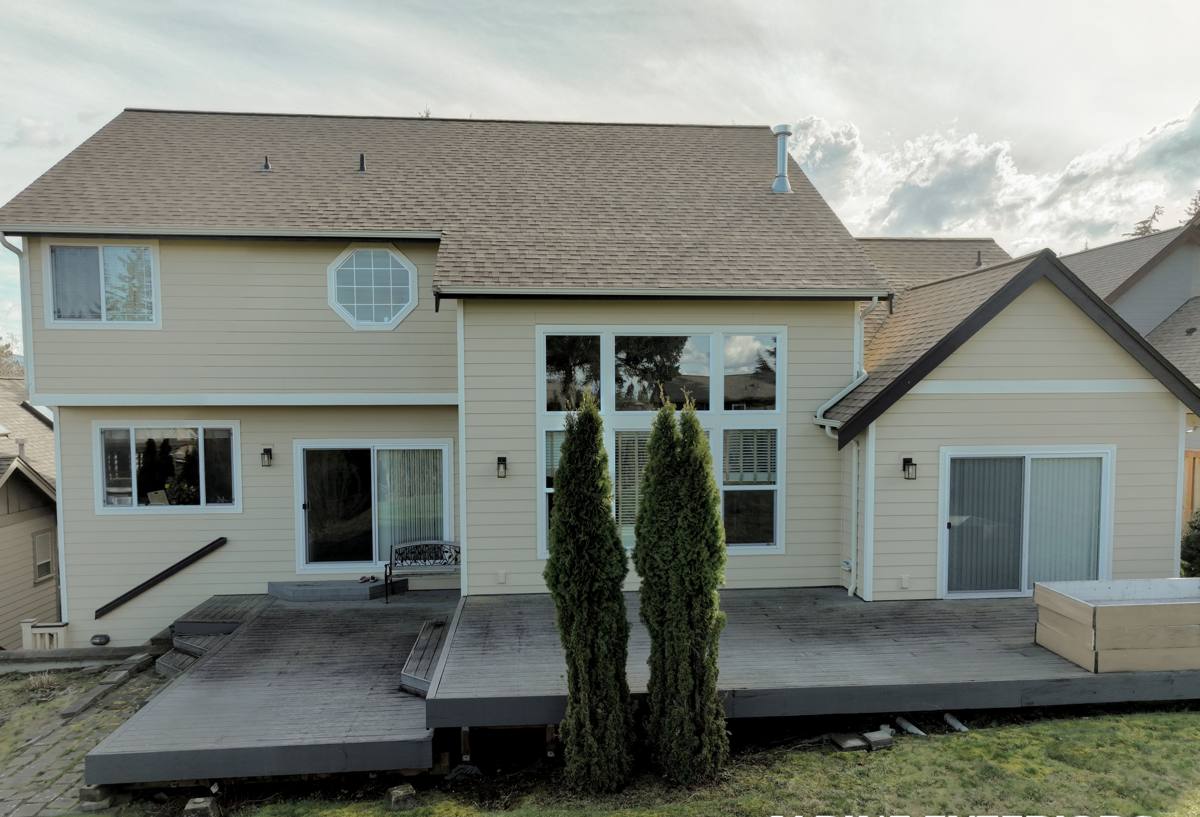
What Bellingham's Climate Actually Does to a Deck
It helps to understand the specific ways this climate attacks a deck, because it changes almost every material and fastening decision.
Salt Air and Corrosion
Homes closer to the water deal with airborne salt that accelerates corrosion on any exposed metal — fasteners, brackets, railing hardware, and structural connectors. Standard hardware that would last decades in a dry inland climate can start rusting and staining decking within a few seasons near the bay.
Driving Rain and Moisture Intrusion
Bellingham doesn't just get rain, it gets wind-driven rain that pushes water sideways and upward under railings, around ledger boards, and into any gap that isn't properly flashed or sealed. Over time, that moisture finds the weak points in a deck's construction, not the surface.
The Long Moss and Algae Season
Whatcom County's mild, wet winters give moss and algae months to establish themselves on any deck surface that doesn't drain and dry quickly. Moss holds moisture against the decking material, which speeds up rot in wood and can leave composite decking looking dingy and slick if it isn't cleaned. Shaded, north-facing, or tree-covered sections of a deck — common in Birchwood's more wooded lots — are especially prone to this.
Freeze-Thaw Cycling
Whatcom County doesn't get deep, sustained freezes most winters, but it does get repeated freeze-thaw swings. Water that gets into cracks, joints, or unsealed end-cuts can freeze, expand, and widen those openings over several winters, which is how small maintenance issues turn into structural ones.
Choosing the Right Decking Material for This Climate
There's no single "best" decking material for every home — it depends on budget, how much upkeep you want to do, and how exposed the deck is to sun, shade, and salt air. Here's how the common options actually perform in Birchwood's conditions.
| Material | How It Handles Salt Air & Rain | Moss/Algae Resistance | Maintenance |
|---|---|---|---|
| Cedar | Naturally rot-resistant when sealed; needs re-sealing to keep that resistance | Moderate — needs regular cleaning in shaded areas | Annual cleaning, re-stain or seal every 2–3 years |
| Pressure-Treated Fir/Pine | Good structural durability if fasteners are corrosion-rated; surface checks over time | Low — prone to moss buildup without upkeep | Annual cleaning, staining every 2–3 years |
| Composite Decking | Excellent — doesn't absorb moisture or corrode | Higher, but still needs periodic washing in shaded spots | Occasional washing, no staining or sealing |
| Tropical Hardwoods | Very good natural density and moisture resistance | Moderate to good | Periodic oiling to maintain color and grain |
For homes closer to the water or with heavily shaded yards — common throughout Birchwood — we lean toward materials and finishes that resist moss and don't rely on the homeowner keeping up with a strict maintenance schedule. For sunnier, more open lots, a well-sealed wood deck is often a perfectly reasonable choice at a lower upfront cost.
The Structural Details That Determine Whether a Deck Lasts
Most deck failures we get called out to repair aren't decking failures — they're structural failures that started below the surface. This is where a correct build matters most, and where corners get cut most often.
Ledger Board Flashing
The ledger board — where the deck attaches to the house — is the single most common source of hidden rot on any deck in a wet climate. It needs proper flashing that directs water away from the house framing, not just caulk or a wood-to-wood connection. A poorly flashed ledger can rot for years behind the decking before it's visible.
Joist Protection
Joist tape or an equivalent moisture barrier on top of every joist keeps standing water from sitting against the wood under the decking boards, which is exactly the kind of slow, hidden damage that driving rain and a long wet season cause over time.
Footings Sized for Whatcom County Soil and Frost Depth
Footings need to be sized and set to the frost depth and load requirements that apply locally, on soil that's often damp clay or fill in this area. Undersized or shallow footings are a common source of deck settling and railing movement we see on older builds.
Drainage and Airflow Underneath
A deck that can't shed water and dry out underneath will hold moisture against the framing indefinitely during Whatcom County's wet months. Proper board spacing, grading beneath the deck, and — on taller decks — under-deck drainage systems all matter more here than in drier parts of the state.
Our Custom Deck Process
Every deck we build starts with a conversation about how the space will actually be used, then works backward into materials and structure. Here's the general sequence.
- On-site assessment — we look at sun exposure, drainage, existing grade, and how close the deck will sit to trees or shaded areas that will affect moss buildup.
- Design and material selection — we walk through decking, railing, and finish options based on your budget, maintenance preferences, and how the deck ties into the house.
- Permitting — we handle the permit application and inspections required for the project so you're not managing that process yourself.
- Structural build — footings, framing, ledger flashing, and joist protection go in first, and this is inspected before decking goes down.
- Decking, railing, and finish work — surface material, railing systems, stairs, and any lighting or built-ins are installed and detailed.
- Final walkthrough — we go over the finished deck with you, including what maintenance it needs and on what schedule.
Railings, Fasteners, and Hardware That Hold Up Near the Water
Hardware is where a lot of decks quietly fail first, especially in a coastal-influenced climate. We use corrosion-rated fasteners and structural connectors rated for the exposure level a given deck will see — homes closer to Bellingham Bay warrant a higher standard than a fully inland, sheltered lot. Hidden fastener systems, where the screws don't penetrate the top face of the decking, also help reduce the entry points where water and salt air can start corrosion or staining at the surface.
Railings deserve the same attention. Metal railing components and cable railing systems need corrosion-resistant hardware and finishes, and any wood railing components need the same sealing and maintenance attention as the decking itself.
Permits and Local Code Considerations
Most custom deck projects in Bellingham require a building permit, particularly for decks attached to the house, decks above a certain height, or those with stairs and railings. Requirements can vary depending on the specifics of the project and the property, and inspections are typically required at the framing stage before decking is installed. We manage this process as part of the build so the structural work is verified and documented, not just visually finished.
Keeping a Birchwood Deck in Good Shape Year-Round
A well-built deck in this climate still needs some seasonal attention. This isn't a demanding list, but skipping it is how small issues become expensive ones.
- Sweep leaves and debris off the deck surface regularly through fall, especially in shaded or tree-covered areas.
- Wash the deck surface at least once or twice a year to remove moss, algae, and organic buildup before it takes hold.
- Check and clear gaps between decking boards so water can drain through rather than pooling.
- Inspect railings and stair connections annually for movement or loosening hardware.
- Re-seal or re-stain wood decking on the schedule appropriate to the finish used — don't wait until it's visibly failing.
- Look underneath the deck occasionally for standing water, soft framing, or signs of pests that thrive in damp, shaded conditions.
Why a Crew That Already Works in Birchwood Makes a Difference
A deck builder who works regularly in this neighborhood already knows how the local terrain, shade patterns, and proximity to the water affect a build before the first shovel goes in the ground. That means fewer surprises during design, material choices that are already matched to the exposure level of your specific lot, and a build that accounts for Whatcom County's climate from the footings up rather than treating it as an afterthought. It also means someone local you can call if a question comes up after the build is done — not a crew that packed up and moved to the next region.
If you're planning a new deck or replacing one that's showing its age, we're happy to come take a look and talk through what makes sense for your home and your budget. There's no pressure and no obligation — just a straightforward assessment and a free estimate, using the form below.