 Bellingham Roofing
 Deck Building Built for South Hill's Hillside Conditions
South Hill sits above downtown Bellingham with a mix of older homes, sloped lots, and views out toward Bellingham Bay — and that combination creates a specific set of demands for any deck built up here. Between the salt-tinged air rolling in off the water, the driving rain that comes sideways in a winter storm, and a moss season that can stretch from fall through spring, a deck in this neighborhood works harder than one built inland. We build decks in South Hill with those conditions in mind from the first framing decision to the last screw, not as an afterthought.
This page covers what a deck actually needs to hold up here, how we approach the build, and what to expect if you're planning a new deck or replacing one that's showing its age.
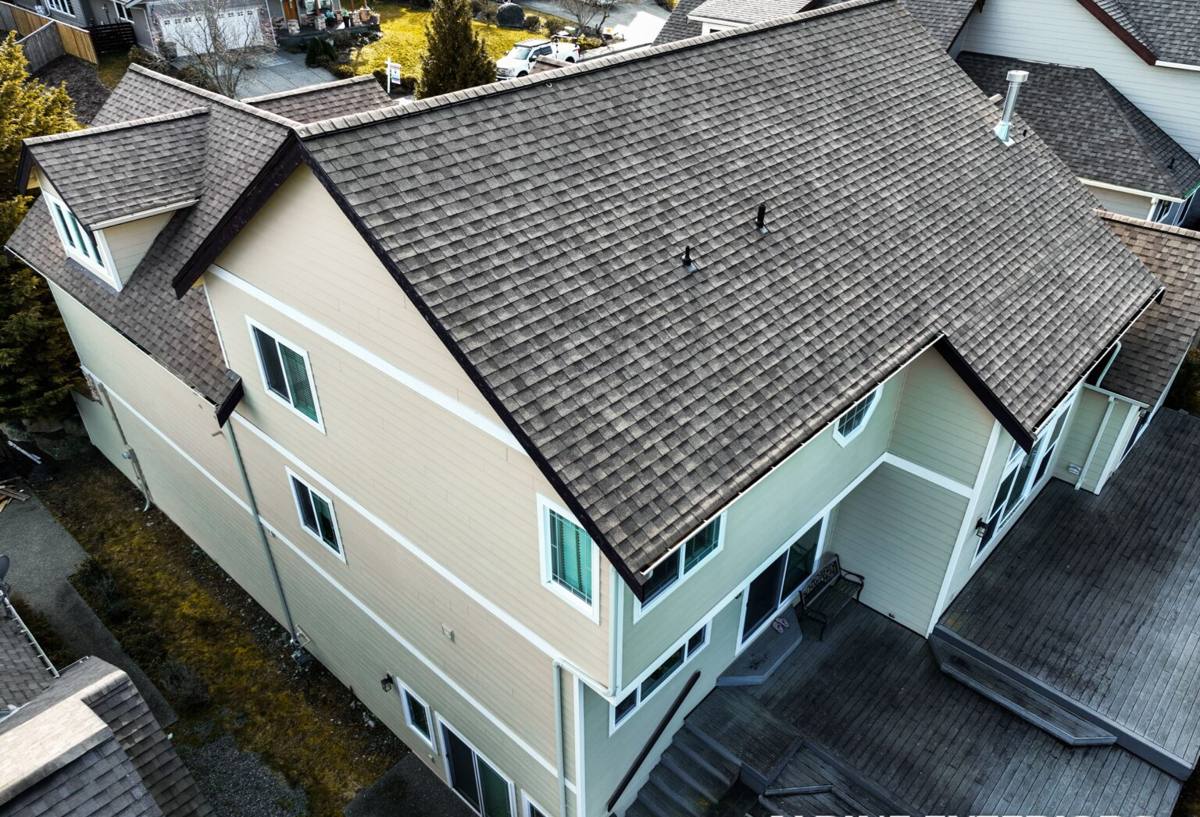
What Whatcom County's Climate Does to a Deck Over Time
A deck built the same way you'd build one in a dry inland climate tends to show problems early in Bellingham. The issues we see most often on South Hill decks are climate-driven, not just age-driven.
Salt Air and Corrosion
Homes with any exposure toward the bay pick up trace salt in the air, and that air finds every unprotected fastener, hinge, and piece of hardware on a deck. Standard fasteners can start showing rust streaks and pitting well before the wood or decking itself is due for replacement. This is one of the most overlooked failure points on older decks — the boards look fine, but the fasteners holding them down don't.
Driving Rain and Water Intrusion
Winter storms here don't just drop rain straight down — wind pushes it sideways and up under boards, around ledger connections, and into any gap in flashing. A deck that isn't detailed for wind-driven rain will eventually let water into the ledger board connection at the house, which is where you get the most expensive kind of deck failure: rot that travels back into the home's framing.
Moss and Shade
South Hill's tree cover and hillside shading mean many decks stay damp longer after a storm than a deck out in full sun would. That extended dampness is exactly what moss and algae need to take hold, and once moss establishes on a walking surface it's not just cosmetic — it holds moisture against the board and makes the surface slick and unsafe, especially on stairs.
What a Correctly Built Deck Needs Here
A deck that's going to hold up on South Hill needs to get several things right at once — material selection, structural framing, fastener choice, and water management at the house connection. Skimping on any one of these shows up as a problem within a few wet seasons, not decades.
- Ledger board flashing that actually sheds water away from the house rim joist, not just a bead of caulk
- Stainless steel or coated corrosion-resistant fasteners and hardware, especially anywhere with bay exposure
- Proper joist spacing and blocking sized for the decking material chosen, not a generic spacing used for every job
- Footings set below the frost line and sized for the slope and soil conditions of the specific lot
- Airflow underneath the deck so boards and framing can dry out between storms instead of staying wet
- A walking surface with enough texture or drainage gap to resist moss buildup and stay safer underfoot
Choosing the Right Decking Material for South Hill
There's no single "best" decking material — the right choice depends on how much maintenance you're willing to do, your budget, and how exposed the deck is to sun, shade, and moisture. We walk every South Hill homeowner through the honest trade-offs rather than pushing one product.
| Material | Maintenance | Moss/Moisture Behavior | Typical Investment |
|---|---|---|---|
| Pressure-treated wood | Annual cleaning and periodic staining/sealing | Absorbs moisture; needs regular sealing to resist rot and moss in shaded spots | Lower upfront cost |
| Cedar | Regular staining/sealing to maintain color and protect against moisture | Naturally rot-resistant but still needs upkeep in constant shade or dampness | Mid-range |
| Capped composite | Occasional washing; no staining or sealing | Doesn't absorb water like wood, but still needs cleaning where moss spores can collect on the surface | Mid to upper range |
| PVC decking | Lowest maintenance; occasional washing | Fully moisture-resistant surface material; least hospitable to moss growth | Upper range |
We don't install every product on the market, and that's on purpose. When we steer a homeowner away from a particular decking line, it's usually because of how it performs in sustained PNW moisture, how forgiving it is during installation, or how its warranty is structured — not because of any one bad experience. We'd rather explain the trade-off honestly than sell something we don't think will hold up on your lot.
Framing and Footings on South Hill's Sloped Lots
A meaningful number of South Hill properties sit on a grade, which changes how a deck gets engineered compared to a flat backyard lot. Footing depth and placement have to account for the slope, soil conditions can vary noticeably from one yard to the next on a hillside, and taller decks built out from a sloped foundation need bracing and post sizing that a flat-lot deck simply doesn't. We assess the actual grade and soil on your property rather than applying a one-size-fits-all framing plan, because guessing on a sloped lot is how you end up with a deck that flexes, bounces, or settles unevenly within a few years.
Our Deck Building Process
We keep the process straightforward so you know what's happening and when.
1. On-Site Assessment
We walk the property, look at grade, drainage, sun/shade exposure, and how the deck will tie into the house, and talk through what you actually want to use the space for.
2. Design and Material Selection
We go over layout, railing style, and decking material options with honest cost and maintenance trade-offs so you're choosing based on real information, not a showroom sample.
3. Permitting
Most new decks and many replacement decks require a permit through the City of Bellingham or Whatcom County, depending on where the property sits. We handle that process as part of the job.
4. Build
Footings, framing, ledger flashing, decking, and railings are installed in sequence, with inspections at the required stages.
5. Final Walkthrough
We walk the finished deck with you, point out anything you should know about care and maintenance for the specific material you chose, and make sure you're satisfied before we call it done.
Permits and Code in Bellingham and Whatcom County
Deck permitting depends on size, height, and location, and requirements can differ slightly between City of Bellingham jurisdiction and unincorporated Whatcom County parcels nearby. Guardrail height, stair geometry, footing depth, and ledger attachment are all inspected points, and getting them wrong isn't just a compliance issue — those same details are what keep a deck safe and structurally sound long-term. We pull the right permits and build to the code that applies to your specific address so you're not left with an unpermitted structure to deal with later, whether that's at resale or with insurance.
Keeping a South Hill Deck in Good Shape
Whatever material you choose, a little regular upkeep goes a long way in this climate. This is the routine we recommend to South Hill homeowners:
- Sweep debris and standing leaves off the deck regularly, especially in fall — trapped organic matter under leaves is what feeds moss and holds moisture against the boards
- Wash the surface at least once or twice a year to remove algae and moss buildup before it takes hold, more often in heavily shaded areas
- Check fasteners and hardware annually for rust or corrosion, particularly on decks with bay-facing exposure
- Reseal or restain wood decking on the schedule appropriate for the product — skipping a season is often when rot gets its start
- Keep gutters and downspouts near the deck clear so roof runoff isn't dumping extra water onto or under the structure
- Confirm underneath airflow isn't blocked by stored items or overgrown landscaping, so the framing can dry between storms
Why Local Deck Building Experience Matters in South Hill
A crew that already works this neighborhood knows the difference between a lot with straightforward drainage and one where water collects against a foundation wall, understands how shade patterns from mature trees affect where moss shows up first, and has already dealt with the permitting process for both city and county jurisdictions nearby. That local familiarity means fewer surprises during the build and a deck that's designed for the property it's actually sitting on, not a generic template. We've built and repaired decks throughout Bellingham and Whatcom County long enough to know what holds up here and what doesn't.
If you're planning a new deck or need an honest look at whether an existing one is still sound, we're happy to come take a look. Reach out for a free, no-pressure estimate using the form below.