 Bellingham Roofing
 Decks in Barkley Take a Different Kind of Beating
Barkley sits close enough to Bellingham Bay that salt-tinged air reaches almost every deck in the neighborhood, and it sits squarely in a stretch of Whatcom County that sees long stretches of driving rain from fall through spring. Add in the tree cover that makes Barkley's streets pleasant to walk and you get shade, damp air, and organic debris landing on deck boards all winter long. That combination is exactly what accelerates wood decay, corrodes fasteners, and feeds the moss and algae that make older decks slick and dangerous.
None of that means a deck in Barkley is doomed to fail early. It means a deck here needs to be built and repaired with those conditions in mind, not treated the way you'd treat a deck in a dry climate. Most of the repair calls we run in this part of Bellingham trace back to water that had nowhere to go, moss that held moisture against wood for months at a time, or fasteners that were never rated for a marine-influenced, high-rainfall environment.
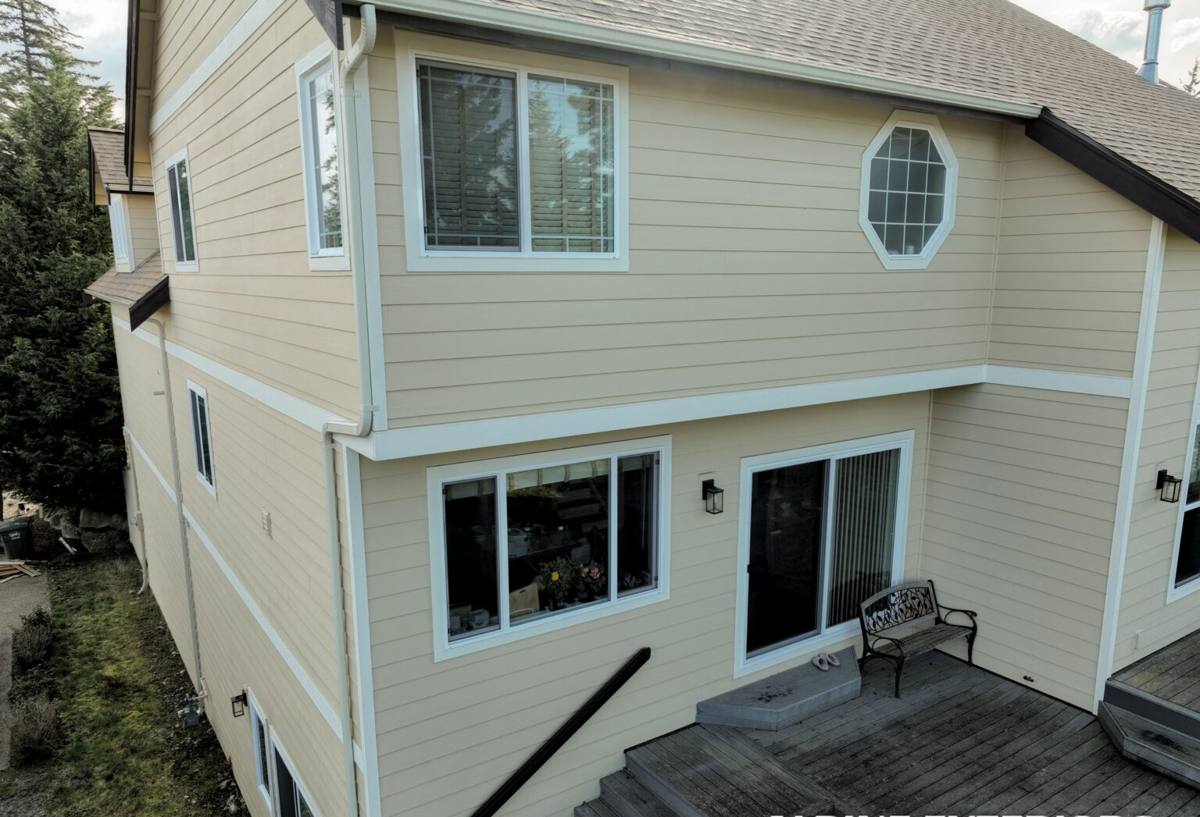
Signs a Barkley Deck Needs Attention
Deck problems in this climate rarely announce themselves with a dramatic failure. They show up as small, easy-to-ignore details that get worse every wet season they go unaddressed.
- Soft or spongy spots underfoot, especially near the house or along board edges
- Green or black staining that keeps coming back within weeks of cleaning
- Rust streaks bleeding out from screw heads or nail holes
- A railing that flexes or wiggles more than it used to
- Gaps opening up where the deck meets the house (the ledger board area)
- Standing water or slow-draining puddles after a normal Bellingham rain
- Stair stringers that feel less solid than the rest of the structure
Any one of these on its own might be minor. Two or three together, especially on a deck more than eight to ten years old, usually means it's time for a proper inspection before the next wet season does more damage underneath the surface than you can see from the top.
What's Actually Failing Underneath
Moss and Organic Buildup
Barkley's mix of mature trees and marine air creates a long moss season, often stretching from October well into April. Moss doesn't just look bad — it holds water against the wood surface far longer than open air would, which is what turns a cosmetic problem into a structural one. Left alone, moss-covered boards stay wet for days after a storm passes, and that constant moisture is what breaks down wood fiber and finish coatings over time.
Ledger Board and Flashing Issues
The ledger board — where the deck attaches to the house — is the single most common failure point we find on repair calls in this area. If flashing was installed incorrectly, missing, or has simply worn out, rain gets channeled directly into the framing where it can't dry out between storms. This is a slow, hidden failure that's often invisible until boards start to feel soft or a railing post starts to lean.
Fastener Corrosion
Salt-influenced air speeds up corrosion on any fastener that isn't rated for it. We regularly find older decks in Barkley built with standard galvanized nails or screws that are now rusting from the inside out, staining the wood and losing their grip strength. This is an easy problem to prevent during a repair but an expensive one to fix once it's already happened throughout a deck.
Rail and Stair Movement
Guardrails and stairs take direct weather exposure and repeated stress from use, so their connections loosen faster than the deck's main structure. Movement here is also a safety issue, not just a maintenance one, since a failing guardrail post can give way under real load even if the rest of the deck looks fine.
Repair, Restore, or Rebuild: How We Decide
Not every deck problem in Barkley calls for the same level of work. Part of an honest inspection is telling you when a targeted repair is enough and when it isn't.
| What We Find | What It Usually Means | Typical Approach |
|---|---|---|
| Isolated soft boards, surface staining | Localized moisture exposure, finish has failed | Board replacement, clean and refinish |
| Rust-streaked or backed-out fasteners | Wrong fastener type for this climate | Re-fasten with corrosion-resistant hardware |
| Soft framing near the house wall | Ledger board or flashing failure | Open up, repair flashing, replace damaged framing |
| Loose rail posts, wobble at multiple points | Connection hardware has failed structurally | Re-anchor or rebuild railing sections |
| Widespread rot across joists and beams | Structural failure beyond spot repair | Partial or full deck rebuild |
The goal is never to sell a full rebuild when a repair will genuinely hold up. It's also not honest to patch a deck whose framing has already lost structural integrity. We tell you which category your deck falls into and why, in plain terms, before any work starts.
How Our Deck Repair Process Works
- Full inspection — we check decking, framing, ledger connection, flashing, fasteners, and railings, not just the visible surface
- Written scope — you get a clear explanation of what's failing, what's sound, and what each repair option involves
- Demo and access — we open up only what needs to be opened, protecting the surrounding structure and landscaping
- Structural repair first — framing, ledger, and flashing issues get fixed before any cosmetic work happens
- Hardware upgrade — corroded or undersized fasteners get replaced with hardware suited to this climate
- Surface work — board replacement, sanding, or refinishing as needed to match the rest of the deck
- Final walkthrough — we check every repaired connection and railing under real load before we call it done
We don't skip the framing to get to the visible boards faster. A deck that looks fresh on top but still has a compromised ledger board or rotted joist underneath isn't actually repaired — it's a problem that's been covered up.
Materials That Make Sense for This Climate
Whatcom County's rain and humidity make some material choices more forgiving than others when it comes to long-term maintenance.
Wood Decking
Cedar and pressure-treated lumber both work in Barkley, but only with consistent upkeep — cleaning, sealing, and prompt attention to any soft spots. Wood offers a natural look and is often the right call when matching or repairing an existing deck, but it asks more of the homeowner over time, especially given how long the moss season runs here.
Composite Decking
Composite boards resist moss growth, don't absorb water the way wood does, and cut down significantly on the seasonal cleaning and refinishing cycle. The tradeoff is a higher upfront material cost and the fact that composite can't simply be sanded or refinished if it's damaged — a damaged section gets replaced instead. For homeowners doing a partial rebuild or replacing a deck surface entirely, it's worth weighing against wood honestly rather than assuming one is automatically better.
Fasteners and Flashing
Regardless of decking material, this is where climate-specific choices matter most. We use fasteners and flashing rated for coastal, high-moisture conditions on every repair, because this is the detail that determines whether a repair lasts five years or fifteen.
Keeping a Barkley Deck in Good Shape Between Repairs
A repaired deck still needs seasonal attention in this climate. A few habits go a long way toward stretching the life of the work.
- Clear leaves and debris off the deck surface regularly through fall, not just once at the end of the season
- Treat moss and algae as soon as it appears rather than waiting for a heavy buildup
- Check railing posts for movement once or twice a year, especially after storms
- Keep gutters and downspouts near the deck clear so runoff isn't draining directly onto it
- Look at the ledger board area where the deck meets the house at least once a year
- Reseal or refinish wood decking on the schedule the product actually calls for, not "when it looks bad"
None of this requires special equipment or a big time commitment, but it's the difference between a deck that needs minor repairs every several years and one that develops the kind of hidden structural damage that's expensive to fix.
Why a Crew That Already Works Barkley Matters
Deck repair isn't a one-size-fits-all trade. A crew that regularly works Barkley and the surrounding Bellingham neighborhoods has already seen how this specific mix of tree cover, rainfall, and salt-influenced air affects decks here, and that shapes real decisions — which fasteners to spec, how much moss and rot to expect under the surface before opening anything up, and how to sequence repairs around our wet season instead of fighting it. That's different from applying general deck knowledge to a climate it wasn't built around.
It also means showing up with an honest read on your specific deck rather than a generic recommendation. Some Barkley decks need a small, targeted repair. Others have deeper structural issues that a surface-level fix would only mask. Knowing which is which, and explaining it clearly, is the job.
Get a Straight Answer on Your Deck
If your deck in Barkley has soft spots, a wobbly rail, stubborn moss, or you're just not sure whether it needs a repair or something bigger, we're glad to take a look. The estimate is free, there's no pressure, and you'll get a clear explanation of what we find and what your real options are — use the form below to get started.