 Bellingham Roofing
 Why Decks Wear Out Faster in a Neighborhood Like Silver Beach
Silver Beach sits close to the water, under a lot of mature tree cover, on lots that are often sloped or tucked into shade for a good part of the day. That combination is hard on a deck. Whatcom County's marine climate already means long stretches of damp air and driving winter rain moving in off the water. Add tree canopy on top of that and you get a deck that stays wet longer after every storm, picks up moss and algae faster than a deck out in the open, and dries out more slowly between rain events. Salt-tinged air off Bellingham Bay adds its own slow corrosion to exposed metal fasteners and hardware across the region, and Silver Beach's shaded, waterside lots get the worst of the moisture side of that equation.
None of this means a deck here is doomed. It means the deck has to be built and replaced with this specific exposure in mind — drainage, fastener choice, and material selection all matter more here than they would on a dry, sunny lot on the other side of town.
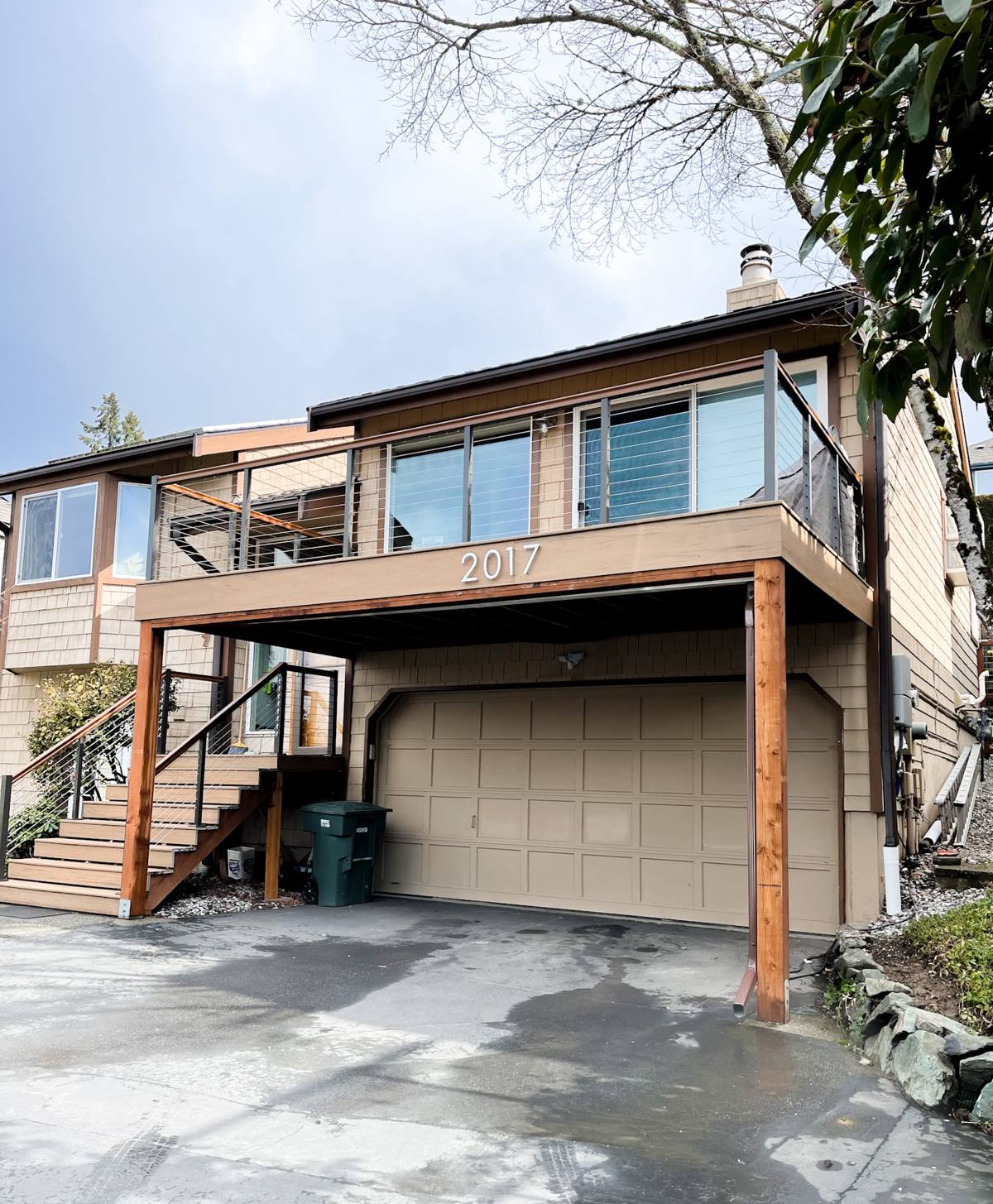
Signs a Deck Needs Replacing, Not Just Repairing
We get a lot of calls from homeowners who assume a board swap or a fresh coat of stain will solve the problem. Sometimes it will. Often, once we're actually under the deck, we find the real issue is structural — and no amount of surface repair fixes that.
Checklist: When Replacement Makes More Sense Than Repair
- Joists or beams feel spongy, soft, or crumble slightly when probed with a screwdriver
- The ledger board (where the deck attaches to the house) shows water staining, gaps, or soft wood
- Multiple support posts show rot at the base, especially where they meet concrete or soil
- Moss or algae keeps coming back within weeks of cleaning, even after treatment
- Fasteners are rusted, backing out, or leaving dark streaks down the decking
- The deck flexes, bounces, or sways more than it used to under normal foot traffic
- Railings feel loose or wiggle at the post connections
- The deck is more than 20-25 years old and hasn't had its structure inspected
If what you're seeing is limited to a handful of surface boards with no soft framing underneath, a repair may genuinely be enough. If the problem shows up in more than one or two of the items above, you're usually looking at a structural issue that a new deck surface won't solve.
What a Correct Deck Replacement Actually Involves
A deck replacement isn't just pulling up old boards and nailing down new ones. The parts of the deck nobody sees — the framing, the connections, the flashing — are what determine whether the new deck lasts 10 years or 30, especially in a wet, shaded setting like Silver Beach.
The Structural Basics We Don't Skip
The ledger board needs proper flashing where it meets the house, so water is directed away from the wall framing instead of wicking into it. Joist hangers and structural fasteners need to be rated for the moisture and any treated-lumber chemical exposure involved — mismatched hardware corrodes fast in a damp climate and is one of the most common hidden failure points we find on older decks. Footings need to sit below frost depth and bear on solid, undisturbed soil, which matters more on sloped or previously landscaped lots. Post bases should hold the post up off standing water and wet soil contact, not just sit directly on a slab or in the dirt.
Drainage and Airflow Underneath
On a shaded, low-lying lot, what happens under the deck matters almost as much as what happens on top of it. Poor grading or blocked airflow underneath traps moisture against the framing long after the surface has dried, which is exactly what accelerates rot in a place like this. Part of a proper replacement is making sure water has somewhere to go and air can actually move underneath, not just replacing boards over the same wet, stagnant space.
Choosing Decking Material for a Wet, Shaded Lot
There's no single "best" decking material — there's the material that fits your budget, your maintenance appetite, and how much sun versus shade your specific deck gets. For a lot like a typical Silver Beach property, moisture and moss resistance usually matter more than they would for a deck baking in full sun all summer.
| Material | Upfront Cost | Moss/Moisture Resistance | Maintenance Needed | Typical Lifespan Here |
|---|---|---|---|---|
| Pressure-Treated Wood | Lowest | Fair — needs sealing to perform | Annual cleaning, periodic staining/sealing | 10-15 years |
| Cedar | Moderate | Good naturally, fades without upkeep | Regular cleaning and refinishing to hold color and resist moss | 15-20 years |
| Composite (uncapped) | Moderate-High | Good, but can absorb moisture at cut edges | Periodic washing, minimal sealing | 20-25 years |
| Capped Composite / PVC | Highest | Best — sheds moisture and resists moss growth on the surface | Occasional washing only | 25-30+ years |
We don't push one material on every job. What we do is have an honest conversation about trade-offs: wood costs less up front but demands consistent upkeep to hold up in a damp, shaded spot — skip a season of sealing here and you'll see it. Capped composite and PVC cost more initially but shed moisture at the surface and hold up with far less attention, which matters if your deck sits mostly in shade and rarely gets a chance to dry out fully between rains. Installation sensitivity is real with composite products too — proper spacing, fastening, and substructure ventilation matter more with these materials than with solid wood, so the install quality affects the warranty as much as the product itself.
Our Deck Replacement Process
1. On-Site Assessment
We walk the existing deck, probe the framing, check the ledger connection, and look at how the lot drains and where the shade falls throughout the day. This tells us whether you're dealing with a repair-level issue or a full replacement, and it shapes our material recommendation.
2. Removal and Structural Inspection
Once the old decking and railings are off, we can actually see the framing, posts, and footings. This is often where we find problems that weren't visible from the surface — soft joists, undersized footings, or a ledger connection that was never properly flashed to begin with.
3. Framing, Footings, and Flashing
We rebuild or reinforce the structure to current code, with attention to flashing, hardware compatible with treated lumber, and footings suited to the site's soil and slope.
4. Decking, Railings, and Fasteners
Surface material goes down with fastening and spacing appropriate to the product, followed by railings and any stairs.
5. Final Walkthrough
We walk the finished deck with you, cover what maintenance the specific material needs, and answer questions before we consider the job done.
Permits and Local Requirements
Deck replacement work in Bellingham typically requires a permit once you're rebuilding structure — framing, footings, or anything beyond a like-for-like surface swap on an already-sound structure. Requirements can shift based on deck height, size, and attachment to the house, and Whatcom County and City of Bellingham jurisdictions handle this through their own permitting processes. We handle the permit application and inspection scheduling as part of the job, so you're not left figuring out code requirements on your own or guessing whether your project needs sign-off.
Maintaining a New Deck in This Climate
A properly built deck still needs some seasonal attention in a spot like Silver Beach — the goal of a good build is to reduce that burden, not eliminate it entirely.
- Clear leaves, needles, and debris off the deck surface regularly, especially in fall
- Sweep or rinse moss and algae buildup before it has a chance to establish, particularly in shaded corners
- Check that gaps between boards stay clear so water can drain through rather than pool
- Inspect fasteners and railings once a year for rust, loosening, or movement
- Reseal or restain wood decking on the schedule the manufacturer recommends — don't stretch it out
- Confirm the space underneath the deck stays ventilated and isn't collecting standing water
Why Hiring a Crew That Already Works in Silver Beach Matters
A deck built for a dry, open lot somewhere inland doesn't automatically hold up on a shaded, waterside lot in this neighborhood. A crew that's worked decks in Silver Beach before already knows to prioritize drainage and airflow underneath, to spec hardware that won't corrode quickly in a damp, salt-influenced regional climate, and to expect moss and shade issues that a lot on the sunnier side of Bellingham simply doesn't deal with. That local familiarity shows up in the details — flashing choices, footing depth for sloped or wooded lots, and honest material recommendations based on how much shade and moisture your specific deck will actually see, not a generic answer that ignores where you live.
If your deck is showing signs of wear, or you're just not sure whether repair or replacement is the right call, we're glad to take a look. We offer free, no-pressure estimates — walk us through what you're seeing, and we'll give you a straight answer, whether that means a full replacement, a targeted repair, or advice on holding off for now. Use the form below to get started.