 Bellingham Roofing
 Ferndale's Roofs Work Harder Than Most
Ferndale sits close enough to the water that salt-laden air is a daily fact of life for anything metal on your roof — flashing, fasteners, vents, gutters. Add in the driving rain that comes through Whatcom County during fall and winter storms, plus a moss season that can run eight or nine months out of the year under the right shade and moisture conditions, and you've got a roof that's dealing with three separate stressors at once. None of these are dramatic on their own. A little surface rust here, a little moss there. But left alone, they compound, and that's how a roof that looked fine from the driveway ends up with rot in the sheathing.
We repair roofs in Ferndale regularly, and the failures we see aren't usually mysterious. They follow a pattern tied directly to this climate. Understanding that pattern is the difference between a repair that actually holds and one that just covers up the symptom for a season.
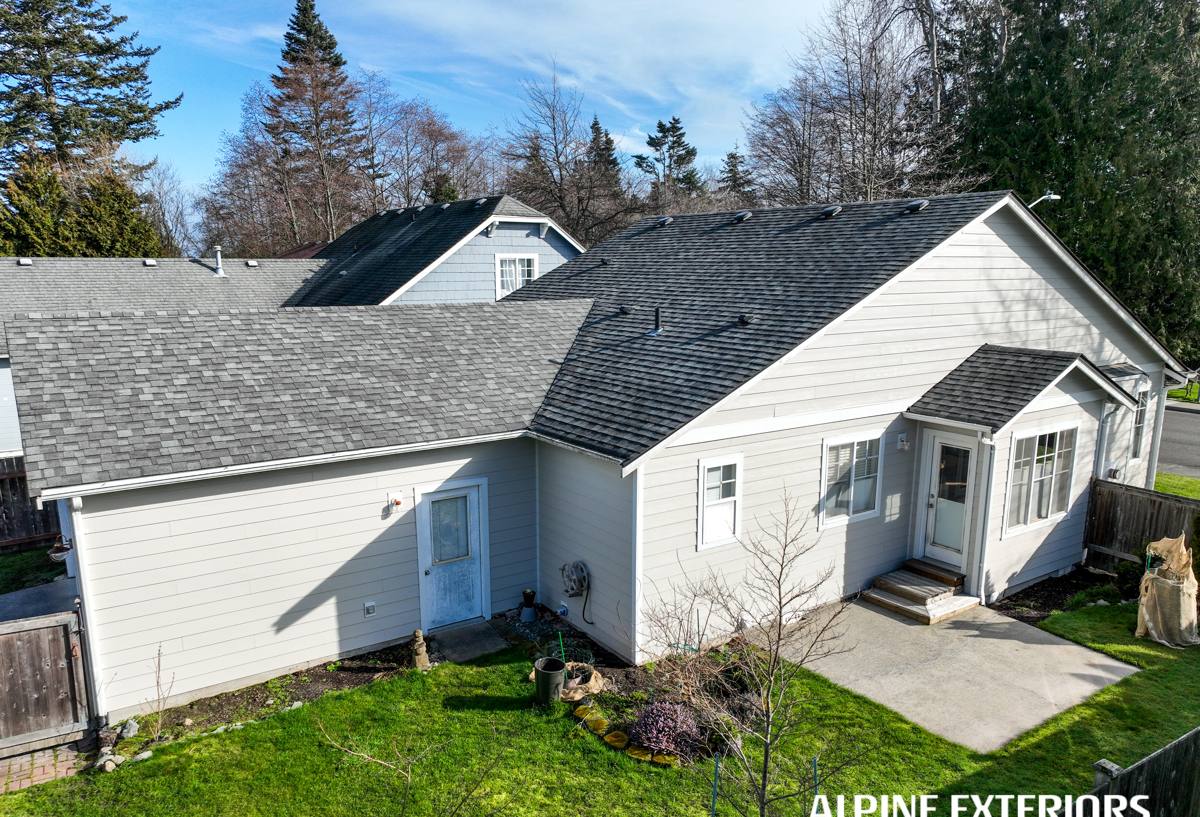
Signs Your Ferndale Roof Needs Repair — Not a Full Replacement
Most homeowners call us after finding a stain on a ceiling, but by the time water shows up inside, the roof has usually been letting moisture in for a while. Catching problems earlier means a smaller, cheaper fix. Watch for:
- Granules collecting in gutters or at downspout outlets — a sign shingles are wearing thin
- Dark streaking or thick moss growth, especially on north-facing slopes or under tree cover
- Curling, cracked, or missing shingles after a windstorm
- Rust staining or visible corrosion around flashing, vent boots, or valleys
- Soft spots or slight sagging when walking the attic (or visible daylight through the roof deck)
- Water stains on interior ceilings or in the attic near chimneys, skylights, or wall intersections
Any one of these can usually be handled as a repair if it's caught early. It's the combination of several, especially with age on the roof, that pushes the conversation toward replacement instead.
The Repairs We Make Most Often in Ferndale
Moss-Related Shingle Damage
Moss holds moisture directly against the shingle surface long after the rest of the roof has dried out. Over time it lifts shingle edges, traps grit against the granule layer, and accelerates wear in exactly the spots that are hardest to see from the ground. Repair here usually means removing the moss carefully — not power-washing, which can strip granules and shorten shingle life further — clearing the damaged section, and replacing shingles that have already lost their weatherproofing.
Flashing and Fastener Corrosion
Salt air oxidizes exposed metal faster than an inland climate would. We see it most at flashing seams around chimneys and skylights, at valleys, and at exposed nail heads. Corroded flashing doesn't fail all at once — it thins and opens tiny gaps at seams and laps, which is exactly where wind-driven rain finds its way in during a real Pacific storm. Repair means replacing the compromised flashing with material suited to the exposure, not just caulking over the rust.
Wind-Driven Rain Intrusion
Whatcom County storms don't just drop rain straight down — wind pushes it sideways and up under laps, ridge caps, and around penetrations. This is a different failure mode than a simple leak, and it's why some "mystery leaks" only show up during a specific storm direction. Correct repair addresses underlayment and lap direction at the affected area, not just the visible gap.
Nail Pops and Wind Damage
Shingles that lift or crack in high wind, and fasteners that back out over time as the roof deck expands and contracts with moisture, are common after fall and winter storm seasons. These are usually straightforward repairs if addressed before the exposed nail hole lets water track down into the deck.
Repair or Replace? What Actually Drives That Decision
We don't push replacement when a repair will genuinely hold, and we don't recommend a patch when the underlying roof is past the point where patching makes sense. The honest answer usually comes down to a few factors:
| Factor | Leans Toward Repair | Leans Toward Replacement |
|---|---|---|
| Roof age | Under 15-18 years (asphalt shingle) | Nearing or past manufacturer's service life |
| Extent of damage | Localized — one slope, valley, or penetration | Spread across multiple slopes or systemic |
| Decking condition | Solid, dry sheathing under the damaged area | Soft, rotted, or delaminated decking found |
| Shingle match availability | Matching shingles still obtainable | Discontinued profile/color, patch would be visible |
| History of repairs | First real issue on the roof | Repeated repairs to the same areas over time |
If your roof checks the "repair" column across the board, we'll tell you that plainly and give you a repair estimate. If it doesn't, we'll explain exactly why — usually rot found once we open up the area, or damage broader than what's visible from the ground.
How We Handle a Repair, Start to Finish
- Inspection. We get on the roof (not just a look from the ladder) and check the attic from inside where accessible, since interior signs often tell us more than the surface does.
- Diagnosis. We trace the actual water path — leaks rarely show up directly below their entry point, especially with wind-driven rain running along the underlayment before it drips.
- Honest scope. We tell you what we found, what it will take to fix it correctly, and what it would cost to do it as a patch versus a more thorough repair if the damage is more involved than expected.
- The repair itself. Matching materials where possible, proper flashing and underlayment detail work where it matters, and fasteners suited to this coastal exposure.
- Cleanup and check. We clear debris and moss from the work area and adjacent roof surfaces so the repair isn't undermined by the same conditions that caused the original problem.
Materials: Why We Don't Cut Corners on the Small Stuff
On a repair, the flashing, fasteners, and sealants matter more than they do on a full replacement, because they're often the only new components going into an otherwise older roof system. We use corrosion-resistant flashing and fasteners suited to salt-air exposure rather than the cheapest available option, because the whole point of a repair is that it should outlast a single storm season. We also try to match existing shingle profile and color as closely as manufacturer availability allows — a repair that stands out visually usually means corners were cut on material selection, not just workmanship.
We're upfront when an exact match isn't available. Sometimes the better call is blending shingles from a less visible slope, or being honest that a small color mismatch is the trade-off for not tearing off more roof than necessary.
Keeping Moss and Debris From Undoing the Repair
A repair is only as good as what happens to the roof afterward. Ferndale's tree cover and damp shoulder seasons mean moss and organic debris come back if nothing changes. A few habits go a long way:
- Clear gutters and valleys at least twice a year, more if you're under conifers
- Trim back branches that keep a section of roof shaded and damp longer than the rest
- Have moss treated or removed before it establishes a thick mat, not after
- Check flashing and vent boots yearly — small gaps are cheap to fix, water damage isn't
- Address a minor leak the season it appears rather than waiting through a second winter
Why a Crew That Already Works Ferndale Matters
Roofing crews that mainly work drier inland climates sometimes under-spec flashing and fastener materials for coastal exposure, because it's not the failure they see every day. A crew that regularly repairs roofs in Ferndale and along the Whatcom County coastline knows where salt air and wind-driven rain actually cause damage on this style of home, and specs the repair accordingly the first time. That also means we're not learning the area's permitting and code requirements on your project — we already know them, which keeps a straightforward repair straightforward.
Local also means faster response. When a storm damages a roof, the difference between a same-week tarp-and-repair and a three-week wait is often the difference between a contained repair and a rot problem that turns into a bigger job.
Get a Straight Answer on Your Ferndale Roof
If you're dealing with a leak, storm damage, moss buildup, or just want an honest read on what shape your roof is in, we're happy to take a look. The estimate is free, there's no pressure to sign anything on the spot, and if a simple repair is the right call, that's exactly what we'll recommend. Use the form below to get started.