 Bellingham Roofing
 What Birchwood's Climate Does to Siding
Birchwood sits close enough to the water and the wet weather patterns that roll through Whatcom County that siding here works harder than siding does in drier inland climates. Salt-laden air off the bay accelerates corrosion on fasteners and metal trim. Driving rain, pushed sideways by wind off the water, finds every gap in a wall assembly that wasn't built to shed it. And Bellingham's long, damp shoulder seasons keep exterior surfaces wet for days at a time, which is exactly the environment moss and algae need to take hold.
None of that is unusual for this part of Washington, but it does mean siding decisions that work fine in Spokane or Boise don't hold up the same way here. Homes in Birchwood need a siding system that resists moisture intrusion at the seams, doesn't feed mold or moss growth on its surface, and keeps its paint and color through repeated wet-dry cycles year after year.
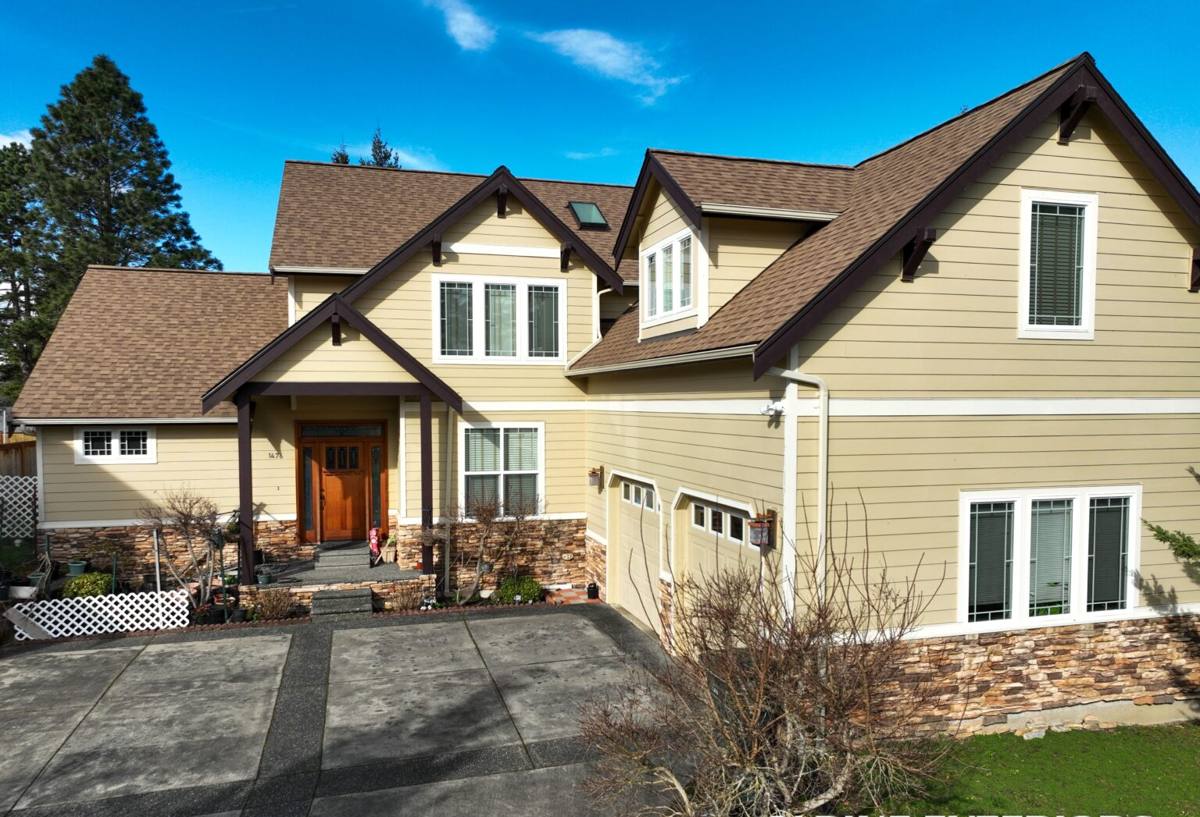
Why We Install Only James Hardie Fiber Cement
We standardized on James Hardie fiber cement siding because it's engineered for exactly the conditions Whatcom County throws at a house. It's non-combustible, it doesn't rot or delaminate when it stays wet, and Hardie's ColorPlus factory finish is baked on under controlled conditions rather than field-applied — which matters a lot in a climate where you rarely get a long stretch of dry, moderate-temperature days for paint to cure properly outdoors.
We don't install LP SmartSide, vinyl, Cemplank, Allura, or bare wood siding, and we're upfront about why. Engineered wood products can perform well but are more sensitive to sustained moisture exposure at cut edges and seams. Vinyl is affordable but can warp, fade, and doesn't hold up as well against the kind of driving, wind-blown rain Birchwood sees off the water. Alternative fiber cement brands may be similar on paper, but we've built our installation training, flashing details, and warranty relationships around one product system, and we'd rather be excellent at one thing than adequate at several.
What a Correct Installation Actually Involves
Fiber cement siding is only as good as the wall assembly behind it. A huge share of siding failures we get called out to inspect trace back to installation shortcuts, not the product itself. For a Birchwood home, a correct job includes:
- A code-compliant weather-resistive barrier installed with proper shingle-lap sequencing so water sheds downward and out, never into the wall cavity.
- Rainscreen furring or drainage house wrap where wall assemblies and exposure warrant it, giving bulk water a way out instead of trapping it against the sheathing.
- Corrosion-resistant, hot-dip galvanized or stainless fasteners — standard steel fasteners degrade fast in salt-influenced coastal air and will bleed rust stains through the finish within a few seasons.
- Correct fastener placement and spacing per Hardie's published fastening schedule, not "close enough" — under- or over-driven nails are one of the most common causes of premature siding failure.
- Proper clearances: siding held back from grade, roof lines, decks, and patios per Hardie's minimum gap requirements, so splashback and standing water don't wick into the bottom edge of the boards.
- Factory-mitered or properly caulked and primed field joints, with butt joints backed by flashing rather than caulk alone.
- Correct flashing and integration at every window, door, and penetration — this is where the majority of hidden leaks originate on any siding job, Hardie or otherwise.
Skip any one of these and the siding itself can be flawless while the wall behind it still fails. That's why we treat the water-management details as the actual job, not an afterthought to hanging boards.
Choosing the Right Hardie Product Line for Birchwood
James Hardie makes several distinct product lines, and the right one depends on the home's architecture, exposure, and your maintenance preferences. For homes in Birchwood's climate zone, we generally steer clients toward Hardie's HZ5 formulation, which is engineered for regions with freeze-thaw cycles and higher moisture exposure like ours.
| Product Line | Look | Best Fit For |
|---|---|---|
| HardiePlank Lap Siding | Traditional horizontal lap, smooth or cedar-textured | Most single-family homes; the most common choice in this area |
| HardiePanel Vertical Siding | Vertical panels, often paired with lap siding | Modern facades, gable accents, mixed-material designs |
| HardieShingle Siding | Staggered or straight-edge shingle profile | Craftsman and cottage-style homes wanting a shingle look without cedar's maintenance |
| HardieTrim Boards | Smooth or textured trim stock | Corner boards, window/door trim, fascia — finishing details that take direct weather exposure |
All of these carry Hardie's ColorPlus factory finish option, which matters here more than in drier climates — a factory-cured finish resists the fading and moisture-driven peeling that field-applied paint is more prone to on a coastal house.
Our Process, Start to Finish
- On-site assessment. We look at your existing siding, wall assembly, moisture history, and any problem areas — soft spots, staining, moss buildup, or past repairs — before quoting anything.
- Written estimate. You get a clear scope: product line, color, trim details, and what's included for tear-off, house wrap, and flashing.
- Tear-off and wall inspection. Removing the old siding lets us actually see the sheathing. If we find rot or water damage, we flag it and get your approval before covering it back up.
- Weather barrier and flashing. This is the step that determines whether the job lasts. We install the water-resistive barrier, flashing, and drainage plane correctly before a single piece of siding goes up.
- Siding installation. Hardie boards installed to manufacturer fastening specs, with attention to clearances at grade, roofline, and penetrations.
- Trim, caulking, and final finish. Trim boards, joint treatment, and touch-up as needed.
- Final walkthrough. We go over the finished job with you and address anything before we call it done.
Cost Factors on a Birchwood Siding Project
Every home is different, so we don't quote off square footage alone over the phone. These are the variables that actually move the number:
| Factor | Why It Matters |
|---|---|
| Tear-off scope | Removing multiple layers of old siding or dealing with hidden sheathing damage adds labor |
| Home shape and trim detail | More corners, dormers, and cutouts around windows mean more labor per square foot |
| Product line and profile | Lap, panel, and shingle profiles carry different material and install costs |
| Finish choice | Factory ColorPlus finish vs. field-primed for paint changes material cost and long-term maintenance |
| Wall assembly upgrades | Adding a rainscreen or upgrading the weather barrier where exposure calls for it |
| Access and site conditions | Multi-story walls, tight lot lines, and landscaping can affect scaffolding and staging costs |
We'll walk through which of these apply to your house during the estimate so you know what you're paying for and why, not just a bottom-line number.
Living With Fiber Cement Siding in a Salt Air, High-Moss Climate
One of the reasons homeowners move to fiber cement in this area is lower ongoing maintenance compared to wood, but "low maintenance" doesn't mean "no maintenance." A few habits keep a Hardie installation performing the way it's designed to for the long haul in Whatcom County's climate:
- Rinse siding once or twice a year with a garden hose and soft brush to clear salt residue, pollen, and early moss growth before it establishes.
- Keep gutters clear and downspouts directed away from the wall — overflow running down siding is one of the most common causes of localized moss and staining.
- Trim back shrubs and trees so foliage isn't holding moisture against the siding surface.
- Inspect caulking at trim joints, windows, and butt joints annually; recaulk before gaps open up and let water behind the boards.
- Address any paint chips or fastener rust spots promptly — small issues left alone become bigger repairs in a climate this wet.
- Avoid pressure washing directly at high PSI close to the siding; it can drive water behind laps and joints.
Why a Crew That Already Works Birchwood Matters
Installation code minimums are a starting point, not a target. A crew that's worked houses in and around Birchwood already knows which wall orientations take the worst of the driving rain, where moss tends to establish first, and how to detail flashing so it holds up through a full Bellingham winter, not just the dry months. That local repetition is what turns "installed to code" into "installed to actually last" in this specific climate. It also means faster, more accurate estimates — we're not guessing at how your neighborhood's weather exposure compares to conditions ten miles inland.
If your current siding is showing moss staining, soft spots, peeling paint, or you're planning ahead for a replacement, we're happy to take a look and give you a straight assessment — no pressure, no upsell script. Reach out for a free estimate and we'll walk your home's exterior with you in person.