 Bellingham Roofing
 Why Siding in Sunnyland Has to Work Harder
Homes in Sunnyland deal with a specific combination of conditions that's tougher on exterior materials than most homeowners realize until they're dealing with the damage. Salt-laden air drifting in off Bellingham Bay slowly corrodes fasteners and degrades cheaper cladding. Driving rain, pushed sideways by wind off the water, finds every gap in flashing and trim that a fair-weather installation might get away with elsewhere. And Whatcom County's long, wet moss season means anything shaded by mature trees or facing north stays damp for weeks at a stretch, which is exactly the environment moss, algae, and rot organisms need to take hold.
None of that is unique to Sunnyland specifically, but it's the reality for this part of Bellingham, and it's why siding choice and installation quality matter more here than in a drier climate. A product that's marginal in Arizona or Texas can fail outright in Whatcom County if it isn't engineered for sustained moisture exposure and installed with real attention to water management. That's the lens we bring to every fiber cement siding job in this neighborhood.
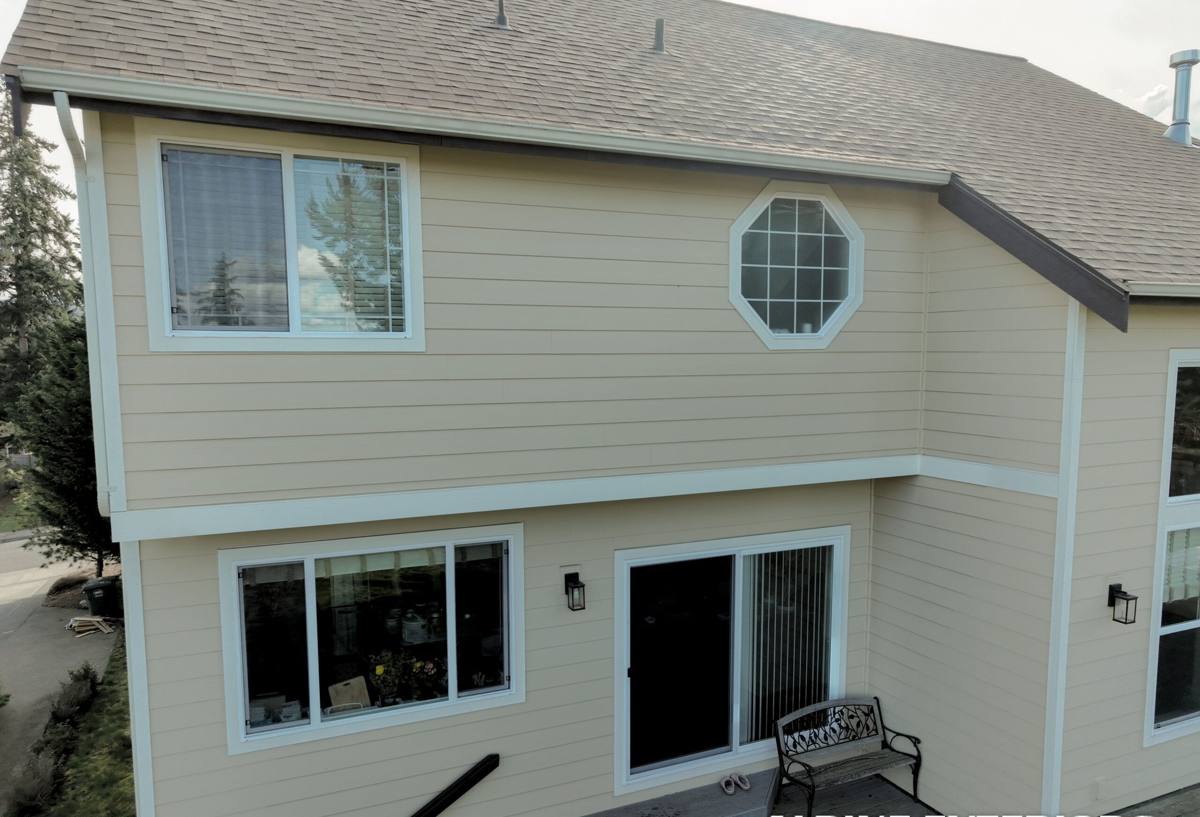
What Correct Fiber Cement Installation Actually Involves
Fiber cement siding is only as good as the installation behind it. The material itself is durable, but water intrusion problems on fiber cement almost always trace back to installation shortcuts, not the product. A correct install is methodical in ways that are easy to skip and hard to notice once the siding is painted and looks finished.
Moisture Management Comes First
Before a single board goes up, the wall needs a properly lapped weather-resistant barrier, correctly flashed windows and doors, and a rainscreen gap or furring strategy that lets any moisture that does get behind the siding drain and dry out instead of sitting against the sheathing. Butt joints get flashed or caulked per manufacturer specification, not just butted together and painted over. Fastener placement, spacing, and depth all matter — over-driven nails crack the board's edge and create a path for water, even though the crack may not be visible from the ground.
Built for This Climate: HZ5 Product Engineering
James Hardie manufactures its siding in climate-specific formulations, and homes in this region should be getting the HZ5 line, engineered for areas with sustained moisture, freeze-thaw cycling, and humidity. That engineering only pays off if the installation respects the clearances, gaps, and flashing details it's designed around — which is why we treat the manufacturer's install specification as a floor, not a suggestion.
Choosing the Right Hardie Product Line for a Sunnyland Home
Not every Hardie product fits every house. Matching the product line to the home's style, exposure, and roofline is part of doing the job right.
| Product | Best Fit | Local Consideration |
|---|---|---|
| HardiePlank lap siding | Traditional and craftsman-style homes | Most common choice; handles wind-driven rain well when properly lapped |
| HardieShingle | Accent gables, dormers, cottage-style homes | Adds texture without the maintenance burden of real wood shingle |
| HardiePanel | Modern facades, garage walls, accent sections | Vertical panel joints need careful battening and flashing in a wet climate |
| HardieTrim | Corners, fascia, window and door trim | Non-combustible, resists the swelling and rot that plagues wood trim here |
Most Sunnyland homes end up on a combination — lap siding as the primary field material with trim and an accent product for gables or entry features. We walk through those options during the estimate rather than defaulting to whatever's easiest to install.
Our Process, Start to Finish
The steps don't change much from house to house, but the details within each step do, based on the home's age, exposure, and existing wall condition.
- On-site assessment of existing siding, sheathing condition, and problem areas (window heads, deck ledgers, ground contact points)
- Written estimate covering product line, color, trim details, and a clear scope of what's included
- Removal of old siding and inspection of the sheathing underneath for hidden moisture damage before anything new goes up
- Installation of weather-resistant barrier, flashing, and any needed furring for drainage
- Fiber cement installation to manufacturer fastening and clearance specifications
- Final trim, caulking at appropriate joints only, and a walkthrough with the homeowner
That third step — checking what's actually happening behind the old siding — is where a lot of hidden problems in this climate get found. Skipping it just means covering up an existing moisture problem with new material.
Why Hiring a Crew That Already Works in Sunnyland Matters
A siding crew that mostly works in drier parts of the country will install fiber cement the way the instructions read on paper. A crew that works this part of Whatcom County regularly knows where the extra attention actually needs to go: which wall orientations take the worst of the wind-driven rain, which older homes tend to have sheathing issues once the old siding comes off, and how much clearance to leave near grade so splash-back and standing moisture don't become a problem two winters later.
Permitting and inspection expectations are also a local detail worth getting right the first time. Working within Bellingham's permitting process and understanding what an inspector will want to see on a re-side job saves time and avoids rework — something that's harder to get right from outside the area.
Keeping Fiber Cement Siding Looking Right for Decades
One of the real advantages of fiber cement with a factory-applied finish is how little ongoing maintenance it needs compared to wood or older cement-board products. That said, "low maintenance" isn't "no maintenance," especially in a climate that grows moss on everything that holds still long enough.
- Rinse siding with a garden hose (not a pressure washer aimed directly at joints) once or twice a year to clear pollen, dust, and early moss growth
- Keep gutters clean and downspouts directed away from the wall base to prevent splash-back staining
- Trim back shrubs and tree limbs that keep a section of wall shaded and damp longer than the rest of the house
- Re-caulk at joints if you notice cracking or gaps — small caulk failures are cheap to fix and expensive to ignore
- Watch north-facing and shaded walls specifically; that's where moss and mildew show up first in this climate
- Touch up any chips or scratches promptly so bare fiber cement isn't exposed to moisture
Homes that get this basic attention tend to hold their finish and color for a very long time, which is part of what makes the ColorPlus factory finish worth having over field-applied paint.
What Drives the Cost of a Fiber Cement Job in Sunnyland
Every home is different, so exact numbers only come from an on-site estimate, but the same factors move the price on nearly every job in this area.
| Factor | Why It Matters |
|---|---|
| Removal and disposal of existing siding | Extra labor and disposal cost, plus more time for sheathing inspection and repair |
| Sheathing or framing repair | Moisture-damaged wood found underneath old siding needs to be addressed before new siding goes on |
| Home size and wall complexity | Dormers, multiple gables, and cut-up facades take more time per square foot than a simple rectangular wall |
| Product line and trim details | Shingle accents and custom trim cost more in materials and labor than straight lap siding |
| Access and site conditions | Tight lot lines, slopes, and landscaping can add setup and staging time |
The biggest wildcard is almost always what's found once the old siding comes off. Homes in this climate that have gone years with failing siding or poor flashing sometimes need sheathing repair that wasn't visible during the estimate — we flag that possibility upfront rather than let it be a surprise mid-project.
Signs Your Current Siding Is Already Past Its Useful Life
Because moisture damage in this climate often develops behind the siding before it's visible on the surface, it helps to know what to watch for:
Soft or spongy spots when you press on the siding, especially near the bottom courses or below windows. Persistent moss or dark streaking that comes right back after cleaning. Paint that's peeling or bubbling from the inside out rather than just weathering on the surface. Visible warping, buckling, or gaps at seams and corners. Rising energy bills with no other explanation, which can point to a wall assembly that's no longer doing its job. Any of these is worth a look before it turns into a bigger repair.
If your Sunnyland home is showing any of these signs, or you're simply due for new siding and want it done right the first time, we're happy to walk the property with you and put together a straightforward, no-pressure estimate — just fill out the form below.