 Bellingham Roofing
 Why South Hill Roofs Take More Punishment Than People Expect
South Hill sits close enough to Bellingham Bay that salt-laden air reaches the rooflines up here, and the elevation and tree cover add their own complications on top of it. Older homes with mature landscaping mean a lot of roofs sit in partial shade for much of the day, which matters more than most homeowners realize once you're talking about moss and moisture retention rather than just rain.
Whatcom County's weather pattern doesn't do this neighborhood any favors either. Rain here tends to come in sideways during winter storms, driven by wind off the water, which puts real pressure on laps, flashing, and fastener points that a calmer climate would never test. Add a moss season that can run eight or nine months out of the year on shaded slopes, and you've got a roofing environment that punishes cheap materials and sloppy installation a lot faster than it would somewhere drier or more sheltered.
None of that means South Hill needs anything exotic. It means the roofing choices and installation details have to actually account for the conditions instead of using a generic approach and hoping for the best.
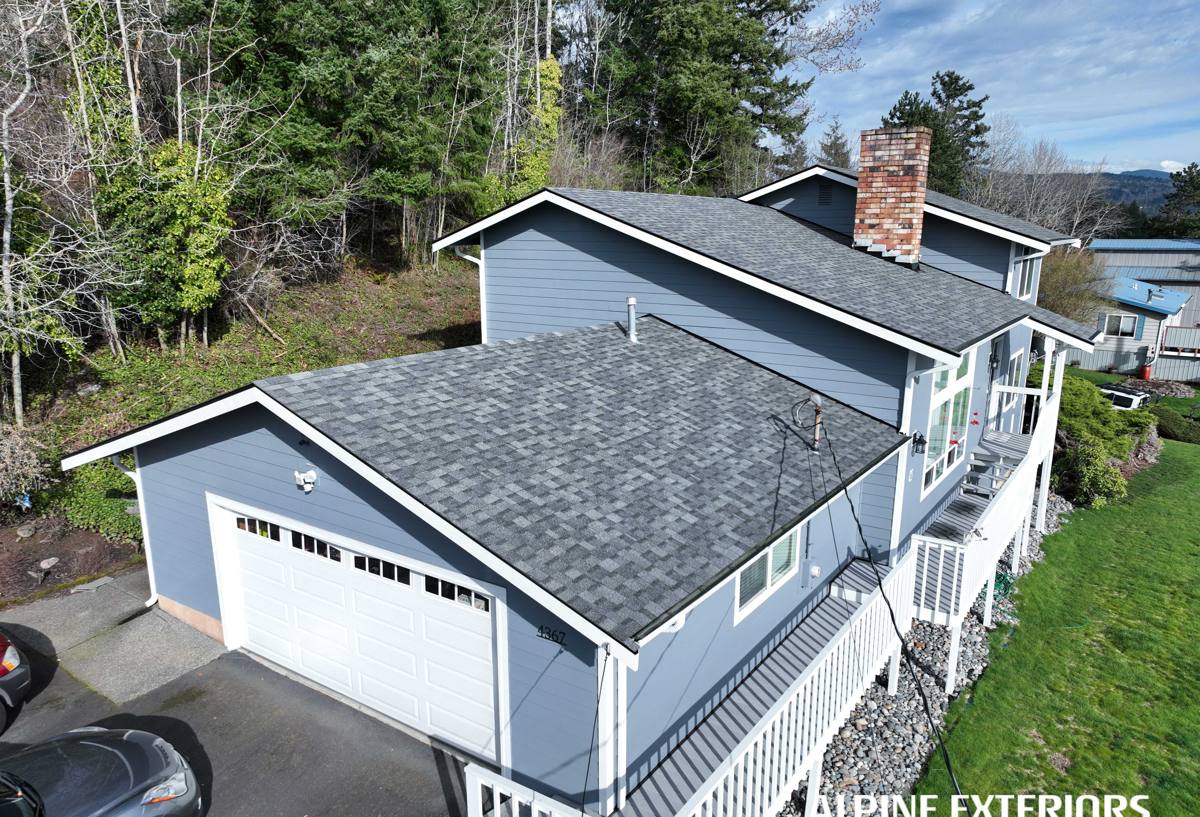
Why Metal Roofing Makes Sense for This Neighborhood
Metal roofing has become a popular upgrade on South Hill for reasons that hold up under scrutiny. A properly installed metal roof sheds moss far better than asphalt shingles because there's no granulated surface for spores to take hold in, and the smooth, sloped panels drain faster during the kind of driving rain this area gets. That combination — less moss, faster drainage — directly addresses the two things that wear out roofs fastest around here.
Metal also holds up well against the salt air coming off the bay, but only when the coating, fasteners, and flashing details are chosen correctly for a coastal-influenced environment. That's the part that separates a metal roof that looks good for thirty-plus years from one that shows corrosion streaks and fastener failure within a decade. We'll get into those specifics below, because they're the difference between metal roofing done right and metal roofing done cheap.
It's worth saying plainly: metal isn't automatically the right call for every home. Steep, highly visible roofs on older South Hill houses sometimes call for a different look, and budget matters. But for homeowners weighing long-term performance against upfront cost, metal earns its reputation here more than in most parts of the country.
What a Correctly Installed Metal Roof Actually Includes
"Metal roofing" covers a range of products and installation methods, and the differences matter a lot more than the marketing usually lets on. The two systems we install most often on South Hill homes are standing seam and exposed-fastener panels, and each has a place depending on the roof and the budget.
| Feature | Standing Seam | Exposed-Fastener Panel |
|---|---|---|
| Fasteners | Concealed under raised seams | Visible, driven through the panel face |
| Typical lifespan | 40-60+ years with proper install | 25-40 years, fastener-dependent |
| Maintenance | Minimal; no exposed fastener seals to fail | Fastener washers need periodic checking |
| Upfront cost | Higher | Lower |
| Best fit | Long-term ownership, coastal exposure, steep pitches | Budget-conscious projects, outbuildings, shorter hold periods |
Exposed-fastener panels aren't a bad product — they're a legitimate option and we install them regularly. But every exposed fastener is a potential leak point over time, especially where salt air accelerates corrosion of the washer seal. On a coastal-influenced roof like the ones up here, that maintenance burden is worth understanding before you choose based on price alone.
Coating Matters as Much as the Metal Itself
The paint or coating system on a metal panel does most of the work protecting it from UV, moisture, and salt exposure. PVDF-based coatings (often sold under names like Kynar) hold color and resist chalking far longer than basic polyester coatings, particularly in a marine-influenced climate. We'll walk through coating options as part of any estimate rather than assuming the cheapest system is good enough for a South Hill roof.
Fasteners, Flashing, and Why Salt Air Changes the Details
Corrosion is the quiet killer of metal roofs near the water, and it doesn't always show up where you'd expect. Two issues come up constantly on inspections around Bellingham:
- Galvanic corrosion — mixing incompatible metals (say, the wrong flashing against a panel, or steel fasteners in an aluminum system) sets up a reaction that eats away metal from the inside of the joint, often invisible until it fails.
- Fastener quality — coated screws with quality rubber washers hold up; bargain fasteners corrode and lose their seal well before the panels around them show any wear.
Flashing at valleys, chimneys, and wall transitions is where almost every metal roof leak actually originates — not the field of the roof itself. Correct flashing detail, sized and lapped for the wind-driven rain this area sees, is not optional trim work. It's the part of the job that determines whether the roof performs in a real Whatcom County storm or just looks fine on a dry day.
Moss, Tree Cover, and What Long-Term Maintenance Looks Like
Metal resists moss far better than shingles, but "resists" isn't "immune." On shaded South Hill lots with heavy tree cover, organic debris still collects in valleys and against any obstruction, and moss can still establish in areas that stay damp and shielded from sun. The maintenance burden is dramatically lower than with a shingle roof, but it isn't zero.
A reasonable maintenance approach for a metal roof under mature trees:
- Clear debris from valleys and gutters at least once a year, more often under heavy conifer cover
- Rinse off moss or algae growth before it has a chance to hold moisture against seams
- Check fastener heads and flashing sealant on exposed-fastener systems every few years
- Trim back branches that keep sections of the roof shaded and damp year-round
Homes tucked under trees on South Hill benefit the most from switching to metal, precisely because it's the roofing material least affected by the moss cycle that wears out shingles fastest in shaded, damp spots.
Underlayment and Ventilation — the Parts You Never See
A metal roof is only as good as what's underneath it. Synthetic underlayment across the full roof, with ice-and-water shield at eaves and valleys, protects the deck if wind-driven rain ever gets under a seam during a bad storm — and up here, it will get tested. Proper attic and roof ventilation also matters more with metal than people assume, since condensation can form on the underside of panels if warm, moist attic air isn't managed correctly. Skipping this step is one of the most common shortcuts in cheap metal roofing installs, and it's invisible until it causes deck rot years later.
Our Process for South Hill Metal Roofing Projects
We keep the process straightforward because a roof job shouldn't feel complicated to the homeowner, even though the work itself is technical.
- On-site inspection — we look at the existing roof, deck condition, ventilation, and any tree cover or moss history specific to the property.
- Honest scope and estimate — panel type, coating, and flashing plan laid out clearly, with the trade-offs explained rather than assumed.
- Tear-off and deck check — old roofing removed, deck inspected and repaired where needed before anything new goes down.
- Underlayment and flashing installed to spec — the unglamorous part that determines whether the roof survives a real Bellingham winter.
- Panel installation — fastened and sealed correctly for the coastal exposure this property actually sits in.
- Final walkthrough — we go over maintenance expectations so there are no surprises later.
What Drives the Cost
Metal roofing costs more upfront than asphalt shingles, and pricing varies enough by roof that broad numbers only go so far. These are the factors that actually move the estimate:
| Cost Factor | Why It Matters |
|---|---|
| Panel system (standing seam vs. exposed-fastener) | Standing seam costs more per square but needs less long-term maintenance |
| Roof pitch and complexity | Steep or cut-up rooflines with lots of valleys take more labor and flashing |
| Coating grade | PVDF coatings cost more than basic polyester but last significantly longer |
| Deck condition | Rot or damage found during tear-off adds repair cost before panels go on |
| Tree/access difficulty | Tight lots or heavy canopy on hillside South Hill properties can affect staging and labor time |
We'd rather walk a property and give a real number than throw out a range that doesn't mean much until we've seen the roof.
A Quick Checklist Before You Hire Anyone
- Ask specifically which panel system and coating they're proposing, and why
- Ask how they handle flashing at valleys and wall transitions — get specifics, not "we seal it up"
- Ask about underlayment and ventilation plans, not just the visible panel
- Confirm they're licensed and insured to work in Washington State
- Ask whether they've worked on homes in your specific neighborhood and understand the tree cover or exposure issues on your street
Why It Matters That We Already Work in South Hill
A crew that's worked this neighborhood knows which streets sit in near-constant shade, which lots catch the worst of the wind off the bay, and how the moss cycle behaves differently block to block depending on tree cover. That's not something you can fully account for from a generic checklist — it comes from having actually been on South Hill roofs across different seasons.
We're a Bellingham crew, not a traveling outfit passing through Whatcom County for a season. That means we're around for warranty work, we know local permitting and inspection expectations, and we have a real stake in doing the job right the first time.
If you're weighing a metal roof for a South Hill home, we're happy to come take a look and give you a straight, no-pressure estimate — just fill out the form below.