 Bellingham Roofing
 Roofing a Columbia Home in Bellingham's Coastal Climate
Columbia is one of Bellingham's older, more established neighborhoods, with a mix of home ages and roof styles sitting under a heavy tree canopy just a short distance from Bellingham Bay. That combination is exactly what makes roofing here different from roofing a new subdivision on the edge of town. You've got salt-laden air drifting in off the water, driving rain that comes in sideways during fall and winter storms, and a moss season that, realistically, never fully ends in Whatcom County. Any one of those factors will shorten the life of a poorly installed roof. Together, they make installation quality the single biggest factor in how long a new roof actually lasts here.
We install new roofs across Bellingham, but a Columbia roof gets built with this specific block's conditions in mind — tree cover, moisture patterns, and the salt exposure that comes with living close to the water.
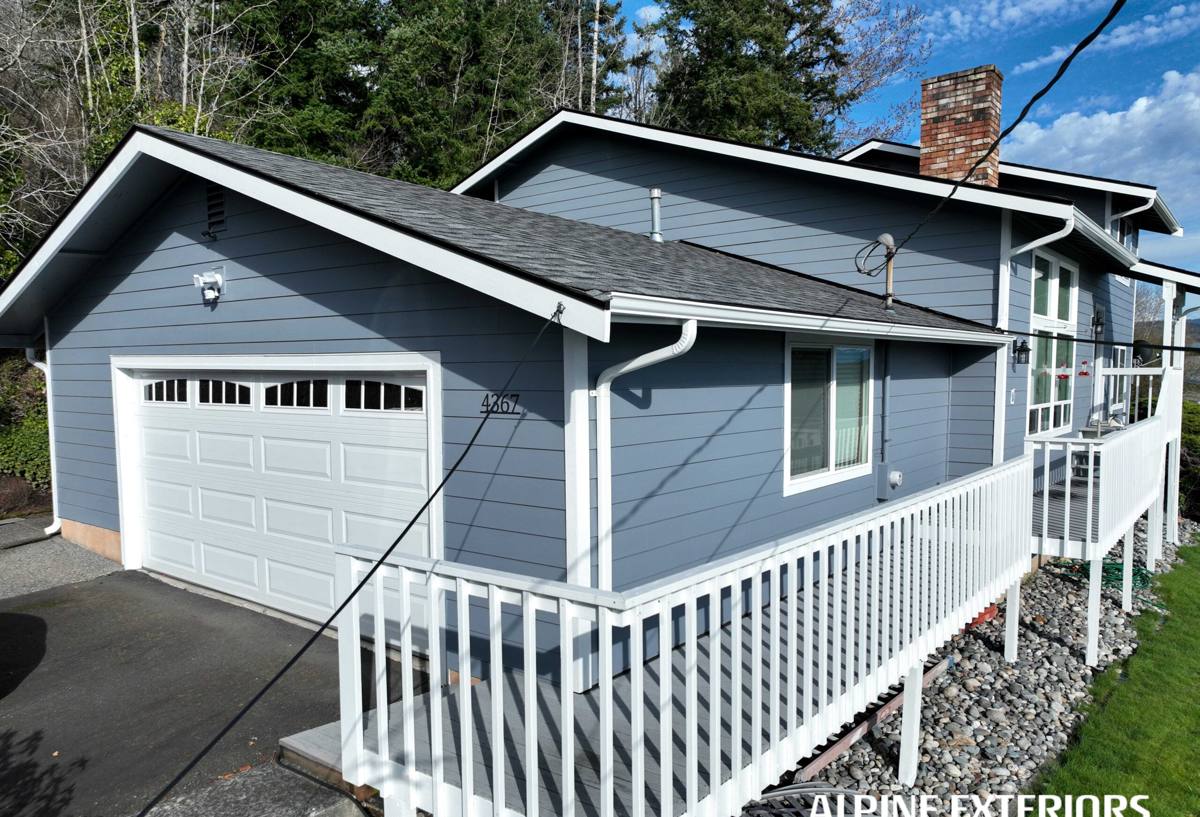
What Salt Air, Rain, and Moss Actually Do to a Roof
Salt Air
Homes within a few miles of Bellingham Bay deal with airborne salt that accelerates corrosion on exposed metal — fasteners, flashing, vents, and gutter hardware. Standard galvanized fasteners can start rusting years before the roofing material itself is due for replacement. Once fasteners corrode, they lose holding power and can allow water to track down the shank into the deck.
Driving Rain
Whatcom County storms rarely fall straight down. Wind-driven rain gets pushed sideways and upward under eaves, around valleys, and against anything that penetrates the roof plane — chimneys, skylights, plumbing vents. A roof that would perform fine in a calmer climate can leak here if flashing details and underlayment aren't built for wind-driven water.
Moss and Shade
Columbia's tree cover is part of the neighborhood's character, but shaded, damp roof sections stay wet longer after every rain, which is exactly what moss needs to establish. Moss holds moisture against the roofing material, works its way under shingle tabs and shakes, and can lift material enough to create a path for water. On an older roof, moss is often less a cosmetic problem and more a sign the roof has been staying wet longer than it should.
Signs a Columbia Home Needs Replacement, Not Another Repair
Not every roof problem calls for a full tear-off. But there's a point where patching becomes a waste of money, and it usually shows up sooner on shaded, tree-covered lots than on open ones.
- Granule loss heavy enough that you're finding grit in gutters and downspouts every season
- Moss or algae staining that returns within months of cleaning
- Multiple past repairs in different areas of the roof rather than one isolated spot
- Soft or spongy decking felt underfoot near valleys or eaves
- Daylight visible through the attic at roof boards, or damp insulation below the deck
- Roofing material at or past its rated service life, especially with visible curling or cracking
- Flashing around chimneys, skylights, or vents that's rusted, lifted, or resealed with visible caulk patches
If you're seeing two or more of these at once, a roofing contractor should be assessing the whole roof system, not just the spot that's actively leaking.
What a Correct New Roof Installation Actually Involves
A new roof is more than swapping old material for new. In a climate that punishes shortcuts, the parts you don't see matter as much as the parts you do.
Tear-Off and Deck Inspection
We remove the old roofing down to the deck rather than layering over it. This lets us actually see the plywood or sheathing underneath, replace any sections that are soft, delaminated, or water-stained, and confirm the deck is solid before anything new goes on top of it. Roofing over a compromised deck just hides a problem that will resurface.
Underlayment
Given how much wind-driven rain this area sees, underlayment choice matters more here than in drier climates. We use synthetic underlayment as the primary water-resistive layer and self-adhering ice-and-water membrane in the vulnerable spots — eaves, valleys, around penetrations, and low-slope transitions — where wind-driven water is most likely to find a way in.
Flashing
Flashing is where most roof leaks actually originate, not in the field of the roofing material itself. Chimneys, skylights, sidewalls, and vent pipes all get new flashing as part of a proper installation, cut and formed to shed water rather than relying on sealant to do the job long-term.
Fasteners and Metal Components
Because of salt exposure this close to the water, we pay attention to fastener and flashing material selection rather than defaulting to whatever's standard inland. Corrosion-resistant fasteners cost a little more upfront and save a lot of grief in ten years.
Ventilation
A roof deck that can't breathe traps moisture underneath it, which leads to premature deck rot and worse moss growth on the surface above. Balanced intake and exhaust ventilation is part of a correct installation, not an optional add-on.
Choosing a Roofing Material for a Shaded, Coastal Lot
There's no single "best" material — the right choice depends on the home's roof pitch, how much shade and tree debris it deals with, and how the homeowner wants to budget between upfront cost and long-term maintenance.
| Material | Performance in Salt Air / Rain | Moss & Shade Considerations | Typical Lifespan |
|---|---|---|---|
| Architectural Asphalt Shingle | Good; corrosion-resistant flashing and fasteners recommended | Moderate moss resistance; benefits from algae-resistant granules | 25–30 years |
| Standing Seam Metal | Excellent when properly coated and fastened for coastal exposure | Sheds moisture fast; least hospitable surface for moss | 40–60 years |
| Cedar Shake | Requires diligent maintenance near salt air; can weather unevenly | Most moisture-retentive option; needs regular treatment and cleaning | 20–30 years with upkeep |
| Synthetic/Composite Shingle | Good; less affected by moisture cycling than wood | Better moss resistance than cedar; low maintenance | 30–50 years |
We don't push cedar shake on tree-covered lots like much of Columbia, not because the material is bad, but because it demands a maintenance commitment that most homeowners underestimate — and a shaded, damp roof section is the hardest possible environment to keep a wood roof performing well in. We'll walk through the honest trade-offs for your specific roof rather than steering you toward whatever's easiest for us to install.
Our New Roof Installation Process
- On-site inspection and estimate. We look at the whole roof system — deck, ventilation, flashing points, and any shade or moss patterns — not just the material on top.
- Material selection. We go over options based on your roof's actual conditions, your budget, and how much maintenance you want to take on long-term.
- Scheduling around weather. Roofing in Whatcom County means planning installation windows carefully; we don't leave a deck exposed when rain is likely.
- Tear-off and deck repair. Old material comes off, the deck gets inspected, and any damaged sections are replaced before anything new is installed.
- Underlayment, flashing, and ventilation installation. This is where the roof's actual weather resistance is built — done right, before the visible material goes on.
- Roofing material installation. Installed to manufacturer specifications, which is what keeps the warranty valid.
- Final walkthrough and cleanup. We check the finished roof with you and clear the site of debris and old material, including a magnetic sweep for stray nails.
Cost Factors for a New Roof in Columbia
Every roof is priced on its own specifics, but the same handful of factors drive most of the variation between projects in this neighborhood.
| Factor | Why It Matters Here |
|---|---|
| Roof size and pitch | Steeper roofs and multiple planes take more labor and material |
| Deck condition | Tree cover and shade increase the odds of hidden moisture damage found during tear-off |
| Material choice | Asphalt, metal, and synthetic options carry different material and labor costs |
| Access and tree clearance | Mature trees common in Columbia can affect staging, debris removal, and safety setup |
| Number of penetrations | Chimneys, skylights, and vents each require flashing work that adds labor time |
| Ventilation upgrades | Older homes often need added intake or exhaust venting brought up to current standards |
We give a written estimate that breaks these factors down rather than a single number with no explanation, so you know exactly what you're paying for.
Why Hiring a Crew That Already Works in Columbia Matters
Roofing knowledge that works in a dry inland climate doesn't automatically transfer to a shaded, coastal neighborhood like Columbia. A crew that regularly works this part of Bellingham already knows which flashing details tend to fail on tree-covered lots, which fastener grades hold up against salt air off the bay, and how much ventilation an older Whatcom County home actually needs versus what a generic spec sheet says. That local pattern recognition is what keeps small decisions during installation from turning into callbacks two winters later.
It also means faster response if something does come up after installation — a local crew doesn't need to schedule a special trip across the region to look at a flashing detail or answer a question about how the roof is settling in.
A Homeowner's Pre-Installation Checklist
- Get a written estimate that itemizes material, labor, and any deck repair allowance
- Confirm the underlayment and ice-and-water shield plan for valleys, eaves, and penetrations
- Ask what fastener and flashing materials will be used, given the salt air exposure this close to the bay
- Confirm ventilation will be assessed and corrected if it's inadequate, not just left as-is
- Check that tear-off, deck inspection, and disposal are clearly included in the scope
- Ask about the manufacturer's warranty terms and what installation standards are required to keep it valid
- Clear vehicles from the driveway and discuss any pets or gardens near the work area before the crew arrives
Get a Free, No-Pressure Estimate
If your Columbia home is showing signs of an aging roof — persistent moss, granule loss, or a roof that's simply reaching the end of its expected life — it's worth getting a straightforward, no-obligation look before another wet Whatcom County winter sets in. Use the form below to request a free estimate, and we'll walk the roof with you and explain exactly what we find.