 Bellingham Roofing
 Roofing in Happy Valley: What the Climate Actually Demands
Happy Valley sits close enough to Bellingham Bay and the surrounding wooded terrain that its roofs take on a specific combination of stress: salt-tinged air moving in off the water, long stretches of driving rain through the fall and winter, and shade patterns from mature trees that keep parts of many roofs damp well after a storm has passed. None of these things alone would wear out a roof fast. Together, over years, they do.
Salt air is corrosive to exposed metal — flashing, fasteners, gutter hardware — in ways that inland Whatcom County neighborhoods don't deal with to the same degree. Driving rain, especially when it comes sideways in a windstorm, finds every gap in flashing and underlayment that a straight-down rain never would. And shaded, moisture-holding roof sections are exactly where moss and algae take hold and spread fastest. A repair strategy that ignores any one of these factors tends to fail again within a season or two.
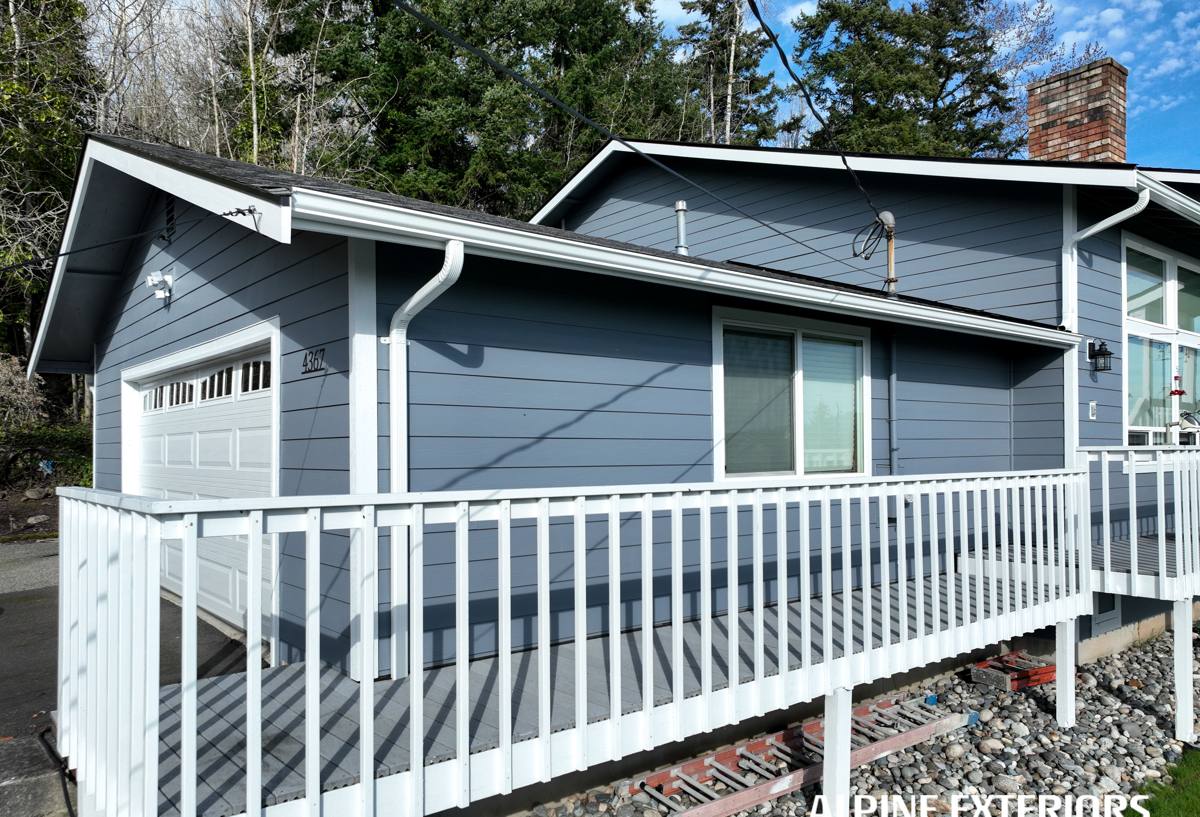
Common Repair Issues We See on Happy Valley Roofs
Moss and Organic Growth
Moss doesn't just look bad — it holds water against the roofing material, works its way under shingle edges, and lifts them over time. On shaded slopes and north-facing sections, moss can establish itself within a year or two of a roof being cleaned. Left unaddressed, it accelerates granule loss on asphalt shingles and can rot the wood decking underneath.
Flashing and Fastener Corrosion
Flashing around chimneys, vents, skylights, and roof-to-wall transitions is the first line of defense against water intrusion, and it's also the first thing salt air degrades. We regularly find pinhole corrosion, rusted fasteners, and sealant that's cracked and pulled away from metal edges — all of it invisible from the ground but obvious once you're actually up there.
Wind and Storm Damage
Driving rain paired with wind is a repair call generator. Lifted or missing shingles, torn ridge cap, and water tracking in along a valley or eave after a storm are the most common reasons we get calls this time of year in this part of Bellingham.
Gutter and Drainage Backups
Roofs here don't fail in isolation from their gutters. Needle and leaf debris from surrounding trees combines with moss runoff to clog gutters and downspouts, which backs water up under the roof edge and rots fascia and the first course of roofing material before anyone notices.
What a Correct Repair Actually Involves
A roof repair done right is not just patching the spot where water is visibly coming through. Water travels — it can enter at a flashing seam or nail pop several feet from where the stain shows up on a ceiling. A repair that only addresses the interior symptom without tracing the actual entry point usually comes back within a year, sometimes worse.
A proper repair includes:
- Identifying the actual point of water entry, not just the visible damage
- Removing and replacing damaged shingles, underlayment, or decking — not just sealing over them
- Re-flashing any compromised metal rather than caulking over corroded or lifted flashing
- Checking and clearing adjacent drainage paths (gutters, valleys, downspouts) so the same failure doesn't repeat
- Matching materials as closely as possible so the repair doesn't stand out or age differently than the surrounding roof
Skipping any of these steps is how a $400 repair turns into a $4,000 repair two winters later.
Our Repair Process, Start to Finish
1. Inspection and Diagnosis
We get on the roof — not just on the ground with binoculars — and trace the actual source of the leak or damage. We also check surrounding areas most homeowners can't see: valleys, chimney flashing, vent boots, and the underside of the decking where accessible, since one weak spot rarely exists alone on an older roof.
2. Honest Assessment
We tell you what we find, including if a "repair" isn't really the right call because the roof is past the point where patching makes sense. We'd rather lose a repair job than sell someone a fix that doesn't hold.
3. The Repair Itself
Most repairs are completed in a single visit. We match shingle type, color, and exposure as closely as possible, use corrosion-resistant flashing and fasteners appropriate for a coastal-influenced climate, and clean up moss or debris in the repair area so the fix isn't undermined by the same conditions that caused the original damage.
4. Follow-Up Check
For anything involving flashing or decking work, we recommend a follow-up look after the next significant rain to confirm the repair is holding before we consider the job closed.
Repair vs. Replacement: How We Help You Decide
Not every damaged roof needs to be replaced, and not every leak can be reasonably repaired. The honest answer usually comes down to a few factors:
| Factor | Repair Usually Makes Sense | Replacement Usually Makes Sense |
|---|---|---|
| Age of roof | Under 15–18 years (asphalt) | Approaching or past expected lifespan |
| Extent of damage | Isolated to one section or flashing point | Multiple areas failing, widespread granule loss |
| Decking condition | Solid, no soft spots or rot | Soft decking, signs of rot in more than one spot |
| Moss/algae history | Manageable with cleaning and targeted fixes | Repeated, deep-rooted growth across large areas |
| Cost outlook | Repair cost is a small fraction of replacement cost | Repair cost starts approaching a third or more of replacement |
We walk through this with you directly rather than just quoting a number. A straightforward flashing or shingle repair on a Happy Valley home might run a few hundred dollars; more involved work — decking replacement, larger sections of flashing, or storm damage across multiple planes — can run into the low thousands. We'll give you a real range once we've actually seen the roof, not a phone estimate.
Materials We Work With in This Neighborhood
Most Happy Valley homes we work on are roofed in asphalt composition shingles, with a smaller number of cedar shake and metal roofs, particularly on older or custom-built homes. Each material behaves differently under the moss-and-moisture conditions common here:
- Asphalt shingles are the most repairable material and the most common — individual shingles can be replaced without redoing a whole section, provided the decking underneath is sound.
- Cedar shake holds moisture longer than asphalt and needs more frequent moss and debris removal to avoid rot; repairs require matching weathered shake, which we approach carefully so the patch doesn't stand out.
- Metal roofing handles driving rain and moss well overall, but seam and fastener integrity matter more here because of salt air — we check those points specifically rather than assuming metal is maintenance-free.
For any material, our standard is to use fasteners and flashing rated for coastal or high-moisture exposure rather than standard-grade hardware, since the cost difference is small and the corrosion resistance is where a lot of long-term repair headaches come from.
Signs You Need a Roof Repair Now, Not Later
Roof problems in this climate rarely announce themselves clearly. Watch for:
- Visible moss buildup, especially in shaded valleys or north-facing slopes
- Granules collecting in gutters or at downspout outlets
- Shingles that look curled, cracked, or lifted at the edges
- Any staining on interior ceilings or upper walls, even faint
- Daylight visible through the attic roof deck
- Rusted or visibly deteriorated flashing around chimneys and vents
- Gutters overflowing during moderate, not just heavy, rain
Catching any of these early is almost always the difference between a repair and a replacement.
Why a Crew That Already Works Happy Valley Matters
A roofer who knows this specific pocket of Bellingham isn't guessing at what your roof needs — they've already seen how the tree cover on a given street shades certain roof faces, how quickly moss returns after a cleaning in this microclimate, and which flashing details tend to fail first under salt air and driving rain. That local pattern recognition means a faster, more accurate diagnosis and a repair built for the conditions your roof will actually face again next winter, not a generic fix.
We also know Whatcom County's permitting and inspection expectations for roofing work, so if a repair does turn out to need more than a patch, we can tell you that honestly and move forward without surprises.
Maintenance That Extends Your Repair's Life
A repair holds longer when it's not fighting the same conditions that caused the original damage. For Happy Valley homes specifically, that means:
- Cleaning moss and debris off the roof at least once a year, more often on heavily shaded sections
- Keeping gutters clear through fall and winter so water isn't backing up under roof edges
- Trimming back tree limbs that keep roof sections damp or drop debris directly onto the roof
- Having flashing and fastener points checked every few years, since corrosion from salt air is gradual and easy to miss until it fails
None of this is complicated, but it's the difference between a repair that lasts a decade and one that needs revisiting in two years.
If you're dealing with a leak, storm damage, or just want an honest read on what your roof actually needs, we're happy to take a look. Fill out the form below for a free, no-pressure estimate — we'll tell you straight whether it's a repair, and what that repair should include.