 Bellingham Roofing
 Roof Repair in Silver Beach: A Lake Whatcom Neighborhood With Its Own Set of Problems
Silver Beach sits along Lake Whatcom, one of the older lakeside neighborhoods on the edge of Bellingham, where roofs deal with a different mix of stress than a typical inland property in Whatcom County. Homes here range from modest older cottages close to the shoreline to newer construction set higher on the slope with a lake view, and both ends of that range share the same basic problem: the roof rarely gets a long, uninterrupted dry stretch. Lake humidity, tree cover on the hillside above many lots, and marine air drifting in from Bellingham Bay all work against whatever is on top of the house. A roof repair here needs to account for that combination, not just patch whatever is leaking today.
This page covers roof repair specifically — not full replacement, not siding, not gutters as a standalone service — for homes in and around Silver Beach. If a roof is past the point where repair makes sense, we say so plainly during the inspection rather than stringing along a series of patch jobs on a roof that needs to come off.
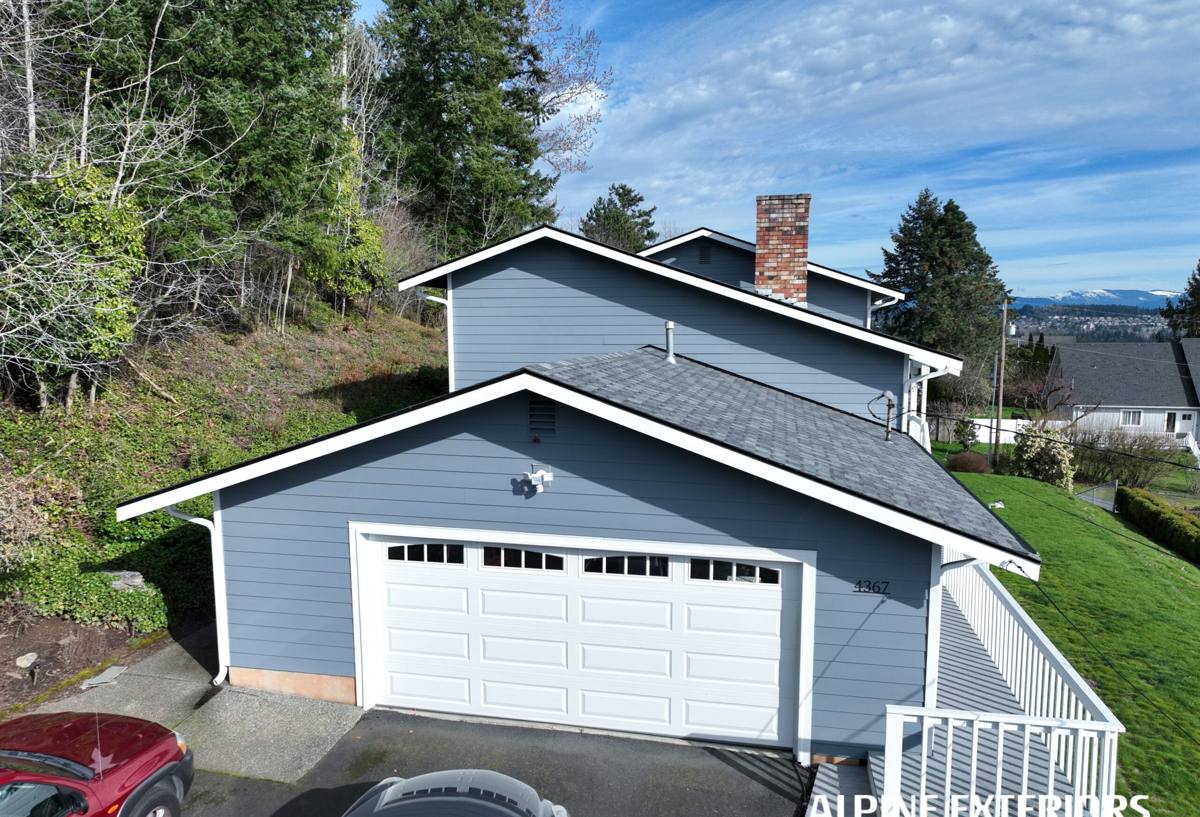
What Bellingham's Climate Does to a Silver Beach Roof
Salt-Tinged Marine Air
Whatcom County's weather is shaped by its position on the Pacific — air moving inland off Bellingham Bay and the Strait of Georgia carries a mild salt content that reaches well past the immediate shoreline, including up into the Lake Whatcom basin. Combined with the lake's own evaporative moisture, that air stays damp and mineral-laden more of the year than it would further inland or up in the drier foothills. Over time, that steady exposure is hard on exposed metal flashing, fasteners, and any roofing material with a finish that isn't built to resist it — showing up as premature corrosion at flashing edges, granule loss, or fastener heads that start to bleed rust through the shingle line.
Driving Rain Off the Lake
Lake Whatcom generates its own local wind pattern to a degree — air moving across open water picks up speed and drives rain into lake-facing roof slopes harder than the same storm delivers to a sheltered inland lot. A roof slope that faces directly across the lake typically takes more wind-driven water at eaves, ridge caps, and roof-to-wall transitions than the uphill or tree-shaded side of the same house. That means a repair standard needs to be set by the wettest, most exposed slope on the roof, not an average condition across the whole structure.
A Long Moss and Mildew Season
Between lake humidity, regular Pacific Northwest rainfall, and tree cover on many Silver Beach lots, roof surfaces here rarely dry out completely for much of the year. That's exactly the environment moss and mildew need to take hold, and it shows up first on north-facing slopes, valleys, and any area shaded by overhanging branches. Moss doesn't just look bad — its root structure works underneath shingle tabs and lifts them slightly, which is one of the more common ways a small, contained leak gets started on an otherwise sound roof.
Warning Signs Worth Calling About Before They Become Bigger Repairs
Most roof repairs we're called out for in Silver Beach didn't start as emergencies — they started small and got put off through one more wet season. Catching these earlier keeps the repair smaller and cheaper.
- Moss returning quickly to shaded slopes or valleys after a cleaning
- Granules building up in gutters, downspouts, or at the base of downspout splash blocks
- Curling, cracked, or missing shingle tabs, especially on lake-facing slopes
- Rust staining running down from flashing at chimneys, vents, or skylights
- Soft, spongy spots underfoot near valleys, eaves, or roof penetrations
- Water staining on interior ceilings near exterior walls after a heavy rain
- Debris packed into valleys or against roof-to-wall transitions from nearby trees
- Daylight visible around a vent pipe, chimney flashing, or skylight from inside the attic
What a Correct Roof Repair Actually Involves
Diagnosing the Real Problem First
A leak that shows up on a ceiling in one spot doesn't necessarily start directly above it — water can travel along the underside of the roof deck or down a rafter before it finds a gap in the drywall or ceiling paint. A repair that just patches the spot where water appeared inside the house, without tracing it back to the actual entry point on the roof, tends to come back after the next hard rain off the lake. We start every repair with an inspection of the roof surface, the attic space where it's accessible, and the flashing at every penetration nearby, so the fix addresses where the water is actually getting in.
Flashing and Transition Points
Most roof leaks in this neighborhood trace back to a transition point rather than the field of the roof itself — chimney flashing, skylight curbs, vent boots, valleys, and the line where a roof meets a wall or a lower roof plane. Flashing that has cracked, pulled loose, or been sealed over repeatedly with caulk instead of properly re-flashed is one of the most common repair calls we get, particularly on the lake-facing side of a home where wind-driven rain finds any gap in that detailing. Correct flashing repair means removing the failed material and properly lapping and integrating new flashing with the surrounding shingles or roofing, not adding another bead of sealant over the old problem.
Matching Materials and Techniques
A repair should tie into the existing roof cleanly — matching shingle profile and, where reasonably possible, color, using fasteners and underlayment appropriate to the surrounding material. On an older Silver Beach roof, that sometimes means sourcing a similar-profile shingle rather than an exact color match, since sun and moss exposure fade older shingles unevenly. We talk homeowners through what a repair will realistically look like next to older material before starting, rather than promising an invisible patch that isn't always possible.
Ventilation and Drying
A roof that can't dry out between wet spells stays in the moss-and-mildew window longer, which shortens the life of any repair done on it. When a repair is being done near ridge vents, soffit vents, or other ventilation components, we check that the surrounding ventilation is actually working, since poor attic airflow is one of the quieter reasons a repair area or an entire slope keeps developing moss and soft decking faster than the rest of the roof.
Repair or Replace? How We Make That Call
Not every roof problem in Silver Beach calls for a full tear-off, and not every leak should be patched indefinitely. The honest answer depends on the age of the roof, how widespread the damage is, and how much of the underlying deck is still sound. We walk through this with the homeowner directly rather than defaulting to whichever option is more profitable for us.
| Situation | Repair Usually Makes Sense | Replacement Usually Makes Sense |
|---|---|---|
| Roof age | Roof is well within its expected lifespan | Roof is near or past the end of its expected service life |
| Damage extent | Isolated to one flashing point, valley, or storm-damaged section | Multiple slopes affected, or decking showing widespread soft spots |
| Moss and moisture history | First occurrence, or well-maintained roof with a single failure point | Chronic moss return and staining across several past seasons |
| Underlying deck condition | Deck is solid where exposed during inspection | Rot or delamination found in the decking itself |
| Cost relative to full replacement | Repair cost is a small fraction of a full re-roof | Repeated repairs are adding up to a meaningful share of replacement cost |
As a general sense of scope, a straightforward flashing or small-section repair on a Silver Beach home might run in the low hundreds of dollars, while storm damage covering a larger area, or repair work that uncovers rotted decking underneath, can run well into the thousands once the deck itself needs attention. We give a firm number after the inspection, not before, because guessing at a price without seeing the actual damage does homeowners a disservice either way.
Our Roof Repair Process
- On-site inspection: We walk the roof and check attic access where available, paying attention to how exposure varies slope by slope, since a lake-facing plane and a shaded uphill plane on the same Silver Beach roof can be dealing with very different conditions.
- Honest diagnosis: We trace the actual source of the leak or damage rather than treating the symptom, and explain what we found in plain terms.
- Written scope and price: Before any work starts, you get a clear scope of what's being repaired and what it costs, so there's no surprise once the work is underway.
- The repair itself: Failed flashing, shingles, or decking are properly removed and replaced — not sealed over or shingled on top of — and the repair area is fully integrated with the surrounding roofing.
- Cleanup and walkthrough: We clear debris and old material from the site and walk the repair area with you before we consider the job finished.
Materials We Use for Lakeside Repair Work
What goes into a repair matters as much as the labor. On a property exposed to marine air and lake humidity, we lean toward materials with a track record in this specific climate rather than whatever is cheapest on a given day.
- Corrosion-resistant flashing: metal flashing suited to sustained damp, marine-influenced conditions rather than a grade that's fine in a drier inland climate
- Algae-resistant shingle options: where a repair calls for new shingles, we can match with algae-resistant products that hold up better to a long moss season than standard shingles
- Proper underlayment at repair points: especially around valleys and roof-to-wall transitions, where wind-driven rain off the lake puts the most pressure on the roof system
- Sealants rated for sustained UV and moisture exposure: used to finish a repair correctly, not as a substitute for proper flashing work
A Quick Look at Common Roofing Materials in This Climate
| Material | Moisture and Moss Behavior | Typical Repair Considerations |
|---|---|---|
| Standard asphalt shingles | Adequate performance, but more prone to moss growth without algae-resistant granules | Widely available, generally easy to color-match for spot repairs |
| Algae-resistant asphalt shingles | Copper or zinc granules slow moss and algae growth on shaded slopes | Better long-term fit for tree-shaded or lake-facing Silver Beach roofs |
| Metal roofing | Sheds moisture quickly, resists moss better than most materials | Repairs require metal-specific technique and matching panel profiles |
| Older or specialty shingle profiles | Performance varies widely by age and original installation quality | May require sourcing a similar profile rather than an exact match |
Maintenance Between Repairs
A repair holds up longer when the rest of the roof is kept in reasonable shape around it. For a Silver Beach property, that mostly comes down to managing the two things this climate throws at a roof constantly: moisture and moss.
- Keep gutters and downspouts clear, especially on lots with overhanging trees, so water isn't backing up at the eaves
- Have moss professionally removed rather than pressure-washed, since aggressive pressure washing can strip granules and shorten shingle life
- Trim back branches that keep a slope shaded and damp longer than the rest of the roof
- Schedule a roof check after major windstorms off the lake, even if nothing looks obviously wrong from the ground
- Address small flashing or shingle issues promptly rather than waiting out a full wet season
Why a Crew That Already Works Silver Beach Makes a Difference
Silver Beach is a neighborhood where two roofs a short distance apart can have very different exposure profiles — one sitting low with a slope facing directly across open water, another set back and shaded by trees on the slope above. A crew that regularly works this shoreline already understands that variation and adjusts flashing details, material choices, and ventilation checks slope by slope instead of applying one generic approach to every roof. That local judgment is often the difference between a repair that holds for years and one that reopens the first time a real windstorm drives rain across the lake.
A Few Questions Worth Asking Before You Hire
- Ask whether they inspect the attic side of the roof, not just the exterior, before diagnosing a leak
- Confirm current Washington contractor licensing and active liability insurance
- Ask how they handle lake-facing slopes that take direct wind-driven rain compared to sheltered or shaded slopes
- Ask whether they'll tell you honestly if repair isn't the right call, versus replacement
- Get a written scope of work and price before any repair work begins
If you're dealing with a leak, storm damage, or a roof that just needs an honest look after another wet Whatcom County season, we're happy to come out to your Silver Beach property and walk the roof with you. Reach out below for a free, no-pressure estimate.