 Bellingham Roofing
 Siding Repair Built for Happy Valley's Climate
Happy Valley is one of Bellingham's older, tree-covered neighborhoods, sitting close enough to Bellingham Bay that homes here take on weather most inland Whatcom County properties don't deal with. Salt-laden air off the water, wind-driven rain during winter storms, and a shaded, wooded tree canopy on many lots all work against exterior siding year-round. A repair that would hold up fine in a drier, more open part of the county can fail fast here if it doesn't account for how this specific neighborhood behaves.
We've worked on siding across Bellingham long enough to know Happy Valley isn't a one-size-fits-all repair job. The approach has to match the conditions: correct water management first, matching materials second, and a long-term view of what the marine climate will do to whatever goes back on the wall.
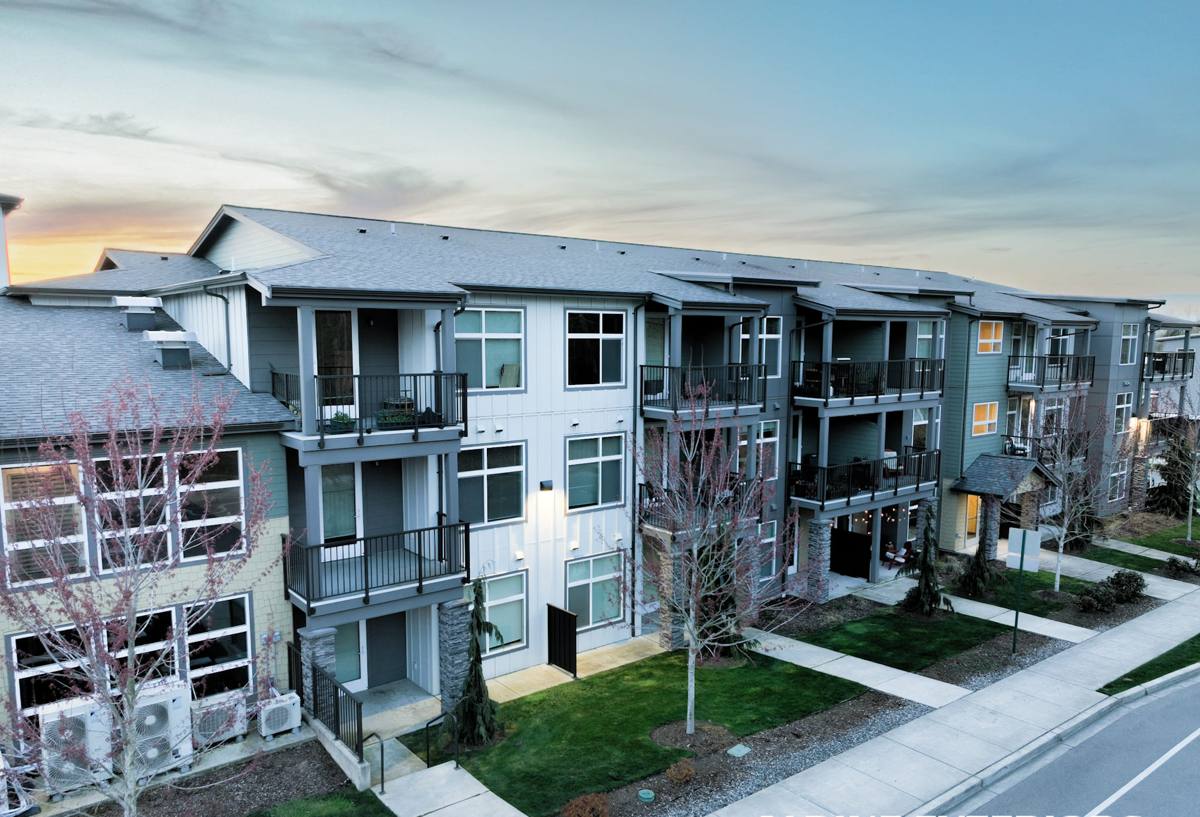
What Makes Siding Age Faster in This Neighborhood
Several things stack up against exterior siding in this part of Bellingham, and most of them are specific to the location rather than generic "Pacific Northwest weather" talking points:
- Salt air corrosion — proximity to Bellingham Bay means fasteners, trim flashing, and caulk joints break down faster than they would further inland.
- Driving rain — storms coming off the water push rain sideways into lap joints, corner trim, and window and door penetrations, not just straight down onto the wall.
- Heavy tree cover — mature trees common on Happy Valley lots keep siding shaded and slow to dry, which is exactly the condition moss and algae need to take hold.
- Freeze-thaw cycling — cold snaps that follow wet stretches can force trapped moisture to expand inside cracks and seams, widening damage that started small.
- Hillside grading — sloped lots throughout the neighborhood can direct runoff toward foundations and lower wall sections if gutters and drainage aren't doing their job.
None of these are unusual for Whatcom County, but combined, they mean siding here needs repair work that treats moisture control as the priority, not an afterthought to patching a visible crack.
Common Signs Your Siding Needs Repair
Most siding problems show themselves before they become expensive. Homeowners in Happy Valley should watch for:
- Soft or spongy spots when you press on the siding by hand
- Paint or finish that's bubbling, peeling, or flaking in patches
- Dark staining or streaking running down from seams and joints
- Moss or green-black algae building on the siding face itself, not just the roof
- Visible gaps opening up at butt joints, corners, or trim boards
- Cracked, warped, or bowing boards, especially on shaded walls
- Nail pops or fasteners showing rust stains
- A musty smell near exterior walls, or staining showing up on interior drywall
Any one of these can be minor on its own. Several showing up together, or on the same wall, usually means water has been getting behind the siding for a while.
Repair or Replace? How We Make the Call
Not every problem needs a full re-side, and we don't sell replacement when a repair will genuinely hold. The decision comes down to how far the damage has traveled and what's underneath it.
| Factor | Repair Is Usually Enough | Replacement Is Usually Needed |
|---|---|---|
| Extent of damage | Isolated to a few boards or one section of wall | Spread across multiple walls or the whole elevation |
| Moisture path | Caught early — surface caulking or flashing failure only | Long-term leak that's reached the sheathing or framing |
| Underlying material | Sound siding with a localized crack or impact hit | Rot, delamination, or swelling in the siding itself |
| Age and condition | Surrounding siding is otherwise in good shape | Rest of the siding is near the end of its service life anyway |
We test moisture levels and check what's happening behind the surface before recommending either path — a wall that looks fine from the sidewalk can still be hiding saturated sheathing, and a cracked board that looks bad can sometimes be a clean, contained fix.
Matching Material and Finish
When a repair is the right call, matching the existing siding matters as much as the repair itself. Profile, reveal, and color all need to line up, or the patch becomes the most visible thing on the house. This is easier with a factory-finished product where color is baked in rather than field-painted, since field-matched paint tends to weather at a different rate than the original coat.
Getting the Water Management Right
A repair that only addresses what's visible on the surface without fixing the flashing, house wrap, or drainage path behind it is a temporary fix. We treat the water management layer — not just the siding board — as the actual repair.
What a Correct Siding Repair Actually Involves
A proper repair starts with an inspection, not a patch kit. That means:
- Checking behind the siding at the damaged area, not just assessing what's visible from outside
- Testing moisture content in the siding and, where accessible, the sheathing behind it
- Verifying flashing above windows, doors, and horizontal trim is doing its job
- Confirming the house wrap or weather-resistant barrier is intact and lapped correctly
- Replacing damaged fasteners with corrosion-resistant hardware suited to a marine climate
- Sealing joints where sealant is actually needed — and leaving drainage gaps where the siding system is designed to shed water, rather than caulking everything shut
Caulking over a problem without addressing what's causing it is the single most common shortcut in siding repair, and it's the reason "repaired" siding so often fails again within a season or two.
Why We Repair — and Replace — With James Hardie Fiber Cement Only
We install and repair with James Hardie fiber cement siding exclusively. We don't install vinyl, LP SmartSide, Cemplank, Allura, primed spruce, or cedar, and in a neighborhood like Happy Valley — with salt air, sustained moisture, and heavy shade — the reasons matter more than they might in a drier climate.
Vinyl siding can crack and become brittle with age and temperature swings, and once a section is damaged, matching a weathered, sun-faded panel with new material is often impossible. Wood and engineered wood products like LP SmartSide can perform well when properly maintained, but they're more sensitive to sustained moisture exposure — exactly the condition this neighborhood's tree cover and rainfall create — and a repair on wood-based siding only holds if moisture is kept out completely going forward.
HZ5 Engineered for This Climate
James Hardie's HZ product lines are engineered for specific climate zones, and the versions specified for the Pacific Northwest are built to handle sustained moisture exposure without the swelling, warping, or rot risk that comes with wood-based products. Fiber cement itself is also non-combustible, which is a real advantage independent of the moisture question.
ColorPlus Finish and Warranty
Hardie's ColorPlus finish is baked on at the factory rather than applied on site, which means better fade resistance and a color that's far easier to match if a future repair is ever needed. It's backed by a strong transferable warranty — useful for Happy Valley's mix of long-time owners and newer buyers alike, since a warranty that transfers protects the investment through a sale.
Our Process for Happy Valley Homeowners
Every job starts with a straightforward, no-pressure assessment:
- On-site inspection — we look at the visible damage and check moisture levels and the condition of what's behind the siding.
- Honest scope — you get a clear recommendation on repair versus replacement, in writing, with the reasoning explained.
- Correct repair work — flashing and water management are addressed first, then siding is repaired or replaced with matched James Hardie material.
- Cleanup and walk-through — the site is cleaned up and we walk the repair with you before calling the job done.
Why Local Experience in This Part of Bellingham Matters
A crew that's already worked in Happy Valley knows things a generic estimate can't capture — where hillside lots tend to send runoff, which walls take the worst of the wind-driven rain off the bay, and which shaded, tree-covered sections are most prone to moss buildup. That local pattern recognition means fewer surprises once a wall is opened up, and it means the repair addresses the conditions this specific neighborhood creates rather than a generic checklist.
It also means faster, more accurate estimates and familiarity with how Bellingham and Whatcom County permitting and inspection work when a repair crosses into replacement territory.
Keeping Repaired Siding Sound Longer
A correct repair should last, but a few habits extend it further in this climate:
- Keep gutters and downspouts clear so water isn't overflowing onto siding below
- Clear leaves and debris from where siding meets the ground or lower trim
- Trim back vegetation and tree limbs that keep walls shaded and damp
- Gently wash off moss or algae buildup before it spreads, rather than letting it sit
- Keep an eye on caulk lines around windows, doors, and trim, and have any that are cracking addressed early
If you're seeing any of the warning signs above on a Happy Valley home, or just want an honest read on whether a repair will hold, we're happy to take a look. The estimate is free, there's no pressure, and you'll get a straight answer about what your siding actually needs — just fill out the form below.