 Bellingham Roofing
 Siding Repair Built for Puget's Climate
Homes in the Puget area near Bellingham take a different kind of beating than houses just a few miles inland. Being closer to the water means more salt-laden air moving across siding day after day, more wind-driven rain hitting walls at an angle instead of falling straight down, and a moss season that runs longer than most homeowners expect. None of that is dramatic on its own, but stacked together over years, it's exactly the combination that finds every weak point in a siding system — a cracked caulk joint, a missing piece of flashing, a panel that was never quite sealed right at installation.
We work on homes throughout Whatcom County, and the repair calls we get from Puget and the surrounding waterside neighborhoods have a recognizable pattern: moisture damage concentrated on the sides of the house that face prevailing weather, moss and algae buildup in shaded, damp corners, and corrosion on fasteners and trim that wouldn't show up nearly as fast on a home further from the Sound. Repairing siding here isn't just about matching a few boards — it's about understanding why that section failed in the first place and making sure the fix doesn't fail the same way again.
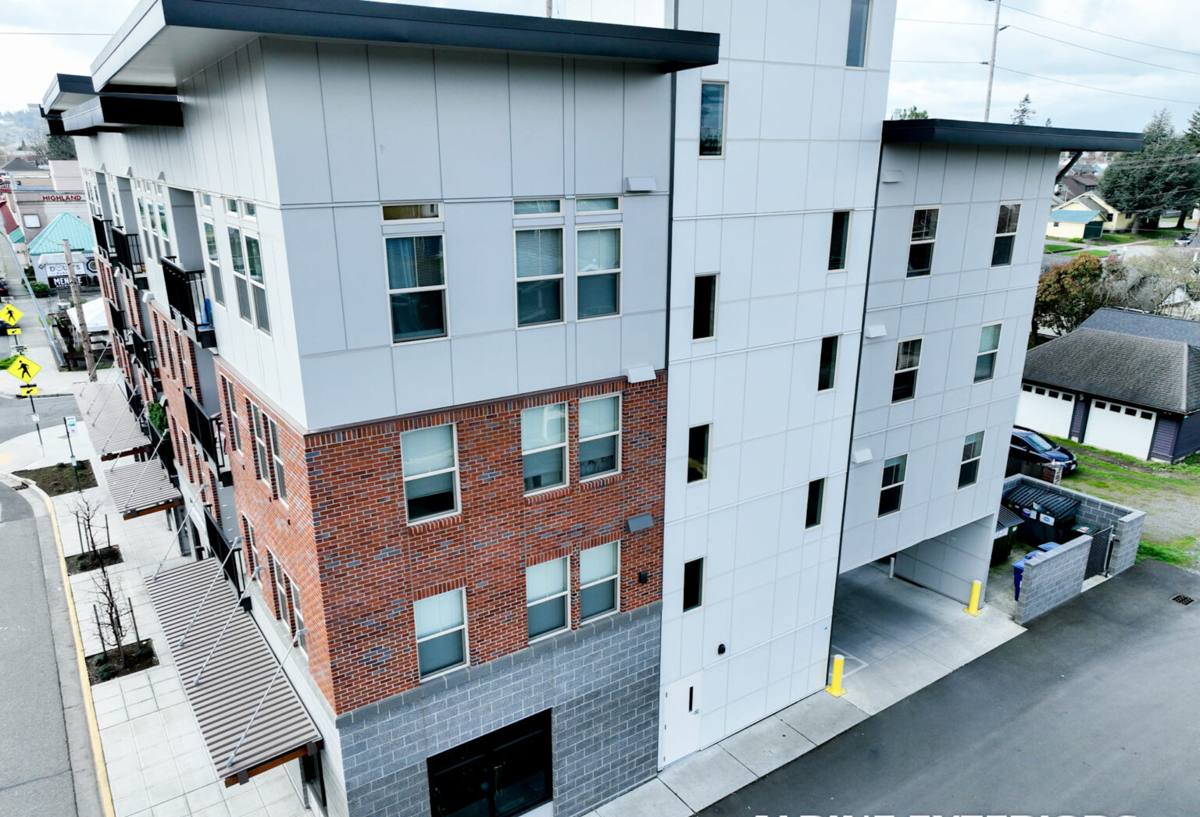
Why Salt Air and Moisture Wear Siding Down Faster
Salt air carries fine particulates that settle on exterior surfaces and accelerate corrosion of metal components — nails, screws, flashing, and trim fasteners in particular. On siding systems that use dissimilar or lower-grade metals, that corrosion can start well before the siding material itself shows any wear. Combine that with the region's near-constant humidity and driving rain events, and you get a slow, steady moisture cycle: wet, damp, wet again, rarely fully dry. Materials that don't handle moisture cycling well — wood-based products, some engineered composites, and vinyl with poorly sealed seams — tend to show it first as swelling, warping, or paint failure, and later as rot or structural softening underneath.
What This Looks Like on a Real Wall
- Soft or spongy spots where a panel has absorbed moisture over time
- Paint or finish that's peeling, bubbling, or chalking unevenly across a wall
- Dark streaking or green-black growth concentrated in shaded, low-airflow areas
- Corroded or rust-streaked fasteners visible at panel edges and trim
- Gaps at seams, corners, or window trim where caulk has shrunk or pulled away
- Panels that have started to bow, cup, or separate slightly from the wall
Moss Season: More Than a Cosmetic Problem
Bellingham's moss season stretches long — the region's cool, wet stretches give moss and algae exactly the conditions they need to establish and spread. On siding, moss isn't just an appearance issue. It holds moisture directly against the surface for extended periods, well past the point where the material would otherwise have dried out. On materials that are moisture-sensitive, that constant dampness is what eventually leads to rot, delamination, or paint failure underneath the growth. By the time moss is visibly established, there's often already moisture damage happening beneath it that isn't obvious from the ground.
Moss also tends to concentrate in specific, predictable spots — north-facing walls, areas shaded by trees or overhangs, and anywhere airflow is restricted, like behind shrubs planted close to the foundation. When we're diagnosing a repair in Puget, those are the first areas we check, moss visible or not, because they're the areas most likely to be hiding damage that hasn't shown up on the surface yet.
What a Correct Siding Repair Actually Involves
A quality repair isn't just swapping a damaged board for a new one. Done right, it starts with figuring out why that section failed — because if the underlying cause isn't addressed, the same spot fails again in a few years, sometimes worse than before.
Our Repair Process
- Diagnose the cause, not just the symptom. We check whether the damage is from a flashing failure, a caulk joint that's given out, a drainage problem behind the wall, or simple material fatigue — each has a different fix.
- Inspect the water-resistive barrier and flashing. If the house wrap or flashing behind the damaged siding has failed, replacing the siding alone won't solve the problem — moisture will just find its way back in.
- Remove damaged material cleanly. We cut back to sound material and undamaged fasteners so the repair has a solid base to tie into.
- Repair or replace the barrier and flashing as needed. This is the step that's easy to skip and the one that determines whether the repair actually lasts.
- Install matching material correctly. Proper fastener placement, correct gaps at seams and butt joints, and manufacturer-spec sealant — not just "close enough."
- Finish and blend. Match paint or factory finish as closely as possible so the repair doesn't stand out as a patch.
Repair vs. Replace: How We Make That Call
Not every damaged section needs a full re-side, and not every "repair" request should end there. We look at how much of the wall is affected, what's causing the damage, and how old the existing siding is before recommending a direction.
| Situation | Usually Repair | Usually Replace |
|---|---|---|
| Damage isolated to one wall section | Yes | — |
| Moisture damage traced to a single flashing failure | Yes | — |
| Widespread moss/moisture damage across multiple walls | — | Yes |
| Original material is wood, LP, or aging vinyl nearing end of life | Sometimes | Often |
| Damage is cosmetic only, structure underneath is sound | Yes | — |
| Rot has spread into sheathing or framing | — | Yes |
When a repair is the right call, we do the repair. We're not going to push a full replacement on a homeowner who has one bad section of siding and a sound wall everywhere else. When the damage is widespread or the existing material is fundamentally not suited to this climate, we'll say so plainly and explain why.
Why We Only Repair and Replace With James Hardie
When repair work does turn into replacement — whether it's one wall or the whole house — we install James Hardie fiber cement siding and nothing else. That's a deliberate standard, not a default. We don't install vinyl, LP SmartSide, primed spruce, cedar, or other fiber cement brands, and in a climate like Bellingham's, the reasoning is straightforward: fiber cement doesn't absorb and swell with moisture the way wood-based products do, it's non-combustible, and Hardie's ColorPlus factory finish holds up to sun and salt air far better than field-applied paint. Hardie also engineers specific product lines for different climate exposures, which matters directly for a location like Puget where wind-driven rain and moisture cycling are part of daily conditions, not occasional weather events.
It's also simply easier to guarantee a repair when we control the material end to end. We know exactly how Hardie panels behave over time, how they take a patch, and how a repaired section will hold its finish alongside the surrounding siding — because we've installed it enough times to know, not guess.
Why a Crew That Already Works This Area Matters
A siding repair on a Puget-area home isn't quite the same job as the same repair fifteen miles inland. A crew that hasn't worked homes exposed to this level of salt air and driving rain can miss the less obvious damage — corrosion hiding under trim, a flashing detail that's marginal but hasn't failed yet, moisture trapped behind moss that hasn't reached the surface. We've done enough of these repairs in and around Bellingham and Whatcom County to know where to look first and what a wall exposed to this climate is actually telling us.
That local familiarity also shows up in smaller, practical ways: knowing which product finishes hold their color longest in this exposure, knowing how long a caulk joint realistically lasts here versus the manufacturer's general claim, and knowing which parts of a house typically need attention first based on orientation and shading — not textbook assumptions, but patterns we've actually seen repeated across homes in this area.
Signs It's Time to Call for a Repair
- Visible gaps, cracks, or separation at siding seams and corners
- Soft spots when you press gently on a section of siding
- Moss or dark staining that keeps returning after cleaning
- Paint failure concentrated on one or two sides of the house
- Rust streaks below fasteners or trim
- Any section that looks or feels different from the rest of the wall
None of these mean the whole house needs new siding. They mean it's worth having someone look before a small, contained problem turns into a bigger one over another wet Whatcom County winter.
If you're seeing any of this on a home in Puget or nearby, we're glad to take a look and give you a straight answer — repair, partial replacement, or leave it alone — with no pressure either way. Reach out for a free estimate using the form below.