 Bellingham Roofing
 Siding Replacement Built for the Puget Area's Climate
Homes in the Puget area near Bellingham deal with a specific combination of weather that most siding products were never designed around: salt-tinged marine air, rain that comes in sideways more often than straight down, and a moss and mildew season that can run most of the year. None of that is dramatic on any single day. It's the accumulation, year after year, that wears out siding well before a homeowner expects to be dealing with it. When we talk about siding replacement in this part of Whatcom County, we're talking about matching the material and the installation detail to that reality, not just swapping old panels for new ones in whatever color the last homeowner picked.
Salt Air and Slow Corrosion
Proximity to open water means a steady drift of mildly corrosive, moisture-laden air moving across exterior surfaces most of the year, not just during storms. That kind of exposure works slowly on fasteners, flashing, and lower-grade finishes. It rarely announces itself. It shows up years later as rust bleed at nail heads, degraded caulking, or a paint finish that's chalked and faded well ahead of its expected life.
Driving Rain That Finds Every Gap
Wind off the water doesn't just make rain heavier, it changes the angle it hits a wall from. Driving rain gets pushed into lap joints, trim seams, and wall penetrations that a siding system designed for a calmer, drier climate was never really tested against. A house that would hold up fine well inland can still take on water here specifically because of how wind and rain interact this close to the coast.
A Moss Season That Doesn't Really End
Mild, consistent dampness and mature tree cover on many Puget-area lots add up to an extended moss and mildew season, especially on north-facing walls and anywhere shade keeps a surface from drying out between rain events. Porous or moisture-retentive siding materials become a growth surface over time, and the problem usually starts in the spots homeowners check least: behind shrubs, under eaves, along the shaded side of the house.
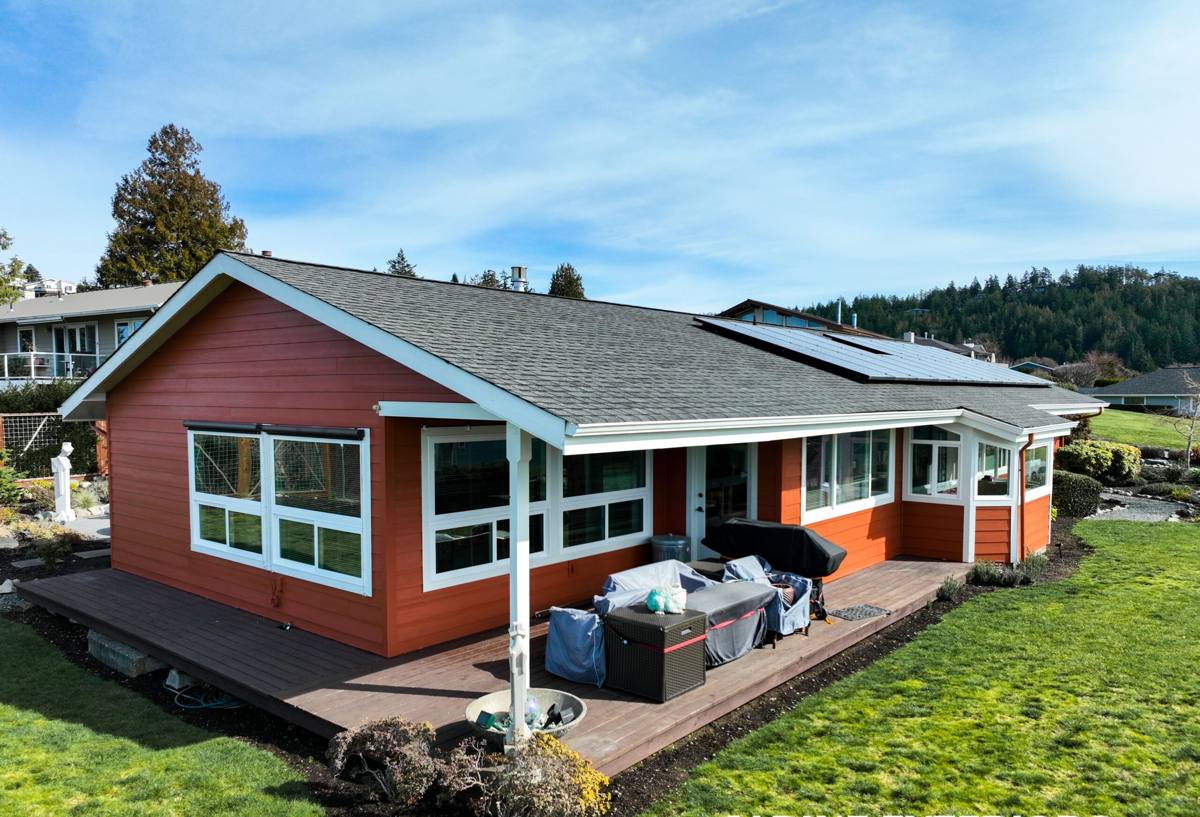
Repair or Full Replacement? Signs Worth Knowing
Not every siding problem on a Puget-area home means a full tear-off. Isolated impact damage or a section that's failed around a single window can sometimes be repaired and matched into existing material. But when moisture has been working behind the wall assembly for a while, or the siding has simply reached the end of its service life, patching usually just delays a bigger project and lets hidden damage keep spreading. These are the signs we take seriously when we're deciding which situation a home is actually in:
- Moss or dark staining that comes back quickly after cleaning, especially on shaded or north-facing walls
- Soft or spongy siding, particularly near the base of the wall or around window and door trim
- Peeling, bubbling, or chalking paint on siding boards or trim
- Cracked, warped, or missing siding sections after wind events
- Visible gaps at seams, corners, or trim joints where water can track in
- Rust staining around fasteners or flashing, a common early sign of marine air exposure
- Rising heating bills that may point to a wall assembly that's no longer sealing properly
- Siding that's original to a home built decades ago and has never been replaced
What a Correct Siding Replacement Actually Involves
The material you choose matters, but it's only part of the job. A siding replacement that actually performs the way it's supposed to in a climate this wet depends just as much on what happens underneath the visible surface.
Tear-Off and What's Underneath
Full tear-off is the only way to see what's really going on behind old siding. On homes where moisture has been getting in for years without an obvious sign from the street, it's common to find soft or damaged sheathing that needs to be addressed before anything new goes up. Skipping that inspection and installing over a compromised wall just buries the problem under a fresh surface.
Water Management Before the New Siding Goes Up
House wrap, flashing at every window and door, and proper drainage planes need to function as one integrated system, not a series of separate steps done in isolation. This is where a driving-rain climate punishes shortcuts. A wall that looks finished from the curb can still be taking on water if the flashing behind the siding wasn't detailed correctly, and that kind of failure often doesn't surface for years.
Fastening, Clearance, and Joint Detail
Correct fastener spacing and type, proper clearance from grade and rooflines, and joints that are lapped and sealed the way the manufacturer specifies all affect how well siding actually resists wind-driven rain over time. A rushed or corner-cut installation is one of the most common reasons a good product ends up with a poor real-world track record, which is why we treat installation detail with the same seriousness as material selection.
Why We Only Install James Hardie Fiber Cement
We don't carry a lineup of siding brands and let price sort out the decision for the homeowner. We install James Hardie fiber cement, and only James Hardie, because of what we've consistently seen on tear-offs and repair calls in this exact kind of marine climate.
- Non-combustible core: Fiber cement doesn't feed a fire the way wood-based siding products can, which matters for household safety and can matter for insurance considerations.
- Factory-applied ColorPlus finish: The color coat cures under controlled factory conditions instead of being brushed on at the job site, giving it far more resistance to fading, chalking, and moisture intrusion over time.
- Climate-engineered HZ product lines: Hardie's HZ5 formulation is built specifically for regions with heavy sustained moisture and freeze-thaw cycling, a closer match to coastal Whatcom County than a generic national spec.
- Dimensional stability: Fiber cement doesn't swell, cup, or warp the way engineered wood products can after repeated wet-season moisture cycles.
- Strong transferable warranty: Hardie backs its products with one of the more substantial warranty structures in the industry, provided the installation follows spec.
We don't install LP SmartSide, vinyl siding, Cemplank, Allura, primed spruce, or cedar. Those are legitimate products, and plenty of contractors install them competently. We made a professional call that in a climate this consistently wet and salt-exposed, standing behind one system we understand completely serves homeowners better than offering a cheaper option that quietly shifts maintenance risk onto them down the road.
How the Common Alternatives Compare in This Climate
| Material | What It Gets Right | Trade-Off in a Marine Climate |
|---|---|---|
| Vinyl siding | Low upfront cost, low maintenance in mild climates | Can warp under direct sun, crack in a cold snap, and trap moisture behind the panel if house wrap and flashing weren't done with real care |
| LP SmartSide | Wood-look appearance, engineered for consistency | Resin-treated strand core is more sensitive to moisture intrusion at cut edges and fastener penetrations than fiber cement |
| Cedar | Natural appearance, long tradition in the Pacific Northwest | Needs ongoing painting or sealing to keep moisture out; that maintenance schedule tends to slip in a climate this wet |
| Primed spruce | Lower material cost, familiar installation | Similar moisture and maintenance sensitivity to cedar, with less inherent decay resistance |
| James Hardie fiber cement | Non-combustible, factory-cured finish, climate-engineered HZ formulations | Higher upfront cost than vinyl; requires correct installation to perform to spec |
Our Siding Replacement Process
- On-site walkthrough: We assess the home's actual exposure, existing siding condition, and any visible signs of moisture damage before quoting anything.
- Written scope and product selection: You get a clear, specific scope, including which Hardie product line and profile fits the home, not just a square-footage number.
- Full tear-off: Old siding comes off completely so we can see the sheathing and framing underneath, not just the parts visible from the ground.
- Substrate repair: Any soft, rotted, or water-damaged sheathing gets addressed before new material goes up. We'll show you what we find.
- House wrap and flashing: A continuous water-management system goes in first, with particular attention to window and door flashing, which is where driving rain most often finds a way in.
- Hardie installation to spec: Correct fastening, clearance, and joint detail, installed the way the manufacturer specifies so the warranty and the performance both hold up.
- Final walkthrough: We go over the finished work with you before we call the job done.
What Affects the Cost of a Siding Replacement
| Factor | What It Affects | Why It Matters in Puget |
|---|---|---|
| Substrate condition | Repair costs before new siding goes on | Years of trapped moisture behind failing siding can rot sheathing before it's ever visible from outside |
| Home size and wall complexity | Total material and labor | More corners, trim detail, and roof intersections mean more places driving rain can work its way in |
| Tear-off vs. overlay | Labor scope and substrate access | Full tear-off is usually the only way to catch hidden moisture damage this close to the water |
| Site access | Labor time and equipment needs | Sloped or tightly landscaped lots common in the area can add staging and setup time |
| Trim and color selection | Material cost and finish longevity | Factory-cured ColorPlus finishes outlast field-applied paint against salt air and UV exposure |
Real numbers depend on the specific house, which is why we walk the property in person before quoting instead of pricing off square footage alone.
Why Hiring a Crew That Already Works in Puget Matters
A crew that works this part of Whatcom County regularly sees how salt air, driving rain, and a long moss season actually behave on real houses over a full year, not just how a product performs on a spec sheet. That translates into practical decisions on install day: where extra flashing attention pays off, which wall orientations stay damp longest, and which details are worth the extra time so you're not dealing with a callback two winters later. A homeowner in the Puget area shouldn't have to explain local conditions to a contractor who mostly works somewhere drier. It should be the other way around.
If your Puget-area home needs a siding replacement, or you're not sure yet whether you're looking at a repair or a full tear-off, we're glad to take a look and give you a straight answer. Reach out using the form below to schedule a free, no-pressure estimate.