 Bellingham Roofing
 Storm Damage Roofing in Sehome: A Neighborhood That Takes a Beating
Sehome sits on higher, wooded ground close to Bellingham Bay, which means the roofs here catch the worst of what Whatcom County weather has to offer. Wind off the water gets funneled and accelerated as it moves up the hillside streets, driving rain sideways under shingle tabs that would stay dry on a flatter, more sheltered lot. Add in the tree cover that gives Sehome its shaded, established feel, and you've got a roof that's dealing with wind-driven rain, falling limbs, and near-constant shade that keeps moss and moisture problems going twelve months a year.
Storm damage in this neighborhood rarely looks dramatic. It's a handful of lifted shingles, a bent piece of flashing, a soft spot where a branch came down during the last windstorm. None of it looks urgent from the driveway, and that's exactly why it turns into a bigger problem — small storm damage left alone through a Bellingham winter has months of rain to find its way in before anyone notices a stain on the ceiling.
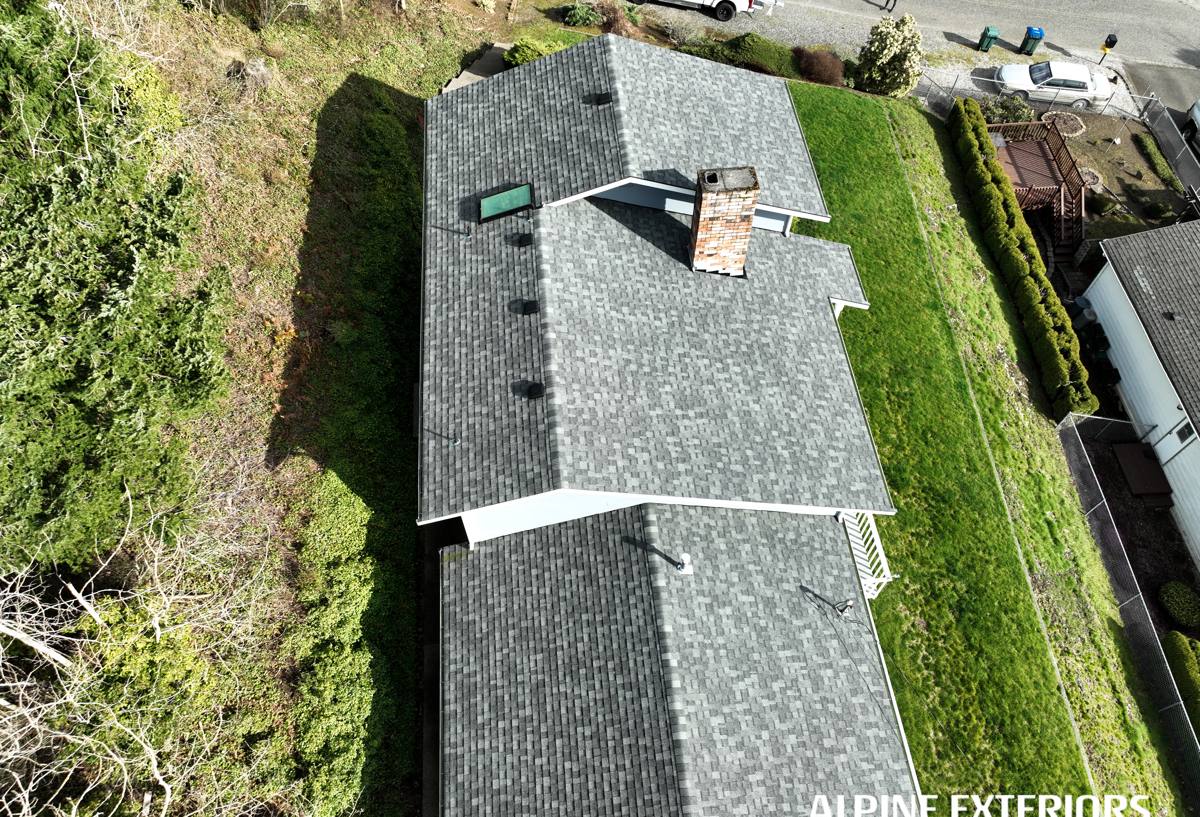
What Bellingham's Climate Does to a Storm-Damaged Roof
This isn't damage that happens once and then sits still. Whatcom County's wet season runs long, and every storm after the first one works on whatever weakness the last one left behind.
Salt Air
Proximity to Bellingham Bay means metal roof components — flashing, fasteners, gutter hardware — are exposed to salt-laden air that accelerates corrosion compared to homes further inland. A fastener or flashing seam that's already been stressed by wind is more likely to corrode and fail sooner near the water.
Driving Rain
Storms here tend to bring rain at an angle, not straight down. Wind-driven rain finds gaps that vertical rain never would — lifted shingle tabs, compromised flashing, nail pops — and pushes water uphill under roofing materials rather than just running off them.
A Long Moss Season
Bellingham's mild, damp climate and Sehome's tree cover create ideal conditions for moss and algae for most of the year. Moss isn't just cosmetic — it holds moisture against the roof surface, works its way under shingle edges, and can lift and separate shingles that storm wind has already loosened, turning a minor problem into an entry point for water.
Freeze-Thaw Cycling
Whatcom County doesn't get deep freezes often, but it gets enough short cold snaps that water trapped in a storm-damaged spot can freeze, expand, and widen the damage before a thaw lets it drain — a slow-motion process that turns a pinhole leak into a real one over a few winters.
Recognizing Storm Damage on a Sehome Roof
Most storm damage doesn't announce itself. Here's what we look for, and what you can check yourself before it's worth a service call.
From the Ground
- Shingles that look curled, cupped, or lifted at the edges, especially on the side of the roof that faces prevailing wind
- Granules collecting in gutters or at downspout outlets — a sign of shingle surface wear from wind and impact
- Visible gaps or dark lines along roof valleys, ridges, or where the roof meets a chimney or wall
- Flashing that looks bent, lifted, or separated from the roof surface
- Branches or debris resting on the roof after a windstorm, even if nothing looks broken
- Sagging or uneven rooflines, which can indicate deck damage underneath
From the Attic
- Daylight visible through the roof deck
- Damp or discolored insulation, especially near the roof edges or around penetrations
- Water stains or streaking on rafters or the underside of the decking
- A musty smell that wasn't there before the last storm
If you notice any of these after a windstorm, it's worth getting a look before the next round of rain moves through — not because every sign means a major problem, but because storm damage is far cheaper to fix while it's still small.
What a Correct Storm Damage Repair Actually Involves
A storm repair that's done right isn't just replacing the shingles you can see from the street. Wind and rain damage rarely stays contained to one spot, and a repair that only addresses the visible symptom tends to fail again in the next storm. A proper repair looks at:
- The roof deck — the plywood or OSB sheathing underneath. If it's been wet long enough to soften or delaminate, patching over it won't hold.
- The underlayment — the water-resistant barrier between the deck and the shingles. Storm damage often tears or displaces this layer even when the shingles above it look mostly intact.
- Flashing — around chimneys, vents, skylights, and valleys. This is where the majority of storm-related leaks actually originate, not in the open field of shingles.
- Fasteners — wind can back nails out or shear them off without visibly displacing the shingle. A shingle that looks fine but isn't properly fastened will lift again in the next storm.
- Ventilation — damaged or blocked roof vents change how moisture moves through the attic, which matters a lot in a climate as wet as Bellingham's.
This is also why a same-day patch job and a proper storm repair aren't the same thing. A patch stops the immediate leak. A repair addresses why the leak happened and makes sure the same wind event doesn't reopen it.
Our Storm Damage Repair Process
- Inspection and documentation. We walk the roof and the attic, photograph the damage, and give you a straight answer on whether you're looking at a repair or something bigger. If it's insurance-related, this documentation matters — see below.
- Emergency mitigation, if needed. If there's active water intrusion, we get the roof tarped or otherwise protected the same day so the damage doesn't grow while a permanent repair is scheduled.
- A written repair plan. You get a clear scope before any work starts — what's being replaced, what materials are going on, and why. No surprise add-ons mid-job.
- The repair itself. Deck repair or replacement where needed, new underlayment in the affected area, matched shingles or roofing material, and flashing reset or replaced — not just caulked over.
- Cleanup and inspection. Old materials and debris hauled off, and a final check to confirm the repair is sealed and weathertight before we consider the job done.
Repair or Replace? What Actually Drives That Decision
Not every storm-damaged roof needs to be replaced, and not every roof that "just needs a patch" should be repaired instead. The honest answer depends on a few factors, not on how bad the damage looks from the ground.
| Factor | Favors Repair | Favors Replacement |
|---|---|---|
| Age of existing roof | Roof is less than half through its expected lifespan | Roof is near or past its expected service life |
| Extent of damage | Damage is localized to one section or slope | Damage is spread across multiple areas or slopes |
| Deck condition | Sheathing underneath is sound | Widespread soft spots or rot in the decking |
| Shingle match availability | Matching shingles are available for a clean repair | Discontinued material means visible mismatch after repair |
| History of prior storm damage | First significant damage event | Repeated repairs to the same areas over recent years |
We'll tell you honestly which side of that table your roof falls on. A roof with years of life left rarely needs a full replacement over one storm event, and we're not going to sell you one it doesn't need.
Materials We Use for Storm Repairs in This Climate
What goes back on a Sehome roof after storm damage matters as much as the repair work itself. Our standard for this climate:
- Ice-and-water shield underlayment at valleys, eaves, and around penetrations — the areas most prone to wind-driven water intrusion in Whatcom County storms.
- Corrosion-resistant flashing appropriate for coastal-adjacent exposure, given the salt air off Bellingham Bay.
- Matched or compatible shingle products rated for wind resistance, since a repair using a lower wind rating than the surrounding roof just creates the next weak point.
We're generally cautious about wood shake repairs in this specific climate. Shake holds moisture longer than composition or metal roofing, and in a neighborhood with Sehome's tree cover and shade, that moisture has fewer chances to dry out between storms — which speeds up moss growth and rot. If your home has a shake roof, we'll still repair it properly; we just won't pretend the maintenance burden isn't higher here than it would be on a drier lot.
Moss, Salt Air, and Keeping a Repaired Roof Repaired
A storm repair is only as good as what happens to the roof afterward. Two things shorten the life of repair work in Sehome faster than anything else: moss regrowth and neglected gutters.
Moss that's allowed to re-establish will lift shingle edges again, including ones that were just repaired, and it does this quietly over a season or two rather than all at once. Gutters clogged with needles and debris from the surrounding tree cover back water up under the roof edge during heavy rain, which is exactly the kind of pressure that turns a small repair into a recurring leak.
A basic seasonal maintenance rhythm goes a long way here:
- Gutters cleared at least twice a year, more often on heavily treed lots
- Moss treatment or removal before it spreads past a thin surface layer
- A visual check after any significant windstorm, not just once a year
- Prompt attention to any granule buildup in gutters, which signals surface wear
Insurance Claims After Storm Damage
Many storm repairs in Bellingham are at least partially covered by homeowner's insurance, but coverage depends entirely on your specific policy, the cause of damage, and your insurer's own claims process — we're not in a position to promise a claim outcome, and we'd rather be upfront about that than tell you what you want to hear.
What we can do is document the damage thoroughly with dated photos and a clear written scope, which is exactly what an adjuster needs to evaluate a claim fairly. If you're filing a claim, having that documentation in hand before the adjuster visits tends to make the process go smoother, and we're glad to walk you through what we found.
Why It Matters to Hire a Crew That Already Works in Sehome
Storm damage repair isn't a job where local experience is just a nice-to-have. A crew that already works this neighborhood knows how the terrain channels wind differently than it does two miles away in a more open part of Bellingham, knows what a normal amount of moss looks like here versus what's actually a problem, and can get to a leaking roof faster after a storm because they're not driving in from across the county. When a windstorm rolls through Whatcom County, response time matters — a tarp that goes up same-day is the difference between a repair job and a much larger one.
Local experience also means fewer surprises during the repair itself. We're not guessing at how this climate behaves — we're working from what we've already seen hold up, and what hasn't, on roofs facing the same wind and rain patterns as yours.
Get a Free, No-Pressure Storm Damage Estimate
If your Sehome home has visible storm damage — or you're just not sure after the last windstorm — we'll come out, take an honest look, and tell you plainly what we find. No pressure, no inflated scope, just a clear picture of what your roof needs. Use the form below to request a free estimate.