 Bellingham Roofing
 Window Installation for Fairhaven Homes
Fairhaven sits right on Bellingham Bay, which means the windows on these homes deal with a different set of stresses than windows a few miles inland. Salt-laden air off the water, wind-driven rain that comes in sideways during winter storms, and a wet season that stretches for months all put extra load on window frames, seals, and the flashing details around them. A window installation that would hold up fine in a drier part of Whatcom County can fail early here if it isn't built and installed with this specific exposure in mind.
We install windows throughout Bellingham, and Fairhaven is one of the areas where we see the clearest pattern of premature failure on the wrong product or a rushed installation. This page covers what actually matters for a Fairhaven window job: the climate factors at play, what a correct installation looks like, and how we handle it.
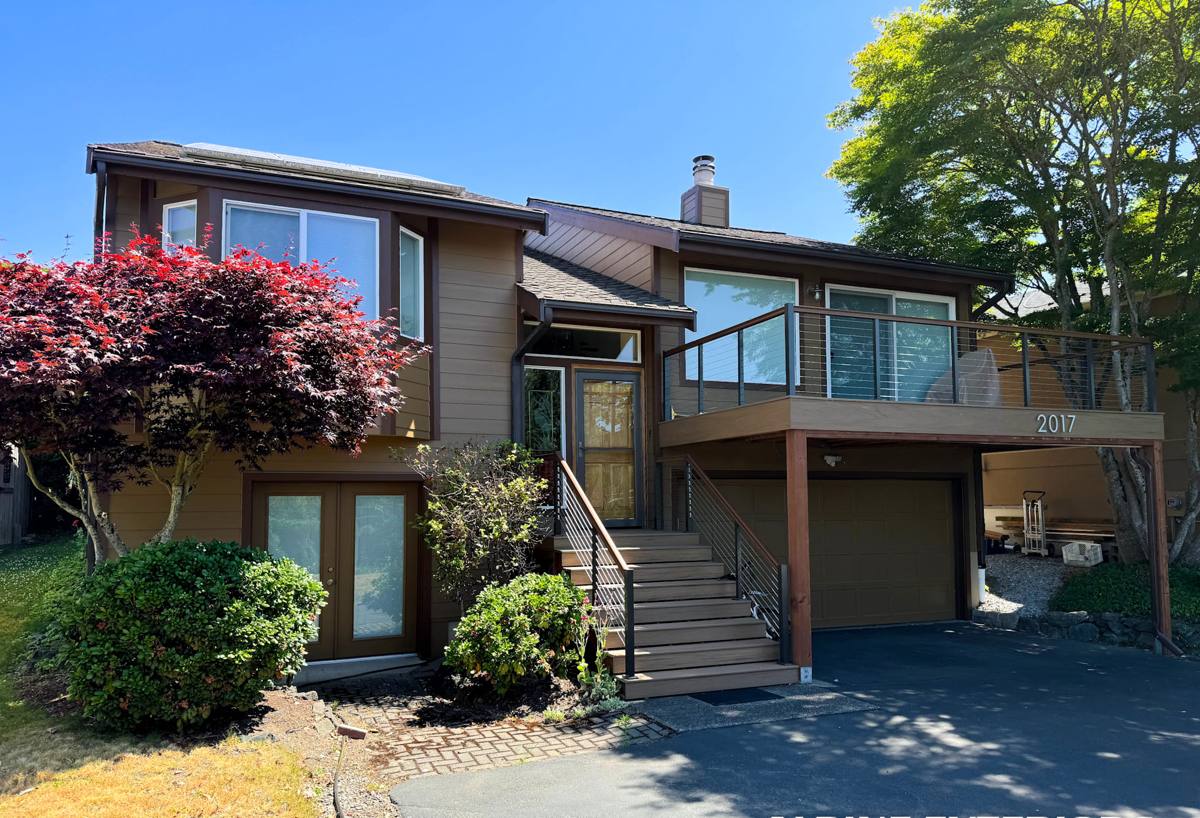
What the Local Climate Does to Windows
Salt Air and Corrosion
Proximity to the bay means a steady low level of salt in the air, even on calm days. Over years, this accelerates corrosion on unprotected metal hardware, aluminum components, and fasteners. It's not usually dramatic or fast, but it shows up as pitted hardware, stiff or sticking sashes, and staining around metal trim pieces well before a comparable window would show wear in a non-coastal location.
Wind-Driven Rain
Storms coming off the water push rain sideways into the building envelope rather than straight down. Windows facing the water or open exposure take the brunt of this. If the flashing, sill pan, or sealant detail around a window is even slightly off, wind-driven rain will find that gap. This is different from a simple downpour — it's water actively being forced against and under the window assembly, which is why water management details matter more here than in sheltered inland locations.
The Long Moss and Moisture Season
Whatcom County's wet season runs long, and constant dampness feeds moss and algae growth on any surface that stays damp — including window sills, trim, and the wood framing around older windows. Moss and algae hold moisture against wood longer than bare wood would hold it on its own, which speeds up rot in sills, jambs, and casing if those surfaces aren't sealed and maintained.
What This Means for Existing Windows
If you're noticing any of the following, it's usually the coastal climate doing its work rather than a sign you did something wrong:
- Fogging or condensation between panes (a failed seal on a double- or triple-pane unit)
- Soft or discolored wood at the sill or bottom corners of the frame
- Hardware that's stiff, corroded, or has visible pitting
- Drafts or a cold feeling near the window even when it's shut
- Visible moss or dark staining building up on the exterior sill or trim
- Difficulty opening or closing sashes that used to move freely
Any one of these on its own might just need a repair or a re-seal. Several at once, or a window over 20 years old showing more than one of these signs, usually means replacement is the more cost-effective path.
Choosing the Right Window Material for This Climate
Not every window product handles a marine, high-moisture environment the same way. Frame material has a real effect on how a window performs near the bay:
| Frame Material | Coastal Performance | Maintenance Needs |
|---|---|---|
| Vinyl | Good — won't corrode or rot, handles moisture well | Low; periodic cleaning of tracks and weep holes |
| Fiberglass | Very good — dimensionally stable, resists moisture and salt exposure | Low; occasional exterior cleaning |
| Wood (unclad) | Weakest in this exposure — prone to rot without diligent upkeep | High; regular repainting and sealing required |
| Wood-clad (aluminum or vinyl exterior) | Good exterior protection with wood interior character | Moderate; interior wood still needs occasional attention |
| Aluminum | Prone to corrosion and thermal transfer in salt air unless well-coated | Moderate to high depending on coating quality |
For most Fairhaven homes, we lean toward vinyl or fiberglass frames for straightforward replacements, and wood-clad when matching an existing wood-window look matters — which it often does in this neighborhood. We don't typically recommend unclad wood or bare aluminum for direct water-facing exposures; it's not that those materials are bad products, it's that they demand a level of ongoing maintenance that most homeowners don't want to sign up for once they understand the tradeoff.
Glass and Seal Considerations
Double-pane, argon-filled, Low-E glass is the practical standard for this climate — it cuts down on the condensation and heat loss that a marine, temperature-swinging climate makes worse. Triple-pane is worth discussing for north- or water-facing rooms where wind exposure is highest, but it adds cost and weight that isn't always necessary on every elevation of a home. We'll walk through which glass package makes sense room by room rather than defaulting to the same spec everywhere.
Fairhaven's Older Homes: Special Considerations
Fairhaven has a higher share of older homes than many parts of Bellingham, including some in and around the historic district. Older construction often means original wood-frame windows, older wall framing methods, and trim details that a generic replacement doesn't always match well. A few things we pay attention to on these jobs:
- Matching sightlines and proportions so a replacement window doesn't look out of place next to original trim and siding
- Checking for existing wood rot or hidden moisture damage in the wall cavity before the new unit goes in — installing over a hidden problem just traps it
- Confirming whether the home is subject to any local historic-district or design-review requirements before ordering product, so there's no surprise mid-project
- Choosing insert versus full-frame replacement based on the actual condition of the existing frame, not just what's easiest to install
None of this is exotic work, but it's the kind of detail that gets missed by an installer who doesn't regularly work older coastal homes.
Full-Frame Replacement vs. Insert Replacement
This is one of the most important decisions on any window job, and it depends entirely on the condition of what's already there — not on which option costs less upfront.
| Factor | Insert (Pocket) Replacement | Full-Frame Replacement |
|---|---|---|
| Existing frame condition | Requires a sound, dry, square existing frame | Necessary when the frame shows rot, water damage, or is out of square |
| Disruption | Faster, less disturbance to interior trim and exterior siding | More involved; exterior trim and some siding typically removed and replaced |
| Access to hidden damage | Limited — problems behind the frame stay hidden | Full access to inspect and repair sheathing, flashing, and framing |
| Best fit | Newer homes or well-maintained older frames | Homes with a history of water intrusion or visible sill/jamb rot |
Given how much wind-driven rain this area sees, we're careful never to recommend an insert replacement over a frame that's already showing water damage — it's a shortcut that just seals a problem in rather than solving it.
Our Installation Process
- On-site assessment — we inspect existing frames, sills, and surrounding wall material for hidden moisture or rot before recommending a product or method.
- Product selection — we go over frame material, glass package, and insert vs. full-frame based on what we found, not a one-size answer.
- Removal and prep — old units come out carefully, especially on older homes, to protect original trim wherever it's being kept.
- Water management detailing — proper flashing, sill pans, and sealants are installed to handle wind-driven rain, not just standard vertical rainfall.
- Insulation and air-sealing — gaps around the new unit are properly insulated and sealed, which affects both comfort and long-term moisture performance.
- Finish work — trim, caulking, and touch-up are completed to match the surrounding exterior as closely as possible.
- Final check — we confirm the unit operates smoothly and the exterior seal is complete before considering the job done.
Why Local Fairhaven Experience Matters
A window installer who mostly works dry, inland, or new-construction jobs may not think twice about wind-driven rain details or salt-air hardware choices, because they rarely have to. Working regularly in Fairhaven and along Bellingham Bay means we've seen which flashing details actually hold up here, which frame materials age well in this exposure, and which older-home quirks are worth planning for before the crew shows up. That local pattern-recognition is the difference between a window that performs for 20-plus years in this climate and one that starts showing seal failure or rot in half that time.
Keeping New Windows Performing Long-Term
A correct installation is the foundation, but a bit of routine upkeep goes a long way in this climate:
- Rinse salt residue and grime off exterior frames a couple of times a year, especially on water-facing elevations
- Clear weep holes and tracks of debris and moss so water drains as designed
- Check exterior caulking annually and touch up before gaps open up
- Keep gutters and downspouts clear so roof runoff isn't dumping extra water onto window heads
- Address any soft spots at sills or trim early, before moisture spreads into the wall
Get a Free Estimate
If you're dealing with drafty, foggy, or hard-to-operate windows in Fairhaven, or you're planning ahead for a full-home replacement, we're happy to take a look and walk you through honest options for your specific home. There's no pressure and no obligation — just a straightforward assessment and a clear estimate using the form below.