 Bellingham Roofing
 Window Replacement for Birchwood Homes
Birchwood is one of Bellingham's older, well-established residential neighborhoods, which means a lot of its housing stock is carrying original or first-generation replacement windows that were never built for the punishment Whatcom County weather delivers year after year. Salt-laden air off the Sound, driving rain that comes in sideways during winter storms, and a moss season that seems to stretch longer every year all work on window frames, seals, and glazing in ways that homeowners further inland simply don't deal with. If your windows are fogging between the panes, sticking in their tracks, or letting in a draft you can feel from across the room, that's not just an inconvenience — it's a sign the building envelope around that opening is starting to fail.
This page is specifically about window replacement in Birchwood. We're not going to give you a generic rundown of window types — we're going to walk through what actually matters for homes in this part of Bellingham, what a correct installation looks like here, and why local experience changes the outcome.
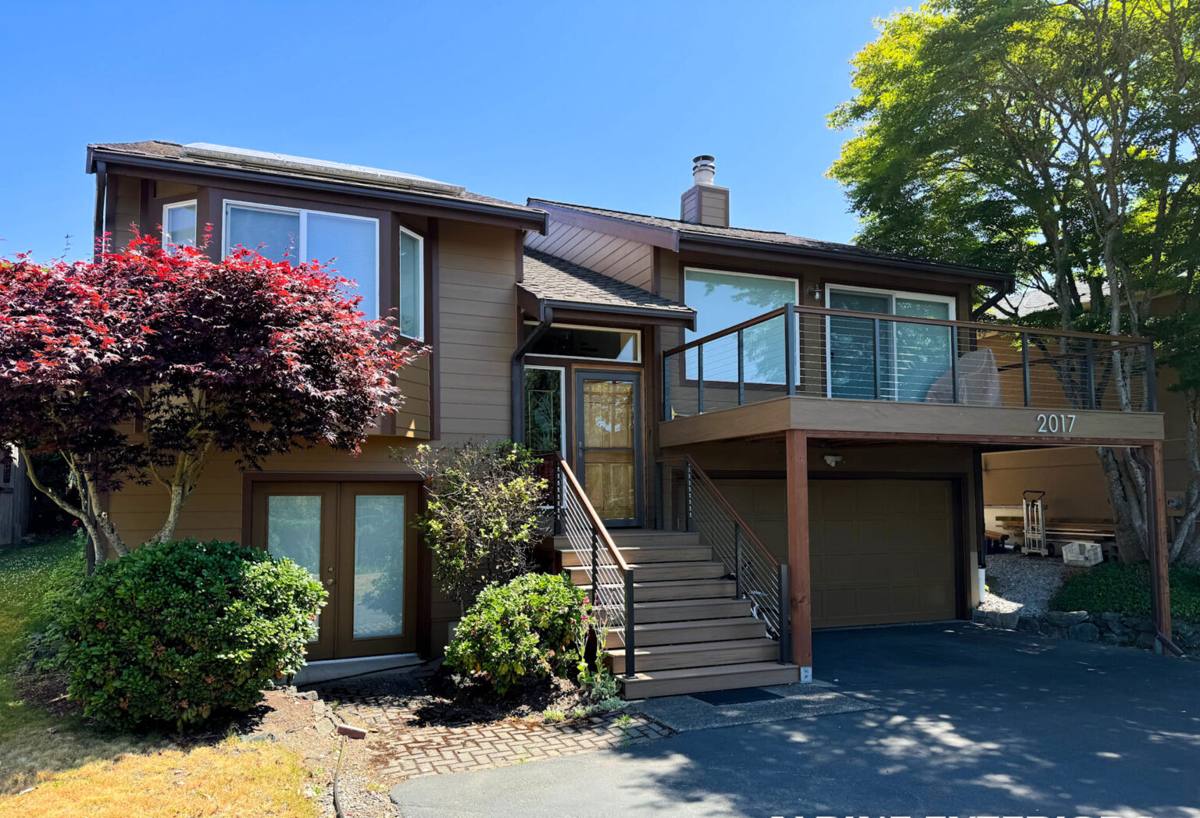
What Bellingham's Climate Does to Windows Over Time
Whatcom County sits in a marine climate zone, and Birchwood's proximity to the water means homes get a steady, low-grade dose of salt air mixed with near-constant moisture for much of the year. That combination is harder on window systems than most people realize:
- Salt air accelerates corrosion on hardware, hinges, and metal window components, even on products marketed as "coastal rated."
- Driving, wind-blown rain finds its way past aging seals and flashing far more easily than a straight-down rain would, which is why leaks often show up around windows facing prevailing weather.
- Extended moss and algae season keeps siding and trim around window openings damp for long stretches, and that moisture has nowhere to go if flashing and drainage details weren't done correctly the first time.
- Repeated freeze-thaw cycles in winter stress seals and caulking, opening tiny gaps that widen every year until a window starts failing outright.
None of this means Birchwood homes need exotic materials. It means the installation details — flashing, sealants, drainage planes, and glazing seals — have to be done right for this climate, not just done to a generic standard.
Signs a Birchwood Home Needs Window Replacement
Not every window problem means full replacement. But there's a point where repair stops making sense and a new, properly installed window is the more honest answer. Watch for:
- Fogging or a hazy film between the panes of a double- or triple-pane window — the seal has failed and the insulating gas is gone for good.
- Visible gaps, soft or discolored trim, or peeling paint immediately around the window frame.
- Windows that are difficult to open, close, or lock, especially if that's a new problem and not just old hardware.
- A noticeable draft near the window on a windy day, even with it fully closed and locked.
- Condensation on the inside of the glass regularly during colder months, which often points to poor seals or single-pane glass struggling against our humidity.
- Moss or dark staining creeping onto the siding or trim directly above or beside a window — a sign water is finding a path it shouldn't have.
If you're seeing two or more of these on the same window, it's worth having it looked at before the damage spreads into the surrounding wall framing.
What a Correct Window Replacement Actually Involves
Full-Frame vs. Insert Replacement
There are two general approaches to replacing a window, and which one is right depends on the condition of the existing frame and trim.
Insert (pocket) replacement keeps the existing exterior frame in place and installs a new window unit inside it. It's faster and less invasive, and it works well when the original frame is still structurally sound and properly flashed. Full-frame replacement removes the window down to the rough opening, which lets us inspect and, if needed, repair the framing, sheathing, and flashing underneath before the new window ever goes in. In a climate like ours, we don't recommend an insert replacement over a frame that already shows signs of water intrusion — it just seals the problem back inside the wall.
The Details That Actually Prevent Leaks
The window unit itself is only part of the job. What actually keeps water out over the next 15-20 years is the work around it:
- Correctly lapped flashing (integrated with the house wrap or building paper) so water sheds down and out, not behind the siding.
- A sloped sill pan under the window so any water that does get past the exterior drains back out instead of pooling.
- Backer rod and the right sealant at the right joints — not just a bead of caulk smeared around the trim.
- Proper shimming so the window is square and level, which keeps hardware working smoothly and seals compressing evenly for years, not months.
- Insulation in the gap between the window frame and the rough opening, so you're not just replacing the glass but also closing an air and thermal gap.
Skip any one of these steps and the window can look fine on installation day while still setting up a leak that shows up two winters later.
Choosing Window Materials for a Salt-Air, High-Rain Climate
There's no single "best" window material for every home — it depends on exposure, budget, and how much upkeep you want to take on. Here's an honest comparison of what we typically discuss with Birchwood homeowners:
| Frame Material | Salt Air / Moisture Behavior | Maintenance | General Cost Position |
|---|---|---|---|
| Vinyl | Won't corrode or rot; performs consistently in coastal-influenced air | Low — occasional cleaning | Most affordable |
| Fiberglass | Very stable dimensionally, holds up well to moisture and temperature swings | Low | Mid to upper range |
| Aluminum | Prone to corrosion near salt air unless specifically coated/finished for it | Moderate — watch hardware and finish | Mid range |
| Wood / Wood-clad | Attractive but needs excellent detailing and upkeep to resist our rain and humidity | High — regular finish maintenance | Highest |
Our general standard for this area is vinyl or fiberglass for most Birchwood homes, because they hold up to sustained damp conditions with the least ongoing maintenance burden. That's not a knock on wood-clad or aluminum windows as products — it's a reflection of how much upkeep a homeowner realistically wants to commit to when the marine layer rolls in eight months out of the year. If you have a period home where wood windows fit the character of the house, we'll talk through what that maintenance commitment actually looks like so you can decide with your eyes open.
Our Window Replacement Process
1. On-Site Assessment
We look at the existing windows from both inside and outside, check the condition of the framing and trim, and note which elevations of the house are taking the most weather exposure. That exposure often varies a lot from one side of a Birchwood home to another.
2. Straightforward Estimate
You get a clear breakdown of window options, what full-frame vs. insert replacement would look like for your specific openings, and a real price range — no pressure, no inflated "today only" pricing tactics.
3. Removal and Inspection
When we open up a wall for full-frame replacement, we check the sheathing and framing underneath before anything new goes in. If there's hidden water damage, you'll know about it before we close the wall back up, not after.
4. Installation to Local Standards
Flashing, sill pans, sealants, insulation, and shimming are done to hold up against Bellingham's rain and humidity — not just to a bare-minimum manufacturer instruction sheet.
5. Cleanup and Walkthrough
We clear the site, walk you through the new windows' operation and locks, and make sure everything opens, closes, and locks the way it should before we consider the job done.
Why Local Experience in Birchwood Matters
A window is only as good as the installation around it, and installation quality is shaped by understanding the specific conditions of the site. A crew that regularly works in Birchwood and the surrounding Bellingham neighborhoods already knows which directions catch the worst wind-driven rain, how moss and algae tend to build up on north- and west-facing walls, and what kind of flashing details actually hold up through a Whatcom County winter versus one that was only ever tested somewhere drier. That's the kind of knowledge that doesn't show up in a product brochure — it comes from doing this work, on homes like yours, in this exact climate, season after season.
There's also a practical side: local crews know the realities of scheduling around our wet season, understand typical lot layouts and access in established Bellingham neighborhoods, and can spot early warning signs — moss creep, soft trim, hairline gaps — that an out-of-area crew might miss on a first pass.
What Affects the Cost of Window Replacement
Every home is different, so we won't quote a number without seeing the actual openings, but these are the main factors that move the price up or down:
| Factor | Why It Matters |
|---|---|
| Full-frame vs. insert replacement | Full-frame involves more labor and materials but is often necessary where there's existing water damage |
| Frame material and glass package | Vinyl, fiberglass, and upgraded glazing (double vs. triple pane, coatings) carry different price points |
| Number and size of openings | Larger or custom-sized windows cost more to manufacture and install than standard sizes |
| Condition of the existing framing | Hidden rot or water damage found during removal adds repair work before the new window can go in |
| Access and site conditions | Second-story windows, tight side yards, or landscaping obstacles affect labor time |
As a rough guide, straightforward single-window replacements tend to run in the low thousands per opening, with full-frame jobs, larger openings, or repair work behind the scenes pushing that higher. The only way to get a real number is a look at your actual windows.
Keeping New Windows Performing Long-Term
A correctly installed window shouldn't need much from you, but a little seasonal attention goes a long way in this climate:
- Rinse accumulated grime and salt residue off exterior glass and frames a couple of times a year, especially on sides of the house exposed to weather.
- Keep an eye on moss or algae buildup on nearby siding and trim, and address it before it holds moisture against the window frame.
- Check that weep holes on vinyl and fiberglass windows stay clear so water draining out of the frame system isn't blocked.
- Re-caulk visible exterior joints if you notice cracking or gaps, rather than waiting for a leak to show up inside.
If you're considering window replacement for a home in Birchwood, we're happy to take a look and give you a straightforward, no-pressure estimate — just fill out the form below and we'll get in touch.