 Bellingham Roofing
 Building Decks for Barkley's Particular Conditions
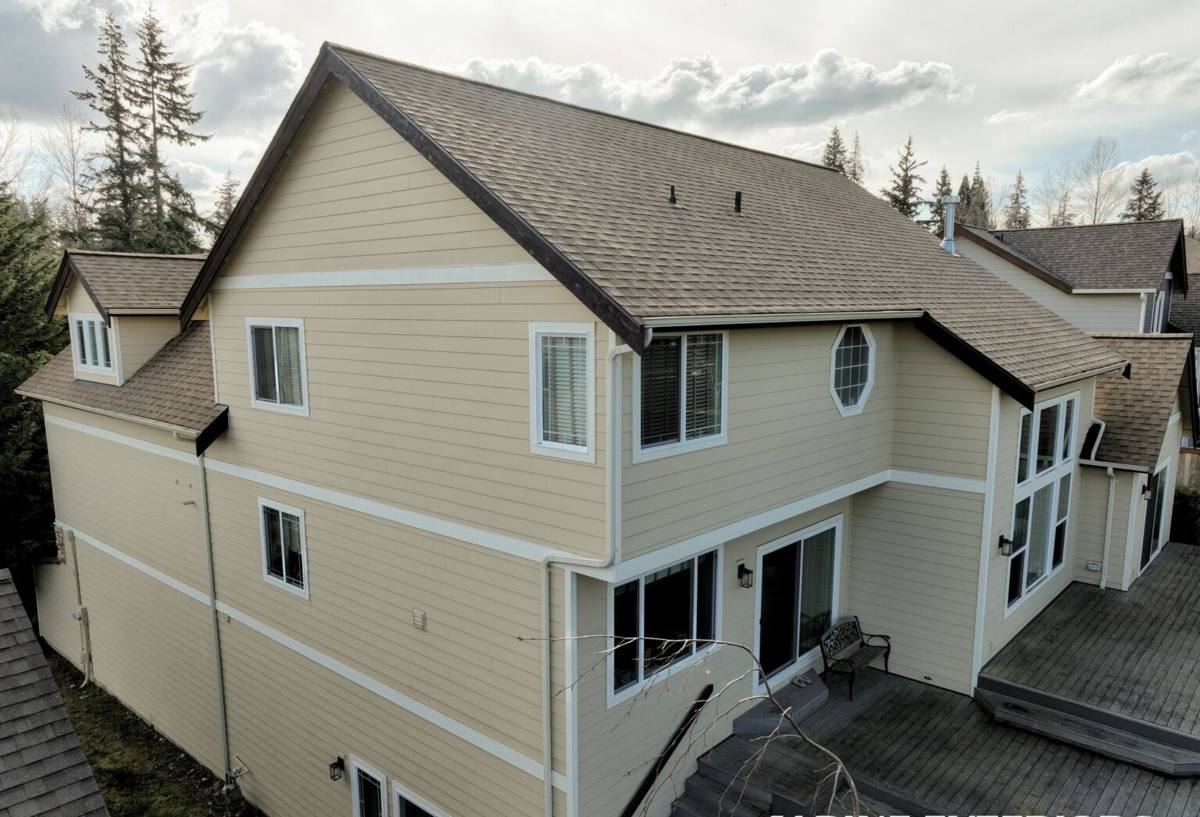
Barkley sits close enough to the water and tucked into enough tree cover that a deck built here has to answer to more than just style. Homes in this part of Bellingham deal with salt-tinged air rolling in off the bay, long stretches of driving rain through fall and winter, and a moss season that can run from October clear through April if a surface never gets a chance to dry out. A deck that looks good on installation day but wasn't built with those conditions in mind will show its age fast — cupped boards, black streaking, soft spots around fasteners, and a slick, moss-covered surface that's a fall hazard before the wood ever fails structurally.
This page is about one thing: building and rebuilding decks for Barkley homes, done right for the ground they sit on and the weather they'll actually see. Not a generic overview of decking — the specific job, done in this specific neighborhood.
What Whatcom County Weather Does to an Outdoor Deck
Salt Air and Metal Fasteners
Proximity to Bellingham Bay means a steady low-grade exposure to salt-laden air, even for homes that aren't waterfront. Salt air accelerates corrosion in anything less than fully rated hardware — deck screws, joist hangers, post bases, and structural bolts. A fastener that would last decades inland can start showing rust streaks and weakening within a few years here if it's the wrong grade. This is one of the most common failure points we find on decks we're asked to inspect or rebuild: the wood is fine, but the hardware holding it together isn't.
Driving Rain and Water Management
Bellingham's rain doesn't just fall straight down — wind-driven rain gets up under rail caps, behind ledger boards, and into any gap that wasn't flashed or sealed properly. On a poorly built deck, water finds its way to the ledger connection at the house, to end grain on cut boards, and to any spot where two pieces of decking meet without a drainage gap. That's where rot starts, and it's almost always hidden until the damage is well underway.
Moss Season
A deck surface that stays shaded and doesn't drain or dry efficiently becomes a moss farm by late fall. Beyond the slip hazard, moss holds moisture against the wood surface, which speeds up decay and finish breakdown. Board spacing, surface drainage, and material choice all affect how much of a moss problem a given deck will have — and how much upkeep it'll demand from the homeowner.
Choosing Materials That Actually Hold Up Here
There's no single right answer for every Barkley property — the right material depends on how much sun or shade the deck gets, how much maintenance the homeowner wants to do, and budget. Here's how the common options compare under our regional conditions specifically.
| Material | Moss/Moisture Behavior | Maintenance | Typical Lifespan Here |
|---|---|---|---|
| Pressure-treated fir/hem-fir | Absorbs moisture readily; needs good airflow and drainage to avoid soft spots | Annual cleaning, re-seal every 1-2 years | 15-20 years with upkeep |
| Cedar | Naturally rot- and insect-resistant, but still needs sealing to hold color and shed moisture | Cleaning plus periodic sealant/stain | 20-25 years with upkeep |
| Composite decking | Doesn't absorb water or rot, but can still grow surface moss/algae in shaded, damp spots | Periodic washing; no sealing or staining | 25-30+ years, varies by product warranty |
| PVC decking | Fully moisture-resistant surface; least prone to moss adhesion | Occasional washing | 25-30+ years, varies by product warranty |
We install both wood and composite/PVC systems and will walk through the honest trade-offs for your specific spot on the property — how much shade it gets, how the yard drains, and how much time you want to spend maintaining it. We don't push one product line as a default; we match the material to the site.
What a Correctly Built Deck Involves
A deck that's going to hold up to Bellingham weather for decades comes down to what's underneath and behind the visible surface, not the decking itself. The parts that matter most:
- Ledger attachment: Properly flashed and through-bolted into the house structure, with a drainage gap so water doesn't wick behind the siding — this is the single most common source of rot and structural failure on older decks.
- Footings sized for the soil: Whatcom County soils vary block to block; footings need to go below frost depth and bear on solid ground, not fill dirt.
- Corrosion-rated hardware throughout: Hot-dip galvanized or stainless fasteners, joist hangers, and post bases rated for ground contact and coastal exposure — not standard-grade hardware that looks fine on day one.
- Board spacing and airflow: Correct gapping between boards and adequate ventilation underneath so the structure can dry out between rain events instead of staying saturated all winter.
- Surface drainage and slope: A slight pitch away from the house and clear drainage paths so water doesn't pool on the deck surface, which is one of the biggest drivers of moss growth.
- Rail and stair code compliance: Proper height, baluster spacing, and stair geometry per current building code, inspected and permitted correctly.
Design Considerations Specific to Barkley Properties
Barkley is a mix of lot sizes, grades, and tree cover, and the right deck design depends heavily on the individual site. A few things we look at on every Barkley project:
Grade and Elevation
Sloped lots are common in this part of Bellingham, which often means taller decks with more substantial post and beam structures, plus more attention to how water sheds off the deck and away from the foundation below it.
Tree Cover and Shade
Mature trees are part of what makes many Barkley yards attractive, but shaded, low-airflow decks are exactly where moss and moisture problems concentrate. We factor sun exposure into both material choice and board spacing rather than treating every deck the same regardless of how much light it gets.
Views and Orientation
Where a deck faces matters for both enjoyment and durability — a deck oriented to catch wind-driven rain off the bay needs more attention to fastener grade and finish than one that's more sheltered.
Our Process for a Barkley Deck Project
- On-site assessment: We walk the property, look at grade, drainage, sun exposure, and (for rebuilds) the condition of the existing structure and ledger connection.
- Design and material discussion: We go over layout, size, railing style, and material options honestly, including maintenance expectations for each.
- Permitting: Deck projects in Whatcom County typically require a permit; we handle that process so the structure is inspected and code-compliant.
- Build: Footings, framing, ledger work, decking, and railing installed in sequence with attention to the connection points that matter most for longevity.
- Final walkthrough: We go over the finished deck with you, including basic maintenance guidance specific to the material installed.
Keeping a Deck Ahead of Moss and Moisture
However well a deck is built, ongoing upkeep is what keeps it looking and performing well through Bellingham's wet season. A simple seasonal checklist for homeowners:
- Sweep debris and leaves off the surface regularly, especially in fall — trapped organic matter feeds moss and holds moisture against the boards.
- Rinse or lightly scrub shaded areas where moss tends to establish first, before it gets a foothold.
- Check that gaps between boards stay clear so water can drain through rather than pooling.
- Inspect railings, stair connections, and any visible hardware once a year for rust or loosening.
- For wood decks, plan on re-sealing or staining on a regular cycle rather than waiting until the finish has already failed.
- Trim back overhanging branches where practical to improve airflow and sun exposure on shaded sections.
Why a Crew That Already Works Barkley Matters
A deck built by a crew familiar with this specific area starts with an advantage: we already know what Barkley's mix of grade, tree cover, and coastal exposure typically demands, so the assessment isn't a guessing game. We know which hardware grades hold up to the salt air here, how to plan drainage on the sloped lots common in the neighborhood, and what kind of moss pressure to expect on a shaded north-facing deck versus a sun-exposed one. That local pattern recognition shows up in fewer surprises during the build and a deck that's actually sized and specified for the conditions it will sit in for the next few decades — not a generic build dropped into a Whatcom County yard.
If you're planning a new deck or need an honest look at an aging one in Barkley, we're happy to come out, walk the site, and give you a straightforward assessment. Use the form below to request a free, no-pressure estimate.