 Bellingham Roofing
 Siding Installation for Cordata Homes
Cordata sits in north Bellingham, close enough to Bellingham Bay and the Salish Sea that salt-laden air is a constant factor in how exterior materials age here. Add Whatcom County's long wet season, wind-driven rain off the water, and the shaded, moisture-holding conditions that grow moss on anything that stays damp too long, and you have a climate that is genuinely hard on siding. A product that looks fine going up can fail quietly over five or ten years if it wasn't built for these conditions, or if it wasn't installed correctly for them.
This page is about one job, done right, in one neighborhood: siding installation for Cordata homes. We install James Hardie fiber cement siding exclusively — not vinyl, not LP SmartSide, not primed wood, not other fiber cement brands like Cemplank or Allura. That's a deliberate standard, and this page explains what it means for a Cordata home specifically.
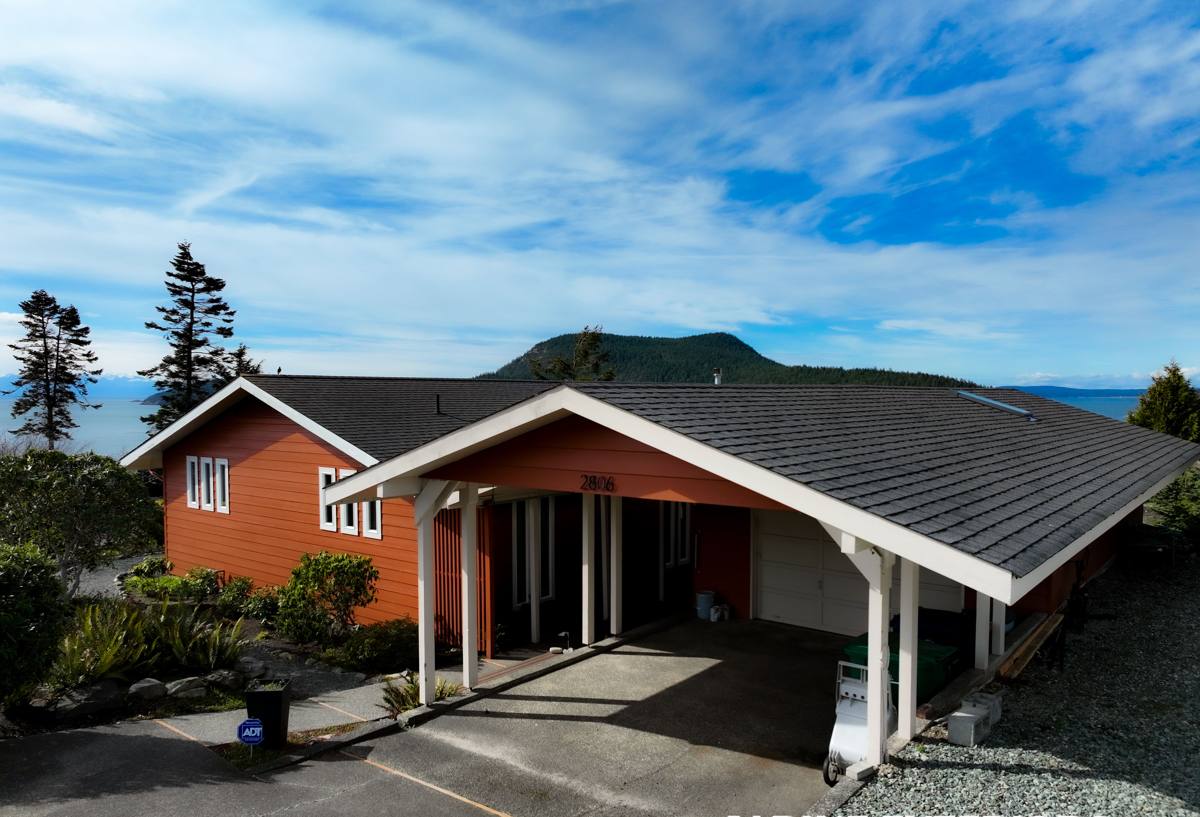
What This Climate Does to Siding
Salt Air
Homes closer to Bellingham Bay pick up airborne salt that settles on exterior surfaces and accelerates corrosion of fasteners, trim, and any metal flashing that isn't rated for it. Salt exposure also breaks down lower-quality paint finishes faster than inland weathering alone would, which shows up as chalking, fading, and peeling years ahead of schedule.
Driving Rain
Storms coming off the water don't just fall straight down — wind pushes rain sideways into wall assemblies, seams, and butt joints. Any gap in flashing, caulking, or clearance becomes a path for water to get behind the siding. Once moisture is trapped against sheathing, it doesn't dry out quickly in a climate where the next rain is usually a few days away at most.
Moss Season
Whatcom County's wet season runs long, and shaded north- and east-facing walls in tree-covered lots — common throughout Cordata — stay damp for extended stretches. That's exactly the environment moss and algae need. Siding that absorbs moisture gives moss something to root into; siding that sheds water and dries fast doesn't.
Why We Install Only James Hardie Fiber Cement
Fiber cement as a category holds up better than vinyl or wood in this climate, but not all fiber cement is engineered the same way, and installation quality matters as much as the product itself. James Hardie's HZ5 product line is specifically engineered for climates with the freeze-thaw cycles and moisture exposure we get in the Pacific Northwest. It's non-combustible, dimensionally stable in wet weather, and finished with the ColorPlus factory-baked finish, which holds color and resists the chalking and fading that salt air and UV exposure accelerate on field-painted products.
We don't install vinyl siding because it can warp, crack in cold snaps, and fade unevenly, and it doesn't hold up structurally the way fiber cement does. We don't install LP SmartSide because engineered wood, even treated, is more sensitive to sustained moisture exposure than fiber cement — a real concern given how long Cordata's wet season runs. We don't install primed spruce or cedar because raw wood siding requires a maintenance commitment — regular repainting and sealing — that most homeowners underestimate, and any lapse invites the moisture and moss problems this climate is already primed to cause. And we don't install other fiber cement brands like Cemplank or Allura, not because they're bad products, but because we've standardized our crews, our installation details, and our warranty backing entirely around one system we know inside and out.
What a Correct Siding Installation Actually Involves
The siding itself is only part of the job. Most premature siding failures we see trace back to installation shortcuts, not the material. In a climate that drives rain sideways and holds moisture, these details matter more than usual:
- Weather-resistive barrier: A continuous, properly lapped house wrap behind the siding, with all penetrations sealed, so any water that gets past the siding still has a drainage path away from the sheathing.
- Flashing at every transition: Windows, doors, decks, and roof-to-wall intersections are where wind-driven rain finds its way in. Correct flashing, lapped shingle-style so water always sheds outward and downward, is non-negotiable.
- Proper clearance: Siding held off the foundation, roofline, and any horizontal surface per manufacturer spec, so it doesn't wick moisture from standing water or trapped debris.
- Fastener pattern and depth: Hardie panels and lap siding have specific nailing schedules. Overdriven or underdriven fasteners compromise the panel's ability to move with temperature and moisture changes without cracking.
- Joint and butt seam treatment: Factory-primed cut edges get field-primed before installation, and joints are treated per Hardie's published details rather than just caulked and left.
- Ventilation behind the cladding: A rainscreen gap where called for, so any moisture that does get behind the siding can dry out instead of sitting against the wall.
Skip any one of these and you can end up with water intrusion, premature rot in the sheathing behind the siding, or moss and mildew taking hold in the gaps — even with the best siding material on the market.
Our Process for a Cordata Job
1. On-Site Assessment
We walk the exterior, check the condition of existing siding and trim, look at drainage patterns around the foundation, note which walls take the most weather exposure based on the home's orientation, and check for any existing moisture damage that needs to be addressed before new siding goes up.
2. Tear-Off and Substrate Check
Old siding comes off and we inspect the sheathing underneath. Any soft spots, existing rot, or damaged framing get flagged and repaired before anything new is installed — covering up a problem with new siding just delays it.
3. Weather Barrier and Flashing
New house wrap goes on continuous and properly lapped, with flashing installed at every window, door, and penetration before the first piece of siding is hung.
4. Hardie Installation to Spec
Panels and trim go up following James Hardie's published installation guidelines for our climate zone — correct fastener schedule, correct clearances, correct joint treatment.
5. Caulking, Touch-Up, and Final Walkthrough
Field-cut edges get primed, joints get sealed with the right products, and we walk the finished job with the homeowner before calling it done.
Cost Factors for a Cordata Siding Job
Every home is different, but the same handful of factors drive most of the variation in price. This isn't a quote — it's what to expect to discuss when we come out for an estimate.
| Factor | Why It Matters |
|---|---|
| Tear-off vs. new construction | Removing and disposing of old siding, and repairing any sheathing damage found underneath, adds labor beyond a straightforward install |
| Home size and wall complexity | More corners, gables, and dormers mean more cutting, flashing, and trim work per square foot |
| Siding profile chosen | Lap siding, panel siding, and shingle-style Hardie products differ in material and labor cost |
| Trim and accent work | Board-and-batten accents, window trim upgrades, and fascia work add scope beyond field siding |
| Existing moisture damage | Rot repair to sheathing or framing found during tear-off is priced separately once it's visible |
| Access and site conditions | Multi-story walls, tight lot lines, or limited staging area affect labor time |
Why a Crew That Already Works Cordata Matters
A crew that regularly works in north Bellingham already understands how homes in this area are typically oriented relative to weather exposure, what Whatcom County's permitting and inspection process looks like, and which details tend to get missed on jobs where the crew doesn't have local experience. That familiarity shows up in small decisions — where to prioritize rainscreen ventilation, which walls need extra attention to moss and algae resistance, how to sequence a job around our wet-season weather windows — that a crew passing through the area for a one-off job is less likely to get right the first time.
What to Ask Before You Hire a Siding Contractor
- Are they a certified or preferred James Hardie installer, and can they explain the specific installation details they follow for our climate zone?
- Will they inspect and repair sheathing damage before installing new siding, not just cover it over?
- Do they use a continuous, properly lapped weather-resistive barrier with sealed penetrations?
- What's their approach to flashing at windows, doors, and roof-to-wall transitions?
- Is the warranty transferable, and does it cover both material and workmanship?
- Can they walk you through why they recommend the specific siding product and profile for your home?
If you're planning a siding project in Cordata, we're happy to walk your property, look at what's there now, and talk through what a correct James Hardie installation would involve for your specific home. Fill out the form below for a free, no-pressure estimate.