 Bellingham Roofing
 Barkley sits close enough to Bellingham Bay and the surrounding Whatcom County tree cover that its roofs take on a specific combination of stress: salty marine air working on metal and fasteners, wind-driven rain finding its way under anything loosely sealed, and long stretches of shade and dampness that keep moss growing for most of the year. None of that means a roof in this neighborhood needs constant work — it means repairs have to be done correctly the first time, because the climate doesn't give a marginal patch job much room to fail quietly. A small gap that would sit dry for months in a drier climate can turn into a leak here in a single wet week.
Why Barkley Roofs Wear the Way They Do
Three climate factors show up again and again on roofs in this part of Bellingham. Salt-laden air off the bay accelerates corrosion on exposed nail heads, older flashing, and cheaper fastener coatings — it's slow, but it's constant, and it's the reason a roof that looks fine from the ground can have rusted-through flashing at a valley or chimney. Driving rain, especially during fall and winter storms, doesn't just fall on a roof — it gets pushed sideways under shingle edges, around vent boots, and into any seam that isn't lapped correctly. And shaded, tree-lined lots mean moss and algae get a long growing season instead of drying out between rains, which is a very different maintenance problem than sun exposure or heat.
Individually, each of these is manageable. Together, over years, they're what turns a minor repair into a bigger one if it's ignored or handled with a quick fix instead of a real one.
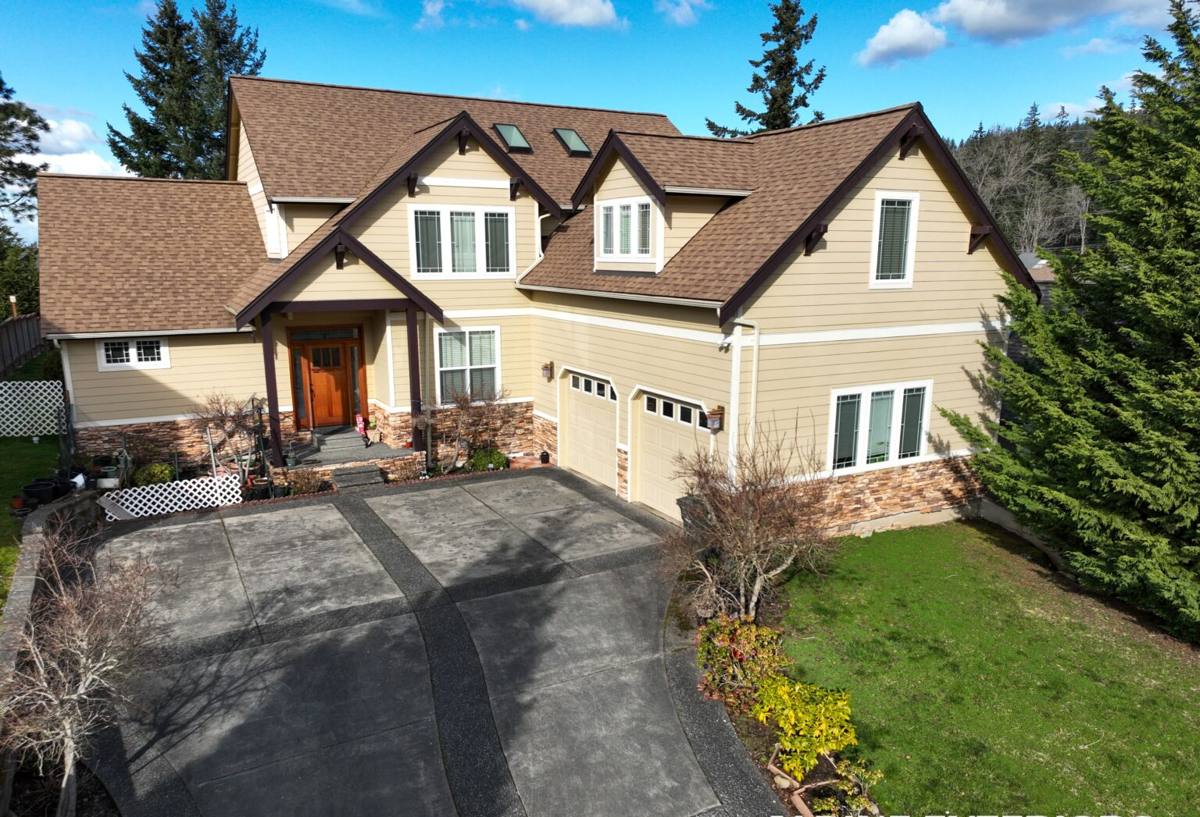
The Repair Issues We See Most Often in This Neighborhood
Moss and Organic Growth
Moss doesn't just look bad — it holds moisture against the shingle surface and works its way under tabs as it grows, lifting them enough for wind and rain to get underneath. Left long enough, it accelerates granule loss and can rot the decking underneath in isolated spots, usually on north-facing slopes or areas shaded by trees.
Flashing and Fastener Corrosion
Flashing around chimneys, skylights, and roof-to-wall transitions is the most common repair we make that isn't visible from the ground. In a marine climate, lower-grade metal or poorly lapped flashing corrodes or works loose years before the shingle field around it wears out, and it's a common source of leaks that get blamed on "the roof" when it's really one flashing detail.
Valleys, Vents, and Penetration Seals
Valleys carry more water than any other part of a roof, and they take the brunt of wind-driven rain. Pipe boots and vent seals — usually rubber or plastic collars — also break down faster under repeated wet-dry cycling than most homeowners expect, and a cracked boot is one of the most common causes of a slow attic leak that shows up as a ceiling stain months later.
What an Actual, Correct Repair Involves
A real repair is more than sealing the spot where water is showing up inside the house. Water rarely enters where it appears — it travels along the deck or underlayment before it drips. A correct repair starts with finding the actual entry point, not just the visible symptom, which means pulling back shingles around the suspected area rather than caulking over the surface.
- Confirm the actual point of water entry, not just where the stain appears indoors
- Check the decking underneath for soft spots or rot before closing anything back up
- Replace flashing rather than resealing it if corrosion or misalignment is the cause
- Match shingle type, weight, and color as closely as possible so the repair doesn't stand out or create a mismatched water path
- Check attic ventilation in the area, since trapped moisture is often what accelerated the original failure
Skipping any one of these steps is how the same leak comes back a year later in a slightly different spot.
Our Roof Repair Process for Barkley Homeowners
- On-roof inspection. We get up on the roof, not just look from the ground, and document the actual condition of the affected area and anything nearby that's trending toward a problem.
- Written estimate. You get a clear scope of what's being repaired, why, and what it costs — no vague line items.
- Material matching. We source shingles, flashing metal, and sealants that match your existing roof as closely as possible, both in performance and appearance.
- The repair itself. Affected materials come out, the decking gets inspected, and everything goes back in with proper flashing and fastening — not surface patches.
- Cleanup and walk-through. We clear debris and go over what was done before we consider the job finished.
Repair or Replace? How We Help You Decide
Not every roof problem in Barkley needs a full replacement, and we won't tell you it does when a targeted repair will hold up. The honest answer usually comes down to a handful of factors:
| Factor | Leans Toward Repair | Leans Toward Replacement |
|---|---|---|
| Roof age | Well within expected material lifespan | Near or past the shingle's rated life |
| Extent of the problem | Isolated to one area or detail | Showing up in multiple spots across the roof |
| Decking condition | Solid, no rot found on inspection | Soft or rotted decking in more than a small area |
| Leak history | First occurrence or a known, fixable cause | Recurring leaks in different locations over time |
| Granule loss / wear | Localized to the repair area | Widespread across most slopes |
If a roof is fundamentally sound and the problem is contained, we'll say so and repair it. If the underlying material is at the end of its service life, patching it is a short-term fix that costs money without solving the real issue — we'll tell you that too, and let you decide on the timeline.
Materials, and Why We Choose What We Choose for This Climate
Not every roofing product performs the same way once it's dealing with salt air and near-constant dampness for months at a time. When we're repairing or replacing sections on a Barkley home, we generally lean toward algae-resistant shingle lines, since standard shingles in shaded, damp conditions will grow moss and streaking noticeably faster. For flashing, we favor corrosion-resistant metals over basic galvanized steel in areas exposed to salt-laden air, since the upfront cost difference is small compared to redoing corroded flashing a few years down the line.
We're also selective about wood shake and shingle roofing in this environment. It's not that cedar is a bad product — it's that it demands a maintenance schedule (cleaning, treating, monitoring for moisture retention) that a lot of homeowners underestimate when they're comparing it to composition shingle, and we'd rather be upfront about that maintenance burden than sell a product and leave you to discover it later.
Timing Repairs Around a Wet Climate
Bellingham doesn't really have a hard stop to its rainy season, but there are still better and worse windows for roof work. Small, contained repairs — a section of flashing, a vent boot, a patch of missing shingles — can usually be done whenever there's a dry enough window, even in the middle of winter. Larger repairs that involve opening up more of the roof deck are better scheduled with a wider forecast margin, which usually means late spring through early fall gives the most flexibility. If you've got a known issue, it's worth addressing it before the fall storms roll in rather than waiting for a wet-season emergency call.
Why a Crew That Already Works in Barkley Makes a Difference
A roofer who's worked this neighborhood regularly already knows the kind of roof pitches, ages, and construction common to the area, which speeds up diagnosis and cuts down on guesswork during the estimate. We know which flashing details tend to fail first in this climate, which shaded lots need more moss attention than others, and how to sequence a repair so it holds up through the next storm season instead of just the next dry week. That local familiarity also means faster response — we're not driving in from across the county to look at a leak that's actively getting worse.
Signs Your Barkley Home Needs Roof Repair Now
- Granules collecting in gutters or at the base of downspouts
- Visible moss buildup, especially on shaded or north-facing slopes
- Daylight visible through the roof deck from inside the attic
- Ceiling stains or discoloration that appear or spread after a storm
- Shingles that are curling, cupping, or lifting at the edges
- Missing or torn shingles after a windstorm
- Rust streaking near flashing, vents, or chimney edges
- Sagging or ponding in a valley or low-slope section
If any of these look familiar, it's worth having someone look at it before the next round of driving rain finds the gap. We offer free, no-pressure estimates for roof repair in Barkley and the surrounding Bellingham area — use the form below to get a straightforward assessment of what's actually going on with your roof and what it would take to fix it right.