 Bellingham Roofing
 Siding Installation in Barkley: What the Job Actually Requires
Barkley is one of Bellingham's established neighborhoods, with a mix of homes old enough to be on their second or third siding system and newer construction that hasn't been tested by a full Whatcom County winter yet. Both categories face the same regional pressures: salt air drifting in off the water, driving rain that arrives sideways more often than straight down, and a moss season long enough to feel year-round on shaded walls. None of that changes what siding material makes sense so much as it changes what a correct installation has to get right. Two homes with identical James Hardie siding can perform very differently ten years out if one was installed to spec and the other wasn't.
This page is specifically about installing new siding on a Barkley home — full re-sides and new construction, not spot repair of an otherwise sound wall. We install James Hardie fiber cement exclusively, and everything below is written around that system, since it's the only one we put our name behind on homes in this area.
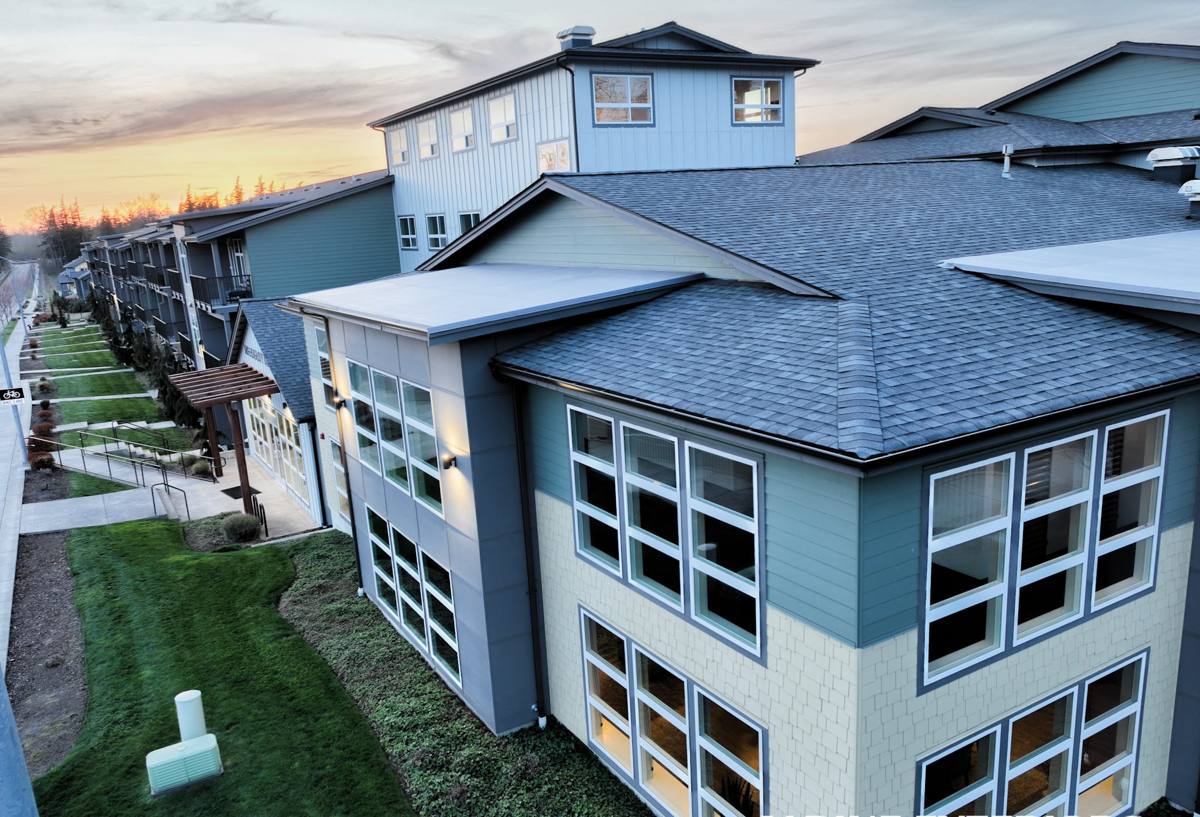
What Local Climate Demands From an Installation
Salt Air
Whatcom County's proximity to Puget Sound and Bellingham Bay means salt-laden air reaches inland neighborhoods like Barkley too, not just waterfront property. It's a slower, less obvious effect than it is right on the water, but it still accelerates corrosion on fasteners, flashing, and trim hardware over the years. An installation built on standard-grade hardware because it's cheaper or easier to source shows that decision eventually — usually as rust streaking or a loosened piece of trim well before the siding itself has any right to fail.
Driving Rain
Storms in this part of the Pacific Northwest tend to come in with wind behind them, which pushes rain sideways into panel joints, window flashing, and anywhere two building materials meet. A water-resistive barrier and flashing system that would be adequate in a calmer, drier climate can fall short here, because wind-driven rain finds gaps that straight-down rain never would. The barrier underneath the siding does more of the real work than most homeowners realize, and it's completely invisible once the job is finished.
A Long Moss Season
Cool temperatures, consistent humidity, and heavy tree cover across Bellingham give moss and algae a growing window that runs most of the year on shaded, north-facing walls. Installation detail affects how much that matters: proper clearance at the base of the wall, a drainage gap that lets a wall dry between wet spells, and siding that isn't fastened tight against trim all reduce how long a surface stays damp. Skip those details and even a good material spends more time wet than it should.
Why We Install Only James Hardie Fiber Cement in Barkley
We install one siding system rather than a menu of brands, because concentrating a crew's experience on a single product produces more consistent results than spreading it across several. James Hardie's fiber cement resists the swelling and edge-softening that wood-based products can show under sustained moisture, it's non-combustible, and its ColorPlus finish is baked on at the factory under controlled conditions rather than field-painted — which matters in a climate where paint has a narrow window to properly cure outdoors.
| Product | Trade-off we weigh against a Barkley installation |
|---|---|
| Vinyl siding | Panel seams can open under wind-driven rain; material can warp under sustained temperature swings |
| LP SmartSide / engineered wood | Wood-strand core is more sensitive to moisture at cut edges and fastener points than fiber cement |
| Primed spruce or cedar | Needs ongoing paint and moisture upkeep to avoid rot; a heavier long-term cost than the upfront price suggests |
| Other fiber cement brands | May not offer a climate-specific HZ formulation or the same factory-finish warranty depth |
That's not a claim that these products can't work anywhere — they're simply trade-offs we're not willing to install and then stand behind in a climate this consistently wet. James Hardie's HZ5 formulation is engineered for regions with heavy moisture exposure and freeze-thaw cycling rather than desert heat, which lines up closely with what a Barkley installation actually has to withstand.
What a Correct Installation Involves, Step by Step
Site Assessment and Estimate
Before pricing anything, we look at how each wall of the house is exposed — which faces get direct wind and rain, which sit in shade or under tree cover, and whether existing moss buildup or staining points to a chronic moisture issue rather than a cosmetic one. That walk-through is what the estimate is based on, not a flat per-square-foot number.
Tear-Off and Sheathing Check
Old siding comes off and the sheathing underneath gets inspected before anything new goes up. Installing over damaged sheathing just hides a problem that keeps getting worse behind the wall. We'd rather find rot or soft spots at this stage and price the repair honestly than have it resurface as a bigger issue later.
Weather-Resistive Barrier and Flashing
The barrier goes on with proper overlap and sealed seams at every penetration before flashing and siding go over it. Most of the siding failures we see in this area trace back to water getting behind the cladding, not through it — which makes this the step that's easiest to rush and hardest to inspect once the new siding is up.
Fastening and Clearances to Spec
James Hardie publishes specific fastener types, spacing, and clearance requirements above grade, decks, and roofing, and they exist for a reason: keeping the bottom edge of the siding out of standing water or splash-back, and keeping panels secured through wind loads. Following that spec precisely is also what keeps the manufacturer's warranty intact.
Field-Cut Edges and Final Detailing
Any panel cut on site — around a window, at a corner, at the end of a run — needs its cut edge sealed according to Hardie's specification before it goes up. An unsealed cut edge is one of the more common places fiber cement actually takes on water, not because the material fails, but because the field cut wasn't finished correctly. Touch-up at these spots uses Hardie's matched product rather than field-mixed paint, so the finish stays consistent.
James Hardie Siding Options for a Barkley Home
Which James Hardie profile fits a given home usually comes down to its architectural style and how much wall surface takes direct weather exposure.
| Product line | Typical use |
|---|---|
| HardiePlank lap siding | The most common choice for traditional and craftsman-style homes; horizontal lap in several widths and textures |
| HardieShingle | A shingle-style profile for homes wanting a more textured, staggered look |
| HardiePanel | Vertical panel siding, often used for accent walls, gables, or modern-style exteriors |
| HardieTrim | Fiber cement trim for windows, corners, and fascia that matches the siding's durability |
Color runs through Hardie's ColorPlus palette, engineered to resist the fading and chalking that field-applied paint typically shows within a few years in this climate.
Signs an Existing Installation Is Starting to Fail
- Soft or spongy spots when pressing on the siding, especially near the bottom courses or under windows
- Persistent moss or dark streaking concentrated on north-facing or heavily shaded walls
- Paint peeling, bubbling, or wearing unevenly, often a sign of moisture trapped behind the surface
- Visible gaps, cupping, or separation at seams and corner boards
- Rust staining running down from fastener heads or metal trim
- A musty smell or staining on an interior wall that shares an exterior wall with a suspect area
Any one of these can point back to an installation issue rather than a material one — which is worth knowing if you're getting a second opinion on siding that's failing well before it should.
What Affects Cost and Timeline for a Barkley Installation
| Factor | Why it matters |
|---|---|
| Home size and wall complexity | More corners, dormers, and cutouts mean more material waste and labor time than a simple footprint |
| Sheathing condition underneath old siding | Rot found during tear-off adds repair scope that can't be priced accurately until the old siding is off |
| Siding profile and trim detail | Lap width, accent panels, and trim choices affect both material and labor cost |
| Access and site conditions | Tight setbacks, steep grades, or limited staging space can add time and equipment cost |
| Tear-off vs. new construction | Removing and disposing of old siding is an added labor step new construction doesn't require |
Weather windows also affect scheduling more here than in a drier region — a stretch of wind-driven rain can shut down safe panel handling on days that would otherwise be workable, so we build some flexibility into a project timeline rather than promising a fixed date a bad week is likely to break.
A Checklist for a Correct Installation
Whether you're reviewing our proposal or comparing it to another contractor's, these are reasonable things to confirm before an installation is considered finished:
- Fasteners rated for the corrosion pressure of a marine climate, not generic standard-grade hardware
- Documented clearance between the bottom of the siding and grade, decks, and roofing
- Flashing visible and properly lapped at every window, door, and penetration before siding covers it
- All field-cut edges sealed or primed, not left raw
- A continuous, properly overlapped weather-resistive barrier underneath the siding
- Installation that follows James Hardie's published fastening and spacing spec as the baseline
- A final walkthrough where the crew explains the work, not just a closing invoice
Why a Crew That Already Works in Barkley Matters
Installation quality described in an estimate and installation quality delivered on the wall aren't always the same thing, and the gap shows up faster in a climate this consistently wet. A crew that installs siding regularly in Bellingham makes different calls than one working here occasionally between jobs elsewhere — where extra flashing attention actually pays off, how much clearance a given wall needs at grade, which shortcuts show up as a problem in year three instead of year twenty. We also handle permitting as part of the job, which matters given how requirements and timelines can vary by jurisdiction within Whatcom County. And because we're local, we're easy to reach if a question comes up well after the crew has left — not a name from an out-of-area lead service that stops answering once the invoice is paid.
If you're planning a full siding installation for a Barkley home, or want an honest second opinion on whether an existing installation was done correctly, we're glad to come take a look. Use the form below to request a free, no-pressure estimate.