 Bellingham Roofing
 Deck Repair Built for Birchwood's Climate
A deck in Birchwood doesn't fail the way a deck in a dry inland climate does. It's not one big storm that does the damage — it's years of moisture cycling into wood that never fully dries out between rain events, salt-tinged air working on fasteners and hardware, and shaded corners where moss and algae get a foothold and never let go. By the time a board feels soft underfoot or a railing post wiggles more than it should, the underlying damage has usually been building quietly for a while.
None of that means a deck can't hold up well here. It means repairs have to account for what this specific stretch of Whatcom County actually does to exterior wood and hardware, rather than treating every deck repair as a generic patch job. This page covers what a correct deck repair looks like for a Birchwood home, how to tell when repair is enough versus when it isn't, and how we approach the work from first look to final walk-through.
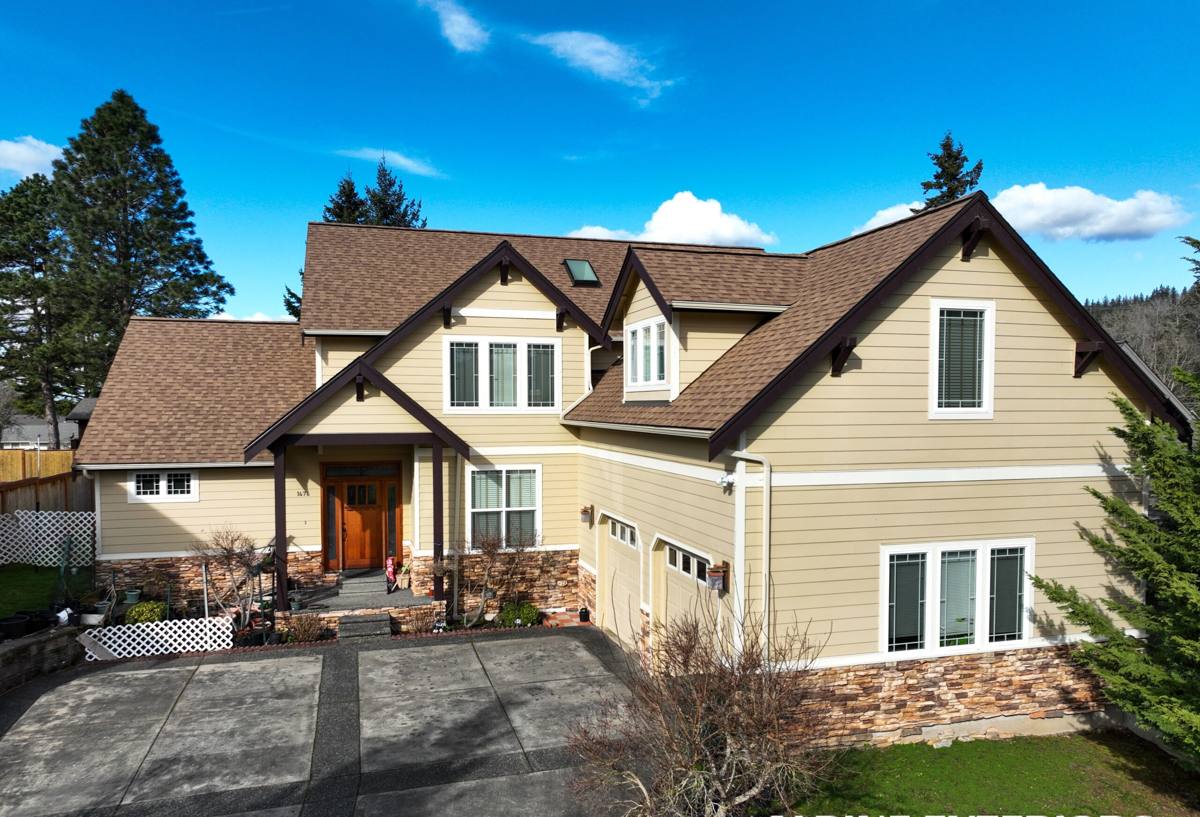
What Birchwood's Weather Does to a Deck
Three conditions do most of the work against decks in this area, and they compound each other rather than acting alone.
Salt Air and Hardware Corrosion
Homes closer to the water deal with salt-tinged air that speeds up corrosion on fasteners, joist hangers, and other structural hardware. A galvanized nail or screw that would last for decades in a dry inland climate can start rusting from the inside of a connection years earlier here, and because that corrosion happens where you can't see it — inside a joist hanger, under a ledger board — it's often further along than it looks by the time it's discovered.
Driving Rain and Moisture Cycling
Rain in this region doesn't always fall straight down and run off cleanly. Wind-driven rain gets pushed into board gaps, against ledger connections, and up under railings and stair stringers, and it doesn't dry out quickly in a marine climate with long stretches of overcast, humid weather. Wood that stays damp longer than it stays dry is wood that's setting up for rot, and that cycle repeats every wet season.
A Long Moss Season
Shaded decks, and the north-facing or tree-covered sections of otherwise sunny decks, hold onto moisture longer and give moss and algae a long window to establish themselves. Beyond the surface appearance, a moss-covered deck surface holds water against the wood constantly, which accelerates rot in exactly the boards that already have the least sun exposure to dry out.
Repair vs. Replacement: How We Make That Call
Not every deck problem calls for a full rebuild, and not every deck problem should be patched over either. We look at three things to figure out which side of that line a given deck falls on: the structural framing underneath, the ledger board connection to the house, and the condition of the decking boards and railings themselves.
| Condition Found | Usually Means |
|---|---|
| A few soft or cracked deck boards, railings intact and solid | Board-level repair — replace the affected boards, leave the structure alone |
| Rust staining or movement at joist hangers, framing otherwise sound | Hardware replacement and structural repair, decking can often stay |
| Soft or spongy framing near the ledger board, gaps at the house connection | Ledger and framing repair — this is a structural safety issue, not cosmetic |
| Widespread rot across multiple framing members, posts, or the ledger | Full or near-full rebuild is usually the more honest recommendation |
The ledger board — where the deck attaches to the house — gets special attention on every inspection we do. It's a common point of chronic moisture intrusion because it's a horizontal connection sitting right against the house's siding and sheathing, and if it's been improperly flashed, it can be quietly feeding water into the house structure itself, not just the deck.
What a Correct Deck Repair Involves
Diagnosis Before Any Board Comes Off
We start by probing suspect boards, framing members, and the ledger connection with a screwdriver or awl rather than just looking at the surface. Wood that looks fine from a few feet away can be soft and compromised underneath, and the only way to know the real extent of a problem is to physically check it, section by section.
Matching Structural Repairs to Code
Any framing, ledger, or post repair should meet current structural requirements for load and fastening, not just replicate whatever was there originally — especially on older decks that may predate current hardware and connection standards. This matters most at the ledger board and post-to-footing connections, which are the points most responsible for a deck's actual structural safety.
Corrosion-Resistant Hardware
Given how salt air in this area works on lower-grade metal, we use fasteners and structural connectors rated for the exposure a Birchwood deck actually sees, not the minimum hardware that happens to be on the shelf. This is a small cost difference at the time of repair and a real difference in how long the fix actually lasts.
Proper Ledger Flashing
Where a ledger board repair is involved, correct flashing — installed so water sheds away from the house rather than behind the ledger — is part of the job, not an optional add-on. Skipping this step is one of the most common reasons a "repaired" deck develops the same rot problem again within a few years.
Board Replacement and Fastening
Replacement decking should be fastened with appropriate spacing for wood movement and drainage, not tightened flush the way it's sometimes done to make a repair look cleaner on day one. Boards that can't shed water between them just recreate the moisture-trapping problem that likely caused the original damage.
Wood vs. Composite: What We Recommend for Repairs
When a repair involves replacing a meaningful number of boards, homeowners often ask whether to stick with the original wood or switch some or all of the surface to composite decking. There's a real trade-off here, and it depends on the specific deck.
| Factor | Wood Decking | Composite Decking |
|---|---|---|
| Upfront repair cost | Lower | Higher |
| Moisture resistance | Depends on wood species and maintenance | Generally more resistant to rot, but not immune to moisture issues at the framing below it |
| Maintenance | Periodic sealing/staining needed, especially in this climate | Minimal surface maintenance |
| Moss and algae resistance | Lower — bare wood holds moisture readily | Better, though shaded composite surfaces can still develop algae film |
| Matching existing decking | Easier to match an existing wood deck's look | Can be visually inconsistent when partially mixed with existing wood |
Composite decking doesn't eliminate the need for correctly built, well-flashed framing underneath — it just changes what the top surface has to deal with. A composite board over rotted, poorly flashed framing is still a deck with a structural problem, just one that's harder to see from above.
Signs Your Birchwood Deck Needs Attention
- Boards that feel soft, spongy, or springy underfoot, especially near the house or in shaded areas
- Rust staining bleeding from screws, nails, or joist hangers
- Any movement or wobble in railing posts or stair stringers when you push on them
- Gaps, cracking, or separation where the deck meets the house at the ledger board
- Persistent moss, algae, or dark staining on the deck surface that keeps returning after cleaning
- Visible daylight or water staining underneath the deck near framing connections
Catching these early is almost always the difference between a targeted repair and a much larger rebuild. A soft board today is a cheap fix; the same soft board left through another wet season can spread damage into the framing underneath it.
Our Process
- On-site inspection: We check decking, framing, posts, footings, railings, and the ledger connection, probing suspect areas rather than relying on a visual pass alone.
- Written scope and estimate: You get a clear breakdown of what needs repair, what's optional, and what we recommend leaving alone, with pricing tied to that specific scope.
- Repair work: Framing, hardware, and ledger repairs are handled to current structural standards before any new decking or railing goes back on.
- Final walk-through: We go over the completed repair with you, including any maintenance recommendations specific to the materials used.
Why a Crew That Already Works Birchwood Matters
Deck repair looks straightforward from the outside, but the right call at the ledger board, the right hardware for this area's air exposure, and the judgment to know when a repair is enough versus when it's papering over a structural problem all come from having done this work repeatedly in this specific climate. A crew that mostly works drier inland areas can miss how much of a difference wind-driven rain and a long moss season make to how a deck should be built back. We're used to the moisture patterns, the shaded lots, and the hardware corrosion that shows up in Birchwood specifically, and we build repairs to hold up against that, not against a generic weather assumption.
If you'd like an honest, no-pressure look at your Birchwood deck and a written estimate you can compare against anything else you've received, we're glad to come take a look. Use the form below to request a free estimate.