 Bellingham Roofing
 Roof Repair Built for Blaine's Coastal Conditions
Blaine sits right where Whatcom County meets the Salish Sea, and that location shapes what a roof has to deal with year-round. Salt-laden air off the water, wind-driven rain that finds its way under loose or aging flashing, and a moss season that stretches long into the calendar all add up to a different repair workload than you'd see on a roof twenty miles inland. A roof repair here isn't just patching a leak — it's addressing the specific combination of moisture, salt exposure, and organic growth that Blaine roofs contend with more than most.
We work on homes throughout Blaine and the surrounding Whatcom County coastline, and the repair calls we get tend to follow a pattern: flashing that's corroded faster than it should have, moss that's worked its way under shingle tabs, and soft or stained decking where water has been getting in slowly for longer than anyone realized. Understanding that pattern is what separates a repair that actually holds up from one that's back on our schedule in eighteen months.
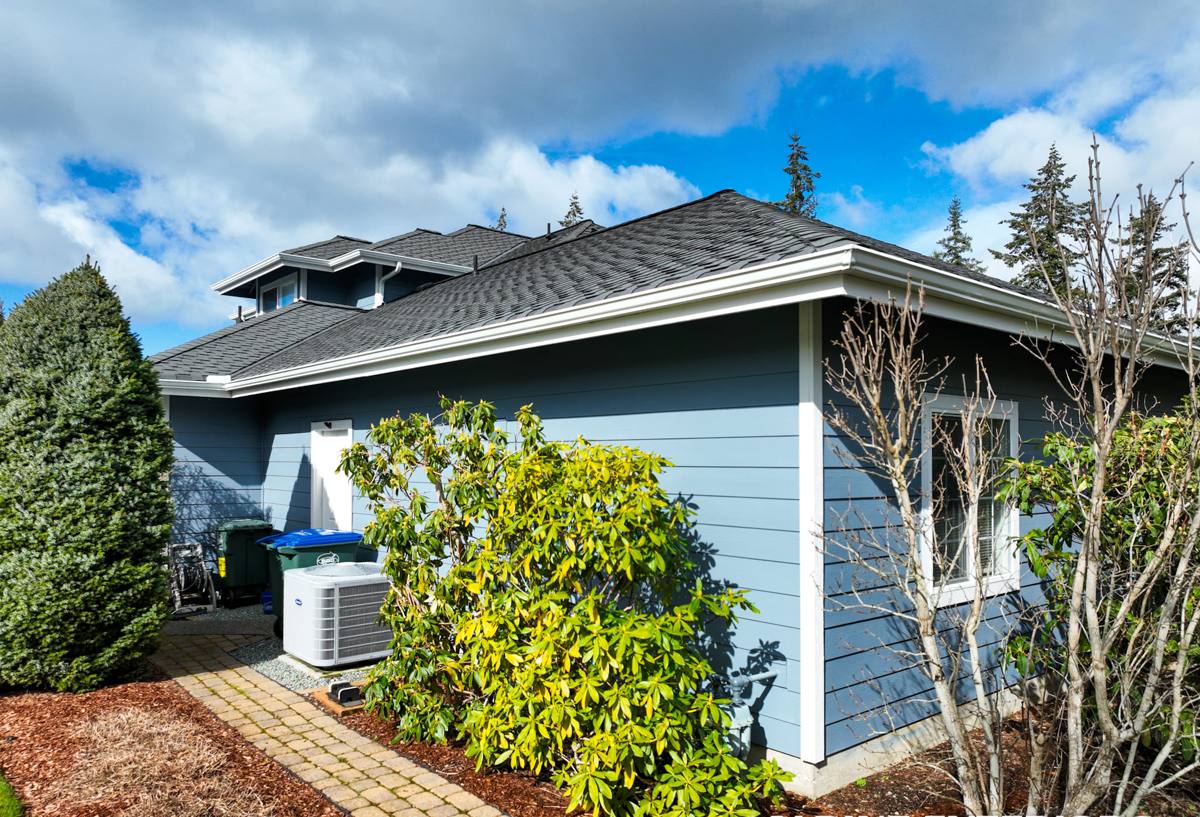
Why Blaine's Climate Is Tougher on Roofs Than It Looks
Salt Air and Metal Fatigue
Homes close to the water take in salt-laden moisture in the air itself, not just during storms. That salt settles on exposed metal — flashing, vent caps, gutter hardware, fasteners — and accelerates corrosion well beyond what you'd see on a roof further inland. A fastener or flashing seam that would last decades elsewhere can start failing years earlier here, and once metal starts to pit and corrode, it stops sealing the way it's supposed to.
Driving Rain and Wind-Driven Moisture
Coastal storms in this part of Washington don't just drop rain straight down — wind pushes it sideways, up under eaves, and into any gap in flashing or siding transitions that would stay dry in a calmer climate. This is why so many Blaine roof leaks show up not at an obvious hole, but at a valley, a chimney flashing edge, or a wall-to-roof intersection where wind-driven water is forcing its way in horizontally rather than falling straight through.
A Long, Persistent Moss Season
Whatcom County's damp, mild climate gives moss a long growing window, and north-facing or shaded roof sections in Blaine rarely get enough sun to dry out and discourage it. Moss doesn't just look bad — it holds moisture directly against the roofing surface, works its rhizoids under shingle tabs and granules, and lifts edges just enough for wind and rain to get underneath. Left alone, what starts as a cosmetic issue becomes a structural one.
What a Correct Repair Actually Involves
A repair that's done right starts with figuring out the real cause of the problem, not just patching where the water is showing up. Water travels — a stain on a ceiling or a soft spot in the attic decking is often several feet away from where the moisture is actually getting in. That's why we don't quote a repair off a photo or a phone description; we get eyes on the actual roof.
- Trace the leak path from the interior sign of damage back to the actual entry point, which is frequently uphill or off to the side of where the damage shows
- Inspect flashing at every penetration and transition — chimneys, vents, skylights, sidewalls, valleys — since these are where the large majority of leaks originate, not the open field of the roof
- Check fastener and flashing metal condition for salt-driven corrosion, especially on homes with direct water exposure or elevation facing the strait
- Assess moss and organic growth coverage, including how far it's worked under shingle edges, not just how it looks from the ground
- Evaluate decking condition at and around the leak site for soft spots, delamination, or rot that needs to be addressed before new material goes down
- Confirm ventilation is adequate, since poor attic airflow traps moisture and speeds up both decking rot and moss regrowth
Once we know what's actually causing the problem, the repair itself typically involves removing and replacing damaged shingles or roofing material, replacing failed or corroded flashing with new material rated for coastal exposure, addressing any soft or compromised decking underneath, and resealing transitions with materials suited to sustained moisture rather than a quick surface patch.
Common Repair Scenarios We See in Blaine
Flashing Failure at Chimneys and Walls
This is the single most common source of the leak calls we get in this area. Step flashing and counter-flashing around chimneys and where a roof meets a wall are metal, and metal exposed to salt air corrodes faster here than elsewhere. Once flashing starts to fail, water gets behind it during any wind-driven rain event, and the damage tracks down into the wall or attic space before it ever shows up as a visible leak.
Moss-Related Shingle Lifting
On shaded or north-facing sections of roof, moss mats build up over a season or two and lift shingle tabs at the edges. This is especially common on older cedar shake or older composition roofs where the moss has had years to establish. The fix isn't just cleaning the moss off — it's checking whether the shingles underneath are still sound or whether the lifted sections need to be replaced outright.
Valley and Low-Slope Leaks
Roof valleys concentrate a large volume of water during heavy rain, and on a coastal roof that volume is higher and more frequent than inland averages. Aging valley flashing, worn underlayment, or granule loss in the valley channel are common culprits, and repairs here need to hold up to sustained flow, not just occasional runoff.
Gutter and Fascia Damage from Corrosion
Salt exposure doesn't stop at the roofing material — gutters, fascia boards, and the fasteners holding them on all take the same corrosive exposure. When gutters fail or pull away, water dumps against the fascia and roof edge instead of draining, which creates a secondary moisture problem on top of whatever brought us out in the first place.
Repair vs. Replacement: How We Help You Decide
Not every roof problem in Blaine needs a full replacement, and we won't sell you one if a targeted repair will genuinely solve the issue. But we also won't patch a roof that's past the point where repair makes financial sense. The honest answer usually comes down to a few factors.
| Factor | Leans Toward Repair | Leans Toward Replacement |
|---|---|---|
| Age of roofing material | Well within expected service life | At or beyond typical lifespan for the material |
| Extent of damage | Isolated to one area or system (flashing, one section) | Widespread across multiple roof planes |
| Decking condition | Solid, no rot beyond the immediate repair area | Soft or rotted decking in multiple locations |
| Moss/organic growth | Surface growth, shingles intact underneath | Growth has compromised shingle integrity broadly |
| Leak history | First occurrence or isolated incident | Repeated leaks in different areas over time |
We'll walk you through where your roof falls on this before recommending anything, and we'll explain the reasoning in plain terms — not just hand you a number.
Our Repair Process
1. Inspection and Honest Assessment
We start with a full inspection, not just a look at the spot you called about. That includes checking the attic where accessible, since interior signs of moisture often tell us more about the real extent of a problem than what's visible from the roof surface.
2. Clear Explanation and Estimate
You get a plain-language explanation of what we found, what's causing it, and what it will take to fix it correctly — along with a written estimate before any work begins. If there's a decision to make between a repair and a more involved fix, we'll lay out the trade-offs honestly.
3. The Repair Itself
We remove and replace only the damaged material, matching existing roofing where possible so the repair blends in rather than standing out as an obvious patch. Flashing gets replaced with new material suited to coastal exposure, and any compromised decking is addressed before new roofing goes back down.
4. Cleanup and Final Check
We clear debris, check the surrounding area for any material that needs to come off the roof or out of gutters, and do a final walk-through so you know exactly what was done and why.
What to Check Between Professional Visits
Between repairs, there are a handful of things a homeowner can reasonably keep an eye on without getting on the roof themselves.
- Watch for streaking or dark patches on the roof surface, which often indicate moss or algae establishing before it's visible from the ground
- Check gutters for granule buildup after heavy rain, which can signal shingle wear
- Look for any sagging or discoloration on interior ceilings, especially after a period of sustained wind-driven rain
- Note any visible gaps or lifted material around chimneys, vents, or skylights when viewed from ground level with binoculars
- Keep gutters and downspouts clear so water isn't backing up against the roof edge or fascia
None of this replaces a proper inspection, but catching an early sign and calling before it becomes an interior leak saves money and prevents decking damage.
Why Hire a Crew That Already Works in Blaine
A roofer who works this stretch of Whatcom County regularly already knows what salt air does to fasteners over a five-year span, which shingle brands and installation details hold up to driving rain versus which fail early at the seams, and how aggressive moss gets on shaded coastal roofs compared to drier inland neighborhoods. That local knowledge shows up in the details — the flashing material chosen, the underlayment spec, how valleys and transitions get detailed — not just in the sales pitch.
It also means a faster, more accurate diagnosis. We're not guessing based on general roofing principles; we're working from what we've actually seen fail and hold up on roofs like yours, in this exact climate, facing this exact exposure.
Get an Honest Look at Your Roof
If you're dealing with a leak, visible moss buildup, or flashing that looks like it's seen better days, the best next step is a straightforward inspection — not a guess over the phone. We'll give you a clear, honest read on what's going on and what it will take to fix it right, with no pressure either way. Reach out using the form below to schedule a free estimate.