 Bellingham Roofing
 Why Blaine's Coastal Climate Is Hard on Windows
Blaine sits right on the Whatcom County coastline, close enough to the water that salt air is a daily fact of life, not an occasional nuisance. That salt-laden air works on window hardware, frame fasteners, and exterior trim year-round, and it doesn't take a storm to do it — just time. Add in the driving, wind-blown rain that comes off the water during fall and winter systems, and you have conditions that punish any window opening that wasn't flashed and sealed correctly the first time.
Then there's moss season, which in this part of Whatcom County isn't really a season so much as most of the year. Constant damp, low winter sun, and shaded north- and west-facing walls keep moisture sitting against siding and window trim longer than it does in drier inland climates. Wood trim around older windows stays wet, paint fails faster, and small gaps in caulking or flashing become slow, hidden leaks instead of obvious ones. By the time staining shows up on an interior sill, the damage underneath has usually been building for a while.
None of this means Blaine homes need exotic solutions. It means the basics — flashing, material selection, and installation sequence — have to be done right, because the climate here doesn't forgive shortcuts the way a drier region might.
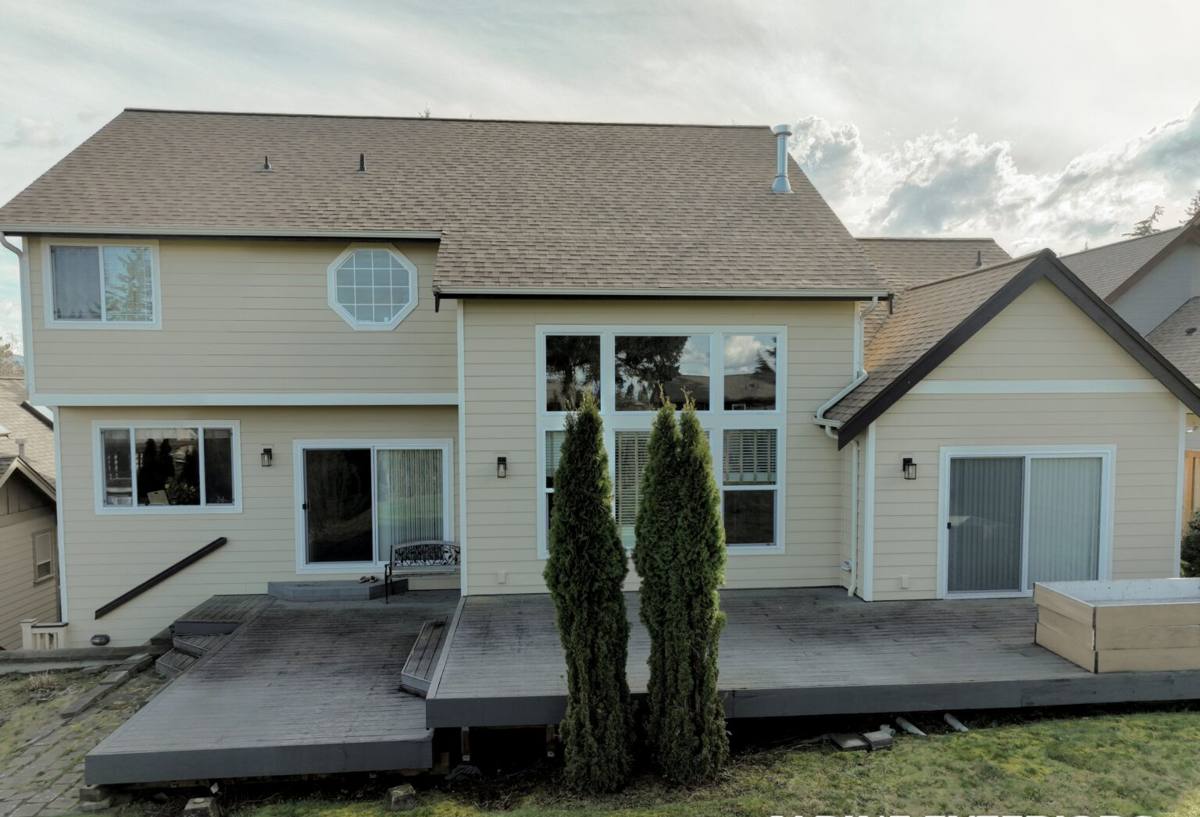
Signs Your Blaine Home Needs Window Replacement
Homeowners near the coast often notice window problems later than they should, because early symptoms look minor. Here's what we look for, and what you can check yourself before calling anyone out.
- Visible fogging or a milky haze between double-pane glass — the seal has failed and the insulating gas is gone
- Soft or spongy wood at the sill, jamb, or exterior trim when pressed with a fingertip
- Persistent condensation on the inside of the glass, especially in winter, beyond normal household humidity
- Drafts you can feel with your hand near the frame on a windy day
- Windows that are hard to open, close, or lock — frames can swell or warp from moisture cycling
- Paint that keeps peeling or bubbling on exterior trim no matter how often it's repainted
- Visible corrosion or chalky white residue on aluminum or older vinyl hardware, common closer to the water
- Rising heating bills that don't match any change in usage
One or two of these on a single window is often a caulking or flashing repair. Several of these across multiple windows, especially on the sides of the house that face the weather, usually points to replacement being the more honest recommendation.
What a Correct Window Installation Actually Involves
Window installation looks simple from the outside — old window out, new window in — but the work that determines whether it lasts fifteen years or fails in three happens at the opening itself, not at the glass.
Removal and Opening Inspection
Once the old window is out, we inspect the rough opening for rot, soft framing, or prior water damage before anything new goes in. In a coastal, high-moisture area like Blaine, this step matters more than most homeowners expect — installing a new window into a damaged opening just seals the problem behind new trim instead of fixing it.
Flashing and Weatherproofing
This is where driving rain performance is won or lost. A correctly flashed opening uses a sloped sill pan so any water that gets past the window sheds outward instead of pooling, plus properly lapped flashing tape at the sides and top so water is directed down and out, never trapped behind the siding. Skipping or rushing this step is the single most common cause of window-related water damage we see on coastal homes.
Insulation and Air Sealing
The gap between the window frame and the rough opening gets sealed with the right amount of low-expansion foam or backer rod and sealant — not stuffed with excess material, which can bow the frame, and not left loose, which leaves drafts and a path for moist air to reach framing.
Trim, Caulking, and Final Seal
Exterior caulking has to be a product rated for constant damp exposure and movement, applied at the right joints, not everywhere indiscriminately. Interior and exterior trim gets reset or replaced as needed so the finished look matches the rest of the house.
Choosing Window Materials for a Coastal Whatcom County Home
There's no single "best" window material — the right choice depends on exposure, maintenance appetite, and budget. Here's how the common options hold up specifically in salt air and heavy rain conditions like Blaine's:
| Material | Coastal/Salt Air Performance | Maintenance | General Cost Tier |
|---|---|---|---|
| Vinyl | Good — won't rust or corrode, handles moisture well | Low — occasional cleaning | Lower |
| Fiberglass | Very good — dimensionally stable, resists warping from moisture and temperature swings | Low | Higher |
| Wood-clad (vinyl or aluminum exterior) | Good on the exterior face; interior wood still needs protection from indoor humidity | Moderate | Higher |
| Solid wood | Requires diligent upkeep — most vulnerable to Blaine's long wet season and salt exposure | High — regular painting/sealing | Moderate to Higher |
| Bare aluminum | Poor near salt air — prone to pitting and corrosion over time | Moderate | Lower |
We steer most coastal Blaine homeowners toward vinyl or fiberglass for the sash and frame material, not because wood or aluminum can't work, but because the maintenance burden near the water is real and ongoing. If you love the look of wood trim, a clad option gives you that appearance with a lower-maintenance exterior face — that's a trade-off we're happy to walk through honestly rather than push one product as universally superior.
Window Ratings That Actually Matter Here
Window energy labels list several numbers, but not all of them carry equal weight in this climate.
- U-factor is the one to prioritize — it measures how well the window resists heat loss, and Whatcom County's mild but persistently damp, cool climate rewards a low U-factor for comfort and heating costs
- SHGC (Solar Heat Gain Coefficient) matters less here than in sunnier climates, since Blaine doesn't see the intense summer heat that makes solar control a top priority elsewhere
- Air leakage rating is worth checking on any window facing prevailing weather — lower is better, especially on walls exposed to wind off the water
- Condensation resistance is a good secondary indicator of how well a window will perform through a damp Pacific Northwest winter
We're happy to walk through the label on any window you're considering and explain what the numbers mean for your specific exposure, rather than just pointing at the highest-rated option regardless of price.
Our Process, Start to Finish
We keep the process straightforward and try not to waste your time with upsells you didn't ask for.
- Free on-site estimate — we look at every window being considered, check the openings, and talk through material and budget options honestly
- Measurement and ordering — precise measurements matter for a tight, correctly flashed fit; we don't rely on rough estimates
- Install day — old windows removed, openings inspected and repaired if needed, new windows set, flashed, insulated, and sealed per the process above
- Trim and cleanup — interior and exterior trim finished, job site cleaned, old windows hauled away
- Walkthrough — we check operation, sealing, and appearance with you before calling the job done
Most single-window replacements are a same-day job; multi-window projects are scheduled around weather windows to keep openings covered as briefly as possible, which matters when Blaine's rain doesn't always cooperate with a construction calendar.
Permits and Local Requirements
Depending on the scope of the project and whether it's a like-for-like replacement or a structural change to the opening, permitting through Whatcom County or the City of Blaine may apply. We handle that determination and the paperwork as part of the job so it's not something you have to sort out on your own.
Why a Crew That Already Works Blaine Matters
A window installer who mainly works drier, inland jobs can still do competent work, but a crew that regularly handles homes along the Whatcom County coastline already knows which walls take the worst of the driving rain, how much salt exposure to plan for near the water, and why moss season changes the timeline for trim and paint work. That's not a marketing point — it's the difference between a window that's flashed for average conditions and one that's flashed for the conditions your specific home actually faces.
If you're weighing whether it's time to replace aging windows, or you just want a straight answer about what a repair versus replacement would look like, we're glad to come take a look. Reach out for a free, no-pressure estimate using the form below.