 Bellingham Roofing
 Cordata sits in north Bellingham, a mix of newer subdivisions built out over the last two decades alongside older homes that have been through plenty of Pacific Northwest winters. Whatever the age of the house, the siding on it is doing the same job: standing between the framing and a climate that includes salt-tinged air off the bay, driving rain that comes in sideways during winter storms, and a moss season that runs longer here than almost anywhere else in the state. When siding starts to fail in Cordata, it's rarely a mystery why. The question is what to do about it, and doing it right matters more here than in drier climates because there's very little margin for error before moisture finds its way behind the wall.
Why Siding Wears Differently in Cordata
Whatcom County's marine climate means Cordata homes deal with sustained damp periods rather than occasional storms. Rain doesn't just fall here, it lingers — low clouds and drizzle can sit over a property for days, keeping siding surfaces wet far longer than manufacturers' moisture-cycling tests often assume. Add wind-driven rain during winter fronts, which pushes water into laps, seams, and butt joints that would stay dry in a calmer climate, and you get a wear pattern that shows up first at the details: corners, window trim, and the bottom courses closest to grade.
Tree cover is common throughout Cordata's residential streets, and shaded, damp siding is exactly what moss and algae need to take hold. Once moss establishes on a siding surface, it holds moisture against the material around the clock, which accelerates whatever degradation process that material is already prone to — swelling in engineered wood products, cracking in brittle vinyl, or coating failure on painted surfaces. Homes closer to Bellingham Bay also pick up salt-laden air, which is harder on fasteners, flashing, and any siding product that relies on paint film integrity to keep water out.
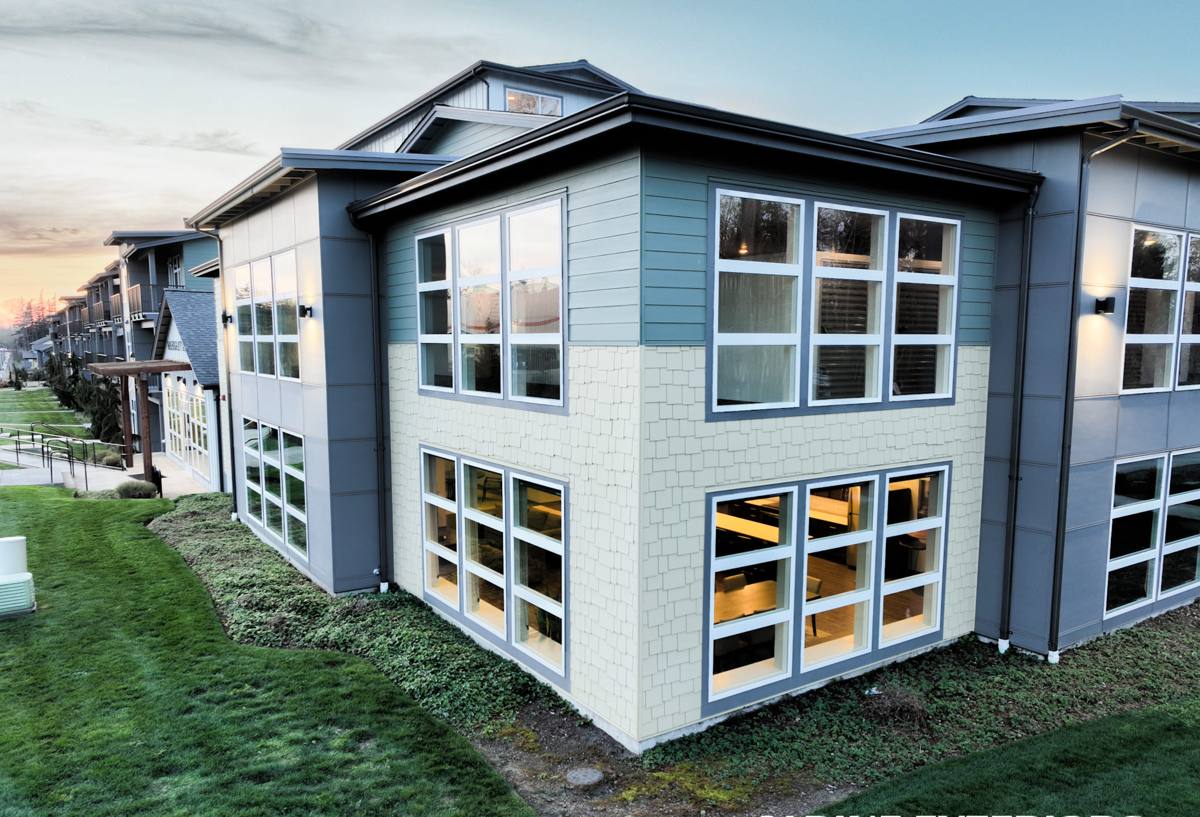
Signs a Cordata Home Needs Siding Replacement, Not Just Repair
Not every siding problem calls for a full replacement, but in this climate, damage found late is usually damage that's already spread. Homeowners in Cordata should treat these signs as a reason to get a professional look rather than wait for the next dry season:
- Soft, spongy, or crumbling spots when you press on the siding, especially near the bottom courses or under windows
- Persistent moss or black-green staining that comes back within weeks of cleaning
- Visible buckling, warping, or gaps opening up at seams and corners
- Paint or finish that's peeling, chalking, or failing faster than a normal repaint cycle would explain
- Interior signs like musty smells, peeling interior paint, or soft drywall near exterior walls
- Siding that was installed more than 20-25 years ago and has never been fully inspected behind the surface
Any one of these on its own might be a spot repair. Several together, especially on a home with mixed sun and shade exposure typical of Cordata's tree-lined lots, usually means the water-resistive barrier and sheathing behind the siding have already taken on moisture, and patching the visible layer won't fix what's happening underneath.
What a Correct Siding Replacement Actually Involves
Siding replacement done right is not a cosmetic swap. The visible plank or panel is the last layer installed, not the only thing that matters. A correct job in this climate includes:
Tear-off and inspection
Removing the old siding down to the sheathing so the crew can actually see what's there — soft sheathing, rusted fasteners, or compromised framing don't show up until the old material is off. This is also the point where a contractor should catch problems the homeowner never knew existed.
Water-resistive barrier and flashing
A properly lapped weather-resistive barrier, correctly flashed windows and doors, and flashing at every horizontal transition — these details matter more in a climate that gets sustained wind-driven rain than they do almost anywhere else in the country. Siding is the first line of defense, not the only one; the drainage plane behind it is what actually keeps a wall dry over decades.
Fastening and installation to spec
Fastener type, spacing, and placement all affect how siding performs over time, particularly in a marine climate where corrosion-resistant fasteners aren't optional. Manufacturer installation instructions exist for a reason, and skipping steps to save labor time is where premature failures usually start.
Trim, caulking, and finish details
Corners, trim boards, and caulk joints are where most siding failures begin. Getting these right the first time avoids callbacks and, more importantly, avoids the slow water intrusion that homeowners don't notice until it's expensive.
Why We Install James Hardie Fiber Cement — And Nothing Else
We install James Hardie fiber cement siding exclusively. We don't install vinyl, LP SmartSide, Cemplank, Allura, primed spruce, or cedar, and that's a deliberate standard, not an oversight. Each of those products has real strengths, but in a climate like Cordata's — sustained moisture, moss pressure, salt air, and wide temperature swings between summer and winter — the trade-offs stack up against them over the long run: vinyl can warp and become brittle with age and offers limited defense in wildfire-adjacent conditions; engineered wood products are more sensitive to moisture intrusion at cut edges and seams if installation isn't precise; and natural wood siding like cedar demands an ongoing maintenance commitment most homeowners don't want to sign up for.
James Hardie fiber cement is non-combustible, holds its factory-applied ColorPlus finish far longer than field-applied paint, and its HZ product lines are engineered specifically for climate zones like ours — built to handle moisture cycling without swelling, cracking, or hosting the kind of persistent moss growth that plagues wood-based products here. It also carries a strong transferable warranty, which matters to homeowners who may sell before the siding's functional life is over.
Comparing Siding Materials for a Wet, Mossy Climate
| Material | Moisture Behavior | Moss/Algae Resistance | Maintenance Burden | Typical Lifespan |
|---|---|---|---|---|
| James Hardie fiber cement | Dimensionally stable, resists moisture-driven swelling | Factory finish resists staining better than raw wood | Occasional wash, no repainting for many years | 30+ years with proper install |
| Vinyl | Can warp/distort with heat and age | Moderate; seams and laps can trap moisture | Low, but limited repair options once damaged | 20-30 years, variable |
| LP SmartSide / engineered wood | Vulnerable at cut edges and seams if not fully sealed | Moderate; needs consistent paint maintenance | Regular repainting and edge sealing | 20-30 years with diligent upkeep |
| Cedar | Absorbs and releases moisture naturally; prone to cupping | Low without regular treatment | High — staining/sealing on a recurring cycle | 15-30 years, highly maintenance-dependent |
Our Process From Estimate to Finished Job
We start with an on-site inspection of the existing siding and, where accessible, a look at what's happening behind it — not just a walk-around estimate. From there we walk the homeowner through what we found, what a correct replacement will involve on that specific house, and a clear written estimate before any work begins. Once a project is scheduled, tear-off, sheathing inspection, and any needed repairs happen before a single piece of new siding goes up. We install to James Hardie's published specifications for our climate zone, including fastening, clearances, and flashing details, and we walk the finished job with the homeowner before calling it done.
What to Ask Before Hiring a Siding Contractor in Cordata
- Do you inspect sheathing and the water-resistive barrier before installing new siding, or just install over what's there?
- What clearance and flashing details do you follow for our specific climate?
- Are you a manufacturer-recognized installer, and do you follow published installation specs?
- What does your warranty cover, and is it transferable if the home sells?
- Can you explain, in plain terms, why you recommend the product you're recommending for this house?
- Do you have current licensing and insurance you can provide before work starts?
A contractor who can answer these clearly and without hesitation is worth far more than the lowest bid. Siding is a 20-to-30-year decision; the labor and detailing behind it matter as much as the material itself.
Why Local Experience in Cordata and Whatcom County Matters
A crew that already works in Cordata and across Whatcom County has seen how this specific climate treats siding over years, not just what a manufacturer's spec sheet says in theory. That means knowing which details tend to fail first on homes with heavy tree cover, how much wind-driven rain a north-facing wall actually takes in a typical winter, and what "correct installation" looks like once it's been tested by a few real Pacific Northwest storm seasons. It also means being available for warranty questions, follow-up, or a second look years down the road — not a one-time crew that's moved on to another region.
If your Cordata home's siding is showing its age, or you're planning ahead before the next wet season, we're happy to take a look and give you a straightforward, no-pressure estimate. There's no obligation, and no upsell — just an honest read on what your home actually needs. Use the form below to get started.