 Bellingham Roofing
 Building Decks for Sehome Homes
Sehome sits close enough to Bellingham Bay that salt-laden air, wind-driven rain, and a long, damp moss season are just part of owning a home here. A deck built without those conditions in mind will look fine for a year or two and then start showing problems — soft spots, rust streaks from fasteners, slick green film underfoot, and boards that cup or split as they take on and release moisture over and over. Building a deck correctly in Sehome means designing for that cycle from the start, not patching it later.
We've built and repaired decks throughout Bellingham and Whatcom County long enough to know which details matter here and which ones are just upsells. This page covers what actually holds up in a neighborhood like Sehome, close to the water and shaded by mature trees, and what our process looks like from first look to final walkthrough.
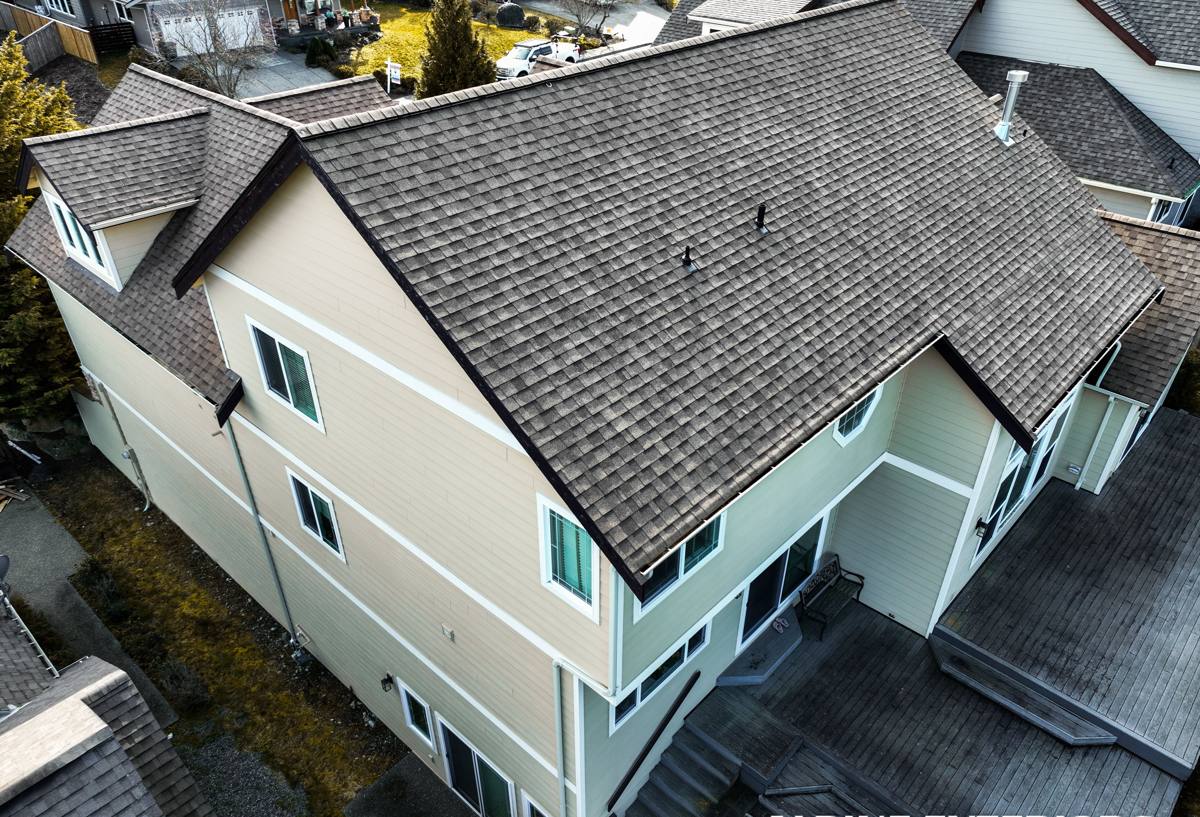
What Sehome's Climate Does to a Deck
A few conditions show up again and again on decks we inspect in this part of Bellingham:
- Salt air corrosion. Proximity to the bay means airborne salt reaches decks even a mile or two inland, especially on exposed or elevated sites. Standard steel fasteners and hardware corrode faster here than in drier, inland parts of the county.
- Driving rain and wind-blown moisture. Bellingham's rain rarely falls straight down. Wind pushes it sideways under railings, along ledger boards, and into any gap that isn't properly flashed, which is where hidden rot usually starts.
- Extended moss and algae season. Cool, wet, shaded conditions for much of the year create ideal moss growth on horizontal surfaces, particularly on the north and east sides of a house or under tree canopy common in older Sehome yards.
- Freeze-thaw cycling. Whatcom County gets enough cold snaps mixed with wet weather that trapped moisture in wood or concrete footings can freeze, expand, and slowly work joints and fasteners loose over several seasons.
None of this means a deck can't last decades in Sehome. It means the framing, fastener choice, flashing, and drainage details have to be right the first time, because moisture problems in a deck are far cheaper to prevent than to fix.
What a Correct Deck Build Involves Here
Footings and Framing
Everything starts below the decking. Footings need to sit below frost depth and bear on undisturbed, well-draining soil — a real concern on older Sehome lots where fill, tree roots, or clay pockets are common. We use pressure-treated framing lumber rated for ground contact where posts meet soil, and we keep structural wood off grade wherever possible to reduce standing moisture contact.
Ledger Attachment and Flashing
The ledger board — where the deck attaches to the house — is the single most common failure point we find on older decks in this area. If it isn't flashed correctly, wind-driven rain gets behind the siding and rots the rim joist and sheathing from the inside, often for years before anyone notices. We flash every ledger connection with proper step and drip flashing and use structural screws or through-bolts rated for the load, not just deck screws.
Fastener and Hardware Choice
Given the salt exposure in Sehome, we use stainless steel or heavy hot-dip galvanized fasteners and structural hardware rather than standard coated screws, which can start showing rust bleed on decking within a couple of seasons this close to the bay. It costs more upfront and saves a full re-fastening job down the line.
Decking Material
Homeowners in Sehome generally choose between two paths:
| Material | Upfront Cost | Maintenance | How It Handles Local Climate |
|---|---|---|---|
| Pressure-treated wood | Lower | Annual cleaning, periodic staining/sealing | Needs regular sealing to resist moisture cycling and moss; sanding/staining hides wear over time |
| Composite decking | Higher | Occasional washing, no staining | Resists rot and moisture absorption well; still needs periodic cleaning to prevent surface moss/algae film |
| Cedar | Mid-range | Regular oiling/sealing | Naturally rot-resistant but still needs upkeep in constant damp shade; ages to gray without maintenance |
There's no universally "right" material — it's a tradeoff between upfront cost and long-term maintenance. We'll walk through the real difference in yearly upkeep for your specific site, especially if your yard sits in heavy shade, since that changes how fast moss and moisture problems show up regardless of material.
Drainage and Moss Prevention Built Into the Design
A lot of moss and rot problems on Bellingham decks trace back to poor drainage rather than bad materials. We design decking gaps and joist spacing to let water shed and air circulate underneath, which matters more in shaded Sehome yards than in open, sunny sites. Where a deck sits low to the ground or under tree cover, we also talk through grading and any nearby landscaping that's trapping moisture against the structure — sometimes a small change in a downspout or a bit of trimmed vegetation does more for deck longevity than any product choice.
For low or covered decks, we build in enough ventilation underneath to keep framing dry between rain events, since that space rarely gets direct sun to help it dry out on its own here.
Railings, Stairs, and Code Requirements
Railings and stairs are where a lot of DIY and budget deck builds cut corners, and they're also the components inspectors check closely. In Whatcom County, deck permits and inspections apply based on height, size, and attachment to the home — we handle that process as part of the build so you're not left sorting out permitting after the fact. Railing height, baluster spacing, and stair geometry all have to meet current code, and on an elevated deck near a slope or grade change, getting this wrong is a real safety issue, not just a paperwork one.
Our Process for a Sehome Deck Project
- On-site assessment. We look at your yard's grade, shade, soil, and how the deck will attach to your home before recommending materials or layout.
- Design and material selection. We walk through the real maintenance tradeoffs for your site — not just a catalog of options — so you pick a material you'll actually be happy maintaining.
- Permitting. We handle the permit and inspection scheduling required for your project size and attachment type.
- Footings and framing. Built to depth and spec for your soil conditions, with ground-contact-rated lumber and corrosion-resistant hardware throughout.
- Flashing and waterproofing. Every ledger connection and any deck-to-house transition is flashed before decking goes down — this step doesn't get skipped or rushed.
- Decking, railing, and stairs. Installed to code, with attention to drainage gaps and airflow underneath.
- Final walkthrough. We go over basic care for your specific material so you know what upkeep to expect each season.
Why a Crew That Already Works in Sehome Matters
A deck built to a generic national spec sheet often isn't built for a bay-adjacent, tree-shaded lot in western Whatcom County. Contractors who work regularly in Bellingham neighborhoods like Sehome already know which fastener grade holds up against the salt air, which ledger details actually stop wind-driven rain, and which yards need extra attention to drainage because of shade and soil type. That local pattern recognition is the difference between a deck that needs re-fastening in five years and one that's still solid in twenty-five.
We also know the Whatcom County permitting process for residential decks, which keeps your project from stalling on paperwork or failing an inspection over a detail that's easy to get right the first time.
Maintaining Your Deck Once It's Built
Whatever material you choose, a few habits go a long way in this climate:
- Sweep debris and standing leaves off the deck regularly, especially in fall when Sehome's tree cover drops the most litter.
- Wash the surface at least once or twice a year to clear early moss and algae growth before it takes hold, more often on shaded sections.
- Check and re-seal or re-stain wood decking on the manufacturer's recommended schedule — don't wait until it looks obviously weathered.
- Inspect railings and stair connections annually for looseness, especially after a hard winter.
- Keep nearby plantings trimmed back so airflow and sunlight can reach the deck surface where possible.
Staying ahead of these small tasks is what keeps a well-built deck from ever needing major repair.
Get a Free Estimate
If you're planning a new deck or replacing an aging one in Sehome, we're happy to come take a look, walk the site with you, and give you a straight answer on what it'll take — no pressure, no upsell. Use the form below to request a free estimate.