 Bellingham Roofing
 Windows Built for Edgemoor's Waterfront Climate
Edgemoor sits close to Bellingham Bay, under a heavy tree canopy, which gives the neighborhood two things at once: some of the prettiest views in Whatcom County, and some of the hardest conditions in the area for a window to survive. Salt-laden air off the water works on metal hardware and frame seals year-round. Driving rain off the Sound finds its way into any flashing detail that isn't done right. And the long moss season here — stretching well past what most of the country would call "wet season" — keeps humidity high against exterior walls for months at a stretch.
None of that is a reason to avoid replacing windows in Edgemoor. It's a reason to be picky about the product, the installation detail, and the crew doing the work. A window that performs fine in a dry inland climate can fail early here if it's the wrong material or if the install skips proper flashing and drainage. This page covers what actually matters for energy-efficient window replacement on an Edgemoor home, and what a correct job looks like from estimate to final walkthrough.
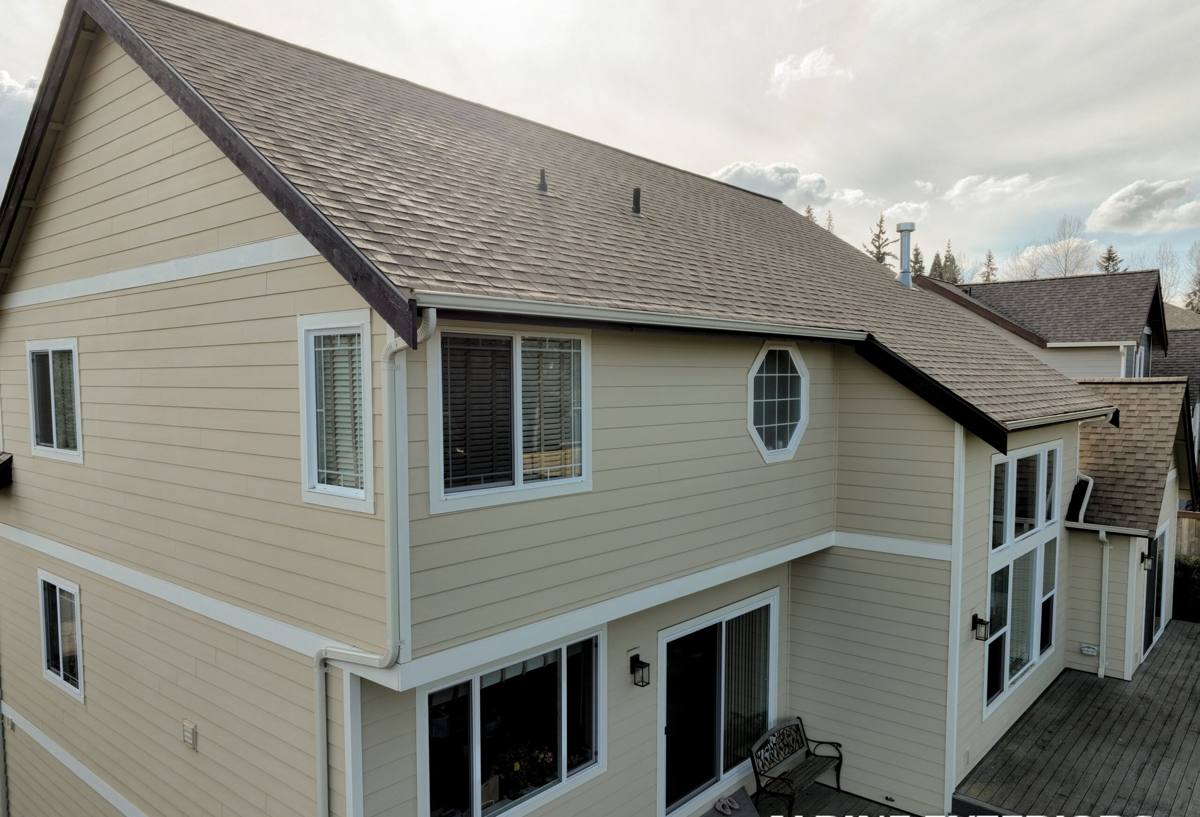
What "Energy-Efficient" Actually Means
"Energy-efficient" gets used loosely in window marketing. For a homeowner, it comes down to three measurable things, plus one detail that matters more in the Pacific Northwest than almost anywhere else: the installation itself.
U-Factor
This measures how much heat the window lets escape. Lower is better. In Bellingham's marine climate, where the goal is keeping heat in during long damp winters rather than keeping heat out during brief hot spells, U-factor is usually the number worth paying the most attention to.
Solar Heat Gain Coefficient (SHGC)
This measures how much solar heat passes through the glass. Under Edgemoor's tree cover, most homes don't get blasted with direct sun, so SHGC tends to matter less here than it would on an open, south-facing lot. It's still worth checking on any west- or south-facing glazing you have.
Air Leakage
This is the rating most homeowners actually feel — drafts around the sash, cold spots near the frame, condensation on the interior glass in winter. A well-rated window with a sloppy installation will still leak air. The installation detail matters as much as the window itself.
Signs Your Current Windows Are Costing You Money
Most homeowners don't replace windows because of a single dramatic failure. They replace them because a slow list of small problems finally adds up. Watch for:
- Condensation or fogging between the panes — the seal has failed and the insulating gas fill is gone
- Visible daylight or a draft you can feel with your hand along the frame edge
- Wood trim or sill that's soft, discolored, or shows moss growth starting on or near the frame
- Hardware (locks, cranks, hinges) that's pitted, stiff, or corroded — common near the water
- Rooms that are noticeably colder near the window than the rest of the house
- Paint or finish failing on the interior sill faster than elsewhere in the room
Any one of these on its own isn't an emergency. Several of them together, especially on a home's water-facing or weather-facing side, usually mean it's time to start planning a replacement rather than another repair.
Frame Materials That Hold Up Near the Water
Frame material matters more in Edgemoor than in a lot of Whatcom County, simply because of the salt air and near-constant moisture exposure. Here's how the common options generally compare for this kind of setting.
| Material | Salt Air / Moisture Resistance | Insulating Performance | Maintenance |
|---|---|---|---|
| Vinyl | Good — won't corrode or rot, seams are the main watch point | Good, especially multi-chambered profiles | Low — occasional cleaning |
| Fiberglass | Very good — dimensionally stable, resists warping in wet/dry cycling | Very good | Low |
| Wood (unclad) | Poor in this setting without diligent upkeep — prone to rot and moss | Good | High — regular refinishing needed |
| Wood-clad (aluminum or vinyl exterior) | Good on the exterior face — interior wood still needs normal care | Good | Moderate |
| Aluminum | Fair — resists rot but is a poor insulator and can corrode over time near salt air | Poor unless thermally broken | Low |
We don't rule out wood-frame windows for Edgemoor homes — plenty of owners want the look and are willing to keep up with the maintenance. But we tell every homeowner up front what that maintenance schedule actually looks like this close to the water, rather than letting them find out the hard way in year three. For most Edgemoor replacements, vinyl or fiberglass ends up being the lower-maintenance, better-performing choice, and we'll say so honestly even if it's not the fancier-looking option.
Glass Package Details
Beyond the frame, the glass package does a lot of the energy-efficiency work:
- Double-pane with Low-E coating and argon fill — the standard for most Edgemoor replacements; solid performance at a reasonable cost
- Triple-pane — better U-factor and sound dampening, worth considering on north- and water-facing rooms where drafts are worst, but adds weight and cost
- Warm-edge spacers — the material separating the panes at the edge of the glass; matters for reducing condensation risk in a humid climate like ours
What a Correct Installation Actually Involves
The window unit itself is maybe half the job. The other half is how it's flashed, sealed, and integrated into the wall — and this is where driving rain off the bay finds every shortcut a crew might have taken.
Removal and Opening Prep
Once the old window is out, we check the rough opening for hidden rot or moisture damage before anything new goes in. In Edgemoor, especially on older homes, this step regularly turns up sill or framing damage that wouldn't have been visible with the old window still in place.
Flashing and Drainage
Proper flashing — a drainage plane that sheds water down and out, not into the wall cavity — is the single biggest factor in whether a window installation lasts. This matters everywhere, but especially on a lot exposed to wind-driven rain off the water.
Sealing and Insulation
The gap between the window frame and the rough opening gets insulated and sealed correctly — not just caulked over on the outside and left hollow inside, which is a shortcut that shows up later as drafts and moisture problems.
Exterior Trim and Finish
Trim gets reinstalled or replaced and sealed to shed water away from the opening, matching the home's existing siding and trim details.
Our Process, Start to Finish
- Free on-site estimate — we walk the home, look at each window in question, and talk through what's actually needed versus what's optional
- Product selection — we go over frame material, glass package, and finish options based on your budget and the specific exposure of each window
- Scheduling — we work around Bellingham's weather windows to minimize how long any opening is exposed
- Removal, inspection, and installation — including checking the rough opening for hidden damage before the new unit goes in
- Flashing, sealing, and trim work — done to shed water, not just look finished
- Final walkthrough — we test operation, check seals, and go over care instructions before we consider the job done
What Affects the Cost
Every home and every window opening is a little different, so we don't quote sight-unseen numbers on a page like this. What we can tell you is what drives the price up or down:
| Factor | Effect on Cost |
|---|---|
| Frame material (vinyl vs. fiberglass vs. wood-clad) | Vinyl generally lowest, wood-clad and fiberglass higher |
| Glass package (double vs. triple-pane) | Triple-pane adds cost but improves performance and sound dampening |
| Window size and configuration | Larger or custom-shaped openings cost more than standard sizes |
| Condition of the existing opening | Hidden rot or framing damage adds repair cost discovered during removal |
| Number of windows done at once | Doing multiple windows in one visit is usually more efficient than one-off replacements |
We'd rather give you a real, itemized number after seeing the actual windows than a vague range that doesn't reflect your home.
Why a Crew That Already Works Edgemoor Matters
A contractor who mostly works drier, inland parts of Whatcom County can still do a technically fine window install — but they may not default to the flashing and drainage detail that Edgemoor's exposure actually calls for, because most of their jobs don't demand it. A crew that regularly works this neighborhood knows which sides of a home take the worst of the weather, what moss and moisture damage tends to look like when it's caught early versus late, and how salt air affects hardware choices over time. That's not a marketing point — it's the difference between a window that's still performing well in fifteen years and one that needs attention again in five.
Keeping New Windows Performing Long-Term
Energy-efficient windows are a long-term investment, and a little regular attention keeps them performing the way they should:
- Clean weep holes and drainage tracks periodically so water can actually exit the frame
- Rinse salt residue off exterior frames and hardware, especially after storms
- Check exterior caulk and sealant lines once a year for cracking or gaps
- Keep nearby vegetation trimmed back so moss and debris don't build up against the frame
- Operate locks and hardware periodically even on windows you rarely open, to keep mechanisms from seizing
- Watch for condensation between panes, which signals a failed seal rather than a cleaning issue
If your Edgemoor home has drafty, foggy, or aging windows, we're happy to take a look and give you a straightforward, no-pressure estimate — no games, just an honest read on what your windows actually need. Use the form below to get started.