 Bellingham Roofing
 Windows Built for the Barkley Climate
Barkley sits close enough to Bellingham Bay and the surrounding wetlands that homes here deal with a specific mix of weather stress: salt-laden air rolling in off the water, wind-driven rain that hits window seals sideways rather than straight down, and a moss season that stretches for months every fall, winter, and spring. None of that is dramatic on its own. But year after year, it adds up on window frames, seals, and glazing in ways that a lot of homeowners don't notice until a window feels drafty, fogs up between the panes, or gets hard to open and close.
Energy-efficient windows aren't just about lower heating bills, though that's part of it. In Whatcom County, the bigger issue is often moisture management and long-term durability. A window that's efficient but poorly sealed or installed with the wrong flashing detail will still let water in behind the trim. A window that's well-installed but not rated for our climate will still lose heat and let condensation build up on cold mornings. Getting both right is what actually protects a home here.
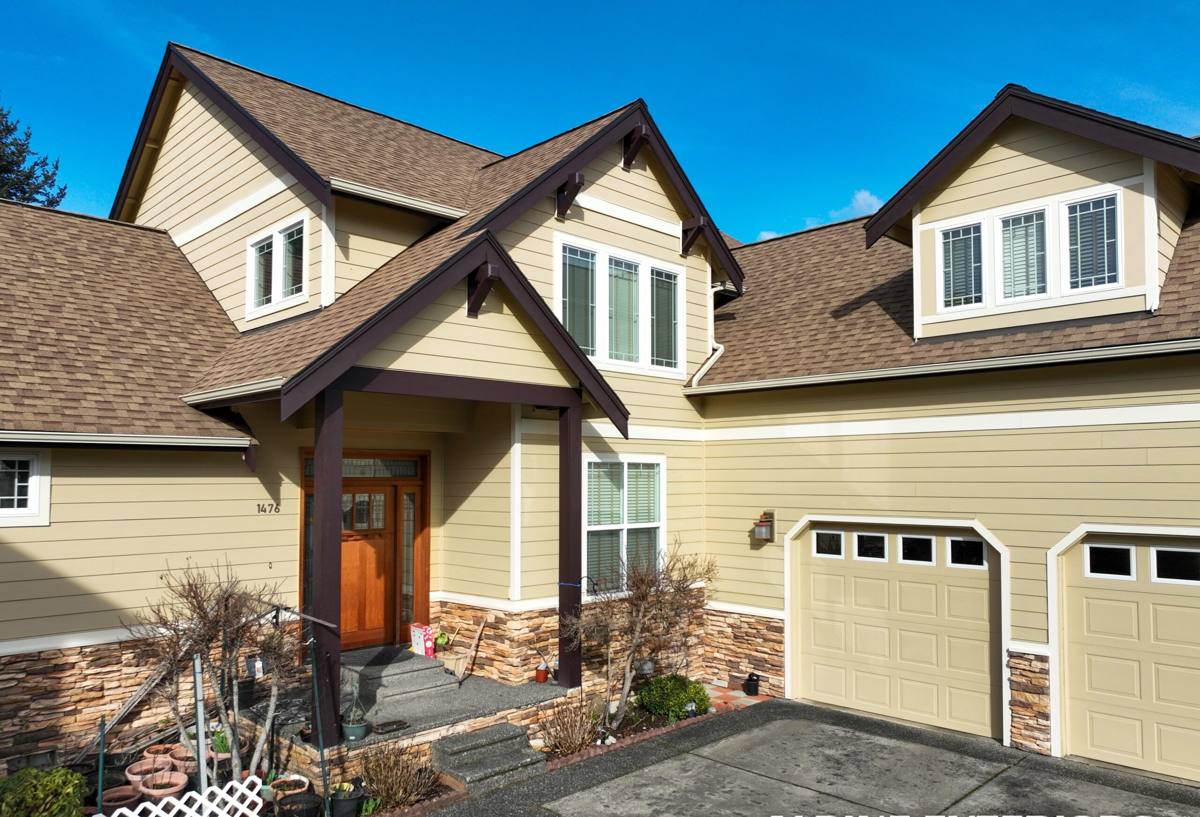
What Bellingham's Climate Does to Windows Over Time
Salt Air and Metal Fatigue
Homes closer to the water pick up a fine layer of salt in the air, and that salt is corrosive to window hardware — hinges, locks, balance mechanisms, and any exposed aluminum components. Over years, this can mean stiff or failing hardware well before the glass or frame itself shows any problem. It's a slow process, which is exactly why it gets missed until a window won't latch properly.
Driving Rain and Wind-Driven Water
Bellingham doesn't just get steady rain — it gets rain that comes in sideways during storms off the Strait. Windows facing the prevailing weather take the brunt of this, and any weak point in the flashing, sealant, or sill design becomes a path for water to get behind the siding. This is usually where rot starts, and it's almost always invisible until the damage is well established.
The Long Moss and Moisture Season
Whatcom County's extended damp season keeps humidity high around the exterior of a home for much of the year. That constant moisture doesn't just feed moss on roofs and decks — it keeps window sills, trim, and lower frame corners damp longer than they'd stay in a drier climate, which is exactly the condition that wood rot and failed seals need to take hold.
What "Energy-Efficient" Actually Means Here
Energy-efficient windows are rated on a few key numbers, and in a marine climate like ours, some of those numbers matter more than others. Understanding them helps you make a decision based on your home instead of a sales pitch.
| Rating | What It Measures | Why It Matters in Bellingham |
|---|---|---|
| U-Factor | How well the window resists heat loss | Lower is better — this is the main driver of winter heating costs in our climate |
| SHGC (Solar Heat Gain Coefficient) | How much solar heat passes through the glass | Less critical here than in sunnier climates, but still worth balancing on south- and west-facing walls |
| Air Leakage Rate | How much air passes through the window assembly | Directly tied to draft complaints and moisture infiltration during wind-driven storms |
| Condensation Resistance | How well the window resists interior condensation | Important given our high humidity and the temperature swings between damp mornings and heated interiors |
A window with a strong U-factor but poor air-leakage performance can still feel drafty during a windstorm. This is why we look at the full performance picture for a given wall orientation and exposure, not just one number on a label.
Frame Material Trade-Offs
| Frame Material | Strengths | Trade-Offs in Our Climate |
|---|---|---|
| Vinyl | Low maintenance, good value, resists moisture well | Can expand/contract with temperature swings; quality varies a lot between manufacturers |
| Fiberglass | Very stable dimensionally, strong long-term durability, holds paint well | Higher upfront cost than vinyl |
| Wood / Wood-Clad | Classic appearance, good insulating properties | Exterior wood exposed to our driving rain and moss season needs consistent maintenance to avoid rot; cladding helps but seams still need attention |
| Aluminum | Strong and slim sightlines | Poor insulator and prone to corrosion in salt-air exposure unless well-treated — generally not our recommendation for this area |
We don't push one material on every home. The right call depends on your home's exposure to weather, your maintenance preferences, and your budget. What we won't do is install a product in a spot where its known weaknesses — wood in a heavy splash zone, bare aluminum on a salt-exposed wall — are set up to fail early. That's a standard we hold regardless of what's cheapest to install.
Signs Your Current Windows Are Costing You
- Visible fog or moisture trapped between panes of double- or triple-glazed units — a sign the seal has failed
- Cold drafts near the window frame even when the window is fully closed and latched
- Difficulty opening, closing, or locking windows, especially on the sides facing prevailing weather
- Soft or discolored trim and sill areas around the window exterior
- Condensation forming on the inside of the glass regularly during cold mornings
- Noticeably higher heating bills compared to similarly sized homes nearby
- Visible gaps, cracked caulk, or deteriorated sealant around the window perimeter
Any one of these on its own isn't an emergency. Several of them together, especially on the weather-facing side of a Barkley home, usually means it's worth having someone look before the underlying wood framing gets involved.
What a Correct Installation Actually Involves
Replacing a window is straightforward in concept but easy to do poorly. In this climate, the installation detail work matters as much as the window product itself.
Removal and Inspection
Once the old window is out, we inspect the rough opening for hidden water damage or rot before anything new goes in. This is often the most important step — installing a new window into a compromised opening just seals the problem behind new trim.
Sill Pan and Flashing
A sloped sill pan and properly layered flashing are what actually keep wind-driven rain from working its way behind the window over time. This detail is easy to shortcut and impossible to see once the trim is back on, which is exactly why it needs to be done right the first time.
Air Sealing and Insulation
The gap between the window frame and the rough opening gets sealed and insulated properly — not just stuffed with fiberglass, which settles and loses effectiveness. Correct air sealing here is a big part of what separates a window that performs to its rating from one that doesn't.
Final Weatherproofing
Exterior trim, caulking, and any cladding details are finished to shed water away from the opening, not toward it. On homes with more direct weather exposure, we pay extra attention to head flashing above the window, since that's the detail doing the most work during a driving rainstorm.
Our Process for Barkley Homeowners
- On-site assessment — We look at each window's current condition, orientation, and exposure to prevailing weather, not just take a count of how many windows need replacing.
- Product recommendation — Based on that assessment, we recommend frame materials and glazing packages suited to each wall's actual exposure, explaining the trade-offs honestly.
- Written estimate — A clear scope and price before any work starts, with no pressure to decide on the spot.
- Installation — Careful removal, opening inspection, proper flashing and sill pan work, air sealing, and finish trim, done by a crew that treats the flashing detail as the priority it is.
- Cleanup and walkthrough — We clean up the job site and walk through the finished work with you before we consider the job done.
Why Local Experience Matters
A crew that already works in and around Bellingham has seen how homes in this area age under our specific conditions — which wall orientations take the worst of the driving rain, how quickly moss and moisture build up on north-facing trim, and where salt air tends to cause the earliest hardware wear. That's not something you get from a general product catalog. It comes from doing the work here, on homes like yours, through multiple wet seasons.
It also means we're not guessing at appropriate glazing packages or flashing details for a climate we don't know. Whatcom County's weather is specific enough that a window setup that works fine in a drier region can underperform here, and a crew unfamiliar with local conditions may not catch that until after installation.
Protecting Your Investment After Installation
Energy-efficient windows are a long-term investment, and a little regular attention keeps them performing the way they're supposed to in our climate.
- Rinse salt residue and grime off exterior frames and glass periodically, especially on wind-exposed walls
- Check and lubricate hardware such as locks and hinges on a yearly basis to prevent corrosion-related sticking
- Inspect exterior caulking and sealant each fall before the wet season sets in, and touch up any cracked or missing sections
- Keep gutters and downspouts clear so water isn't overflowing directly onto window heads below
- Watch for any soft spots developing in exterior trim or sills and address them promptly rather than waiting
Get a Straightforward Estimate
If your windows in Barkley are drafty, fogging, or just due for an upgrade, we're happy to take a look and give you an honest read on what's actually needed — no pressure, no inflated scope. Use the form below to request a free estimate and we'll walk you through your options for your home's specific exposure and budget.