 Bellingham Roofing
 Deck Building for Fairhaven's Waterfront Conditions
Fairhaven sits close enough to Bellingham Bay that its weather behaves differently than decks going up a few miles inland. Homes here deal with salt-laden air off the water, wind-driven rain that gets pushed sideways under eaves and railings, and a long, damp shoulder season each fall and spring where moss and algae get a real head start. A deck built without those specifics in mind can look fine for a year or two and then start showing problems that are expensive to reverse — corroded hardware, soft framing, and a walking surface that turns slick every morning. Building correctly for Fairhaven from day one costs less than fixing it later.
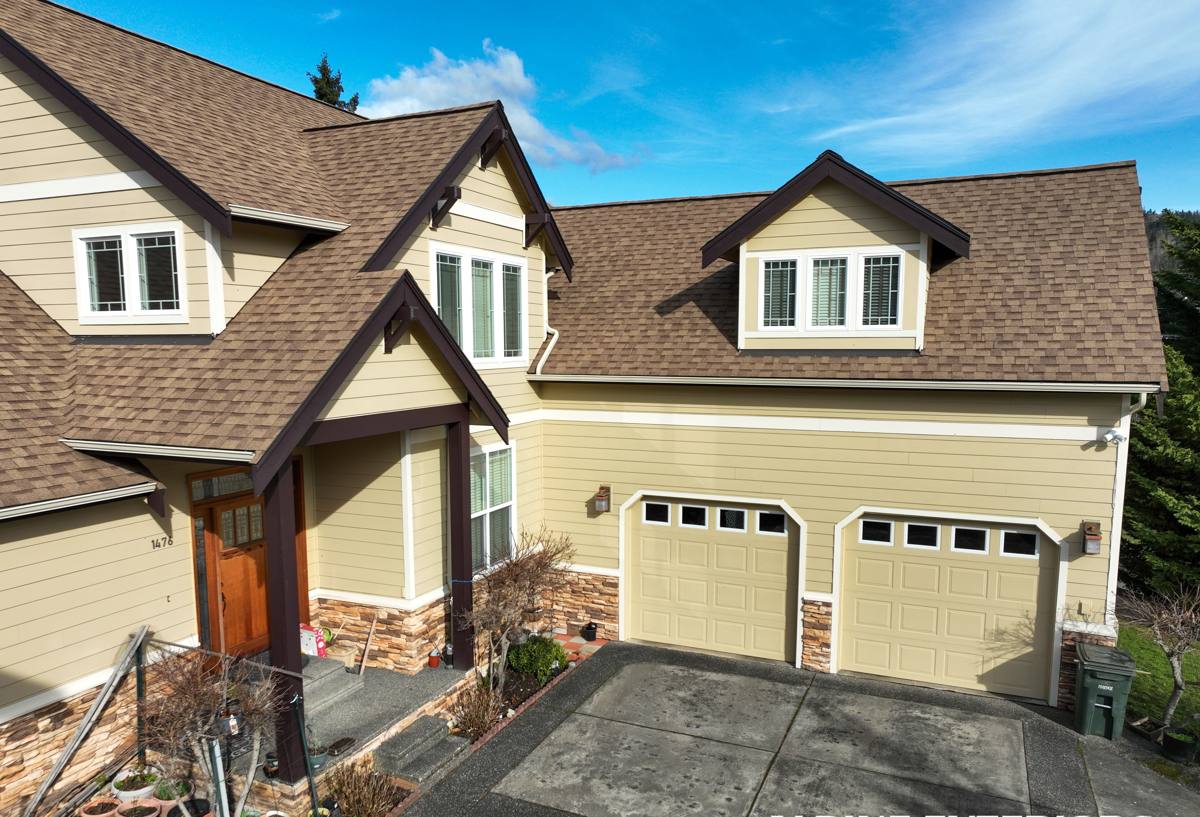
What the Local Climate Actually Does to a Deck
Salt Air and Metal Hardware
Proximity to Bellingham Bay means airborne salt reaches exposed wood and metal even without direct ocean spray. Over time, standard galvanized fasteners and brackets can pit and corrode faster than they would further inland, which weakens connections at exactly the points — ledger boards, joist hangers, post bases — where structural failure matters most. This isn't a reason to avoid a deck near the water; it's a reason to spec hardware rated for it from the start.
Driving Rain and Water Intrusion
Whatcom County gets plenty of rain, but the kind that causes deck damage isn't the straight-down variety — it's wind-driven rain that gets forced up and under flashing, railing posts, and ledger connections. Any gap in flashing detail becomes a slow leak path into the house band joist or into end grain on framing lumber, and that kind of rot often stays hidden until a board or post feels soft underfoot.
Moss and Algae Season
Shaded decks, north-facing decks, and anything under tree cover in Fairhaven's tree-lined streets pick up moss and green algae film for a good stretch of the year. Beyond the cosmetic issue, a mossy deck surface is a genuine slip hazard on stairs and ramps, and moss holds moisture against the board surface longer than open air would, accelerating wood decay underneath it.
Choosing the Right Decking Material
There's no single "best" decking material for Fairhaven — the right call depends on how much upkeep you want to do, your budget, and how exposed the deck is to sun, shade, and weather. Here's how the common options actually compare for this climate.
| Material | Salt Air / Moisture Behavior | Moss Resistance | Maintenance | Relative Cost |
|---|---|---|---|---|
| Pressure-treated fir/pine | Good if properly sealed and re-sealed on schedule | Needs regular cleaning; textured grain traps moss spores | Annual cleaning, re-sealing every 1-2 years | Lowest upfront |
| Cedar | Naturally rot-resistant, but still needs sealing near the water | Moderate — smoother grain sheds moss better than fir | Sealing every 1-3 years to hold color and resist checking | Mid-range |
| Composite (capped) | Excellent — doesn't absorb moisture or swell | Good, though algae film can still form in shade and needs washing | Occasional washing, no sealing or staining | Higher upfront, lower long-term |
| PVC decking | Excellent — fully moisture-immune | Good; smooth cap resists organic buildup | Lowest — soap and water as needed | Highest upfront |
For a deck that gets regular shade or sits close to the water, we generally steer homeowners toward capped composite or PVC unless they specifically want the look and feel of real wood and are prepared for the maintenance rhythm that comes with it. Neither choice is wrong — it's a trade-off between upfront cost and ongoing work, and we'll walk through it honestly rather than push whatever has the best margin.
Structure and Framing Details That Matter Here
The parts of a deck nobody sees are the parts that determine whether it lasts. A few things we treat as non-negotiable on Fairhaven builds:
- Ledger board flashing that properly diverts water away from the house rim joist, not just a bead of caulk behind the board
- Stainless or heavy-duty coated fasteners and structural connectors rated for coastal/salt-air exposure, not standard galvanized
- Footings sized and set to local frost depth and soil conditions, since Fairhaven's terrain varies from flat lots to steep hillside grades
- Proper joist spacing and blocking under composite or PVC boards, since these materials have different span ratings than solid wood
- Airflow underneath the deck — closing it in without ventilation traps moisture against framing
On sloped or hillside lots, which are common in and around Fairhaven, footing depth and post height also affect how much structural bracing the deck needs against wind and lateral load. We assess that on-site rather than assuming a flat-lot standard.
Railings and Hardware Built for the Air Here
Railings take the brunt of wind-driven rain and salt exposure because they're the most exposed vertical surface on the deck. Cable railing systems, in particular, need stainless steel cable and hardware — anything less will show rust streaks down the posts within a couple of seasons near the water. Wood and composite railing systems need the same attention to fastener grade as the decking itself. We spec hardware based on the deck's actual exposure, not a one-size-fits-all default, because a deck tucked against the house behind other structures faces less salt load than one that's fully open to the water side.
Our Process for Fairhaven Deck Projects
1. On-Site Assessment
We walk the property, look at sun and shade exposure, existing drainage patterns, slope, and how close the deck will sit to the water-facing side of the house. This is where we flag anything — soft framing on an existing deck, poor grading, an undersized ledger connection — before it becomes a surprise mid-project.
2. Design and Material Selection
We talk through decking material, railing style, and layout against your budget and how much maintenance you actually want to do. This is also when we discuss whether the design needs to account for entertaining space, stairs, or multiple levels for a sloped yard.
3. Permitting
Most new decks and many substantial rebuilds in the City of Bellingham require a building permit, and requirements can shift depending on deck height, size, and proximity to property lines. We handle the permit process as part of the job so you're not left tracking down inspection scheduling yourself.
4. Construction
Framing first, with every structural connection built to the hardware standard the site calls for, then decking, then railings and finish details. We don't rush the framing stage — it's the part that determines whether the deck is still solid in fifteen years.
5. Final Walkthrough
Before we call it done, we walk the finished deck with you, check railing stability, stair rise and run, and drainage, and go over the maintenance schedule for whatever material you chose.
Maintenance Checklist for Fairhaven Homeowners
Whatever material your deck is built from, a little seasonal attention goes a long way in this climate:
- Sweep leaves and debris off the deck surface regularly, especially in fall — trapped organic matter feeds moss and holds moisture
- Wash the deck surface at least once a year with a deck-safe cleaner to remove algae film and salt residue before it builds up
- Check railing posts and stair stringers annually for movement or soft spots, particularly where wood meets a metal bracket
- Re-seal or re-stain wood decking on the schedule your material calls for — don't wait until it visibly needs it
- Keep gutters and downspouts near the deck clear so runoff isn't dumping extra water onto or under the structure
- Watch for moss regrowth in shaded corners and stair treads, since that's where slip risk is highest
Why It Matters to Hire a Crew That Already Works in Fairhaven
A deck contractor who mainly builds inland doesn't necessarily think about salt-rated hardware, wind-driven rain flashing, or hillside footing depth as a default — because most of their jobs don't require it. Working regularly in Fairhaven and along the rest of Bellingham's waterfront means we're not guessing at what this specific stretch of Whatcom County does to a structure over time; we've seen which details hold up and which ones fail early. That local familiarity also extends to the City of Bellingham's permitting process, so there are fewer surprises and delays getting a project approved and inspected.
Get a Straight Answer on Your Deck Project
If you're planning a new deck or need to replace one that's showing its age, we're happy to take a look and give you an honest read on materials, structure, and cost — no pressure, no upsell. Use the form below to request a free estimate and we'll set up a time to walk the site with you.