 Bellingham Roofing
 Why Sehome Decks Wear Out Faster Than the Manuals Say
Sehome sits close enough to Bellingham Bay that salt-laden air reaches almost every deck in the neighborhood, even ones tucked back under mature trees. That salt air settles into fastener heads, joist hangers, and any exposed end grain, and it works faster than most manufacturer warranties assume. Add Whatcom County's long wet season, where driving rain comes in sideways off the water for weeks at a time, and you have moisture finding its way into every joint, screw hole, and board gap on a deck that wasn't detailed for it.
Then there's moss. Bellingham's moss season isn't a month, it's most of the year. On a deck, moss doesn't just look bad, it holds water against the wood surface, keeps boards from drying out between rains, and turns a bare structure into something dangerously slick with the first frost. A deck built to a generic national spec, without extra attention to drainage, fastener choice, and material selection, will show rot, corrosion, and slip hazards well before its expected lifespan in this specific climate.
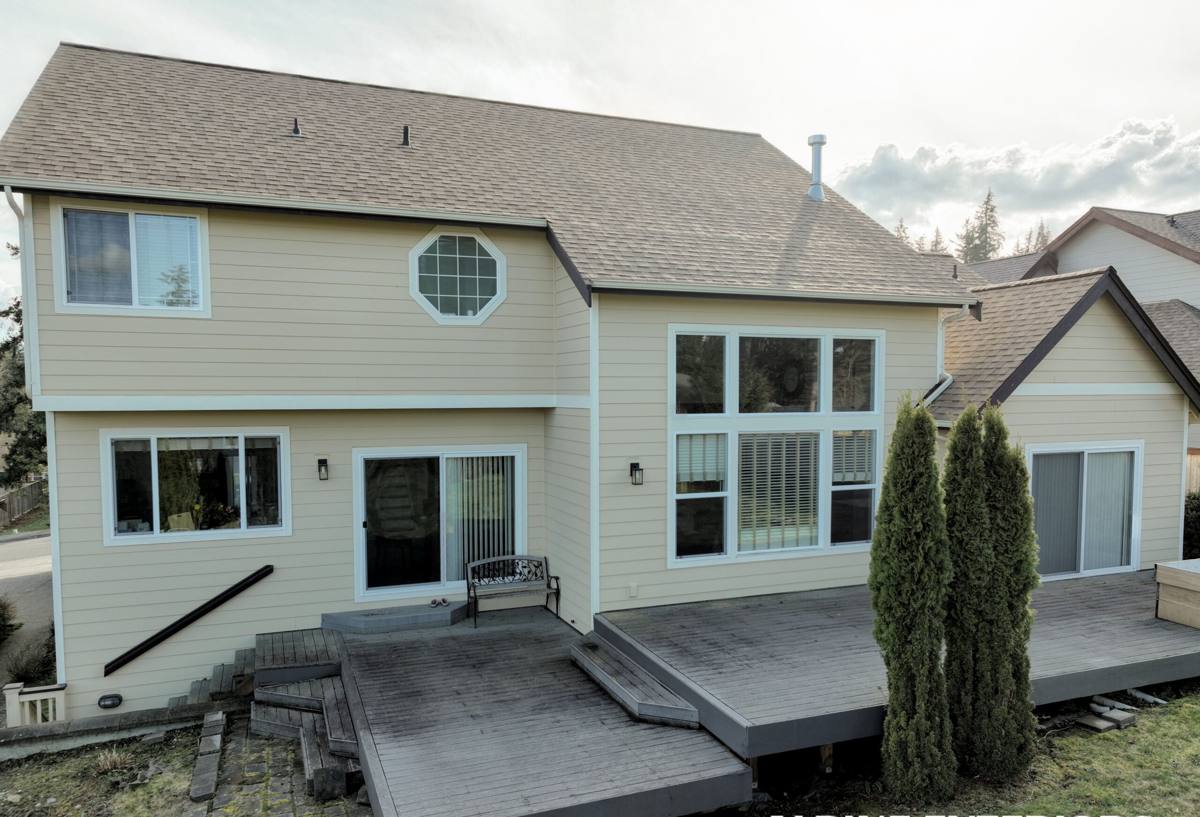
Signs a Sehome Deck Needs Replacement, Not Just Repair
Structural warning signs
Some problems mean the whole structure needs to come out, not just a board or two swapped. Watch for:
- Soft, spongy, or bouncy sections when you walk across the deck
- Ledger board pulling away from the house, or visible gaps at the house connection
- Posts or footings that have shifted, settled, or show visible rot at the base
- Rust streaking from joist hangers, bolts, or nail heads onto the wood
- Persistent moss or algae growth on the underside framing, not just the walking surface
Cosmetic problems versus structural failure
Gray, weathered wood or a few surface cracks aren't automatically a replacement job — that can often be sanded, cleaned, and refinished or spot-repaired. The distinction that matters is whether the problem is skin-deep or has reached the framing. A screwdriver test on suspect boards and a look underneath at the joists and beams tells the real story. We'll always tell you honestly if repair is the smarter, cheaper option — replacement is warranted when the substructure itself is compromised, not just when the surface looks tired.
What a Correct Deck Replacement Actually Involves
The substructure comes first
A deck is only as good as what's underneath it. That means checking post spacing and footing depth against current load requirements, confirming beam sizing is adequate for the span, and replacing any joists or ledger material that show rot or fastener corrosion. In a climate like ours, we also pay close attention to ledger flashing — the strip of metal and membrane that keeps water from wicking into the house band joist where the deck attaches. A poorly flashed ledger is one of the most common causes of hidden rot on decks in this region, and it's invisible until you pull the decking off.
Fasteners and hardware matter more here than most places
Standard hot-dip galvanized hardware can start showing corrosion within a few years this close to the water. We use fasteners and structural connectors rated for coastal exposure — typically stainless steel or heavy-duty coated hardware matched to whatever decking material is going on top, since some coatings react with certain wood treatments. It's a small cost difference at install time and a large difference in how the deck looks and performs a decade out.
Drainage and airflow underneath
Moss and rot both need standing moisture to take hold. Part of doing this correctly means grading or venting the space under the deck so water has somewhere to go, keeping board gaps consistent for drainage across the whole surface, and avoiding designs that trap leaves and debris in corners where they hold moisture against the framing all winter.
Choosing a Decking Material for Sehome's Climate
There's no single "best" decking material — there's a best fit for your budget, how much upkeep you want to do, and how the deck will be used. Here's how the common options actually perform under salt air, regular rain, and moss pressure:
| Material | How it handles this climate | Maintenance reality |
|---|---|---|
| Pressure-treated wood | Affordable and strong, but end grain and fastener holes are entry points for moisture; needs consistent sealing to resist rot and moss staining | Annual cleaning and re-sealing recommended |
| Cedar | Naturally rot-resistant and handles moisture well, but softer surface can hold moss and algae if not cleaned regularly | Periodic cleaning, occasional oil or sealer |
| Composite decking | Resists rot and won't absorb moisture into the board itself, but surface can still grow moss/algae film and needs periodic washing | Low — occasional wash, no sealing |
| PVC / capped composite | Most moisture-resistant option, sheds water well and resists staining, though it can feel warmer underfoot in direct summer sun | Lowest — soap and water cleaning |
We install all of these depending on what a homeowner wants, but we're honest about trade-offs rather than pushing one product line. A budget-conscious rebuild might make sense in pressure-treated wood with a firm sealing schedule; a homeowner who wants to stop thinking about the deck for a decade usually leans composite or capped PVC. What we won't do is install a product in a way that ignores its known moisture behavior just to save an afternoon of labor — that's how decks end up failing early in a climate like ours.
Our Deck Replacement Process
- On-site assessment. We inspect the existing deck, ledger connection, footings, and framing to confirm whether replacement or repair is the right call, and to check for anything the original build got wrong.
- Plan and permit. We handle the scope of work needed for permitting through the local building department and make sure the design meets current guardrail, stair, and structural requirements — codes have tightened since a lot of older Sehome decks were built.
- Demolition and disposal. Old decking, framing, and hardware are removed and hauled off; we check the house band joist and siding behind the old ledger for hidden water damage before rebuilding.
- Framing and flashing. New posts, beams, joists, and a properly flashed ledger connection go in first, built to span and load requirements, not just to match what was there before.
- Decking installation. Boards are installed with corrosion-resistant fasteners and consistent drainage gaps, following the manufacturer's specific installation requirements if it's a composite or PVC product.
- Railings, stairs, and final details. Guardrails, stair stringers, and any built-in features are finished and checked against code height and spacing requirements.
- Final walkthrough. We walk the finished deck with the homeowner, point out any care specifics for the material chosen, and answer questions before calling the job done.
Permits and Code Considerations Around Bellingham
Deck replacement in Bellingham and Whatcom County generally requires a permit when the structure involves framing, footings, or attachment to the house — it's not just paperwork, it's a check that the ledger connection, guardrail height, and stair geometry meet current safety standards, which have changed over the years. A lot of older Sehome decks were built under looser rules or without a permit at all, and replacement is often the moment those gaps get corrected. We handle the permit submission and inspection scheduling as part of the job so homeowners aren't navigating that process alone.
Keeping a New Deck Looking Good Through Bellingham Winters
Whatever material you choose, a little seasonal attention goes a long way in this climate. A simple routine we recommend to every homeowner:
- Sweep leaves and debris off the surface and out of corners before fall rains set in
- Rinse or scrub visible moss and algae film at least twice a year, more often in shaded spots
- Check that board gaps and drainage paths aren't clogged with debris or dirt
- Inspect fastener heads and hardware once a year for early rust staining
- Re-seal wood decking on the schedule the product calls for — don't wait until it looks gray
- Confirm the ledger flashing and house connection stay dry after heavy rain events
Why It Matters That We Already Work in Sehome
A crew that mostly works inland or in drier climates will often build a deck to a generic spec sheet — technically fine, but not adjusted for what salt air and near-constant moisture actually do to fasteners, framing, and decking material here. Working regularly in and around Sehome means we've seen how specific ledger details, hardware choices, and drainage decisions hold up after several wet seasons, not just how they look on installation day. That local pattern recognition is the difference between a deck that needs attention again in five years and one that doesn't.
If your deck is showing rot, rust, persistent moss, or just isn't safe to stand on anymore, we're happy to take a look and give you a straight answer about repair versus replacement. Reach out for a free, no-pressure estimate using the form below.