 Bellingham Roofing
 Siding Installation in Fairhaven: Why the Work Matters as Much as the Material
Most homeowners researching siding spend their time comparing materials and never think much about the installation itself, the part of the job that actually determines whether a wall stays dry for the next thirty years or starts failing in five. In Fairhaven, that gap matters more than it does in a lot of places. This neighborhood sits close to Bellingham Bay, which means its homes deal with salt-tinged marine air, rain that gets driven sideways by wind more often than it falls straight down, and a moss season that can run most of the year on shaded, tree-covered lots. A siding installation that would hold up fine forty miles inland can fail here specifically because of small shortcuts in how it was put together, not because of the material itself.
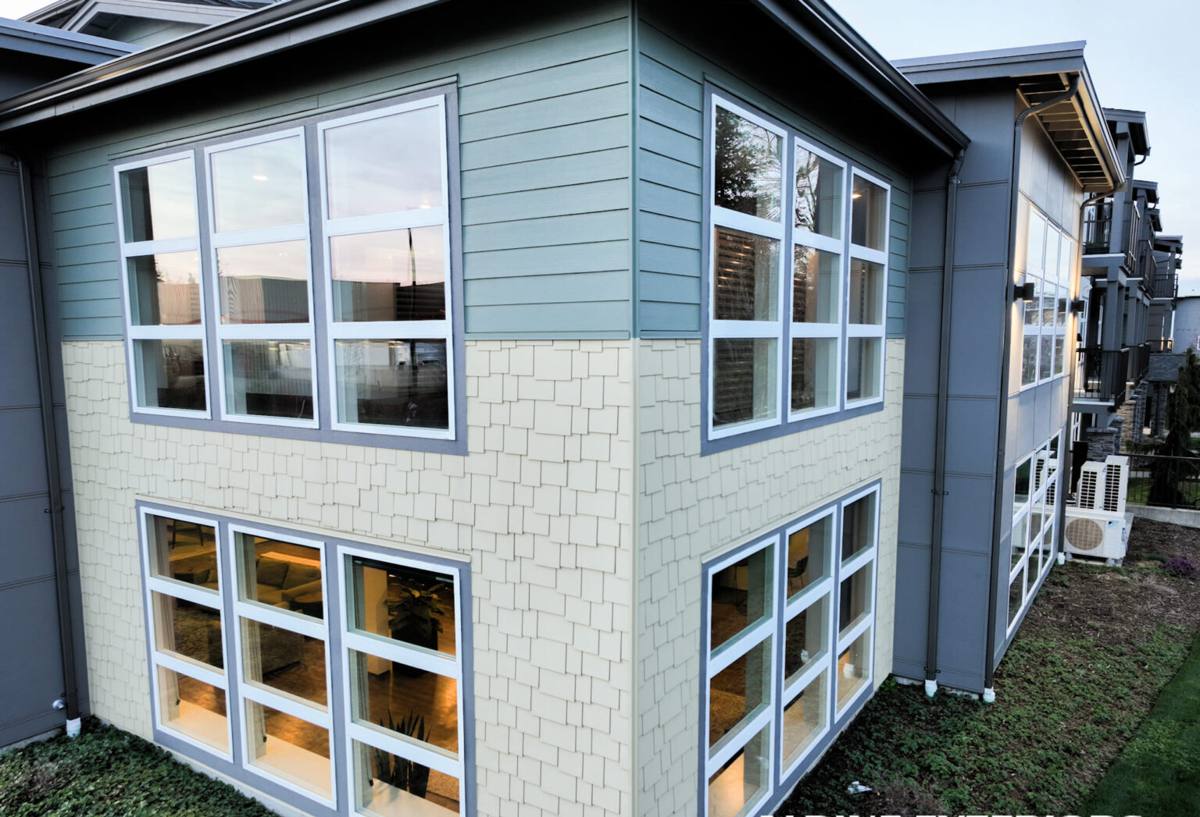
This page is about that installation process: what a correct job actually involves on a Fairhaven home, how we approach it, and why hiring a crew that already works this part of Bellingham changes the outcome. We install James Hardie fiber cement siding exclusively, but the material is only half the story. The other half is fastening patterns, water-resistive barrier integration, flashing detail, and joint treatment done correctly, on a home with this specific set of exposures.
What Fairhaven's Climate Demands From an Installation
Salt Air and Fastener Corrosion
Homes near the bay sit in a steady drift of moisture-laden, mildly corrosive air most of the year, not just during storms. That kind of exposure works slowly on fasteners and flashing. An installer who uses the wrong fastener spec, or who doesn't seat and seal fasteners correctly, is setting up a problem that won't show itself for years, usually as rust bleed at nail heads or a fastener that's lost its grip on the substrate.
Wind-Driven Rain and Flashing Detail
Fairhaven's position near open water means rain arrives at angles, not just straight down. That changes what "correctly installed" means at every seam, corner, and penetration. Flashing that would keep a wall dry in a calmer climate can still let water in here if it wasn't lapped, sealed, and integrated with the house wrap in the right order. This is the single biggest reason two homes with identical siding material can age completely differently.
A Long Moss Season and Drainable Wall Assemblies
Mild temperatures, consistent dampness, and mature tree cover common on Fairhaven's older lots keep some walls damp for extended stretches, especially on north-facing sides. An installation needs to leave the wall assembly able to drain and dry, not just look finished. That means proper clearance behind the siding, correct grade and roofline clearances, and attention to spots where debris or landscaping can trap moisture against the wall long after a storm passes.
Why the Material Is James Hardie Fiber Cement
We install James Hardie fiber cement siding and only James Hardie. We don't install LP SmartSide, vinyl siding, Cemplank, Allura, primed spruce, or cedar. Those are legitimate products, and other contractors install them competently, but we made a professional call that standing behind one system we understand completely, in a climate this consistently wet and salt-exposed, serves homeowners better than juggling multiple manufacturer specs and quietly shifting maintenance risk onto them later.
For installation purposes specifically, that standardization matters: our crew works to one set of fastening, clearance, and joint-treatment specs every day, on every job, instead of switching between different manufacturers' requirements from one house to the next. Hardie's HZ5 formulation is engineered for regions with heavy sustained moisture, which is a closer match to coastal Whatcom County than a general national spec, and the factory-applied ColorPlus finish means the color coat arrives cured and consistent rather than depending on field conditions the day it's applied.
Our Installation Process, Step by Step
Tear-Off, Inspection, and Substrate Repair
We remove the existing siding rather than installing over it, because covering old siding also covers whatever moisture damage might already be sitting behind it. On a bay-adjacent property, we routinely find some degree of hidden sheathing or framing damage on older homes, and we address that before anything new goes up. Installing new siding over compromised substrate just delays the same problem under a nicer surface.
House Wrap and Flashing Integration
The water-resistive barrier and flashing go on as one integrated system, not as separate steps done in isolation. Window and door openings, seams, and any wall penetration get flashed and lapped so water is directed out and down, never trapped behind the barrier. This is the step where wind-driven rain resistance actually gets built into the wall, and it's largely invisible once the siding goes on, which is exactly why it has to be done right the first time.
Fastening, Clearances, and Joint Treatment
Fiber cement siding needs to be fastened to spec, with the correct pattern and penetration depth, and with proper clearance maintained from grade, roofline, and any horizontal surface like a deck or patio. Butt joints and panel seams get treated correctly so they shed water instead of collecting it. On a hillside or close-set lot, getting these clearances right sometimes takes more coordination with grading and drainage than it would on a flat, open site.
ColorPlus Trim, Caulking, and Finish Details
Trim work and any field-applied caulking get finished to match the factory ColorPlus coat, and joints are sealed with products rated for the exposure. This is a place where corner-cutting shows up fast in a marine climate: caulk used as a substitute for proper flashing, rather than as a secondary seal on top of flashing that's already doing the real work, tends to fail within a few seasons here.
Final Walkthrough and Cleanup
Once the siding is up, we walk the exterior looking specifically for anything that could become a moisture entry point later: gaps at trim returns, fastener placement near seams, and clearance at grade. Site cleanup includes removing debris and old material, not leaving it for the homeowner to deal with after the crew moves on.
Installation Mistakes That Cause Early Failures in This Climate
- Nailing too tight or too loose, both of which compromise the panel's ability to handle normal expansion and contraction
- Skipping or shortcutting flashing at window and door openings, a common source of hidden leaks
- Installing siding with insufficient clearance from grade, decks, or roof lines, letting splash-back and standing moisture reach the bottom edge
- Relying on caulk alone at butt joints instead of proper flashing behind the joint
- Failing to integrate the house wrap and flashing as one continuous drainage plane
- Covering existing moisture damage instead of repairing the substrate first
Installation Cost Factors in Fairhaven
| Factor | What It Affects | Why It Matters Here |
|---|---|---|
| Tear-off complexity | Labor time and disposal | Older Fairhaven homes often have layered siding history that takes longer to remove and assess |
| Hidden substrate repair | Cost added once walls are opened up | Bay-adjacent moisture exposure makes hidden sheathing damage more common on older housing stock |
| Site access and slope | Staging, scaffolding, and setup time | Hillside lots common in Fairhaven can add equipment and access time before installation even starts |
| Trim and penetration count | Flashing labor | Homes with more dormers, window trim, and roof intersections need more flashing detail to install correctly |
| Color and finish selection | Material cost | Factory ColorPlus finishes reduce future repainting cycles against salt air and UV exposure |
These are the factors that move a number up or down; the actual number depends on the specific house, which is why we walk the property in person before quoting rather than pricing off square footage alone.
What to Expect During Your Fairhaven Installation
- A pre-installation walkthrough where we confirm scope, note any hidden-damage risk areas, and set expectations on timeline
- Protection of landscaping, walkways, and adjacent surfaces before tear-off begins
- Daily jobsite cleanup rather than debris left to accumulate over the course of the project
- Clear communication if hidden substrate damage is found once old siding comes off
- A final walkthrough where we point out what was done and answer any questions before calling the job complete
- Warranty paperwork for the installed system, registered correctly so it stays valid
Why a Crew That Already Installs in Fairhaven Matters
A crew that works this part of Bellingham regularly knows how salt air, wind-driven rain, and moss actually behave on real Fairhaven walls over a full year, not just how a product performs on a spec sheet. That translates into decisions made on install day: where extra flashing attention is worth the time, which wall orientations stay damp longest, and how much clearance a specific lot's grading actually calls for. Fairhaven's older housing stock and hillside terrain aren't identical to newer, flatter subdivisions elsewhere in Whatcom County, and a crew with real hands-on experience in the neighborhood installs accordingly instead of applying a one-size-fits-all approach.
If you're planning a siding installation in Fairhaven, we're glad to walk the property, look at what your home is actually dealing with, and give you a straight answer on scope and approach. Reach out using the form below to schedule a free, no-pressure estimate.