 Bellingham Roofing
 Fairhaven Sits Right Where Bellingham Bay Weather Gets Serious
Fairhaven is close enough to Bellingham Bay that its roofs take a different kind of beating than homes further inland. Salt-tinged air off the water, storms that arrive with real wind behind the rain, and long stretches of damp, gray weather that never quite let a roof dry out all add up over the years. When a storm actually damages a roof here, the repair has to account for that background wear and tear, not just patch the obvious hole.
We work on roofs throughout Whatcom County, and Fairhaven's mix of older homes and newer construction means we see a bit of everything — original decking under a later reroof, composition shingle roofs still working through their first few Pacific storm seasons, and metal roofing that's held up well but still needs storm-specific attention at the seams and fasteners. Whatever the roof type, the same regional pressures apply: driving, wind-pushed rain, salt air, and a moss season that runs longer than most homeowners realize.
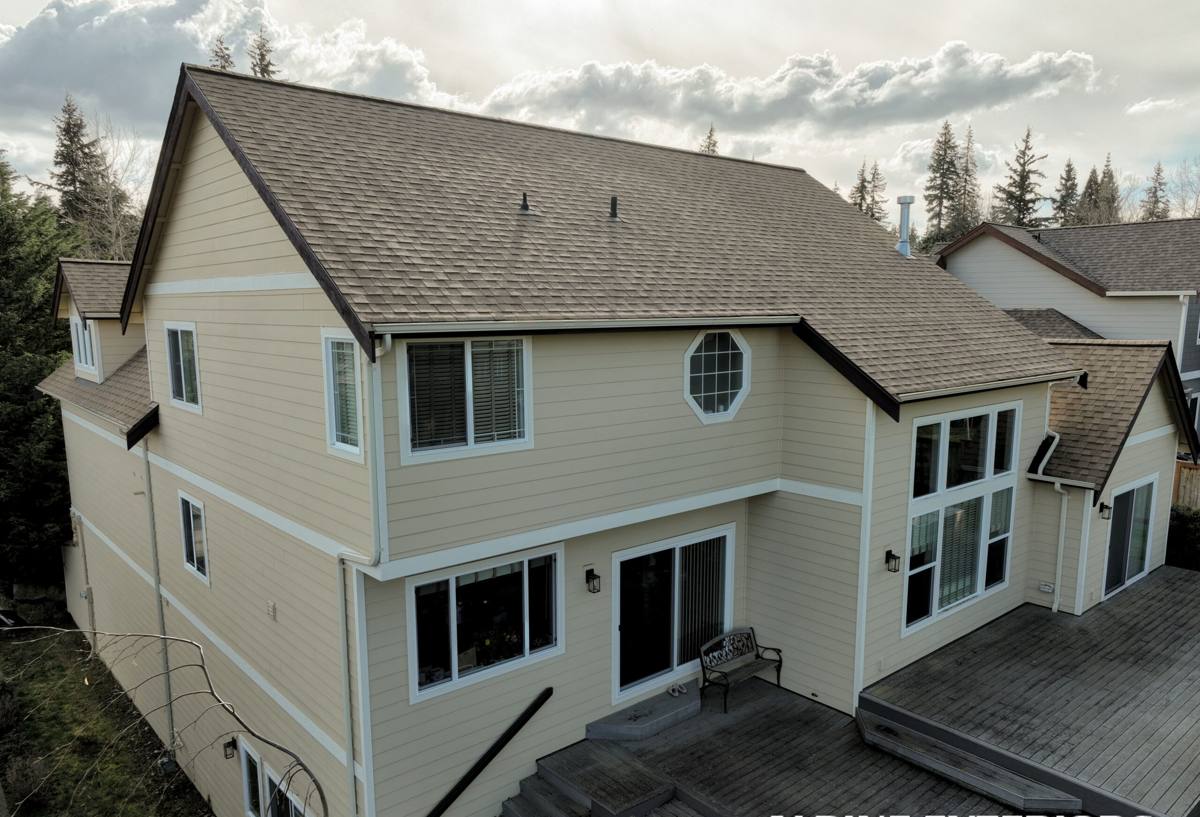
What Storm Damage Actually Looks Like on a Fairhaven Roof
Not every storm-related roof problem is dramatic. Some of the most expensive damage is the kind nobody notices from the ground until a stain shows up on a ceiling weeks later.
Wind damage
Sustained wind off the water can lift shingle tabs, crack ridge caps, and loosen fasteners without tearing anything off completely. A roof can look fine from the driveway and still have several compromised spots that will fail during the next storm.
Wind-driven rain intrusion
Bellingham storms rarely drop rain straight down. When wind pushes rain sideways, it works its way under shingle edges, around flashing, and into any gap that would never leak in a calm rain. This is the damage type most often missed in a quick visual check, and it's usually what causes the interior leaks that show up long after the storm has passed.
Debris impact
Mature trees are part of what gives Fairhaven's older residential streets their character, but they also mean branches and debris coming down during wind events. Impact damage can crack shingles, dent metal flashing, or knock granules loose in ways that shorten the roof's remaining life even where nothing has actually failed yet.
Moisture trapped under moss
Moss doesn't cause storm damage by itself, but a moss mat that's been holding moisture against the roof deck makes storm damage worse. Shingles under a moss patch are already softened and more likely to tear or lift once wind gets underneath them.
Why Salt Air and a Long Moss Season Change the Repair Math
A storm repair on a Fairhaven roof isn't the same job as the identical repair twenty miles inland. Salt-laced marine air accelerates corrosion on exposed fasteners, flashing, and any metal roofing components — a repair that uses the wrong fastener or an unprotected metal edge can start corroding within a couple of seasons instead of lasting the life of the roof. We use fasteners and flashing rated for coastal exposure specifically because of this.
The region's moss season is another factor most out-of-area contractors don't think about. Whatcom County's damp shoulder seasons give moss and algae months to establish themselves on north-facing slopes and shaded valleys. A storm repair that doesn't address the moisture pattern that let moss take hold in the first place is a repair that will have the same problem again. Part of doing this correctly is looking at why a section of roof was vulnerable, not just fixing what broke.
What a Correct Storm Repair Actually Involves
A storm repair is more than swapping out visibly broken shingles. Wind and rain damage tends to extend beyond what's obvious, and a repair that only addresses the visible symptom often leaks again in the next storm. A correct repair typically includes:
- Inspecting beyond the damaged area to check surrounding shingles, fasteners, and flashing for wind stress that hasn't fully failed yet
- Checking the roof deck underneath damaged sections for moisture intrusion or soft spots before new material goes down
- Replacing damaged underlayment, not just shingles, since wind-driven rain often gets past the shingle layer
- Re-sealing or replacing flashing around chimneys, vents, and valleys, which is where storm leaks most often originate
- Matching shingle type, weight, and color closely enough that the repair doesn't stand out or create a mismatched wear pattern over time
- Confirming proper ventilation wasn't compromised, since blocked ventilation traps moisture and speeds up moss regrowth
Skipping any of these steps saves time on the day of the repair but tends to cost more later, either through a repeat leak or through the moss and moisture problems the shortcut left behind.
Patch Job vs. Proper Storm Repair
| Approach | What It Addresses | Typical Outcome |
|---|---|---|
| Surface patch (shingles only) | Visible missing or cracked shingles | Looks fixed, but underlying flashing or underlayment damage often causes a repeat leak within a season or two |
| Full storm repair | Shingles, underlayment, flashing, and deck condition in the affected area | Restores the roof's actual weather resistance, not just its appearance |
| Full repair plus moisture/ventilation check | Everything above, plus the conditions that let moss or trapped moisture develop | Addresses both the storm damage and the regional wear pattern that made it worse |
Our Process for Fairhaven Storm Repairs
- Inspection. We get on the roof — not just a look from the ground — to find the full extent of wind and water damage, including anything the storm loosened but didn't fully detach.
- Documentation. We photograph and note the damage clearly enough to support an insurance claim if you're filing one, and we explain what we're seeing in plain terms.
- Written scope and estimate. You get a clear breakdown of what needs to be repaired and why, before any work starts.
- Repair. We replace what's damaged, correct any underlying flashing or underlayment issues we found, and match materials to blend with the existing roof.
- Cleanup and final check. Debris and old material are removed, and we walk the repair with you before calling the job done.
Insurance and Documentation
Most storm damage claims come down to how well the damage was documented before repairs started. We take clear photos of the damage in place, note the likely cause, and provide a written scope that an adjuster can work from. We're not a public adjuster and we don't handle your claim for you, but we'll give you documentation that holds up and answer straightforward questions about what we found. If a section of roof has both storm damage and pre-existing wear, we'll tell you honestly which is which — insurance typically only covers the former, and pretending otherwise doesn't help you.
What Affects the Cost of a Storm Repair
| Factor | Why It Matters |
|---|---|
| Extent of the damage | A few displaced shingles is a different scope than a section of roof with compromised underlayment and deck |
| Roof pitch and access | Steeper roofs and limited access around trees or tight lot lines take more time and care to work safely |
| Flashing and valley involvement | Repairs touching flashing, valleys, or chimney details take more skill and time than open-field shingle replacement |
| Material match | Older or discontinued shingle lines can be harder to match, sometimes requiring a wider repair area for a consistent look |
| Underlying moisture or moss damage | If moss has already softened the deck or underlayment in the area, the repair scope grows beyond the storm damage alone |
We don't quote storm repairs sight unseen — the range is wide enough between a simple shingle swap and a repair involving deck replacement that an honest number requires an actual inspection.
A Homeowner's After-the-Storm Checklist
After a wind or rain event, there's a lot you can safely check from the ground before deciding whether a professional inspection is needed:
- Look for shingles, granules, or pieces of flashing in the yard or gutters
- Check gutters and downspouts for sudden clogs, which can signal granule loss or debris from the roof
- Watch ceilings and upper walls for new stains, soft spots, or discoloration over the following week
- Note any visibly lifted or curled shingle edges you can see safely from ground level
- Check attic spaces, if accessible, for daylight, damp insulation, or musty smells after a storm
- Avoid climbing onto the roof yourself — storm-damaged roofs can have weak spots that aren't visible from a walk-through
If you notice any of these signs, it's worth getting an inspection soon. Small amounts of water intrusion get more expensive the longer they sit, especially in a climate that doesn't dry things out quickly.
Why It Matters That We Already Work in Fairhaven
After a storm, it's common to see unfamiliar trucks going door to door in hard-hit neighborhoods offering fast, cheap repairs. Some of that work is fine. A lot of it disappears before the following winter, when the real test of a repair — a full Bellingham wet season — shows whether it was done right.
We're a local Whatcom County crew, and Fairhaven is part of our regular service area, not a place we show up once after a storm and never see again. That matters for a few practical reasons: we already understand how salt air and this area's moss season affect roofing decisions here, we're available if a repair needs a follow-up look, and we have a reputation in this community to stand behind. A storm repair should hold up through several more storms, not just look fine on the day it's finished.
If your Fairhaven home has storm damage — or you're not sure whether what you're seeing is storm damage or just normal wear — we're happy to take a look. Reach out for a free, no-pressure estimate using the form below, and we'll give you an honest read on what your roof actually needs.