 Bellingham Roofing
 Ferndale's Siding Wears Differently Than Siding Further Inland
Ferndale sits close enough to the water that its siding takes a different kind of beating than a house twenty minutes inland in Bellingham. The salt-laden air coming off the Strait and the Sound works into fasteners, seams, and any exposed edge of siding material. Add driving rain that comes in sideways during winter storms, and a moss season that can run eight or nine months out of the year in this part of Whatcom County, and you have a climate that punishes siding that wasn't installed right the first time — or that's simply reached the end of what its material can take.
We're not describing a hypothetical. It's the reason siding repair calls out of Ferndale tend to look different than calls from drier, more sheltered parts of the county. The damage patterns repeat: fastener corrosion, water staining below butt joints, moss holding moisture against the wall longer than it should sit there. Understanding those patterns is most of what separates a repair that lasts from one that fails again in two years.
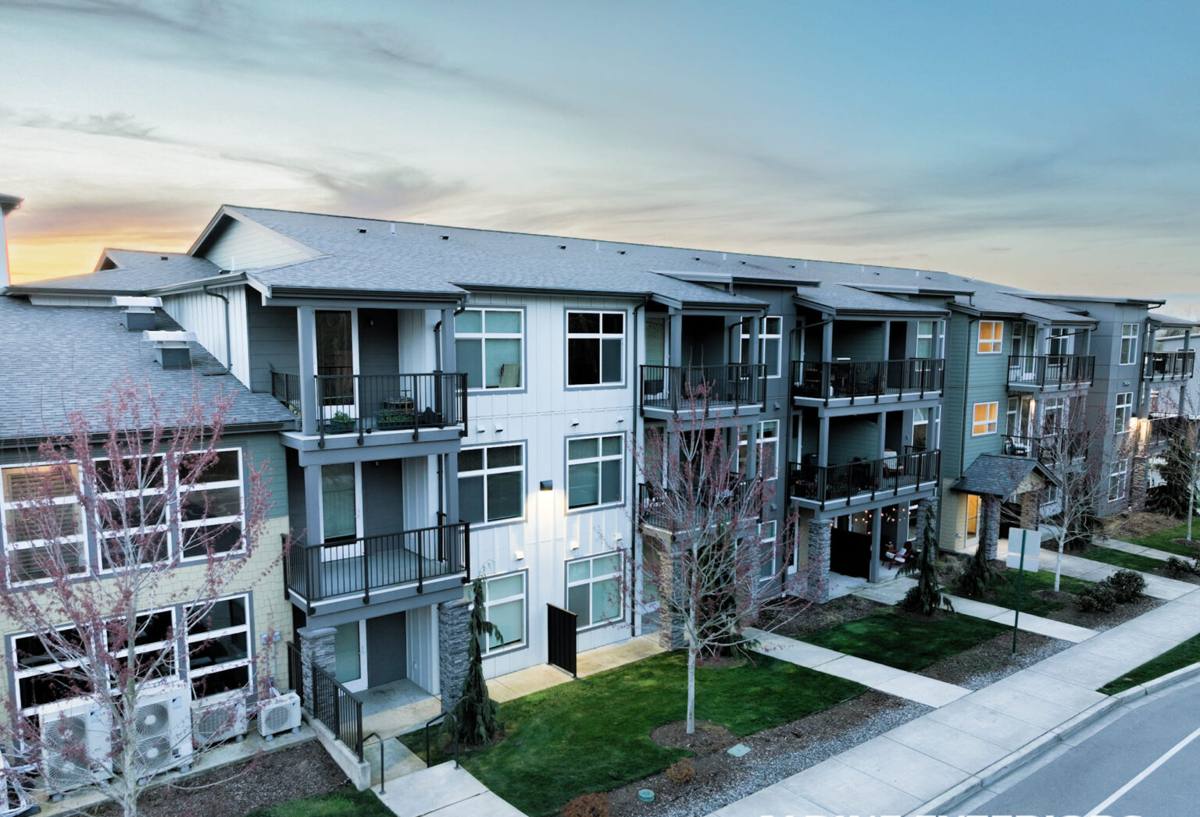
Signs Your Ferndale Home's Siding Needs Repair, Not Just Paint
A lot of siding problems get treated as cosmetic when they're actually structural warnings. Before you spend money on paint, walk your exterior and check for these:
- Soft or spongy spots when you press on the siding, especially near the bottom courses
- Visible gaps or separation at seams, corners, or around window and door trim
- Streaking or dark staining that shows up in the same spot after every heavy rain
- Moss or algae that keeps coming back within weeks of being cleaned off
- Rust bleeding from fastener heads or streaking down from nail holes
- Paint that's bubbling or peeling in patches rather than fading evenly
- Any section that sounds hollow or crumbles slightly when tapped
Any one of these on its own might be minor. Several of them clustered in the same area, especially on a wall that faces prevailing wind and rain, usually means water has been getting behind the siding for a while.
What's Actually Causing the Damage
Salt Air and Fasteners
Ferndale's proximity to saltwater means airborne salt settles on exterior surfaces more than it does further from the coast. Over years, that salt accelerates corrosion on exposed nail heads, trim fasteners, and any metal flashing that isn't properly protected. Once a fastener starts to corrode, it loosens, and a loose fastener is an open door for water.
Driving Rain and Water Intrusion
Wind-driven rain doesn't just fall on siding, it pushes into any gap it can find — lap joints, corner boards, penetrations for hose bibs and vents. Siding that was caulked instead of properly flashed, or that has butt joints without the right overlap, gives that driving rain a way in. Once water gets behind the siding, it can sit against the sheathing far longer than anyone would guess from the outside.
Moss and Trapped Moisture
This region's wet, mild winters are ideal moss-growing conditions, and moss doesn't just look bad — it holds moisture directly against the siding surface for extended stretches, especially on north-facing and shaded walls. That constant dampness accelerates wear on cladding materials that aren't designed for sustained moisture exposure, and it can mask rot developing underneath.
Repair or Replace? How We Make That Call
Not every damaged section needs a full re-side, and we don't push replacement when a targeted repair will genuinely hold up. But we also won't patch over a problem that's going to resurface in a season or two. Here's roughly how we weigh it:
| Factor | Leans Toward Repair | Leans Toward Replacement |
|---|---|---|
| Extent of damage | Isolated to one or two sections | Spread across multiple walls |
| Water behind the siding | Surface-level only, sheathing dry | Sheathing or framing shows water damage |
| Age and material | Newer siding, still structurally sound | Original siding is past its practical service life |
| Cause of failure | One-off issue (impact, flashing gap) | Systemic issue (wrong material for this climate, failed original install) |
| Cost over time | Repair cost is a fraction of replacement | Repeated repairs are adding up to replacement cost anyway |
We'll tell you honestly which side of that table your house falls on. If it's a repair, we do the repair. If the underlying problem is going to keep resurfacing, we'll say so before you pay for another round of patchwork.
What a Correct Siding Repair Actually Involves
A siding repair that lasts is more than swapping a damaged board for a new one. Done right, it includes:
- Removing enough surrounding material to see what's actually happening behind the siding, not just at the visible damage
- Checking the water-resistive barrier and sheathing underneath for hidden rot or moisture staining
- Correcting any flashing, house wrap, or drainage plane issues that let water in to begin with — replacing the board without fixing the entry point just resets the clock
- Matching the replacement material's dimensions, profile, and fastening pattern to the existing siding
- Sealing and finishing new material to the same standard as the surrounding wall, so it weathers evenly rather than aging at a different rate
Skip step three and you've addressed the symptom, not the cause. It's the single most common shortcut we see when we're called out to look at a previous repair that failed.
Why We Repair and Replace With James Hardie Fiber Cement
When a repair calls for new material, or when a homeowner decides enough sections have failed that a full re-side makes more sense, we install James Hardie fiber cement. It's the only siding system we put on homes, and in a climate like Ferndale's, the reasons are practical rather than a matter of brand preference.
Fiber cement doesn't rot, and it isn't a food source for the moss and algae that thrive in this area's wet winters. Hardie's ColorPlus factory finish is baked on under controlled conditions, which holds up to sustained moisture and salt air better than field-applied paint typically does over time. Hardie also engineers specific product lines for different climate zones — the HZ5 line used in this region accounts for the freeze-thaw and moisture patterns of the Pacific Northwest, rather than treating every market the same. And because it's non-combustible, it doesn't add fuel-related risk to a home the way some other claddings can.
We've made the call not to install vinyl, LP SmartSide, or other engineered wood products, largely because of how each performs against the exact conditions Ferndale sees every year: sustained moisture, salt exposure, and long stretches without much drying time between rain events. Fiber cement's track record in coastal Pacific Northwest conditions is what it comes down to for us.
Our Process for a Ferndale Siding Repair
We keep the process straightforward because homeowners are usually dealing with an active problem, not shopping for a remodel:
- Inspection: we look at the damaged area and check adjacent sections, corners, and penetrations for related issues before quoting anything
- Honest scope: you get a clear explanation of what's damaged, what caused it, and whether repair or replacement makes sense — with the reasoning, not just a number
- Written estimate: no surprise add-ons once work starts unless we find something hidden behind the siding that changes the picture, in which case we show you before proceeding
- The repair itself: water barrier and flashing corrected first, then matched material installed and finished to blend with the existing wall
- Walkthrough: we go over the completed work with you before we consider the job done
Why a Bellingham Crew That Already Works Ferndale Matters
Siding repair is one of those jobs where local experience actually changes the outcome, not just the sales pitch. A crew that regularly works this stretch of Whatcom County already knows which wall orientations take the worst of the driving rain, how aggressively moss comes back on a shaded north face here versus a sunnier lot, and what fastener and flashing failures show up first in homes exposed to salt air off the water. That's the difference between a repair that treats the visible symptom and one that accounts for why the damage happened in this specific location.
It also means faster, more accurate estimates. We're not learning Ferndale's climate on your house — we've already seen the pattern on others nearby, and that shows up in how quickly we can diagnose the real cause versus just the visible damage.
Get an Honest Look at Your Siding
If you're seeing water stains, soft spots, or moss that won't quit coming back, it's worth getting a straight answer on what's happening behind the siding before it turns into a bigger repair. Reach out for a free, no-pressure estimate — we'll tell you plainly whether you're looking at a repair or something more, and why.