 Bellingham Roofing
 Building Decks for Happy Valley Homes, the Right Way
Happy Valley sits in one of Bellingham's older, tree-covered neighborhoods, with homes that range from mid-century ramblers to newer infill construction packed close to mature Douglas fir and cedar canopy. That combination — established trees, hillside lots, and proximity to Bellingham Bay — means decks here face a specific set of conditions that a generic build doesn't account for. We build decks in this neighborhood regularly, and this page walks through what actually matters when you're putting a deck on a Happy Valley home: the climate factors, the structural details, the material trade-offs, and the process we use to get it right the first time.
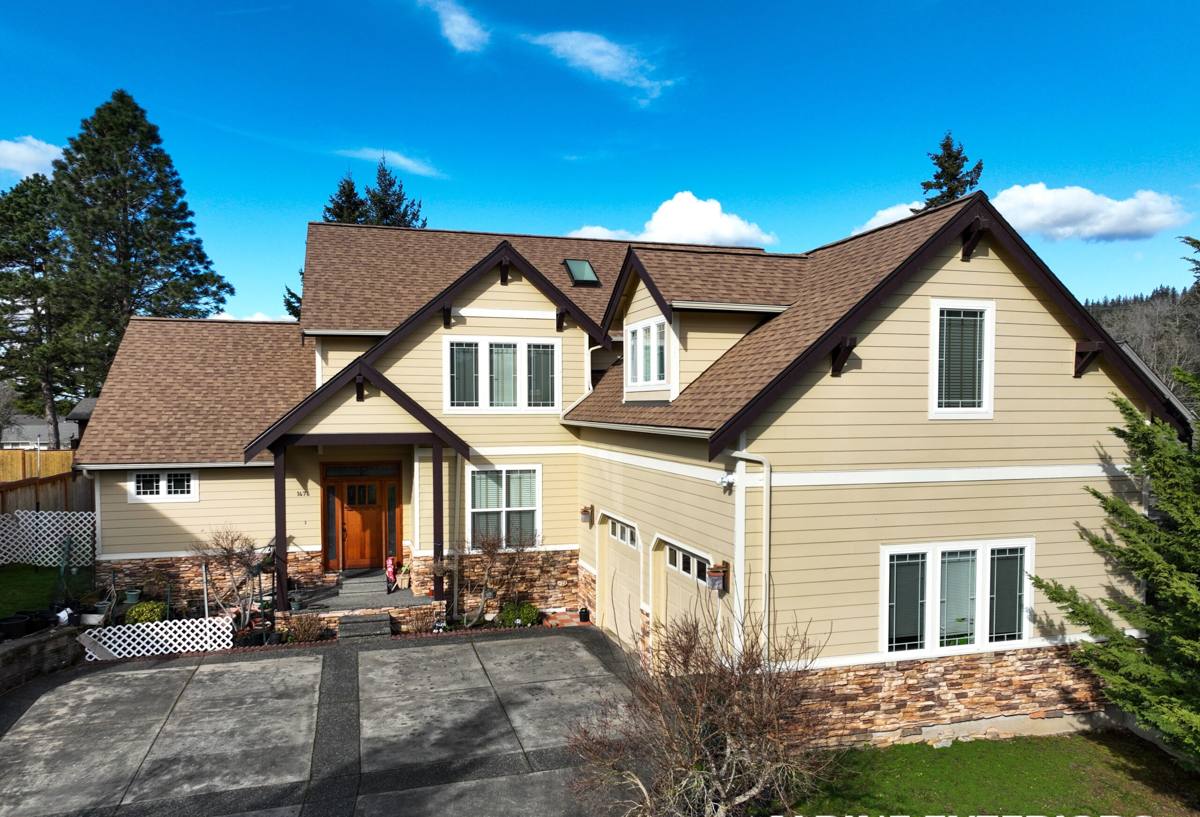
What Bellingham's Climate Does to a Deck Over Time
Whatcom County's marine climate is easy on people and hard on exterior wood structures. A few specific stressors show up again and again on decks we inspect or rebuild in this area:
Salt Air and Fastener Corrosion
Bellingham Bay is close enough that airborne salt reaches inland neighborhoods, including Happy Valley, especially on windier days. Salt air accelerates corrosion in fasteners, joist hangers, and any exposed metal hardware. A deck built with standard interior-grade screws or under-rated hardware will show rust streaks and weakened connections years before it should. This is one of the most common failure points we find on older decks in the area — the wood is often fine, but the hardware holding it together isn't.
Driving Rain and Ledger Rot
Western Washington doesn't just get a lot of rain — it gets wind-driven rain that hits siding and ledger connections at an angle, not straight down. The ledger board (where the deck attaches to the house) is the single most common source of rot and structural failure on decks in this climate, because water gets pushed behind the board if it isn't flashed correctly. Once that framing member is compromised, the whole deck's connection to the house is compromised with it.
Long Moss and Algae Season
Between the tree cover typical of Happy Valley lots and roughly nine months a year of damp conditions, horizontal wood and composite surfaces here grow moss and algae far more readily than they would in a drier climate. Beyond looking bad, a mossy deck surface holds moisture against the boards and becomes slick and genuinely dangerous underfoot, particularly on stairs.
Decking Material Options: What Holds Up Here
There's no single "best" decking material — there's a best material for your budget, your maintenance appetite, and how much shade and moisture your specific lot deals with. Here's how the common options actually perform in Bellingham's conditions:
| Material | Upfront Cost | Moss/Algae Resistance | Maintenance | Typical Lifespan Here |
|---|---|---|---|---|
| Pressure-treated fir/hem-fir | Lowest | Low — needs regular cleaning and sealing | Annual wash, re-seal every 2-3 years | 15-20 years with upkeep |
| Cedar | Moderate | Moderate — natural oils help but fade over time | Regular cleaning, periodic oil/stain | 20-25 years with upkeep |
| Composite (capped) | Higher | Good — resists moisture absorption, but surface grime still needs washing | Occasional wash, no sealing/staining | 25-30+ years |
| PVC decking | Highest | Very good — non-porous surface, minimal organic growth to anchor | Occasional wash | 30+ years |
For shaded, damp Happy Valley lots specifically, we lean toward recommending capped composite or PVC when the budget allows, simply because they don't need the annual sealing routine that wood does to keep moss from getting a foothold. That said, plenty of homeowners want the look and feel of real wood, and a well-built cedar deck with a realistic maintenance plan is a completely legitimate choice — it just asks more of you as the owner.
Getting the Structure Right: What a Correct Build Actually Involves
Footings Sized for Real Conditions
Footing depth and sizing need to account for local frost depth and soil conditions, not a generic minimum. On sloped or fill-heavy lots — common in this neighborhood given the terrain — we also pay attention to soil bearing and drainage around the footing itself so water isn't sitting against the concrete year-round.
Ledger Flashing Done in the Correct Order
A correctly flashed ledger uses metal flashing installed so that water sheds over the top of it and away from the house, integrated with the existing siding's water-resistive barrier rather than just caulked on top of it. Caulk is not flashing, and caulk-only ledger attachments are one of the most common shortcuts we see on decks that end up with rot.
Joist Spacing and Hardware Rated for the Decking
Joist spacing needs to match the specific decking material's span rating — composite and PVC boards often require tighter joist spacing than solid wood, and using wood-spec framing under composite decking is a common mistake that leads to bounce and premature sagging. All structural hardware should be corrosion-resistant hot-dip galvanized or stainless, given the salt air factor covered above.
Guardrails and Stairs Built to Code, Not Guessed At
Guardrail height, baluster spacing, and stair rise-and-run are all dictated by code for good reason — they're the parts of a deck most directly tied to someone getting hurt. We build these to spec every time, not to "close enough."
Permits and Code in the City of Bellingham
Most new decks and many significant deck rebuilds in the City of Bellingham require a building permit, with inspections at key stages such as footings and framing before decking goes down. If your Happy Valley property falls under Whatcom County jurisdiction rather than city limits, the permitting process runs through the county instead. Either way, we handle the permit application and coordinate inspections as part of the build — it's not an extra homeowners should have to manage themselves, and skipping permits on a structural project like a deck can create real problems at resale or insurance time.
Our Deck Building Process
- On-site visit and honest assessment. We walk the lot, look at grade, drainage, sun/shade exposure, and the existing house connection point before recommending anything.
- Design and material discussion. We talk through layout, size, and material trade-offs based on your budget and how much maintenance you actually want to do.
- Written estimate. Clear scope and pricing before any work starts — no surprise change orders for things we should have caught up front.
- Permitting. We submit and manage the permit and inspection schedule with the applicable jurisdiction.
- Footings and framing. Built to the sizing and spacing the design calls for, with corrosion-resistant hardware throughout.
- Ledger flashing and decking installation. Flashing detail done correctly before a single deck board goes down.
- Railings, stairs, and final walkthrough. We go over the finished deck with you, including basic care guidance for whatever material you chose.
Keeping Moss and Algae Off a New Deck
A well-built deck still needs some basic seasonal care in this climate, especially on shaded Happy Valley lots. A simple maintenance routine goes a long way toward protecting the investment:
- Sweep debris (needles, leaves, seed pods) off the deck surface regularly through fall — trapped organic matter is what moss needs to establish
- Rinse or wash the deck surface at least once or twice a year, more often in heavy shade
- Keep gutters and downspouts near the deck clear so runoff isn't dumping extra water onto the structure
- For wood decks, re-seal or re-stain on the schedule the product calls for — don't wait until it visibly needs it
- Check fastener heads and hardware periodically for early rust, especially on older decks that may not have corrosion-resistant hardware to begin with
- Trim back overhanging branches where practical to get more light and airflow across the deck surface
Why a Crew That Already Works Happy Valley Matters
A deck built by a crew unfamiliar with this specific neighborhood's conditions can still look fine on the day it's finished — the problems show up two, five, ten years later, when the ledger flashing that wasn't quite right starts leaking, or the fasteners that weren't rated for salt air start streaking rust down the fascia. Working regularly in Happy Valley and the surrounding Bellingham neighborhoods means we've already seen how these specific lots drain, how much shade the tree cover actually creates, and which shortcuts tend to fail first in this climate. That's not a substitute for doing the job correctly — it's what lets us do the job correctly without treating every build like a first attempt.
Get a Free Estimate
If you're planning a new deck or need to replace one that's showing its age, we're happy to come take a look, answer questions honestly, and put together a written estimate — no pressure, no obligation. Use the form below to get started.