 Bellingham Roofing
 Why Happy Valley Homes Need Siding Built for This Climate
Happy Valley sits within Bellingham's marine climate, which means homes here deal with a longer, wetter stretch of weather than most of the country ever sees. Whatcom County gets salt-laden air off the water, driving rain that comes in sideways during fall and winter storms, and a moss season that can stretch from October well into spring on shaded lots. None of that is unusual for this part of Washington, but it does mean the siding on a Happy Valley home is working harder, more often, than siding on a house in a drier climate.
That combination is exactly why we're careful about what goes on the walls of homes in this neighborhood. Mature tree canopy on many Happy Valley lots keeps siding shaded and slow to dry after rain. Elevation changes and older streets mean drainage and grading vary block to block. And the salt air common to greater Bellingham accelerates corrosion on anything metal that isn't rated for it — fasteners, flashing, trim. A siding system that isn't engineered for these conditions will show it faster here than it would in a lot of other places.
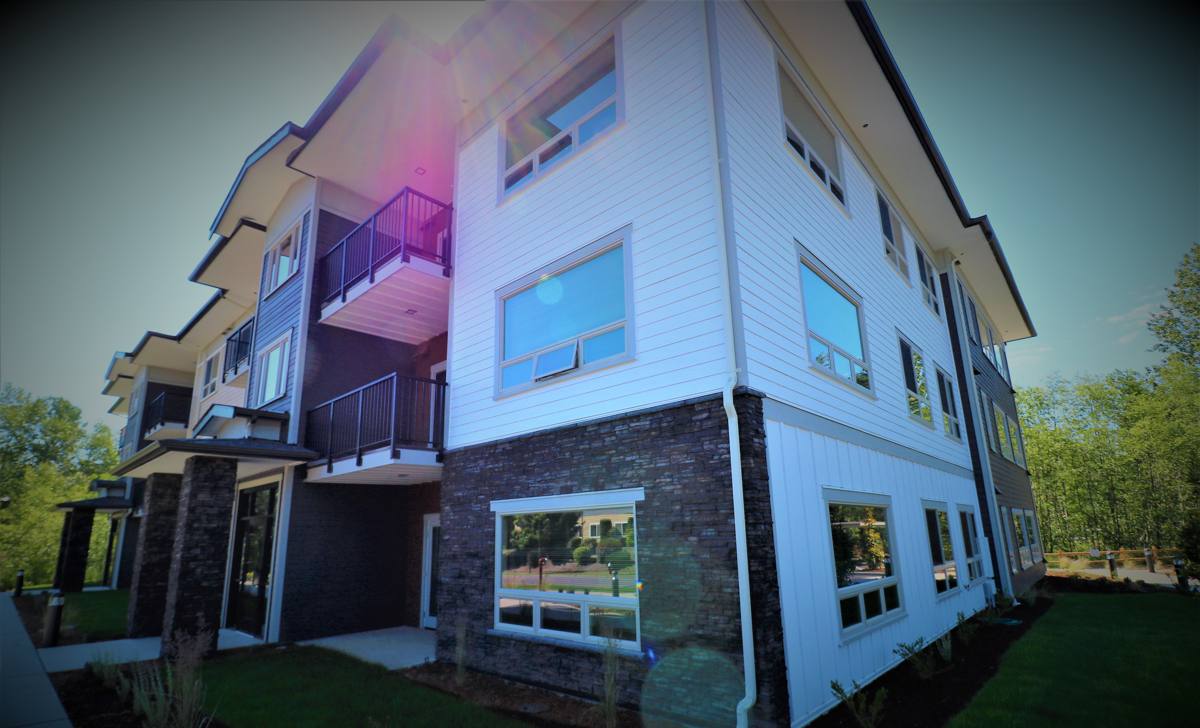
What Constant Moisture and Salt Air Do to the Wrong Siding
Most siding failures we see in this region aren't dramatic — they're slow. Wood-based products absorb moisture at cut edges and fastener holes, swell, and eventually rot from the inside out, often before it's visible from the ground. Vinyl siding can warp or buckle when it's exposed to repeated wet-dry cycling and doesn't hold paint if a homeowner ever wants to change the color. Cheaper trim and fasteners corrode faster near the coast, leaving rust streaks and loose boards within a few years instead of a few decades.
Moss and algae are a separate problem on top of all that. On shaded Happy Valley lots, north-facing walls and areas under tree cover stay damp long after the rest of the house has dried out. Siding with a porous or unfinished surface gives moss and mildew something to grip onto, and once it takes hold, it holds moisture against the wall even longer — a cycle that speeds up rot and paint failure.
- Cut edges and fastener holes are the most common entry points for moisture, regardless of siding material
- North- and west-facing walls under tree cover dry the slowest and see the most moss growth
- Unrated or standard-grade fasteners corrode faster in coastal, salt-influenced air
- Poor factory finishes chalk, fade, or peel years before a quality finish would
- Gaps at window and door trim let wind-driven rain track behind the siding before anyone notices
Why We Install Only James Hardie Fiber Cement
We made a decision to install James Hardie fiber cement siding exclusively, and it comes down to how the product performs over decades in exactly this kind of climate, not just how it looks on install day. Hardie's HZ5 product line is engineered for the Pacific Northwest specifically — it's formulated to resist moisture damage, hold up to freeze-thaw cycling, and stand up to the wet winters and long shoulder seasons Whatcom County gets every year.
Fiber cement itself is non-combustible, which matters increasingly in Washington as wildfire smoke and ember exposure become a bigger part of the conversation even west of the Cascades. It doesn't rot, and it doesn't feed insects the way wood-based siding can. Hardie's ColorPlus factory finish is baked on under controlled conditions rather than field-painted, which gives it better fade and chip resistance than a job-site paint job — and a better base layer of protection against the moss and mildew that thrive in shaded, damp conditions.
Hardie also backs the product with a strong, transferable limited warranty, which carries real value on a home you might sell down the road. We stand behind our installation work separately, but knowing the material itself is warrantied by the manufacturer gives homeowners a level of protection that weaker or unproven siding products simply don't offer.
What Hardie Product Fits a Happy Valley Home
Most Happy Valley homes work well with either HardiePlank lap siding, which gives a traditional horizontal-board look, or HardieShingle for homes going for a more textured, cottage-style appearance. HardiePanel and trim boards come into play on accent areas, gable ends, and porch details. We walk through the options with you based on your home's architecture and what's already working well on the block — not a one-size-fits-all recommendation.
What a Correct Fiber Cement Siding Installation Involves
Fiber cement siding performs the way it's supposed to only when it's installed to spec. A rushed or corner-cut install can leave a Happy Valley home with the same moisture problems as cheaper siding, just wrapped in a better-looking material. The details matter more here than in a drier climate, because there's less margin for error before wind-driven rain finds a way in.
- A continuous weather-resistive barrier behind the siding, with all seams and penetrations properly sealed
- Correct fastener type, spacing, and depth — over- or under-driven nails are one of the most common causes of early failure
- Proper flashing at every window, door, and roofline intersection, lapped to shed water downward
- A rainscreen gap where conditions call for it, so siding can dry rather than trap moisture against the wall
- Correct clearance from grade, roofing, and decks so soil and runoff don't wick moisture into the bottom courses
- Caulking only at true butt joints and transitions — not as a substitute for proper flashing
Skipping any one of these steps might not show up in year one. It shows up in year five or seven, usually as staining, soft spots, or paint failure right around the areas that were cut corners in the first place.
Our Process for Happy Valley Projects
1. On-Site Assessment
We start by looking at your home's specific exposure — how much sun and tree cover it gets, which walls take the brunt of wind-driven rain, and the condition of the sheathing and trim underneath the existing siding. This tells us whether we're dealing with a straightforward re-side or whether there's underlying moisture damage to address first.
2. Product and Color Selection
We go over lap, shingle, and panel options along with Hardie's ColorPlus palette. Many Happy Valley homeowners want a finish that complements the neighborhood's mix of older and newer houses, and we can talk through what holds up best on shaded versus sun-exposed elevations.
3. Installation to Manufacturer Spec
Our crews install to James Hardie's published fastening, clearance, and flashing requirements — not a generic siding install. This is what keeps the manufacturer's warranty intact and, more importantly, what keeps the wall assembly dry underneath.
4. Final Walkthrough
Before we consider a job finished, we walk the exterior with you, point out anything you should watch for, and answer questions about basic upkeep specific to your home's exposure.
Comparing Siding Materials for a Climate Like This
| Factor | Fiber Cement (James Hardie) | Wood-Based Siding | Vinyl Siding |
|---|---|---|---|
| Moisture resistance | Engineered for wet climates, resists swelling and rot | Absorbs water at cuts and edges; prone to rot over time | Water-resistant surface, but can trap moisture behind panels |
| Moss/algae resistance | Factory finish resists buildup better than raw or field-painted surfaces | Porous surface gives moss and mildew a foothold | Resists moss growth but shows dirt and staining |
| Salt air / coastal durability | Rated for coastal exposure with proper fasteners | Degrades faster without frequent maintenance | Can become brittle over long-term coastal exposure |
| Fire resistance | Non-combustible | Combustible | Can melt or deform under heat |
| Finish longevity | Factory-baked ColorPlus finish resists fading and chipping | Field-applied paint needs repainting every several years | Cannot be repainted easily if it fades or chalks |
Maintenance in a Happy Valley Microclimate
Even the right siding needs some basic attention in this environment. Shaded lots should have moss and debris cleared from siding and trim before it accumulates, since standing organic material holds moisture against the wall. Gutters should be checked regularly — overflow during a heavy driving rain event is one of the most common ways water ends up behind siding that would otherwise be performing fine. It's also worth a periodic visual check of caulking at trim and penetrations, since even good sealant has a service life and needs to be renewed over time.
None of this is heavy maintenance compared to wood siding, which is part of the appeal — but "low maintenance" doesn't mean "no maintenance," especially on the wetter, shadier lots common throughout this neighborhood.
Signs Your Current Siding Is Losing the Battle
- Soft or spongy spots when you press on the siding, especially near the bottom courses
- Persistent moss or dark staining that returns soon after cleaning
- Paint that's peeling, bubbling, or chalking heavily on one or two walls but not others
- Visible gaps or separation at seams, corners, or window and door trim
- Rust streaking from fasteners or trim, especially on walls facing prevailing wind and rain
- A noticeably higher heating bill without another clear explanation, which can point to moisture-compromised insulation behind failing siding
Why a Crew That Already Works Happy Valley Matters
Siding installation isn't one-size-fits-all, even within Bellingham. A crew that regularly works this neighborhood already understands how tree cover, lot grading, and wind exposure vary from block to block, and adjusts flashing, drying gaps, and fastener choices accordingly instead of applying a generic install everywhere. That local familiarity also means fewer surprises with permitting and inspection expectations specific to Whatcom County jurisdictions.
It also means accountability. A contractor who plans to keep working in this community has every incentive to install correctly the first time, because a callback on a job down the street is bad for business in a way it wouldn't be for a crew that came from out of the area and won't be back.
Get a Straightforward Estimate
If your Happy Valley home's siding is showing its age, or you're planning ahead before the next wet season sets in, we're happy to take a look and give you an honest assessment — no pressure, no hard sell. Use the form below to request a free estimate and we'll walk you through what we see and what we'd recommend.