 Bellingham Roofing
 Sehome's Climate Is Harder on Siding Than It Looks
Sehome sits close enough to Bellingham Bay that salt-laden air is a real factor for anything mounted on the outside of a house, and it sits in the same Whatcom County weather pattern that brings months of low clouds, driving rain, and heavy shade from mature trees. That combination is exactly what wears out the wrong siding material fastest. Salt air corrodes unprotected metal fasteners and trim over time. Wind-driven rain finds any gap in flashing or caulking and pushes moisture behind the cladding instead of just running down the face of it. And the long, damp, shaded stretches of fall through spring turn north-facing walls and anything under tree cover into a moss and mildew farm if the siding can't shed water and dry out quickly.
None of this is unique to one street or one style of house. It's the baseline every exterior in this part of Bellingham has to deal with, whether it's an older home with decades of paint layers or a newer build finished in the last few years. Siding that isn't engineered for this climate, or that isn't installed with this climate in mind, shows the wear within a handful of years: streaking, soft spots, cupped boards, and paint that won't hold.
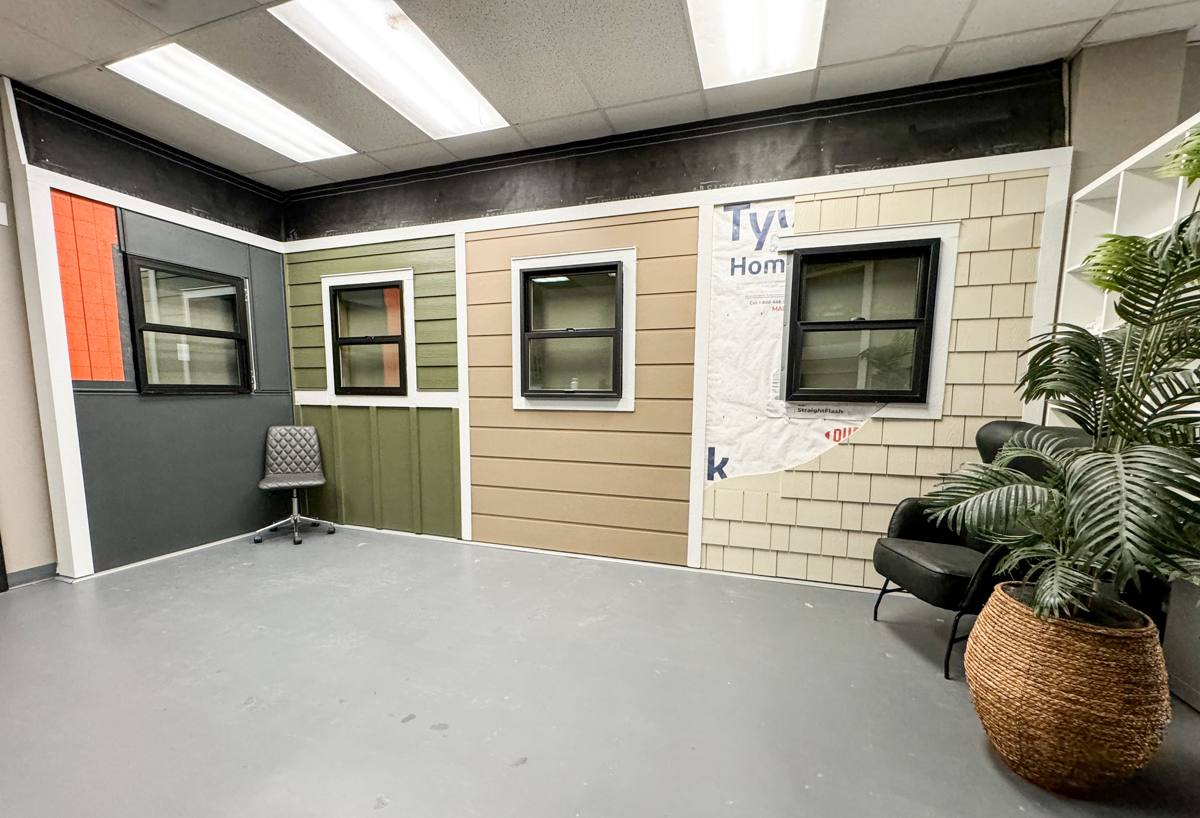
Why We Standardized on James Hardie Fiber Cement
We install James Hardie products exclusively. We don't install vinyl, LP SmartSide, Cemplank, Allura, primed spruce, or cedar, and that's a deliberate call, not a limitation of what we're capable of doing. Vinyl expands and contracts with temperature swings and can crack or warp under impact, and it has seams and a lap profile that's easy to spot up close. Wood-based and engineered-wood products like LP SmartSide are still organic material at the core — even with a resin-treated surface, any breach in that surface, whether a nail pop, a saw cut, or a corner that wasn't sealed, gives moisture a path into wood fiber that Bellingham's rain and humidity will exploit over time. Primed spruce and cedar require ongoing paint and sealant maintenance just to keep water out at all, which is a tough standard to keep up with in a climate that's damp more months than it's dry.
James Hardie fiber cement is cement, sand, and cellulose fiber — non-combustible, dimensionally stable, and not something moisture rots from the inside out the way it can with wood-based products. It's not maintenance-free, but the maintenance it needs is realistic for this climate, and the ColorPlus factory finish holds up to UV and moisture far longer than field-applied paint on other substrates.
What This Means for a Sehome Home Specifically
On a home exposed to salt air and shaded, rain-heavy walls, the difference between fiber cement and a wood-based or vinyl alternative shows up first at the details: butt joints, corners, and anywhere trim meets the field of the siding. Those are the spots where the wrong material starts failing years before the rest of the wall does. Hardie's stability at those joints, combined with correct flashing, is what keeps a Sehome exterior looking and performing the same at year ten as it did at year one.
The HZ5 Product Line: Built for This Exact Weather
Bellingham falls in James Hardie's HZ5 climate zone, which covers regions with significant freeze-thaw cycling and sustained moisture exposure. HZ5 products are engineered with that in mind — the composition and moisture-management features are tuned differently than what Hardie ships to a dry, hot climate. Installing the correct zone-engineered product isn't a marketing detail; it's the difference between siding that's designed for what Whatcom County actually throws at it and siding that was designed for somewhere else entirely.
- HardiePlank lap siding — the most common choice for full-home siding replacement, available in several exposure widths and textures.
- HardiePanel vertical siding — used for board-and-batten looks or accent sections, often paired with lap siding.
- HardieShingle — a shingle-profile option for homes wanting a traditional or craftsman look without the maintenance of real wood shingles.
- HardieTrim — used at corners, window and door surrounds, and fascia to match the siding system rather than mixing in a different material at the trim.
What a Correct Installation Actually Involves
Fiber cement siding is only as good as the installation behind it. Hardie publishes detailed installation specifications for a reason — skipping steps is the single biggest cause of premature siding failure, on any brand, in any climate, and it's usually invisible until years later when the damage is already behind the wall.
Flashing and Water Management Come First
Before a single piece of siding goes up, the wall needs a continuous, correctly lapped water-resistive barrier, and every penetration — windows, doors, hose bibs, light fixtures, vents — needs proper flashing so water is directed out and down, never trapped behind the cladding. In a climate that sees as much driving rain as Bellingham, this step matters more than the siding brand itself. Get it wrong and even the best material on the market will eventually show moisture damage at the sheathing.
Gaps, Fastening, and Caulking to Spec
Hardie specifies clearances from grade, roof lines, and decks; gaps at butt joints and trim; and a fastening pattern and depth that keep the boards secure without cracking the material or over-driving fasteners. Caulking is limited to where Hardie actually calls for it — over-caulking every seam can trap moisture instead of letting the assembly dry, which is a common mistake on jobs done by crews who aren't used to working with fiber cement specifically.
Cut Edges and Field Touch-Up
Every cut edge on a factory-primed or ColorPlus board needs to be sealed before installation, because a raw cut exposes the fiber cement core to moisture. On ColorPlus boards, this is a touch-up sealant matched to the finish rather than a full repaint, which is part of what preserves the factory finish's long-term color and durability advantage over field-painted siding.
James Hardie vs. Other Siding Options for a Sehome Home
Every siding option on the market can be made to look good on install day. The real test is how it holds up after several wet seasons next to Bellingham Bay, which is where the material differences actually show up.
| Factor | James Hardie Fiber Cement | Vinyl | LP SmartSide / Engineered Wood |
|---|---|---|---|
| Behavior in salt air | Non-corrosive core; stable finish | Can chalk and become brittle over time | Depends on surface treatment holding up |
| Response to driving rain | Water-resistant core, doesn't rot | Sheds water but seams can leak | Vulnerable if surface is breached |
| Moss / mildew resistance | ColorPlus finish resists staining | Can trap moisture behind panels | Organic core susceptible if wet |
| Fire resistance | Non-combustible | Combustible | Combustible (wood-based core) |
| Typical repaint interval | 15+ years with ColorPlus | Doesn't repaint the same way; fades | 5-10 years typical |
Our Process on Sehome Projects
The steps don't change much house to house, but doing them in the right order, and not skipping any of them, is what separates a siding job that lasts from one that doesn't.
- On-site inspection — we look at the existing siding, sheathing condition where accessible, trim, and any trouble spots like window returns or areas that stay shaded and damp.
- Written scope and estimate — what's being removed, what product lines and colors are proposed, and what the flashing and water-management plan looks like.
- Tear-off and sheathing check — old siding comes off and we check the sheathing underneath for rot or moisture damage before anything new goes on.
- Water-resistive barrier and flashing — installed or repaired to current standards at every penetration and transition.
- Hardie installation — to Hardie's published fastening, gap, and clearance specifications for the HZ5 zone.
- Trim, caulk, and touch-up — cut-edge sealing and any ColorPlus touch-up done to match the factory finish.
- Final walk-through and cleanup — site cleared of debris and nails, and the finished work reviewed with the homeowner.
Why Hiring a Crew That Already Works Sehome Matters
A crew that regularly works in Bellingham and Whatcom County knows what this climate does to a wall before the first board comes off — where moisture tends to collect on a shaded, tree-covered lot, how much clearance to leave given how much rain the area gets, and how salt air factors into fastener and trim choices near the bay. That's knowledge that comes from doing the work here repeatedly, not from a general installation manual written for a different part of the country. It also means realistic scheduling around the wet season, since fiber cement installation and caulking both want dry conditions to go in correctly, and a local crew can plan the job around Bellingham's weather instead of fighting it partway through.
Permitting and local building department requirements are also easier to navigate for a crew that already pulls permits in the city routinely, which keeps the project moving instead of stalling on paperwork a crew from outside the area has never dealt with before.
Living With Fiber Cement Siding in a Moss-Prone Climate
Correctly installed Hardie siding is low-maintenance, not no-maintenance. In a climate that grows moss on roofs, decks, and fences without much effort, a little seasonal attention keeps the siding performing the way it's designed to.
- Rinse the exterior once or twice a year with a garden hose to clear pollen, salt residue, and organic buildup — avoid high-pressure washing directly at seams and joints.
- Keep gutters clear so overflow doesn't run down the face of the siding or pool at the base of a wall.
- Trim back vegetation and tree branches that keep a section of wall shaded and damp longer than the rest of the house.
- Check caulking at trim and penetrations every couple of years and have any cracked or missing sealant redone before it becomes a moisture path.
- Address any small impact damage or exposed cut edges promptly rather than letting a raw edge sit through a wet season.
Get a Straight Answer on Your Siding
If your Sehome home's siding is showing streaking, soft spots, failing paint, or moss and mildew that keeps coming back no matter how often you clean it, it's worth having someone look at it who works this exact climate and installs one product line correctly rather than several products at varying levels of care. We're happy to walk the exterior with you, point out what we actually see, and put together a straightforward estimate — no pressure, no upsell into a product we don't stand behind. The form below gets you started.