 Bellingham Roofing
 Why Sudden Valley's Setting Is Hard on Siding
Sudden Valley sits under heavy tree canopy along Lake Whatcom, and that setting is beautiful right up until you look at what it does to the outside of a house. Big stands of conifers mean large parts of most homes here stay shaded for most of the day, sometimes for weeks at a stretch in the wetter months. Add the lake's humidity, and you get siding that dries slower than siding on an open lot in town. In Whatcom County generally, homes deal with driving rain off the Pacific and a moss season that can run from fall through spring. In Sudden Valley specifically, the tree cover and lake-effect moisture push that even further — north-facing walls and anything tucked behind landscaping can stay damp for days after a storm passes everywhere else.
None of that is a reason to avoid living here. It's a reason to be honest about what the siding on a Sudden Valley house has to put up with, and to choose a product and installation method that's actually built for it.
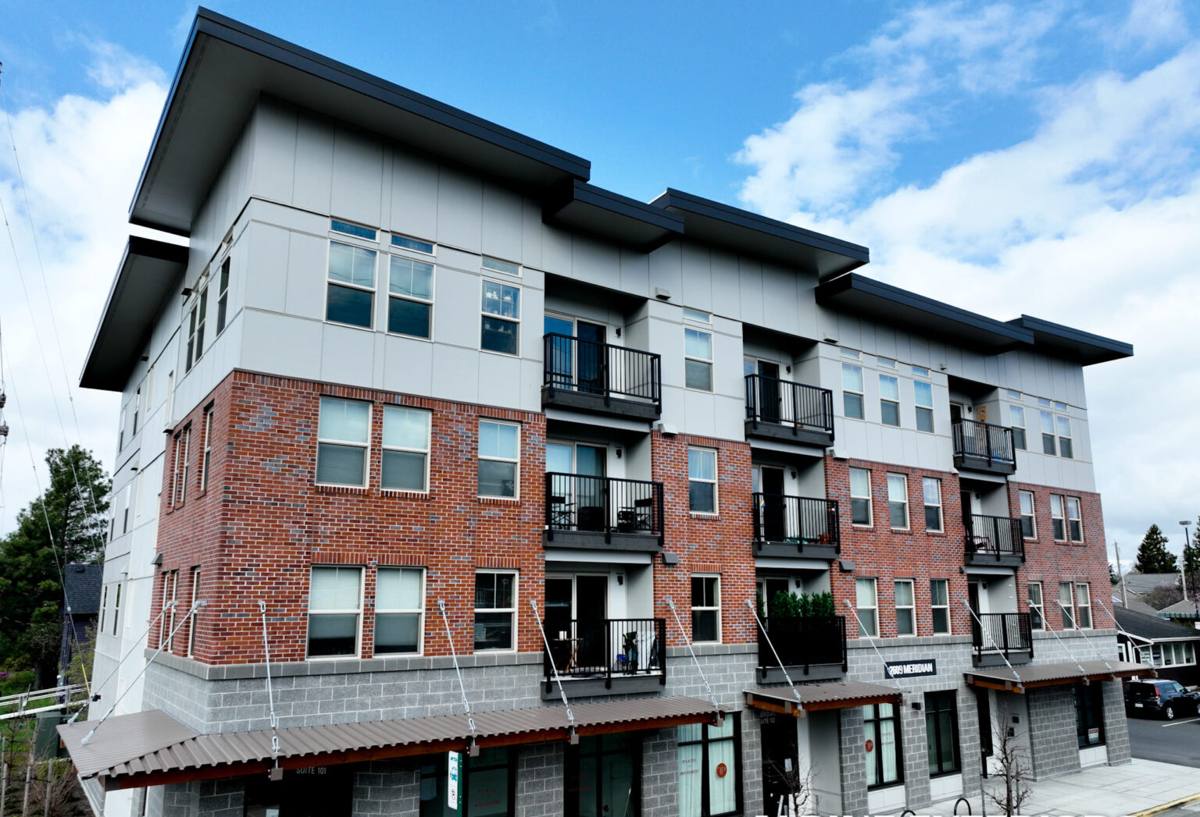
What Constant Shade and Moisture Do to the Wrong Material
Siding failure in this kind of environment rarely happens all at once. It's slow. Moisture gets held against the wall longer than it should, algae and moss get a foothold on the shaded and lower sections first, and from there it spreads. Depending on the material, that ongoing dampness can mean swelling at seams and butt joints, paint that lets go early, or in the worst cases moisture working its way behind the siding and into the sheathing. By the time a homeowner notices soft spots or staining that won't pressure-wash off, there's often more going on behind the wall than what's visible on the surface.
This is exactly why material choice matters more in a place like Sudden Valley than it does on a dry, sun-exposed lot. A siding product that performs fine in an open subdivision can struggle under year-round shade and lake humidity.
Why We Only Install James Hardie in This Area
We install James Hardie fiber cement siding exclusively — not vinyl, not LP SmartSide, not cedar, not primed spruce, not other fiber cement brands. That's a deliberate standard, not a sales preference, and in a climate like Whatcom County's, the reasoning holds up under scrutiny.
Built for This Climate: the HZ5 Product Line
James Hardie engineers its siding by climate zone, and the HZ5 line is formulated for the wetter, more moisture-exposed regions of the Pacific Northwest. Fiber cement itself doesn't rot, swell, or delaminate the way wood-based products can when they stay damp. It also doesn't provide the kind of surface that algae and moss can colonize as readily as bare wood or some engineered wood siding. That matters directly in Sudden Valley, where shaded walls stay wet longer than the county average.
Non-Combustible Matters in a Wooded Lake Community
Sudden Valley is a heavily forested community, and like a lot of wooded areas in Washington, wildfire risk is a real consideration for homeowners here, not a hypothetical one. James Hardie siding is non-combustible fiber cement. That's not a guarantee against every risk a home faces, but it's a meaningful, honest advantage over vinyl (which can melt and deform under heat) or wood-based siding, and it's one more reason it's the product we stand behind for homes surrounded by trees.
What a Correct Installation Actually Involves
James Hardie siding performs the way it's supposed to only when it's installed to spec. A rushed or shortcut installation can undercut even the best material, and in a damp, shaded environment those shortcuts show up faster than they would somewhere drier.
Drainage and Moisture Management
Correct installation starts with a weather-resistive barrier and, in most cases, a drainage gap (rain screen) behind the siding so any moisture that does get past the surface has somewhere to go instead of sitting against the wall. This is especially important on the shaded, slower-drying sides of a Sudden Valley home.
Fastening, Flashing, and Joints
Hardie panels and lap siding have specific nailing patterns, minimum overlaps, and clearance requirements at butt joints, corners, and penetrations (windows, vents, hose bibs). Flashing at every horizontal transition — window heads, trim boards, roof-to-wall intersections — is what actually keeps water from getting behind the siding in the first place. This is where a lot of installation problems on older homes trace back to: not the siding material, but flashing details that were skipped or done wrong.
ColorPlus Factory Finish
Where budget and design allow, we recommend James Hardie's ColorPlus factory-applied finish over field painting. It's baked on under controlled conditions, holds color and resists fading better than most site-applied paint jobs, and comes with its own finish warranty. In a shaded, humid setting like Sudden Valley, a durable factory finish is worth more than it would be on a sun-baked lot, since field-applied paint has less opportunity to fully cure between rain events.
How Our Process Works
- On-site assessment — we look at sun exposure, tree cover, drainage patterns, and the current condition of your existing siding and sheathing before we quote anything.
- Tear-off and sheathing check — old siding comes off and we inspect the sheathing underneath for any moisture damage that needs to be addressed before new siding goes on, not covered up.
- Weather barrier and drainage plane — house wrap and, where called for, a rain screen gap go in before any siding is hung.
- Flashing at every transition — windows, doors, trim, and roof lines get flashed correctly, not just caulked.
- Installation to James Hardie's specifications — correct fastener spacing, clearances, and overlaps for the HZ5 product line.
- Final walkthrough — we go over the finished job with you before we consider it done.
James Hardie vs. Other Siding Options in a Shaded, Wet Setting
| Material | Moisture & moss resistance | Fire performance | Long-term appearance |
|---|---|---|---|
| James Hardie fiber cement | High — doesn't rot or swell when damp | Non-combustible | ColorPlus finish holds up under shade and rain |
| Vinyl | Moderate — won't rot, but seams and moisture behind panels can trap moss growth | Can soften or deform under heat | Fades over time; can warp near heat sources |
| Cedar | Low to moderate — needs ongoing sealing/staining to resist moisture and moss | Combustible | Requires regular maintenance to hold color and resist rot |
| LP SmartSide / engineered wood | Moderate — engineered to resist moisture but still wood-based and seam-sensitive | Combustible | Performance depends heavily on caulking and paint maintenance |
What Influences Your Project Cost
| Factor | Why it matters here |
|---|---|
| Home size and wall complexity | More corners, dormers, and trim transitions mean more flashing detail work |
| Existing siding removal and sheathing repair | Homes with long-term moisture exposure sometimes need sheathing addressed before new siding goes on |
| Access and site conditions | Sloped lots, tree cover, and limited driveway access around Lake Whatcom can affect staging and labor time |
| Product line and finish | Panel vs. lap siding, and ColorPlus factory finish vs. field paint, both affect material cost |
| Trim and accessory work | Fascia, soffit, and trim replacement done at the same time can add cost but avoids mismatched future repairs |
We give straightforward, itemized estimates rather than a single vague number, so you can see what's driving the cost on your specific home.
Why Hiring a Crew That Already Works in Sudden Valley Matters
Sudden Valley isn't downtown Bellingham. The roads, the tree cover, and in some cases HOA or community access rules affect how a job gets staged and scheduled. A crew that's already worked in the neighborhood knows what to expect on arrival, understands how shade and lake humidity affect drying time between install steps, and isn't learning the area's quirks on your dime. That local familiarity translates into fewer surprises and a smoother project timeline.
Questions to Ask Before You Hire
- Are you a certified James Hardie installer, and can you explain your flashing details at windows and rooflines?
- Will you inspect and address sheathing condition before installing new siding, not just cover it up?
- Do you use a drainage gap or rain screen behind the siding, and where does that apply on my home?
- What's included in your written estimate — tear-off, disposal, trim work, and finish type?
- Have you worked in Sudden Valley or similar wooded, lakeside settings before?
If your siding is showing moss, staining, or soft spots — or you're planning ahead before it gets that far — we're happy to take a look and walk you through what your home actually needs. Reach out for a free, no-pressure estimate using the form below.