 Bellingham Roofing
 Why Ferndale Roofs Need to Be Built for This Specific Climate
Ferndale sits close to the water on the north end of Whatcom County, and that location shapes what a roof has to deal with year-round. The air carries salt off the coast, storms roll in with sideways rain rather than gentle vertical rainfall, and the tree cover combined with damp winters means moss has months on end to get established on anything that holds moisture. A roof that would be perfectly adequate in a drier inland climate can underperform here within a decade if it wasn't specified and installed with these conditions in mind.
We're a Bellingham-based crew, and Ferndale is part of our regular service area, not a one-off trip. That matters more than it sounds like it should. A contractor who only sees a handful of Ferndale roofs a year is guessing at what holds up here. We're not guessing — we're specifying flashing details, fastener types, and coatings based on what we've actually watched succeed and fail on homes a few miles from where we're standing.
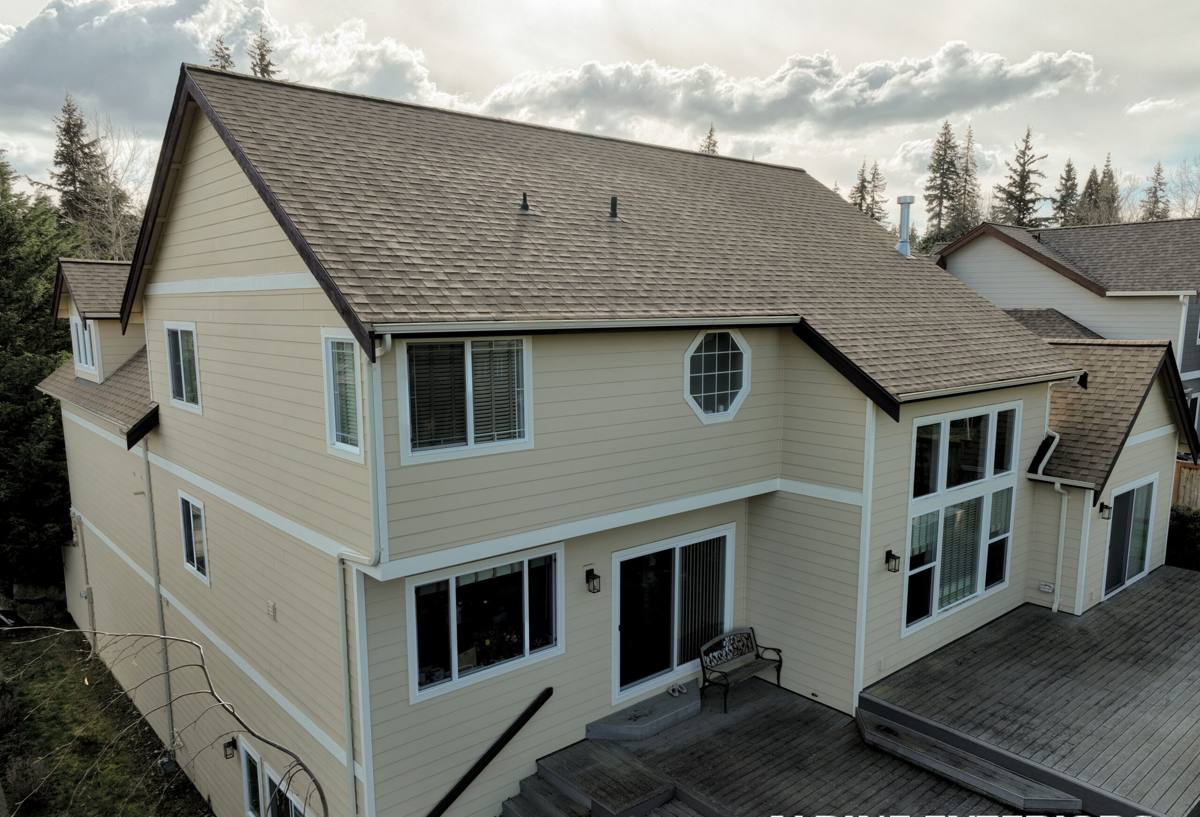
What Salt Air, Rain, and Moss Actually Do to a Roof Over Time
Each of these three factors stresses a roof in a different way, and a correct metal roofing system has to answer all three at once.
Salt Air and Corrosion
Airborne salt accelerates corrosion on anything with exposed raw metal, bare fasteners, or scratched coatings. It's not dramatic — you won't see it happen — but over years it eats at cut edges, exposed screw heads, and any spot where a coating has been compromised during installation. The fix isn't a mystery material, it's using panels and fasteners rated for coastal exposure and handling them correctly on the roof so the factory coating isn't nicked, scratched, or left exposed at cut edges.
Driving, Wind-Driven Rain
Western Washington rain doesn't just fall — a good storm off the water pushes it sideways and up under laps, fascia, and flashing that would keep water out in a calmer climate. This is why underlayment selection and flashing detail matter more here than the panel itself. Most metal roof leaks we get called to inspect on older installs trace back to a flashing detail or penetration seal, not the panels failing.
A Long Moss Season
Shade, moisture, and mild temperatures give moss a long window to establish itself in Whatcom County, and once it gets a foothold on a roof surface, it holds moisture against the material and works into any seam or fastener gap. Metal sheds moss far more easily than shingles because it doesn't have the rough, granulated surface moss spores need to grip — but valleys, low-slope sections, and areas under heavy tree cover still need attention.
Panel Systems We Install — and How They Compare
Not every metal roofing system is built the same way, and the right choice depends on the home, the roof's pitch, and the budget. We install both standing seam and exposed-fastener systems, and we'll tell you honestly which one fits a given roof rather than steering everyone toward the higher-margin option.
| Feature | Standing Seam | Exposed Fastener (Corrugated/Ribbed) |
|---|---|---|
| Fasteners | Hidden under interlocking seams | Visible, driven through the panel face |
| Coastal durability | Excellent — fasteners never see weather | Good, but fastener seals need periodic checking |
| Typical lifespan | 40-60+ years | 30-45 years |
| Upfront cost | Higher | More budget-friendly |
| Best suited for | Homes, low-slope sections, long-term ownership | Shops, outbuildings, budget-conscious re-roofs |
For most Ferndale homes, we lean toward standing seam specifically because the fasteners are hidden inside the seam and never exposed to salt-laden weather. Exposed-fastener panels are a perfectly reasonable choice for a shop or secondary structure, but on a primary residence this close to the coast, the long-term maintenance of hundreds of exposed screw penetrations is a real cost we'd rather you know about upfront than discover in year fifteen.
What a Correct Metal Roof Installation Actually Involves
The panels get the attention because they're what you see, but most of what determines whether a metal roof performs for decades happens underneath and around them.
- Underlayment: A synthetic or self-adhered membrane rated for the temperatures under metal, placed as a continuous water barrier under the entire panel system.
- Fastening pattern: Correct screw spacing and torque so panels are secure without over-compressing washers, which is a common cause of early leaks.
- Flashing at every transition: Valleys, walls, chimneys, and roof-to-wall junctions get formed metal flashing, not caulk as the primary seal.
- Ventilation: Ridge and soffit ventilation sized correctly so moisture doesn't condense against the underside of the panels in our damp winters.
- Edge and eave detail: Drip edges and eave closures set up so wind-driven rain can't work its way back up under the first course.
Skipping or shortcutting any one of these doesn't usually cause an immediate problem — it shows up as a leak two, five, or ten years later, usually during the exact kind of storm the roof was supposed to be built for.
Our Process, Start to Finish
We keep the process straightforward and communicate clearly at each step:
- On-site assessment: We look at the existing roof, deck condition, ventilation, and any problem areas before quoting anything.
- Tear-off vs. overlay decision: Metal can sometimes go over an existing roof if the deck and code allow it, but we'll tell you honestly when a tear-off is the right call instead of the cheaper option.
- Written estimate: Panel type, underlayment, flashing scope, and timeline spelled out — no vague allowances.
- Installation: Deck prep, underlayment, panels, and flashing installed in sequence with attention to the coastal-specific details above.
- Final walkthrough: We go over the finished roof with you before we consider the job done, not after.
What Affects the Cost of a Metal Roof in Ferndale
We don't publish fixed prices because every roof is different, but these are the factors that actually move the number:
| Cost Factor | Why It Matters |
|---|---|
| Roof pitch and complexity | Steeper, more cut-up roofs take longer and use more flashing |
| Tear-off vs. overlay | Removing an old roof adds labor and disposal cost but reveals deck issues early |
| Panel system chosen | Standing seam runs higher than exposed-fastener systems |
| Deck repairs needed | Rot or soft decking found during tear-off adds cost but is not optional to fix |
| Access and site conditions | Tree cover, steep lots, and staging space affect labor time |
A detailed on-site look is the only way to give you an honest number — we'd rather walk your roof and tell you a real range than quote blind over the phone.
Living With a Metal Roof in Ferndale's Climate
One of the appeals of metal is how little ongoing work it asks for compared to other roofing materials, but "low maintenance" isn't the same as "no maintenance" in this climate. Keep gutters clear so water isn't backing up under the eave edge during heavy rain. Keep an eye on any valley or low-slope section under trees, since that's where moss and debris are most likely to sit long enough to matter. And after any major windstorm, a quick visual check for lifted flashing or debris impact is worth five minutes of your time.
Beyond that, a correctly installed metal roof in this climate is genuinely one of the lowest-maintenance choices available to a homeowner.
Why a Crew That Already Works Ferndale Is Worth Choosing
Roofing crews based farther away can install a technically fine roof and still miss the details that matter specifically here — the flashing allowance for wind-driven rain, the fastener spec that holds up to salt air, the ventilation balance for our winter humidity. We're not asking you to take that on faith. Ask any contractor bidding your roof how many Ferndale or greater Bellingham jobs they've done in the last year, and how they'd handle the coastal exposure specifically. The answer tells you a lot.
Questions Worth Asking Any Metal Roofing Bid
- Is the underlayment and fastener package specified for coastal/salt-air exposure?
- Are you quoting standing seam or exposed-fastener, and why for this roof specifically?
- How is the deck condition being verified before or during tear-off?
- What's the flashing detail at valleys and roof-to-wall transitions?
- Is ventilation being addressed, or just the panels?
- What warranty covers the panels, and separately, what covers your labor?
If a bid can't answer these clearly, that's worth noticing before you sign anything.
If you're weighing metal roofing for a home in Ferndale, we're glad to take a look and walk you through what your specific roof needs — no pressure, no hard sell, just a straight answer and a written estimate. The form below gets you a free, no-obligation estimate from a crew that already works this area.