 Bellingham Roofing
 Why Windows Matter More in a Marine Climate Like Puget's
In most parts of the country, a window replacement is mainly about comfort and a lower energy bill. In Puget, it's also a defense against a specific set of conditions: salt-laden air off the water, wind-driven rain that hits some walls far harder than others, and a long stretch of the year where moisture and low light barely let a house dry out. Windows sit right at the seam between inside and outside, and in this climate that seam gets tested constantly.
An energy-efficient window in Puget has to do two jobs at once. It needs to keep conditioned air in and drafts out, and it needs to keep water, salt, and organic growth from working their way into the wall assembly around it. A window that's efficient on paper but poorly sealed or matched to the wrong exposure won't hold up here, no matter what the label says.
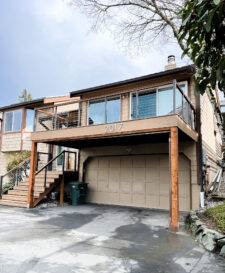
What Bellingham's Weather Does to Ordinary Windows Over Time
Salt Air and Corrosion
Homes closer to the water deal with airborne salt that settles on hardware, fasteners, and unprotected metal components. Over years, this can corrode weep holes, latches, and lower-quality aluminum components faster than an inland home would ever see. It doesn't ruin a window overnight, but it shortens the life of hardware and finishes that weren't specified with this exposure in mind.
Driving Rain and Water Intrusion
Bellingham gets a lot of rain that doesn't just fall straight down — wind pushes it sideways into walls, especially on south and west-facing elevations. A window can be perfectly efficient in terms of glass and frame and still fail if the flashing, sill pan, and sealant details around it weren't done correctly. Most water damage we see around older windows isn't a defect in the window itself; it's water that found a gap in the surrounding installation and had months of driving rain to work with.
Moss, Mildew, and Sustained Humidity
Whatcom County's long moss season isn't limited to roofs. Window sills, trim, and the gaps around older frames can hold enough moisture to grow moss and mildew if drainage isn't working the way it should. That trapped moisture is also what eventually leads to soft wood, stained interior sills, and the musty smell homeowners sometimes notice near older windows in the wetter months.
What "Energy-Efficient" Actually Means for This Climate
Efficiency ratings on a window box aren't one-size-fits-all. In a marine climate with mild summers and a long heating season, the U-factor — how well a window resists heat loss — usually matters more day-to-day than the solar heat gain coefficient, which is more important in climates with intense summer sun. A window built and rated for a hot, dry climate isn't automatically the right choice for a Puget home, even if the price looks similar.
Frame Material Comparison
| Frame Material | Typical Strengths | Trade-Offs Near Puget |
|---|---|---|
| Vinyl | Low maintenance, good insulating value, generally the most affordable option | Quality varies a lot between manufacturers; cheaper vinyl can flex or discolor over time |
| Fiberglass | Very dimensionally stable, holds paint well, resists moisture-related swelling | Higher upfront cost than vinyl |
| Wood-Clad | Traditional appearance, good insulating core | Exterior cladding must be well-sealed against driving rain; interior wood still needs periodic upkeep |
| Aluminum | Strong, allows slimmer sightlines | Conducts heat and cold unless thermally broken; needs a good coating to resist salt-air corrosion over time |
Glass packages matter as much as frame material. A double-pane unit with a low-E coating and an argon or krypton gas fill is standard for efficient performance in this region. Triple-pane glass can add further insulation and sound dampening, which is worth considering on exposed or wind-facing walls, but it adds cost and weight that isn't always necessary for every opening on a home.
What a Correct Installation Actually Involves
The window itself is only part of the job. In a climate where wind-driven rain is routine, the installation details around the window do most of the work of keeping water out over the long run. A correct install typically includes:
- Removing the old unit carefully and inspecting the rough opening and framing for hidden rot before anything new goes in
- Repairing or replacing any damaged framing rather than sealing over it
- Installing a proper sill pan so any water that does get past the window drains back out, not into the wall
- Flashing integrated correctly with the home's existing weather-resistive barrier, in the right shingled order so water sheds downward and outward
- Sealing with appropriate, durable sealant at the right joints — not as a substitute for proper flashing, but in addition to it
- Shimming and fastening the window so it operates correctly and doesn't rack or bind over time
- Insulating the gap between the window frame and rough opening without overpacking, which can bow the frame
Skipping or rushing any one of these steps is how a technically efficient window ends up with a moisture problem two or three winters later. It's rarely the glass that fails — it's what was or wasn't done around it.
Our Process for Puget Homeowners
- On-site assessment: We look at each window's exposure — which walls take the brunt of wind-driven rain, which are more sheltered — and check the condition of existing framing and trim.
- Product selection: We help match frame material, glass package, and hardware to your home's exposure and your budget, rather than recommending the same package for every opening regardless of where it sits on the house.
- Removal and inspection: Old windows come out carefully so we can see the actual condition of the framing underneath before pricing any repair work.
- Installation: New units go in with proper sill pans, flashing, sealant, and insulation, following the sequence that keeps water moving out and away from the structure.
- Final check and cleanup: Every window is tested for smooth operation and a tight seal, and the work area is cleaned up before we consider the job done.
Signs Your Current Windows Are Working Against You
Not every window problem is obvious from across the room. A few signs worth paying attention to, especially heading into another wet Bellingham winter:
- Visible condensation or fogging trapped between the panes of double-pane glass
- Noticeable drafts near the frame on windy days
- Wood trim or sills that feel soft, show staining, or have dark mildew spots
- Windows that stick, won't stay open on their own, or are hard to latch
- Moss or green growth building up on exterior sills, trim, or tracks
- Rooms near certain windows that always feel colder or draftier than the rest of the house
Any one of these on its own might just mean a window needs attention. Several of them together, especially on the same wall, usually points to a bigger moisture or air-sealing issue worth having looked at.
What Affects the Cost of a Window Project
| Cost Factor | Why It Matters |
|---|---|
| Frame material | Vinyl is typically the most budget-friendly; fiberglass and wood-clad cost more upfront |
| Glass package | Standard double-pane with low-E coating is the baseline; triple-pane or upgraded gas fills add cost |
| Number and size of openings | Large picture windows, bays, or bows cost more than standard sliders or single-hung units |
| Condition of existing framing | Rot repair or reframing discovered once the old window is out adds labor before installation can proceed |
| Access and site conditions | Second-story work, tight side yards, or removing trim and siding adds time to the job |
We'd rather walk your home and give you real numbers than quote a broad range that doesn't reflect your actual windows. Framing condition in particular is hard to know until an old window is out, which is why an honest contractor will explain how that's handled rather than baking in a guess.
Why Local Experience in Puget and Bellingham Matters
A crew that already works in this area knows which sides of a house typically take the worst of the wind-driven rain, how long the moss season really runs, and what salt exposure does to hardware and finishes near the water. That's not something you can fully learn from a spec sheet — it comes from installing and revisiting windows on homes with this same weather pattern, year after year.
Local experience also means fewer surprises during permitting and inspection, since the process and expectations in Whatcom County are already familiar. And practically, it means someone is nearby if a question comes up after the job is finished, rather than a crew that installed once and moved on to the next region.
If your windows are drafty, fogged, or showing signs of moisture damage, we're happy to take a look and give you a straightforward, no-pressure estimate — just fill out the form below to get started.