 Bellingham Roofing
 Roof Repair Built for How Lynden Actually Weathers
Lynden sits inland from Bellingham but it is not spared from the moisture that defines this corner of Whatcom County. Salt-laden air drifting off the Salish Sea, long stretches of driving rain, and a moss season that can run from late fall through spring all put steady pressure on roofs here. None of that damage happens overnight. It happens a shingle tab at a time, a nail pop at a time, one soaked patch of underlayment at a time, until a homeowner notices a stain on a ceiling and realizes the roof has been quietly failing for months.
Roof repair done right in this area is not about slapping a patch over a leak and hoping it holds through the next storm. It is about understanding why that spot failed in the first place — usually moisture, wind, or age working together — and fixing the actual cause. That is the standard we hold every repair to, whether it is a single flashing detail or a full section of damaged decking.
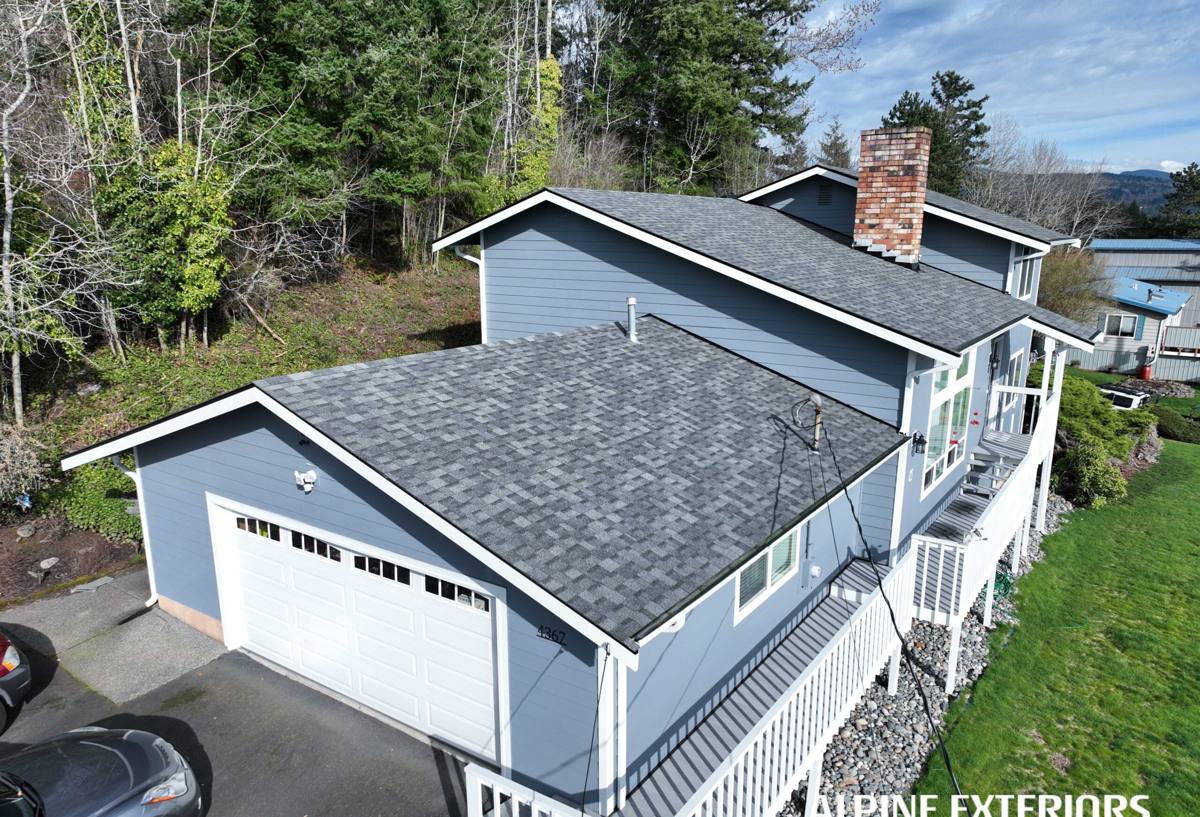
Common Roof Problems We See on Lynden Homes
Every roofing material fails in its own way, and the failure patterns we see on repair calls in this area are pretty consistent once you've worked enough of them.
Asphalt Shingle Roofs
The most common issues are wind-lifted or cracked tabs, granule loss that leaves shingles brittle and less able to shed water, and nail pops that work their way up through the shingle surface over a few wet-dry cycles. Valleys and eave edges are usually the first places trouble shows up because that's where water volume and flow speed are highest.
Metal Roofing
Metal holds up well against rain, but fastener backout, scratched or worn coatings at high-traffic areas, and sealant failure at penetrations (vents, chimneys, skylights) are the typical repair triggers. A small gap at a screw or seam doesn't look like much, but it's exactly the kind of detail that lets water in during a sustained driving rain.
Cedar Shake and Older Roofs
Older cedar roofs in this area often show splitting, curling, and moss colonization faster than other materials because wood holds moisture longer. Repairs here require matching the existing shake profile and paying close attention to the underlayment beneath, which is often original and past its service life even if the shakes on top still look presentable.
Flashing and Penetrations, Regardless of Material
Across every roof type, the majority of real leaks trace back to flashing — around chimneys, skylights, dormers, and where a roof plane meets a wall — rather than to the field of the roofing material itself. This is the detail work that separates a lasting repair from a temporary one.
What a Proper Roof Repair Actually Involves
A repair that's done to last involves more steps than most homeowners expect from the outside:
- Identifying the actual entry point of water, which is often several feet away from where the interior stain or drip appears.
- Removing the damaged material back to solid, dry substrate — not just covering over it.
- Checking the decking underneath for soft spots, delamination, or rot before replacing anything on top of it.
- Installing new underlayment or ice-and-water membrane in the repaired section so it matches the protection level of the surrounding roof.
- Matching shingle or panel type, color, and exposure as closely as possible so the repair blends in and performs the same as the original installation.
- Re-flashing any penetration or transition in the repair area rather than just resealing old flashing with caulk.
Skipping any of these steps is how a "fixed" roof leaks again in the next heavy rain. It's also the most common reason a homeowner ends up paying for the same repair twice.
Our Repair Process, Start to Finish
1. Inspection and Honest Diagnosis
We walk the roof, not just the ceiling stain underneath it. That includes checking the attic side when accessible, since insulation staining and sheathing condition tell us how long a leak has actually been active and how far it may have traveled.
2. A Written Scope and Estimate
Before any work starts, you get a clear explanation of what failed, why, and what the repair involves — in plain language, not a vague line item. If we find something during inspection that changes the scope, we tell you before we proceed, not after.
3. The Repair Itself
We work the area methodically: remove and inspect, replace compromised material, re-establish proper water shedding at every seam and transition, and match the surrounding roof as closely as the existing material allows.
4. Cleanup and Final Check
Job sites get cleaned of debris and stray fasteners, and we do a final water-path check on the repaired section before we consider the job done.
Roof Repair vs. Replacement: How We Help You Decide
Not every roof problem calls for a full replacement, and not every leak can be permanently solved with a patch. Part of an honest estimate is telling you which situation you're actually in.
| Factor | Repair Usually Makes Sense | Replacement Should Be Considered |
|---|---|---|
| Roof age | Well within expected material lifespan | At or past the end of its service life |
| Extent of damage | Isolated to one section or detail | Spread across multiple slopes or repeated leak history |
| Decking condition | Solid, dry substrate found on inspection | Widespread soft spots, rot, or delamination |
| Granule loss / wear | Localized | Uniform across the whole roof surface |
| Moss and moisture history | Manageable with cleaning and targeted repair | Chronic moss damage into the shingle mat or decking |
When a roof falls into a gray area, we say so and lay out both options with honest trade-offs rather than steering you toward the bigger job by default.
Moss, Moisture, and Whatcom County's Long Wet Season
Moss is more than a cosmetic issue here — it's one of the most common underlying causes of the repair calls we get in this part of Whatcom County. Moss holds moisture directly against the roofing material for extended periods, which accelerates granule loss on asphalt shingles and speeds up rot in wood shakes. On shaded, north-facing slopes, moss can establish itself within a couple of seasons if it isn't kept in check.
The long stretch of overcast, rainy weather typical of this region means roofs rarely get a full dry-out period the way they might in a drier climate. That extended dampness is also why we pay close attention to ventilation during repairs — a roof that can't breathe traps moisture underneath the surface, which shortens the life of any repair we make on top of it.
Driving rain adds a separate challenge: wind-driven water can push up under shingle tabs and through marginal flashing details that would never leak in a straight-down rain. That's part of why flashing and edge details get extra attention in every repair we do in this area, rather than treating them as an afterthought.
Materials and Methods We Use for Lasting Repairs
Underlayment and Water Barriers
In repair sections — especially valleys, eaves, and areas around penetrations — we use ice-and-water shield or equivalent self-adhering membrane rather than standard felt alone, since it seals around fastener penetrations and holds up better under sustained wet conditions.
Shingles and Matching Material
We source replacement shingles and panels from established manufacturers so warranty coverage stays intact, and we match color and profile as closely as the original product allows. Where algae- and moss-resistant shingle products are a good fit for a shaded or moss-prone slope, we'll explain that option honestly, including that it's a preventive measure, not a guarantee against moss returning.
Flashing Materials
Metal flashing — not caulk alone — is our standard for chimneys, walls, and penetrations. Caulk and sealant have a place as a finishing detail, but we don't rely on them as the primary water barrier, because sealant degrades with UV and temperature cycling well before the surrounding roofing material does.
Why Local Experience Matters for a Lynden Roof
A crew that works roofs throughout Bellingham and the surrounding Whatcom County communities on a regular basis recognizes failure patterns faster than one working from a general checklist. We know which roof details tend to fail first in this climate, which slope orientations hold moss longest, and how sustained regional rainfall behaves differently than a short, heavy downpour elsewhere. That local pattern recognition shortens diagnosis time and helps us catch secondary damage — a soft spot in decking, a compromised vent boot — before it becomes its own leak.
It also means scheduling that accounts for real weather, not guesswork. Repair work needs a dry roof surface to be done properly, and a crew familiar with this region's weather rhythms plans around that rather than working around it after the fact.
Maintenance Checklist for Lynden Homeowners
Between professional inspections, a few homeowner-level checks can catch problems early:
- Look at gutters and downspouts for granule buildup, which can signal accelerated shingle wear.
- Check for visible moss or dark streaking on shaded roof slopes, especially after the wetter months.
- Watch for ceiling stains, especially near chimneys, skylights, or where two roof planes meet.
- Confirm attic ventilation isn't blocked by insulation, which can trap moisture against the roof deck.
- After any significant windstorm, do a visual check from the ground for lifted or missing shingles.
- Keep overhanging branches trimmed back, since they hold moisture against the roof and encourage moss growth.
None of these replace a professional inspection, but catching an early warning sign yourself can be the difference between a small repair and a much larger one.
Get an Honest Look at Your Roof
If you're dealing with a leak, a suspicious stain, or just want an honest read on how much life is left in your roof, we're happy to take a look. The estimate is free, there's no pressure to sign anything on the spot, and you'll get a straight answer about whether you're looking at a repair or something bigger. Use the form below to get in touch and we'll schedule a time to come out.