 Bellingham Roofing
 Roofing in Blaine's Coastal Climate
Blaine sits right on the water at the top of Whatcom County, and that location shapes what a roof has to put up with year after year. Salt-laden air off the water accelerates corrosion on metal fasteners, flashing, and vents. Driving rain off winter storms tests every seam, lap, and penetration on a roof, not just the open field of shingles. And the region's long stretch of mild, wet winters gives moss and algae months at a time to take hold, especially on north-facing slopes and anything shaded by fir or cedar trees.
None of that means a roof in Blaine is doomed to fail early. It means the materials, fastening, and detailing need to be chosen and installed with those specific stresses in mind. A roof spec that works fine in a dry inland climate can underperform here if it isn't adjusted for salt exposure, wind-driven rain, and moss pressure.
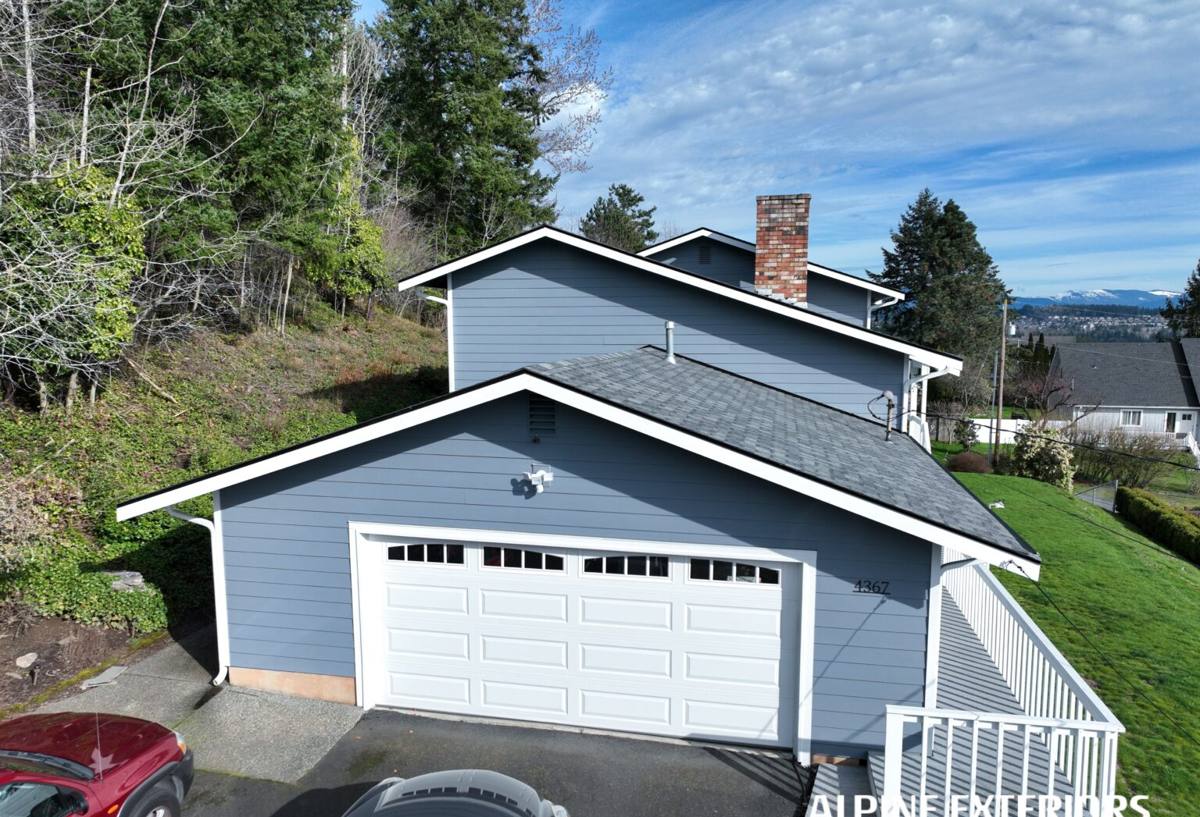
How to Tell a Blaine Roof Needs Replacement, Not Just Repair
Homeowners often call us after a leak, but the leak is usually the last symptom, not the first one. Some signs point toward replacement rather than another round of patching:
- Granule loss heavy enough that you can see bare, shiny patches on asphalt shingles
- Shingles that are cupping, curling at the edges, or cracking when touched
- Moss or algae that keeps coming back within a season or two of cleaning
- Soft or spongy spots underfoot, which usually means the decking underneath has taken on moisture
- Daylight visible through the attic or staining on interior ceilings after a hard rain
- A roof that's 20+ years old, since most asphalt roofing in this climate is nearing the end of its service life by then regardless of appearance
If a roof is showing one or two of these signs in isolated spots, a repair can often buy more years. If several of these show up together, or the roof is old enough that further repairs would just be chasing the next leak, replacement is usually the more honest recommendation.
What a Correct Roof Replacement Involves
A roof replacement is more than swapping old shingles for new ones. The parts you don't see are what determine whether the new roof actually holds up to Blaine's weather.
Tear-Off and Deck Inspection
We remove the old roofing down to the deck rather than layering over it. That lets us actually see the plywood or plank sheathing underneath. Any wood that's soft, delaminated, or water-stained gets replaced before anything new goes down — covering over damaged decking just hides a problem that will resurface.
Underlayment and Water Protection
Given how much wind-driven rain this area sees, underlayment choice matters more here than in drier climates. Self-adhered ice-and-water membrane at eaves, valleys, and roof penetrations gives a second line of defense where wind can push rain up and under shingles rather than straight down them.
Ventilation
Proper intake and exhaust ventilation keeps the attic temperature and moisture level in check, which matters for shingle life and for preventing condensation issues in our damp winters. A roof can be installed perfectly and still underperform if the attic underneath it is trapping moisture.
Flashing and Roof-to-Wall Details
Chimneys, skylights, dormers, and roof-to-wall transitions are where most leaks actually start, not in the open field of shingles. Salt air speeds up corrosion on cheap or thin flashing, so we use materials and fastening details built to hold up to that exposure over time, not just pass inspection on day one.
Material Options for a Salt-Air, High-Moss Climate
There's no single "best" roofing material for every home — it depends on budget, roof pitch, architectural style, and how much long-term maintenance you want to take on. Here's how the common options stack up for a coastal Whatcom County home:
| Material | Moss/Algae Resistance | Salt Air Durability | Typical Lifespan | Maintenance |
|---|---|---|---|---|
| Standard asphalt shingle | Moderate — benefits from algae-resistant granules | Good with quality flashing | 20–30 years | Periodic moss removal recommended |
| Architectural/dimensional asphalt | Better than 3-tab, especially with algae-resistant options | Good with quality flashing | 25–35 years | Periodic moss removal recommended |
| Standing seam metal | Strong — sheds moisture fast, little surface for moss to grip | Excellent with coastal-rated coatings and fasteners | 40–50+ years | Low; occasional fastener/sealant check |
| Wood shake | Poor in this climate — retains moisture, feeds moss growth | Requires diligent upkeep near salt air | Varies widely with upkeep | High; regular treatment needed |
Our default recommendation for most Blaine homes is a quality architectural asphalt shingle with algae-resistant granules, or standing seam metal for homeowners who want to minimize long-term maintenance and don't mind the higher upfront cost. We generally steer clients away from untreated wood shake in this specific climate — not because it can't look good, but because the maintenance burden to keep it performing well near the water is significant, and that's a trade-off worth knowing about before you commit to it.
Our Process, Start to Finish
- Free on-site estimate. We walk the roof (or inspect from ladder and drone where pitch or access requires it), check the attic if accessible, and note existing damage, ventilation, and flashing conditions.
- Written scope and pricing. You get a clear breakdown of materials, labor, and what's included — no vague allowances that turn into surprise add-ons later.
- Material selection. We go over the options in the table above based on your budget, roof style, and how much maintenance you want to take on long-term.
- Scheduling around the weather. Roofing in this region means working with the weather windows we get, not fighting them. We plan tear-off and dry-in to minimize how long your home is exposed.
- Tear-off, deck repair, and installation. Old roofing comes off, decking is inspected and repaired as needed, then underlayment, flashing, ventilation, and roofing material go on in that order.
- Cleanup and walkthrough. We magnet-sweep for nails, clear debris, and walk the finished roof with you before calling the job done.
Why a Crew That Already Works Blaine Matters
We're based in Bellingham and work throughout Whatcom County, including Blaine on a regular basis. That local presence matters in a few practical ways. We're familiar with the county permitting process and inspection requirements, so paperwork doesn't slow down your project. We know how local weather patterns typically move through in a given season, which helps with scheduling tear-off at the right time rather than gambling on an open roof deck. And because we're not traveling in from out of the area, we can respond quickly if a warranty question or minor issue comes up after the job is done.
A roofing crew that only occasionally works this far north doesn't build up the same feel for how salt air and moss behave on real roofs here over multiple seasons. That experience shows up in the small decisions — flashing choices, fastener selection, ventilation details — that don't show up on a sales brochure but do show up in how the roof performs ten years down the road.
What Affects the Cost of a Blaine Roof Replacement
Every roof is different, so we don't publish blanket prices, but these are the main factors that move a quote up or down:
| Factor | How It Affects Cost |
|---|---|
| Roof size and number of planes | More square footage and complexity (valleys, dormers, hips) means more material and labor |
| Roof pitch and access | Steeper roofs and difficult access require more safety setup and time |
| Decking condition | Rotted or delaminated sheathing found during tear-off adds repair cost |
| Material choice | Standard asphalt is the most economical; metal and premium shingle lines cost more upfront |
| Ventilation and flashing upgrades | Bringing older ventilation or flashing up to current standards adds some cost but pays off in roof life |
| Number of layers being removed | Tearing off multiple layers of old roofing takes more labor than a single layer |
We'll walk through your specific factors during the estimate so you understand what's driving the number, not just what the final total is.
Keeping a New Roof Performing in Blaine's Climate
A correctly installed roof still benefits from a little regular attention in this climate. A short annual checklist goes a long way:
- Have moss and debris cleared from valleys and north-facing slopes before it builds up thick enough to hold moisture against the roofing material
- Keep gutters clear so water isn't backing up under the roof edge during heavy rain
- Trim back overhanging branches that keep sections of the roof shaded and damp
- Check attic ventilation isn't blocked by insulation or storage
- Have flashing around chimneys, skylights, and vents visually checked every couple of years, since that's where small problems show up first
None of this requires major effort, but skipping it is how a well-installed roof loses years off its expected lifespan in a climate like this one.
If your roof in Blaine is showing its age or you just want an honest read on where it stands, we're happy to take a look. Fill out the form below for a free, no-pressure estimate.